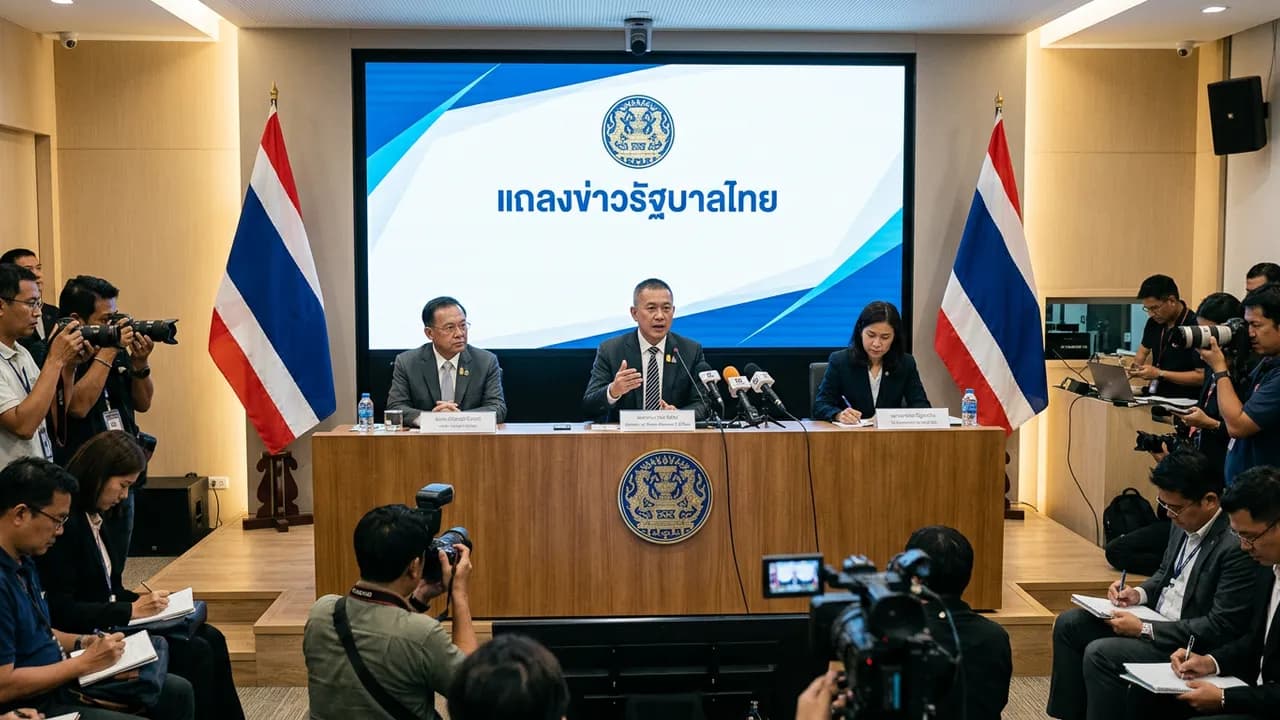
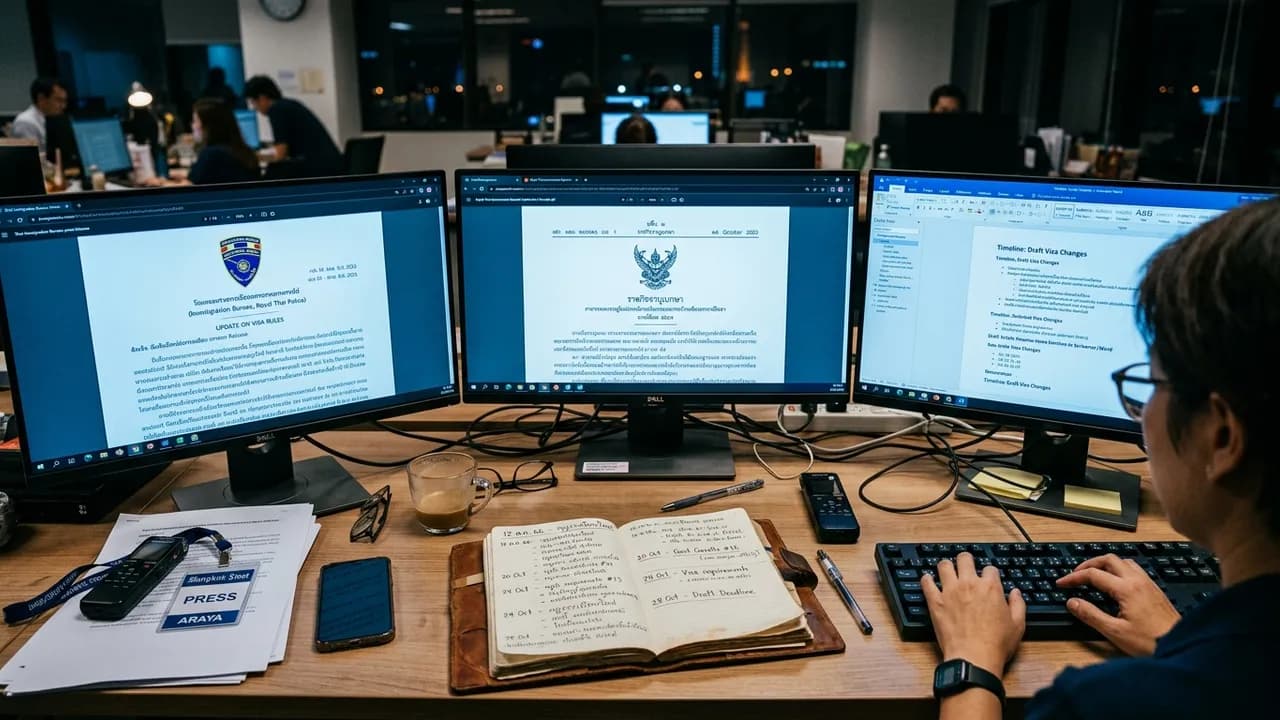
Thailand's Destination Thailand Visa is rejected most often for eleven distinct, identifiable reasons in 2026. They are not equally common — the top three account for the majority of denials community-tracked across the highest-volume embassies. This article ranks all eleven by frequency, gives the embassy's logic, the fix, and the average time before a clean re-application is realistic.
TL;DR. Three rejection categories dominate 2026 DTV outcomes:
- 500,000 THB seasoning failure — funds in the account, but not long enough.
- Applying from inside Thailand — the auto-reject. No in-country conversion exists.
- Language-school-only soft-power activity — language schools were removed from the qualifying soft-power list in 2025–2026.
New since 31 August 2026: two more document rules now stop applications outright. You must apply where you are a national or permanent resident, and you must include a criminal record clearance certificate. See the new rules below.
Methodology
The ranking below combines community-reported denial patterns across Q&A boards, embassy-specific reporting, and 2025–2026 legal commentary. No Thai government source publishes an official rejection-reason tally for the DTV. The ordering reflects the consensus across StampStay's DTV denial analysis, Petchnumnoi's harder-to-get analysis, Lexology's DTV soft-power coverage, and aggregated Ask Thailand community threads through May 2026. Where embassies differ, we note the embassy.
A note on what "frequency" means here. We are ranking by how often each pattern appears across documented rejections, not by what percentage of all DTV applications hit each pattern. If you fix the top three you eliminate most of the rejection risk; the other eight are still real and still cost applications.
1. The 500,000 THB seasoning failure
The single most common DTV rejection in 2026. The applicant has the balance on the day of application — but the funds arrived too recently in the account, the daily closing balance dipped below 500,000 THB inside the window, or a large recent inbound transfer flagged the funds as "parked" for the application.
Why embassies reject: The 500,000 THB is meant to be a stable demonstration of financial means, not a temporary balance. Embassies want to rule out borrowed funds returned after approval. The minimum is 3 months at most missions; Vientiane treats it as 6 months in practice, per Petchnumnoi's embassy breakdown.
Fix: Re-season the funds in a personal account for the full window (90–180 days depending on embassy) and re-apply with a statement dated within 7 days of submission. Detailed step-by-step in DTV 500,000 THB Seasoning Rule.
Average re-apply timeline: 90–180 days.
2. Applying from inside Thailand
The DTV cannot be converted from inside Thailand. Applications submitted via the e-Visa portal while the applicant is physically inside the country are flagged on geolocation and auto-rejected. The rule has been in place since 2025 and is enforced consistently across embassies, per StampStay's denial analysis.
Why embassies reject: The DTV is structured as a pre-arrival visa applied for from a Thai embassy or consulate abroad, or through the e-Visa portal from outside Thailand. There is no in-country switch mechanism, and embassies treat in-Thailand applications as procedurally invalid before they even reach merits review.
Fix: Leave Thailand and apply through the Thai mission for a country where you are a national or permanent resident. Since 31 August 2026, a neighbouring-country embassy such as Vientiane or Kuala Lumpur is only an option if you hold that country's nationality or permanent residence (see the new rules below).
Average re-apply timeline: As soon as you can get to your country of nationality or permanent residence and submit. Missions that publish processing times quote roughly 5–15 working days.
3. Language school selected as the soft-power activity
Standalone Thai language schools were removed from the qualifying soft-power activities list in late 2025, and the exclusion was enforced rigidly through 2026. Applicants citing "language study" as their primary DTV activity are now consistently rejected, per Lexology's analysis of the DTV soft-power category.
Why embassies reject: The MFA reclassified standalone language study as "formal education," which is what the Non-Immigrant ED visa exists to cover. Embassies have been instructed to reject DTV applications that cite language study as the primary activity unless it is bundled with another qualifying soft-power activity (e.g., a Muay Thai camp that also includes Thai language).
Still qualifying: The official mission pages list activities such as Muay Thai courses, Thai cooking classes or culinary training, sport training, medical treatment, seminars and music festivals (Royal Thai Consulate-General Ho Chi Minh City, Royal Thai Embassy London). The DTV visa updates 2026 article tracks the official categories.
Fix: Switch to a qualifying soft-power activity from the official list (for example Muay Thai or Thai cooking) and apply with that registration. Or pivot to the Non-Immigrant ED visa, which is purpose-built for language study.
Average re-apply timeline: Whatever it takes to enrol in a qualifying activity — typically 2–8 weeks.
4. Employment letter from a Thai-based employer
The DTV is for remote workers employed by non-Thai entities. Submitting an employment letter from a Thailand-registered company is a near-automatic rejection. The pattern is documented in StampStay's denial analysis, which lists Thai-based employer letters among the recurring denial categories.
Why embassies reject: The DTV's eligibility framework requires the applicant to work for a foreign company. A Thai-based employer triggers different visa categories — Non-Immigrant B for employment in Thailand. Mixing the two signals confusion about the visa purpose and a likely intent to work locally without a work permit.
Adjacent failure: Employment letter dates that do not align with the salary deposits in the bank statement. If your contract says you started in March but salary deposits only began in June, embassies flag the inconsistency.
Fix: Submit a letter from a non-Thai employer, dated within 30 days, on company letterhead, naming the role, start date, salary, and explicitly stating the work is remote. Match the contract dates to the bank statement's salary-deposit dates exactly.
Average re-apply timeline: 2–4 weeks to assemble the correct documents.
5. Recent large bank transfer voiding the seasoning
Closely related to #1, but the failure mode is distinct: the closing balance is fine, but a single large inbound transfer inside the 90-day window flags the funds as parked. Applicants with strong overall finances trip this more often than applicants with marginal balances, because the well-funded tend to consolidate before applying.
Why embassies reject: The transfer is read as borrowed or temporarily-parked money. A 500,000 THB inbound transfer 45 days before the application is treated worse than a steady 480,000 THB balance held for two years.
Fix: Do not consolidate accounts in the 90 days before applying. If you must, season the consolidated account for 90+ days from the transfer date. Notarised documentation of the source (parental gift letter, asset-sale proceeds, dividend statement) helps but does not replace seasoning time.
Average re-apply timeline: 90–180 days from the last large inbound transfer.
6. Missing certified translations
Thailand is not a signatory to the Hague Apostille Convention. Documents not in English require a certified Thai translation and, in some cases, consular legalisation, per Schmidt & Schmidt's consular legalisation guide. Bank statements, employment letters, and supporting documents in any language other than English are routinely rejected without translation.
Why embassies reject: Officers cannot evaluate documents they cannot read, and they will not approximate. The translation must be done by a certified or sworn translator recognised by Thai consular procedures, and "absolutely everything" on the document must be translated — including names, places, numbers, and the translator's own signature line.
Fix: Obtain a certified translation of every supporting document not originally in English. For US documents, the full chain is notarisation → US Department of State authentication → Royal Thai Embassy legalisation. For EU and other non-English jurisdictions, the certified translator route is usually sufficient.
Average re-apply timeline: 2–4 weeks for translation and legalisation depending on document jurisdiction.
7. Joint-account proof without spousal letter
Joint accounts can satisfy the 500K rule, but only with the right paperwork. Submitting a joint account without supplementary spousal documentation is a documented denial pattern. Most embassies will only credit the applicant's "share" of the joint balance, defaulting to half, per Ask.in.th's joint-account thread.
Why embassies reject: Without a spousal letter, the embassy cannot confirm the applicant's access to the full balance. Defaulting to half-credit means a 600,000 THB joint account becomes 300,000 THB of "applicant-attributable" funds — below the 500,000 threshold.
Fix: (a) Open a personal account in the applicant's sole name and season the funds there for the required window; or (b) keep the joint account but submit a notarised spousal letter confirming the applicant's full access, plus a total balance of roughly 1,000,000 THB to safely cover both names. The Siam Legal DTV FAQ describes the dependent-spouse path.
Average re-apply timeline: Match the seasoning window — 90–180 days.
8. Insufficient document apostille / legalisation
Documents from outside Thailand may require legalisation — Thailand uses consular legalisation, not apostille, because it has not joined the Hague Convention. Applications submitted with documents that lack the required chain of authentication (notarisation, state-level authentication, embassy legalisation) are rejected for procedural reasons rather than on substance.
Why embassies reject: The Thai consular system has formal authentication requirements. A document that has not gone through them cannot be relied on as authentic.
Fix: Run the full authentication chain for any document not originating in Thailand and not pre-authenticated. The standard sequence: local notary → state/county authentication (for US) or foreign ministry authentication (other countries) → Royal Thai Embassy legalisation. Allow 2–4 weeks for the full chain.
Average re-apply timeline: 2–6 weeks, depending on the document's home country and current embassy backlogs.
9. Embassy-shopping pattern
Applying at multiple embassies in short succession is itself a denial pattern. Before 31 August 2026, a first rejection at Ho Chi Minh followed by a same-month application at Vientiane was flagged at Vientiane as embassy-shopping. Since then, most applicants can only use one or two missions anyway (the ones for their nationality or permanent residence), which makes this pattern rarer.
Why embassies reject: Officers see prior applications on the system. A rapid re-application elsewhere without time to fix the underlying issue signals that the applicant is testing for a more permissive officer rather than addressing the substantive problem. The StampStay re-application analysis advises that the second application should be "substantively different" — visibly fixed, not just resubmitted.
Fix: After a rejection, wait at least 90 days, fix the substantive issue, and re-apply at the same embassy. The "fix is visible" rule matters: the officer should be able to see what changed in the application.
Average re-apply timeline: 90+ days minimum after the first rejection, longer if seasoning fixes are part of the remedy.
10. Photo specs wrong
Photo errors are a smaller share of denials than the financial categories, but they are the rejection reason where applicants are most surprised because they assumed a passport photo is a passport photo. The Thai DTV specs are stricter than many home-country passport rules.
Why embassies reject: The photo must be 4 x 6 cm, taken within the last 6 months, white background (some embassies accept light blue), full-face view, no glasses, no head coverings except religious, ICAO-compliant. Photos older than 6 months are flagged on inspection, per the Issa Compass DTV document checklist. Photo background errors (coloured, patterned, or shadowed), poor lighting, and resolution problems are routine grounds for return.
Fix: Get the photos taken at a professional photo studio that explicitly does Thai visa specs. In Thailand or major regional capitals, ask for "Thai visa photo." Online services that crop and resize a personal photo are not reliable.
Average re-apply timeline: 1–3 days for new photos.
11. Passport expiring within 6 months
Missions require at least 6 months of passport validity, counted from your travel date rather than the application date. The Royal Thai Embassy in Washington asks for a passport "valid within 6 months from travel date" (Royal Thai Embassy Washington), and Ho Chi Minh City asks for "validity not less than six months." A passport that is valid for 7 months on the day of application but only 5 months on the planned entry date will be rejected.
Why embassies reject: Thailand requires 6 months of remaining validity at entry to ensure the traveller cannot end up undocumented inside the country. The DTV is a 5-year visa with 180-day stays, so the calculation matters at the back end too.
Fix: Renew the passport before applying. A new passport with 10+ years of validity gives the cleanest application footprint. Make sure to update the passport number on every supporting document — a bank statement still referencing the old passport number is a flag.
Average re-apply timeline: Whatever your home country's passport renewal takes — 2–10 weeks.
New since 31 August 2026: two more rejection triggers
The Ministry of Foreign Affairs changed the DTV's supporting documents from 31 August 2026 at 00.00 hrs Thailand time. "Document indicating current location" was replaced by "Proof of permanent residence," and a "Certificate of criminal record clearance" was added (MFA announcement, posted by the Royal Thai Embassy Canberra). The Royal Thai Embassy in Vientiane states the requirements apply worldwide (Vientiane notice). These are too new to rank by frequency, but either one fails an application on its own.
Applying where you are not a national or permanent resident
Why embassies reject: Applicants must now "be a national or permanent resident of the country where the visa application is submitted." A hotel booking, short lease or entry stamp showing you are visiting that country no longer qualifies. Vientiane, once the busiest third-country DTV mission, now accepts only Lao nationals and permanent residents of Laos.
What counts as proof varies by mission. London asks for UK indefinite leave to remain or Irish long-term residency. Washington lists a valid US visa or Permanent Resident Card. Ho Chi Minh City accepts only a Temporary Residence Card or Permanent Residence Card. See where to apply for a DTV for the mission-by-mission wording.
Fix: Apply through the mission for your country of nationality, or for the country where you hold permanent residence, and upload that mission's listed proof.
Average re-apply timeline: As long as it takes to get to that country and gather the documents, including the criminal record certificate below.
Missing or out-of-date criminal record certificate
Why embassies reject: Every DTV applicant must now "provide a certificate of criminal record clearance issued by the authorities of either their country of nationality or the country where the application is submitted." Missions set their own validity window. London requires a police certificate "issued within 6 months from the date of submission (e.g., the ACRO certificate or the Irish police certificate)" (Royal Thai Embassy London). Washington and Los Angeles require an FBI certificate issued within 3 months (Washington, Los Angeles).
Fix: Order the certificate from your country of nationality or the country where you apply, time it so it is inside your mission's window on the day you submit, and include a certified translation if it is not in English or Thai.
Average re-apply timeline: Depends on how long the issuing authority takes, often several weeks.
Applications already in progress: The MFA announcement says "Applications submitted before 31 August 2026 will continue to be processed in accordance with the previous requirements." Neither notice says anything about DTVs already issued.
Rejection rates by embassy: no official figures
No Thai embassy or government body publishes DTV rejection rates. Earlier versions of this page carried a per-embassy table of estimates. We have removed it because most of those figures could not be traced to any source. The one published third-party figure we can point to is unofficial and dates from before the rule change: Petchnumnoi's embassy comparison put Vientiane's rejection rate at roughly 30–40%, the highest of the major DTV embassies, when many applicants were filing there as visitors. Since 31 August 2026 Vientiane accepts only Lao nationals and permanent residents, so treat that figure as history, not a guide to your odds.
Decision tree: re-apply or pivot?
A rejection is not a blacklist. The DTV does not automatically bar future Thailand visas, and most rejections can be remedied. But the decision to re-apply or pivot depends on which reason was cited.
- Rejected for seasoning? Re-apply DTV after 90–180 days of clean seasoning. Same embassy.
- Rejected for applying from inside Thailand? Leave the country and re-apply at the mission for your country of nationality or permanent residence.
- Rejected for not being a national or permanent resident of the country where you applied? Re-apply at the mission for your country of nationality or permanent residence. No document fix makes a visitor eligible at another country's mission.
- Rejected for a missing or expired criminal record certificate? Get a fresh certificate inside your mission's validity window and re-apply.
- Rejected for language-school soft-power? Switch to Muay Thai, Thai cooking, or another activity on the official list. Or pivot to Non-Immigrant ED for the language study itself.
- Rejected for Thai-based employer letter? Reconsider the visa choice — if you genuinely work for a Thai entity, the DTV is wrong; look at Non-Immigrant B and a work permit.
- Rejected twice in succession at different embassies? Stop re-applying. Wait 6 months, fix the underlying issue, and reapply once with visibly different documentation at the same embassy.
- Rejected and unsure why? Embassies rarely give detailed reasons. Treat the most likely cause (probability-weighted by this list) as the working theory and fix accordingly.
What rejection means for future applications
A DTV rejection does not blacklist you from Thailand. Visa-exemption entry is unaffected. Tourist visas remain available. Future DTV applications can be re-submitted, but since 31 August 2026 only at a mission for your country of nationality or permanent residence.
What rejection does do: it creates a record. The next officer sees the prior application. If the underlying issue is unfixed, the second rejection is more likely than the first. If the fix is visible, the second application is usually fine.
The one situation that does follow you: misrepresentation. Submitting forged documents, false employment letters, or doctored bank statements has cascading consequences — visa records, immigration enforcement, possible criminal charges. The Thai Examiner August 2025 visa-fraud arrest report documents Thai Immigration's active prosecution stance.
What never works
Five strategies that consistently fail, repeated across community threads through 2026:
- Submitting crypto holdings as the primary proof of funds. Across embassies, rejected.
- Borrowed money parked for two weeks before applying. Detected via the inbound transfer pattern.
- Embassy-shopping after a rejection. Read as gaming the system.
- Filing while inside Thailand and hoping the geolocation does not catch it. It catches it.
- Citing a Thai-language school as the soft-power activity. Auto-reject since the 2025 reclassification.
Pre-submission checklist
Run this before clicking submit. If you can answer "yes" to every item, you have eliminated most of the rejection risk.
- You are a national or permanent resident of the country where you are applying, and you have the proof of permanent residence your mission lists.
- You have a criminal record clearance certificate from your country of nationality or the country where you apply, inside your mission's validity window (6 months in London, 3 months for an FBI certificate at the US missions).
- Bank balance has been at or above 500,000 THB equivalent every day for at least 90 days.
- No large inbound transfers in the seasoning window without notarised source documentation.
- Bank statement is branch-issued and stamped, dated within 7–30 days, in English or with certified translation.
- Applying from outside Thailand, on stable internet, from the country of the mission you are applying to.
- Soft-power activity is from the currently-qualifying list (not standalone language study).
- Employment letter is from a non-Thai employer, on company letterhead, dated within 30 days, matching contract dates to salary deposits in the bank statement.
- All non-English documents have certified translations attached.
- Documents from non-Hague jurisdictions are consular-legalised.
- Joint-account proof includes notarised spousal letter and total balance of roughly 1,000,000 THB if relying on joint funds.
- No prior DTV application at a different embassy in the previous 90 days.
- Photos are 4x6 cm, white background, taken within 6 months, ICAO-compliant.
- Passport has 6+ months of validity from the intended entry date.
Where to next
For the deepest dive into the most common failure mode, see DTV 500,000 THB Seasoning Rule. For which mission you must use since 31 August 2026, see where to apply for a DTV. For the wider 2026 DTV picture and what is changing, see DTV Visa Complete Guide 2026, DTV Visa Updates 2026, and the live Thailand visa news tracker.
If you are also considering paying an agent to handle the application — the answer is that an agent cannot fix the substantive issues on this list. They can format documents, but they cannot make your funds older, your employer non-Thai, or you a permanent resident of the country where you want to file. Before paying any agency, read Thailand Visa Agent Scams 2026: How to Spot the Fakes to understand which patterns to avoid.
FAQ
Can I appeal a DTV rejection?
Not in the Western sense. Thai embassies do not publish a formal appeal process for visa rejections. The practical remedy is to fix the issue and re-apply, usually at the same embassy. The StampStay entry-denial appeal analysis is one of the few public discussions of the appeal landscape.
How soon can I re-apply after a DTV rejection?
There is no formal cooling-off period, but a rapid re-application without addressing the substantive issue is itself a flag (see #9). Wait 90 days minimum, longer if the rejection was for seasoning (where the fix itself requires 90–180 days).
Will a rejected DTV affect my future Thai tourist visa or visa-free entry?
Almost certainly not. The DTV is a discretionary long-stay visa with specific financial proof requirements. A rejection is not a blacklist, and short-stay categories (visa exemption, tourist visa, visa on arrival) operate under different rules.
Does the embassy tell me why I was rejected?
Rarely in detail. Most rejection notices cite "insufficient documentation" or "did not meet requirements" without specifying. Inferring the cause from this list of patterns, ranked by probability, is usually the best the applicant can do.
Can I apply for the DTV through an agent if I have been rejected once?
Yes, but understand the agent cannot fix the substantive cause of the original rejection. They can format documents better and prepare a cleaner re-application — but they cannot make your funds older or change your employer's country of incorporation. See Thailand Visa Agent Scams 2026 before hiring anyone.
Is there a "best" embassy after a rejection?
No. Since 31 August 2026 you can only apply at a mission for a country where you are a national or permanent resident, so for most people there is no embassy to switch to. Fix the underlying issue and re-apply at the same mission so the officer can see the visible improvement. See where to apply for a DTV for the rule and what each mission accepts.
Sources
- Ministry of Foreign Affairs, "Adjustment of Supporting Documents for Destination Thailand Visa (DTV) Applications", posted by the Royal Thai Embassy Canberra (1 September 2026)
- Royal Thai Embassy Vientiane — new DTV requirements from 31 August 2026
- Royal Thai Embassy London — Destination Thailand Visa
- Royal Thai Embassy Washington — DTV
- Royal Thai Consulate-General Los Angeles — DTV
- Royal Thai Consulate-General Ho Chi Minh City — DTV
- StampStay — What Gets DTV Applications Denied in Thailand (2026)
- StampStay — DTV Application Rejected 2026: Exactly What to Do Next
- Petchnumnoi — Why Thailand's DTV Visa Is Harder to Get
- Petchnumnoi — 2025 DTV Visa Requirements per Country
- Lexology — DTV Visa Thailand Soft Power Category Explained
- Issa Compass — DTV Visa Document Checklist 2026
- Royal Thai Embassy Phnom Penh — DTV Public Service
- Schmidt & Schmidt — Consular Legalisation from Thailand
- Ask Thailand — Joint account proof of funds for DTV
- Thai Examiner — 2 Chinese men arrested in Bangkok for visa fraud (August 2025)
- Siam Legal — DTV Visa Thailand FAQs