The Destination Thailand Visa (DTV) is a 5-year, multiple-entry Thai visa that grants up to 180 days per entry for remote workers, soft-power applicants, medical visitors, and their dependents, for a 10,000 THB government fee. It launched on July 15, 2024 and, as of May 2026, has tightened in three measurable ways: the 500,000 THB financial proof now requires 3 months of seasoned bank statements, Thai language schools have been excluded from the soft-power category, and all Royal Thai missions process DTV through the mandatory e-Visa portal since January 1, 2025. The biggest change came on 31 August 2026: applicants must now apply where they are a national or permanent resident, and must add a criminal record clearance certificate (MFA announcement, Royal Thai Embassy Vientiane). This article is the rulebook — every category, every document, every fee, every known embassy quirk — sourced from the Royal Thai Embassy network, Thai government reporting, and applicant evidence from ASEAN Now threads.
TL;DR — what you actually need to know
The DTV is the right visa if you (a) work remotely for non-Thai entities, (b) can prove 500,000 THB held for three months, (c) are applying from outside Thailand, and (d) since 31 August 2026, can apply in a country where you are a national or permanent resident, with a criminal record clearance certificate. Everyone else needs to read carefully before paying anyone.
- Where to apply (new from 31 August 2026): The Thai mission for your country of nationality or permanent residence. Third-country filing as a visitor (for example in Vientiane or Kuala Lumpur) no longer qualifies
- Criminal record certificate (new from 31 August 2026): Required for every applicant, from your country of nationality or the country where you apply
- Validity: 5 years from issue, multiple-entry
- Stay per entry: 180 days, extendable once by 180 days at any Thai immigration office for 1,900 THB
- Cost: 10,000 THB government fee (varies USD 280–400 by embassy currency conversion and local surcharges)
- Financial proof: 500,000 THB (≈ $14,700) with 3-month seasoning rule strictly enforced as of 2026
- #1 rejection risk: Lump-sum deposits within 90 days of application — embassies cross-check bank-statement history and reject for fund parking
For a written self-qualification walkthrough, see the DTV eligibility checker. For which mission you must use and what each accepts as permanent residence, see where to apply for a DTV. For the financial-proof rule in depth, see the 500,000 THB seasoning rule. For why applications get denied, see DTV rejected reasons 2026.
What is the DTV?
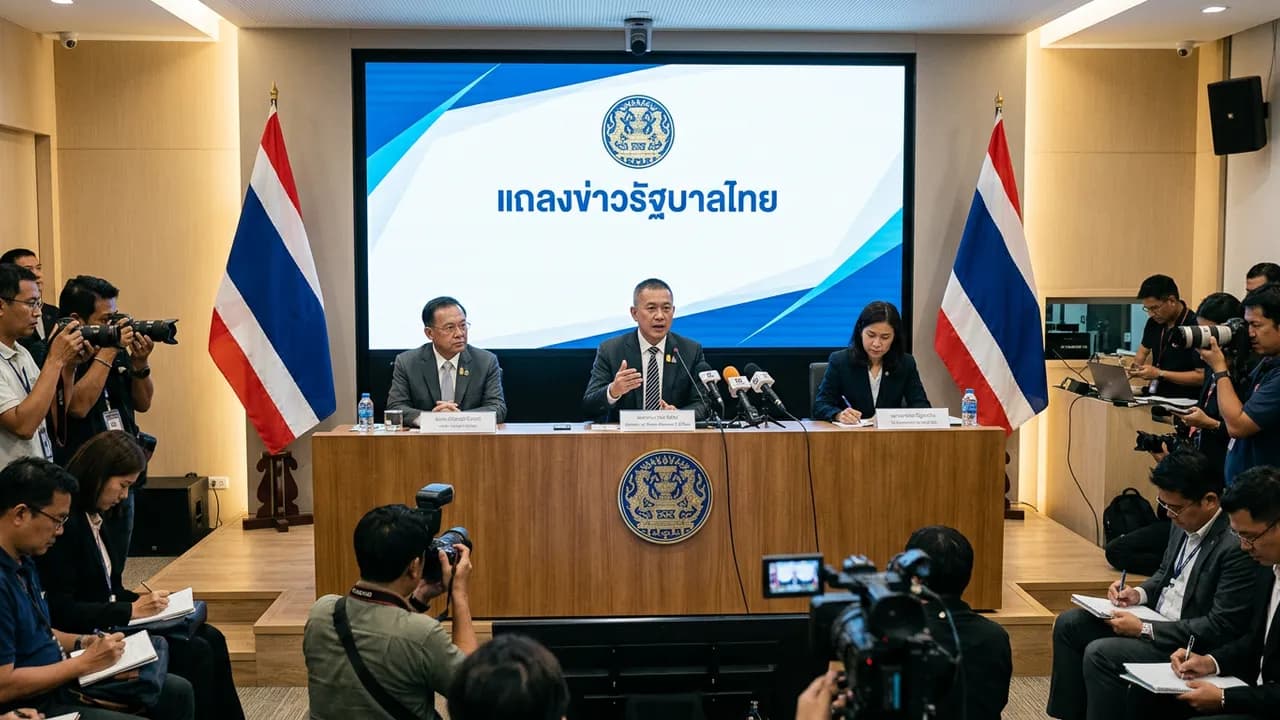
The DTV is Thailand's official answer to global remote work, launched July 15, 2024 by the Royal Thai Government to legalise long-stay nomads and soft-power visitors without granting work-permit rights. It replaces the legal grey zone where digital nomads previously used back-to-back tourist exemptions to live in Thailand — a pattern the Cabinet has since moved to suppress. On May 19, 2026 it agreed to roll back the 60-day visa exemption (Al Jazeera, May 19, 2026, Nation Thailand, May 19, 2026). The change was published in the Royal Gazette on 31 August 2026 and has been in force since 15 September 2026: the exemption is now 30 days for 60 countries, extendable once by 30 days for 1,900 THB (TAT Newsroom).
The DTV was designed by Thailand's Ministry of Foreign Affairs in coordination with the Tourism Authority of Thailand and the Board of Investment, with a stated dual purpose: capture income from long-stay foreign professionals who spend without competing for Thai jobs, and route soft-power participants (Muay Thai, cooking, traditional arts) through a single legal channel. Coverage at launch in Lexology (July 2024) framed it as "Thailand's most direct digital-nomad visa to date." The visa has since become the country's primary long-stay vehicle outside of the LTR, retirement (Non-Imm O-A), and education (Non-Imm ED) routes — see our digital nomad visa DTV reference page for the original category overview and our LTR visa guide for the higher-tier alternative.
DTV at a glance
The DTV is structurally unique among Thai visas: five years validity, 180-day stays, in-country extension, and no work-permit attached. The table below captures every headline rule as confirmed by the Royal Thai Embassy network and the e-Visa portal.
| Attribute | DTV rule |
|---|---|
| Visa code | DTV (Destination Thailand Visa) |
| Validity | 5 years from date of issue |
| Stay per entry | 180 days |
| Extension | One 180-day extension per entry at Thai immigration, fee 1,900 THB |
| Entries | Multiple, unlimited within 5-year validity |
| Re-entry permit | Not required (multiple-entry by default) |
| Application fee | 10,000 THB (≈ USD 280–300; some embassies report USD 340–400 with local conversion and surcharge) |
| Where to apply | Since 31 August 2026: the Thai embassy/consulate for a country where you are a national or permanent resident, via the e-Visa portal at thaievisa.go.th |
| Criminal record certificate | Required since 31 August 2026, from your country of nationality or the country where you apply |
| Apply from inside Thailand | Not permitted (auto-rejection if attempted) |
| Work permit | Not included; remote work for non-Thai entities only |
| Dependents | Spouse and children under 20, separate application + fee each |
| Health insurance | Not listed as a required document on the London, Washington, Los Angeles or Ho Chi Minh City DTV pages; strongly recommended |
| Tax residency trigger | 180+ days in Thailand in a calendar year |
For comparison against alternatives, see the DTV vs alternatives table below or read the dedicated LTR visa guide.
The four eligibility categories
Thailand's DTV is organised around four mutually exclusive categories: Workcation, Thai Soft Power, Medical Treatment, and Dependent. Each has its own document set and its own scrutiny pattern as of 2026.
Workcation (remote workers, freelancers, employees of foreign companies)
This is the dominant category. Applicants must work remotely for entities registered outside Thailand. Acceptable evidence types reported by the Royal Thai Embassy in Phnom Penh and the e-Visa portal include:
- Employment contract or letter from a foreign-registered employer confirming the remote arrangement
- Client contracts, invoices, or proof of established freelance income for self-employed applicants
- Business registration documents for entrepreneurs operating non-Thai entities
- Portfolio evidence: company website, LinkedIn presence, published work, professional history
The financial requirement is evidence of no less than 500,000 THB (see next section). Phnom Penh lists "bank statements, payslips, sponsorship" as examples of that evidence (Royal Thai Embassy Phnom Penh), and Washington asks for "saving or checking bank statements for the last three months with an ending balance of no less than 500,000 THB" (Royal Thai Embassy Washington). None of the mission pages we checked offers a monthly-income route that replaces the 500,000 THB figure.
Thai Soft Power (Muay Thai, Thai cooking, traditional arts, sports, certain cultural programs)
Soft Power was the broadest category at launch. In 2025–2026 it has narrowed materially. Thai language schools have been excluded from soft-power qualification under Ministry of Foreign Affairs guidance, according to legal analysis published on Lexology in 2025 ("DTV Visa Thailand Soft Power Category Explained"). Applicants who want to study Thai must now use the Non-Immigrant ED visa or the newer ED Plus visa, not the DTV.
What still qualifies in 2026:
- Muay Thai training at registered camps (program duration is now scrutinised — embassies frequently demand programs of at least six months)
- Thai cooking and culinary arts at accredited schools
- Traditional Thai medicine and wellness at qualified facilities
- Sports training at registered facilities
- Music festivals, seminars, conferences with registered organisers and invitation letters
- Traditional Thai arts (dance, music, martial arts beyond Muay Thai)
The required document is a formal acceptance letter from the registered Thai institution stating program name, duration, schedule, and fee. Letters from unregistered or informal programs are a known rejection trigger.
Medical Treatment
Foreign nationals receiving medical or wellness treatment at qualified Thai hospitals or clinics may apply under this category. Required documents include:
- Letter from a licensed Thai medical institution confirming treatment plan, expected duration, and cost
- Financial proof sufficient to cover treatment and stay (the 500,000 THB threshold still applies as the default minimum)
- Standard passport, photo, and application documents
The category is most commonly used for elective and long-form procedures — cosmetic surgery recovery, dental work, oncology follow-up, rehabilitation — at Bangkok and Phuket private hospitals.
Dependent (spouse and children under 20)
Spouses and minor children of a primary DTV holder may apply for their own DTV as dependents. Each dependent application is a separate filing with its own 10,000 THB fee.
Required documents:
- Marriage certificate (for spouses) or birth certificate (for children), translated and notarised
- Copy of the primary applicant's DTV approval or active application
- Standard passport, photo, and application documents
Children turning 20 during the validity period must transition to their own visa category before reaching that age. The dependent category does not extend to parents, siblings, or unmarried partners.
The 500,000 THB rule
The single most decisive rule of the 2026 DTV is the 500,000 THB financial-proof requirement, which now requires three months of seasoned bank statements showing the balance was held — not parked. This is the rule that ends most failed applications.
The current standard as published by the Royal Thai Embassy in Phnom Penh and confirmed at other missions:
- Amount: No less than 500,000 THB (or equivalent in another major currency at the day's exchange rate)
- Account type: Personal savings or checking account in the applicant's own name. Joint accounts are tolerated at some missions and rejected at others. Investment, brokerage, crypto, and mutual fund balances are not accepted as the primary proof at any embassy reported to date.
- Seasoning: Washington asks for "saving or checking bank statements for the last three months with an ending balance of no less than 500,000 THB" (Royal Thai Embassy Washington). Applicant and agency reports say officers also look for the balance to have been held throughout those three months, not just at the end.
- Currency: Foreign currency accounts are accepted at most embassies at the current exchange rate; applicants are responsible for the conversion clarity in the statement. London states the threshold as "no less than £12,000 (500,000 THB)" (Royal Thai Embassy London).
- Form of evidence: Missions give examples rather than a closed list: Phnom Penh names "bank statements, payslips, sponsorship," and Ho Chi Minh City names "bank statements, sponsorship letter." Whatever the form, the amount is no less than 500,000 THB. No mission page we checked offers a monthly-income alternative to that amount.
The fund-parking red flag. Officers reviewing applications cross-check the statement history for sudden lump-sum deposits. A statement showing 500,000 THB on the day of application but 50,000 THB three months earlier is the most commonly reported single cause of denial in 2026, per applicant reports across ASEAN Now threads and visa-agency reporting. For the full mechanics, see the 500,000 THB seasoning rule.
Required documents (by category)
The DTV uses a shared base document set plus category-specific add-ons. Every applicant submits the base set; the add-ons depend on which category you applied under.
Base documents (every applicant)
| Document | Notes |
|---|---|
| Passport | At least 6 months validity (12 months recommended); current and any expired passports if relevant to history |
| Photograph | Recent, 4 x 6 cm, white background, taken within 6 months |
| DTV application form | Submitted via thaievisa.go.th |
| Financial proof | 500,000 THB seasoned for 3 months minimum (see above) |
| Proof of permanent residence | Since 31 August 2026 this replaces the old "document indicating current location." What counts varies by mission: London lists UK indefinite leave to remain or Irish long-term residency; Washington lists a valid US visa or Permanent Resident Card; Ho Chi Minh City accepts only a Temporary or Permanent Residence Card. Nationals applying in their own country qualify as nationals |
| Criminal record clearance certificate | Required since 31 August 2026, issued by your country of nationality or the country where you apply. Validity window set by the mission (London: within 6 months; US missions: FBI certificate within 3 months) |
| Travel itinerary or accommodation booking | At least the initial period in Thailand |
| Health insurance | Recommended; not listed as a required document on the mission DTV pages we checked |
| Visa fee | 10,000 THB or local-currency equivalent, paid via e-Visa portal |
Workcation add-ons
- Employment contract or letter from foreign-registered employer OR freelance contracts/invoices showing 6+ months of remote work history
- Portfolio, professional website, or LinkedIn evidence
- Tax return or payslips for the past 12 months (recommended at strict embassies)
Soft Power add-ons
- Acceptance/enrolment letter from a registered Thai institution stating program duration, schedule, and fee
- Program brochure or website link
- Where applicable, evidence of the institution's registration with the Thai Ministry of Education or relevant authority
Medical add-ons
- Treatment plan and confirmation letter from a licensed Thai medical institution
- Expected treatment duration and cost letter
- Receipt or deposit confirmation, if available
Dependent add-ons
- Translated and notarised marriage certificate (spouse) or birth certificate (child)
- Copy of primary DTV holder's approval letter and passport bio page
- For children, evidence of dependency (school enrolment, age verification)
Application process — step by step
The DTV is an e-Visa-only process as of January 1, 2025: every Royal Thai mission worldwide uses thaievisa.go.th, even for in-person appointments. Paper applications are largely discontinued, per the Ministry of Foreign Affairs e-Visa rollout reported by Travel and Tour World and the official Thai e-Visa portal.
Step 1 — Pre-application self-check. Confirm you are physically outside Thailand, in a country where you are a national or permanent resident. Confirm your 500,000 THB has been held for 3+ months. Order your criminal record clearance certificate early so it is inside your mission's validity window when you submit. Confirm your category fits and your add-on documents are ready.
Step 2 — Document preparation. Translate any non-English/Thai documents into English (or Thai) and notarise them. Translations must be done by an authorised translator and stamped accordingly. For US/UK/Australia applicants, apostille is recommended on civil documents (marriage, birth).
Step 3 — Account creation and submission. Create your account on thaievisa.go.th. Select Destination Thailand Visa (DTV). Choose the Royal Thai mission where you will lodge your application. Since 31 August 2026 it must be the mission for a country where you are a national or permanent resident (Royal Thai Embassy Vientiane), and you upload that mission's listed proof of permanent residence.
Step 4 — Upload documents. Upload PDFs or JPEGs at the resolution the portal specifies. File-size limits and resolution standards differ by mission — the e-Visa portal flags rejections during submission so corrections can be made before fee payment.
Step 5 — Pay the fee. 10,000 THB via credit card or bank transfer through the portal. Some missions impose additional local-currency surcharges; the portal displays the final amount.
Step 6 — Wait. Each mission sets its own processing time. Ho Chi Minh City states 5 working days for the DTV; London's e-Visa page says allow 5-15 working days. See where to apply for a DTV for the missions that publish fees and times.
Step 7 — Embassy interview if required. The consular officer may request additional documents or schedule an interview at any point without prior notice. This is more common at strict-review missions and rare at high-volume regional ones.
Step 8 — Approval and entry. On approval, the e-Visa is issued electronically and emailed to you. Print the approval letter for border presentation. At Thai immigration, you receive a 180-day stamp on entry.
Step 9 — In-country administration. Within 24 hours of arrival, your accommodation must file a TM30 with Thai Immigration. After 90 consecutive days you must file a 90-day report. After 180 days you can either leave and re-enter (fresh 180-day stamp) or file the in-country extension (see below).
Cost breakdown
Total likely outlay for a DTV application in 2026 ranges 12,000–25,000 THB depending on where you apply and how much of the documentation you outsource. The base government fee is the only mandatory line item; the rest depends on your prep route.
| Cost item | Range (THB) | Notes |
|---|---|---|
| DTV visa fee | 10,000 | Fixed by the Royal Thai Government |
| Embassy local-currency conversion / surcharge | 0–4,500 | US missions report USD 340–400 equivalent (≈ 12,400–14,500 THB) |
| Document translation | 1,000–5,000 | Per document, depending on language and notary requirements |
| Notarisation / apostille | 500–3,000 | Per document; required for marriage/birth certificates and some employer letters |
| Health insurance | 15,000–60,000 per year | Annualised; not mandatory but strongly recommended |
| Bank statement requests / bank letter | 0–1,500 | Some banks charge for stamped or signed letters |
| Photograph (professional) | 300–800 | Optional; self-taken usually accepted if specifications met |
| In-country 180-day extension | 1,900 | Optional, per extension; payable at Thai immigration |
| Dependent fee | 10,000 | Each, separate application |
Agencies report total prep-and-file packages of 35,000–70,000 THB. Whether that's worth it depends entirely on your category and complexity — for a straightforward Workcation applicant with clean documents, a self-filed DTV is the cheaper and equally fast path. For complex cases (mixed-income, joint accounts, dependent applications, soft-power program selection), an agency review can reduce rejection risk. See /agency-reviews for our independent agency assessments. We do not sell visas.
What changes inside Thailand
Holding a DTV imposes three administrative obligations inside Thailand: TM30, 90-day reports, and — if you stay 180+ days per calendar year — Thai tax residency. Each has been the subject of selective enforcement in 2025–2026, and DTV holders are not exempt.
- TM30 (address registration): Within 24 hours of arrival or moving to a new address, your accommodation provider must file TM30 with Thai Immigration. For hotels and serviced apartments this is automatic. For private rentals and Airbnb stays, ensure your landlord files it — failure can result in a 1,600–2,000 THB fine.
- 90-day report: After 90 consecutive days in Thailand, you must report your address to Thai Immigration. This can be filed in person, online, or by post. See our 90-day reporting guide. Missed reports incur a 2,000 THB fine.
- Banking: Thai bank accounts are available to DTV holders at major retail banks (Bangkok Bank, Kasikorn, SCB) with a passport, the DTV stamp, a Thai address (lease or TM30 receipt), and sometimes a reference from your home-country bank. Branch discretion still applies.
- Tax residency: Spending 180+ days in Thailand in a calendar year makes you a Thai tax resident. Under the 2024 Revenue Department guidance, foreign income remitted to Thailand may be taxable. For the full mechanics, see our Thailand tax guide for expats. DTV holders who keep stays under 180 days per calendar year avoid the trigger entirely.
DTV vs alternatives
The DTV is one of four long-stay options in 2026, and it is not the right answer for every profile. The table below compares the main alternatives. Internal links go to the dedicated guides for each.
| Feature | DTV | LTR | Non-Imm O (retirement / family) | Tourist Visa (TR) | Privilege (Elite) |
|---|---|---|---|---|---|
| Validity | 5 years | 10 years (5+5) | 1 year | 60 days | 5–20 years |
| Stay per entry | 180 days | 1 year | 1 year | 60 days | Up to 1 year per entry |
| Cost (government fee) | 10,000 THB | 50,000 THB | 2,000–5,000 THB | 1,000 THB | 600,000+ THB |
| Income / asset threshold | 500,000 THB savings | USD 80,000/yr OR USD 1M assets | 800,000 THB savings or 65,000 THB/month income | None | None |
| Remote work legal | Yes (foreign clients only) | Yes (Work-from-Thailand cat.) | No | No | No |
| Local work permitted | No | Yes (with WP, certain cats.) | No | No | No |
| Tax exemption on foreign income | No | Yes (Royal Decree 743 — qualifying categories) | No | No | No |
| Dependents | Yes | Yes | Yes | No | Separate application |
The DTV is the best fit for remote workers who don't meet LTR income thresholds. The LTR is the best fit for high-income or asset-rich applicants seeking tax relief. The Non-Imm O is the standard retirement and Thai-spouse route. The Privilege (Elite) is the "buy it and skip immigration friction" tier. The Tourist Visa is — increasingly — only useful for genuine short trips, now that the visa exemption has been cut to 30 days (in force since 15 September 2026).
Common rejection reasons (top 5)
The most reliable DTV rejection patterns in 2026 are documented across embassy guidance and applicant reports. The top five, in order of frequency:
- Fund parking / failed seasoning — bank statement shows 500,000 THB on application day but smaller balance 60–90 days earlier
- Applying from inside Thailand — auto-rejection enforced via passport-stamp and IP cross-check
- Weak Workcation documentation — LinkedIn alone is not sufficient; employer letter or signed client contracts required
- Language-school soft-power applications — explicitly excluded under 2025 MFA guidance
- Wrong mission or missing new documents (since 31 August 2026) — applying at a mission for a country where you are not a national or permanent resident, or without the criminal record clearance certificate
For the full rejection rulebook with case examples, see DTV rejected reasons 2026.
Where to apply: the 31 August 2026 rule
Since 31 August 2026 you no longer choose an embassy for speed. You must apply through the Thai mission for a country where you are a national or permanent resident. The Ministry of Foreign Affairs replaced the old "document indicating current location" with "proof of permanent residence" and added a "certificate of criminal record clearance," effective 31 August 2026 at 00.00 hrs Thailand time (MFA announcement, posted by the Royal Thai Embassy Canberra). The Royal Thai Embassy in Vientiane states the requirements apply worldwide: applicants must "be a national or permanent resident of the country where the visa application is submitted" and provide a criminal record certificate "issued by the authorities of either their country of nationality or the country where the application is submitted" (Vientiane notice).
What this means in practice:
- Third-country "DTV runs" are over for most people. Vientiane now accepts only Lao nationals and permanent residents of Laos. Flying to Vientiane, Phnom Penh or Kuala Lumpur as a visitor to file no longer meets the rule.
- "Permanent residence" is read differently by different missions. London lists settled status such as UK indefinite leave to remain; Washington lists a valid US visa or Permanent Resident Card; Ho Chi Minh City accepts a Temporary or Permanent Residence Card. Check your mission's own DTV page.
- Applications in progress: Applications submitted before 31 August 2026 continue under the previous requirements. The notices say nothing about DTVs already issued.
For the mission-by-mission wording and what to do if you live abroad without permanent residence, see where to apply for a DTV.
Renewal and extension
The DTV is renewable once per entry via an in-country 180-day extension at any Thai immigration office, for a flat 1,900 THB fee. It is not a re-application of the visa itself, which is multiple-entry for the full 5 years.
How the extension works:
- File before your current 180-day stamp expires (most immigration officers recommend filing 15–30 days in advance)
- Required documents: passport with current DTV stamp, completed TM7 form, two passport photos, proof of accommodation, copy of TM30 receipt, and supporting documents matching your original DTV category (employer letter, soft-power program letter, etc.)
- Some immigration offices request updated financial proof (current bank statement showing 500,000 THB still on hand)
- Fee: 1,900 THB
- Result: 180 days added to your current entry, taking the maximum continuous stay to 360 days before requiring exit
You can extend once per entry. After the extended stay, you can exit Thailand and re-enter on a fresh 180-day stamp at any time within the 5-year validity. Bangkok's main immigration office at Chaeng Wattana handles the bulk of DTV extensions in the capital. Provincial offices in Chiang Mai, Phuket, and Pattaya also process them.
The 2026 crackdown context
Thailand's 2025–2026 enforcement reset has tightened the DTV in four measurable ways without changing the headline rules (5 years, 180 days per entry, 500,000 THB). Cabinet decisions and Ministry of Foreign Affairs guidance through September 2026 have:
- Re-enforced the 500,000 THB seasoning rule. Embassies now systematically reject lump-sum deposits within 90 days of application. Agencies report 30–50% of self-filed applications fail their first review on this point alone.
- Excluded Thai language schools from soft-power qualification under 2025 MFA guidance documented in Lexology legal analysis. The category is now substantially narrower than at launch.
- Added location verification. Through mid-2026, applicants had to provide a "document indicating current location" in the country of the embassy where they applied, such as a utility bill, lease, or driver's licence.
- Replaced location with permanent residence, and added a criminal record check (31 August 2026). Applicants must now be a national or permanent resident of the country where they apply and submit a criminal record clearance certificate. This ended the practice of filing at a regional mission as a visitor. See where to apply for a DTV.
For broader context on what's changing across Thailand's visa system, see Thailand visa news tracker for the live update feed and DTV visa updates 2026 for the dedicated DTV change log.
The Cabinet's broader posture — set out in its May 19, 2026 decision to roll back the 60-day visa exemption — is to push long-stay foreigners off back-to-back tourist entries and into proper long-term visas like the DTV, LTR, or Non-Imm categories. Per Bangkok Post (May 19, 2026) and Al Jazeera (May 19, 2026), Government Spokesperson Rachada Dhanadirek cited "exploitation" of the 60-day window as the trigger. From July 2024 until 14 September 2026 the exemption was 60 days. Since 15 September 2026 it has been 30 days for 60 countries, with land-border entries capped at twice per calendar year (TAT Newsroom). The DTV is not affected by the exemption change, but since 31 August 2026 it is only open to people who can apply in a country where they are a national or permanent resident, so it is no longer an easy switch for someone living in Thailand on exemptions.
FAQ
Can I apply for a DTV from inside Thailand?
No. As of 2025, DTV applications submitted from inside Thailand are auto-rejected. The e-Visa portal cross-checks passport stamps and applicant location against the embassy's jurisdiction. Attempting to apply from inside Thailand can also result in blacklisting at the embassy in question, according to applicant reports on ASEAN Now and agency reporting. You must be physically outside Thailand and, since 31 August 2026, lodging your application at the mission for a country where you are a national or permanent resident.
Does the 500,000 THB have to stay in my account during my time in Thailand?
For the original application, the 500,000 THB must be in your account, seasoned for at least 3 months prior to filing. For the 180-day in-country extension, some immigration offices request a current bank statement showing 500,000 THB is still on hand; others do not. There is no continuous-balance requirement during your stay between application and extension. In practice, most DTV holders keep the balance available because they may need it again at extension time or on re-application after 5 years.
Can I work for a Thai company on a DTV?
No. The DTV authorises remote work for non-Thai entities only. Taking employment with a Thai-registered company, accepting Thai clients on a contractor basis, or performing in-person services for Thai customers requires a Non-Immigrant B visa and a Thai work permit. This is the single most-asked DTV question and the answer has not changed since launch.
Can I study Thai language on a DTV?
You can take casual or short-format Thai lessons while on a DTV — there is no rule against attending classes. What you cannot do is use Thai language school enrolment as your qualifying activity to obtain the DTV in the first place. Under 2025 MFA guidance, language schools are excluded from the soft-power category. For formal full-time Thai-language study, use the Non-Immigrant ED visa.
Does the DTV count toward Thai permanent residency?
No. Time spent on the DTV does not count toward the consecutive-years requirement for Thai permanent residency, which requires consecutive years on a Non-Immigrant visa category. The DTV is structurally a long-stay visa, not a residency pathway. Applicants seeking PR should use the Non-Imm B (employment), Non-Imm O (Thai family/retirement), or LTR routes.
Can I get a Thai driver's licence on a DTV?
Yes. DTV holders can apply for a Thai driver's licence at the Department of Land Transport with a passport, DTV, TM30 receipt, residence certificate from immigration, medical certificate, and a photograph. Some provincial offices require additional documents; the process is similar to that for Non-Imm visa holders.
What happens if I overstay the 180-day stamp?
Any overstay creates an immigration record. Fines start at 500 THB per day capped at 20,000 THB total. More significantly, if you surrender, overstays of more than 90 days trigger entry bans (1 year, rising to 10 years for overstays over 5 years). If you are arrested, any overstay brings a 5-year ban, or 10 years if it runs over a year (Samut Prakan Immigration). For the full overstay framework see our overstay guide. DTV holders should set calendar reminders 30 and 60 days before each stamp expiry and either extend or exit.
Can a US/UK/Australia citizen apply at Vientiane or Phnom Penh?
Not any more, unless they are also a national or permanent resident of Laos or Cambodia. Since 31 August 2026, DTV applicants must "be a national or permanent resident of the country where the visa application is submitted," and the Royal Thai Embassy in Vientiane now accepts DTV applications only from Lao nationals and permanent residents of Laos (Vientiane notice). A US, UK or Australian citizen should apply through the Thai mission for their own country, or for a country where they hold permanent residence. See where to apply for a DTV for what each mission accepts.
Will the DTV survive future Thai government changes?
The DTV is a Royal Gazette-published visa category, not a temporary measure. It is unlikely to be cancelled outright. What can change — and has changed several times since launch — is the application rules: documentation requirements, scrutiny levels, soft-power eligibility, embassy-by-embassy practice and, from 31 August 2026, who may apply where. The MFA has signalled further refinement throughout 2026 but no cancellation. See DTV visa updates 2026 for the current change log.
Do I need an agency to apply?
No. For Workcation applicants with clean documents — a foreign-employer letter, six months of seasoned bank statements, proof of nationality or permanent residence in the country where you apply, and a criminal record clearance certificate — self-filing on the e-Visa portal is straightforward. Agencies become useful for complex cases: dependents, soft-power program selection, mixed-currency banking, or applicants with prior visa rejections. We do not sell visas. Our agency reviews document which agencies are competent and which sites are marketing aliases dressed as embassies.
Sources
- Ministry of Foreign Affairs, "Adjustment of Supporting Documents for Destination Thailand Visa (DTV) Applications", posted by the Royal Thai Embassy Canberra (1 September 2026) — permanent residence and criminal record requirements from 31 August 2026
- Royal Thai Embassy Vientiane, new DTV requirements (updated 28 August 2026) — worldwide application of the rule
- Royal Thai Embassy London, DTV, Royal Thai Embassy Washington, DTV, Royal Thai Consulate-General Los Angeles, DTV (accessed September 16, 2026) — mission-level residence and criminal record documents
- Royal Thai Embassy in Phnom Penh — Destination Thailand Visa (DTV) (accessed May 22, 2026)
- Royal Thai Embassy in Vientiane — Destination Thailand Visa (DTV) (accessed May 22, 2026)
- Royal Thai Consulate-General in Ho Chi Minh City — DTV public service page (accessed May 22, 2026)
- Thai e-Visa portal (thaievisa.go.th) — official application system (accessed May 22, 2026)
- Lexology, "DTV Visa Thailand Soft Power Category Explained" (2025) — language school exclusion under MFA guidance
- Al Jazeera, "Thailand to slash tourist visa-free stays" (May 19, 2026) — Cabinet 60-day rollback context
- Nation Thailand, "Thailand scraps 60-day free visa, restores old exemption rules" (May 19, 2026) — Foreign Minister Sihasak Phuangketkeow quotes
- Bangkok Post, "Thailand ends 60-day visa-free stay" (May 19, 2026) — enforcement-tightening context
- TAT Newsroom, "Thailand introduces new 30-day and 15-day visa exemption rules from 15 September" (September 2026) — the 30-day exemption now in force
- ASEAN Now community threads — "DTV in Vientiane - Success - My Story" and "Applying for DTV in the UK" (crowdsourced applicant evidence, used with attribution)
- Travel and Tour World — Thailand e-Visa rollout to all embassies (January 2025)
- Kreston Thailand, "Thailand unveils Destination Thailand Visa (DTV) for Digital Nomads 2024" — original launch date confirmation (July 15, 2024)