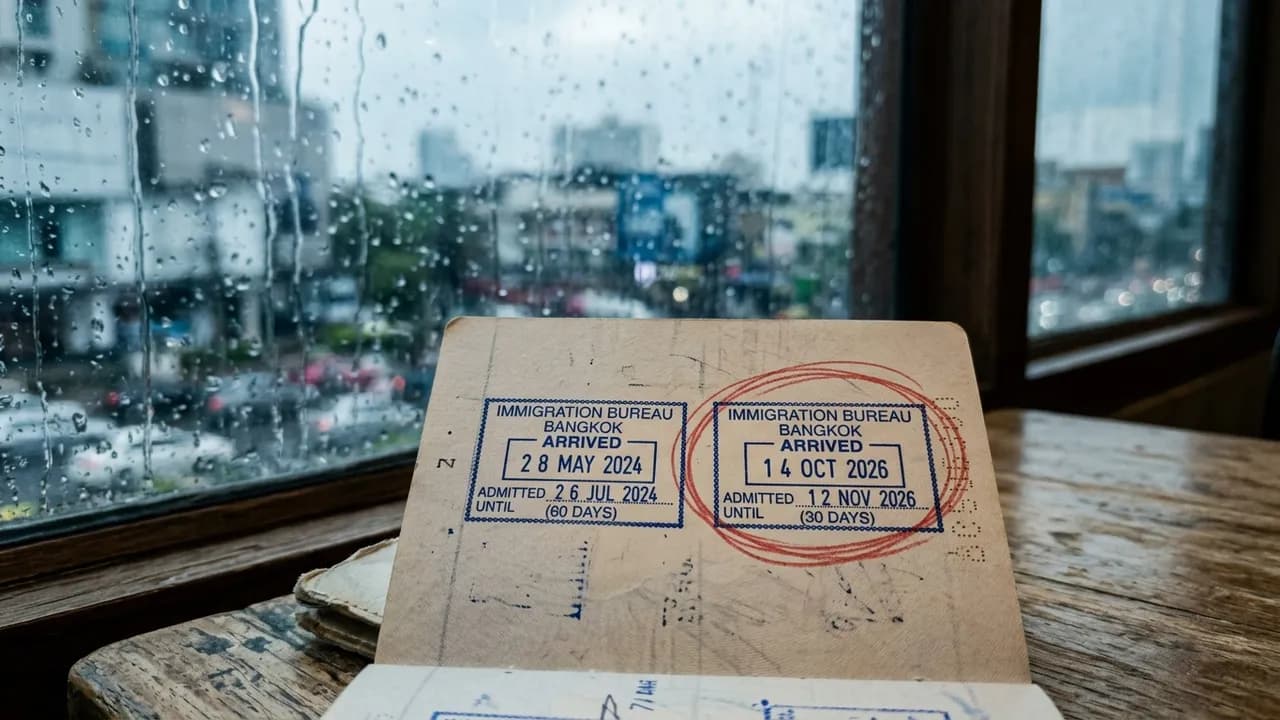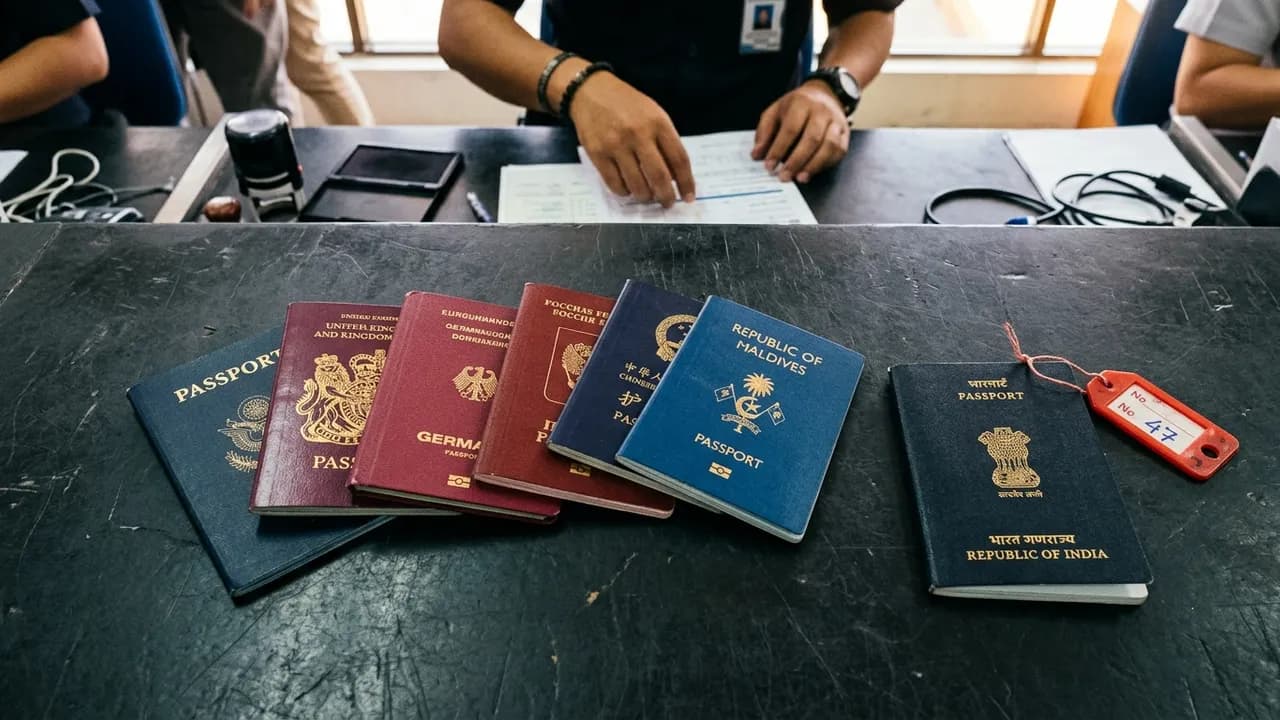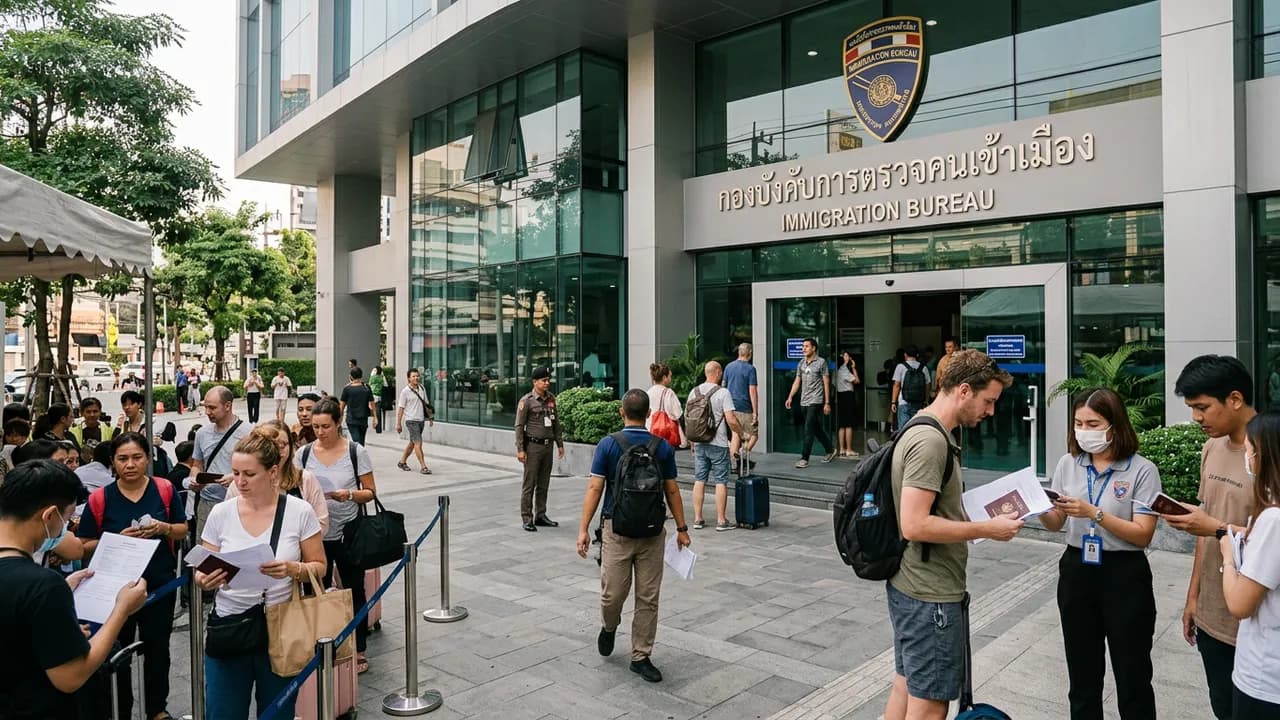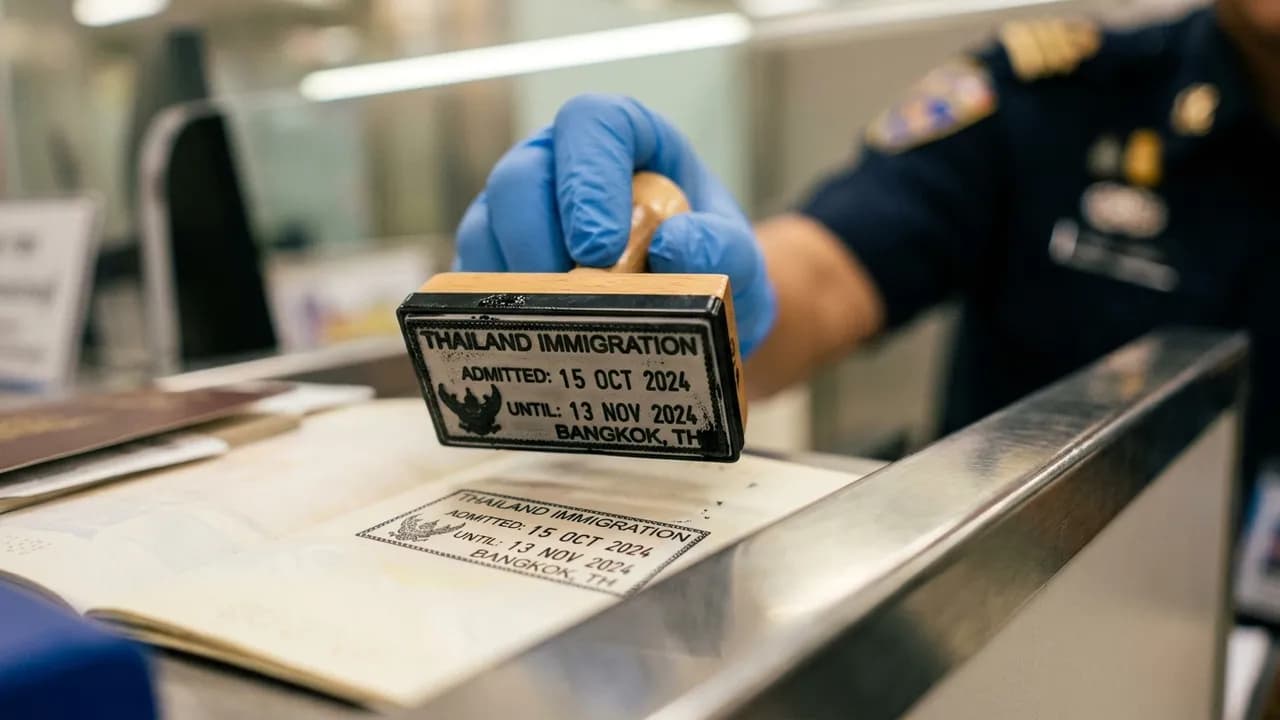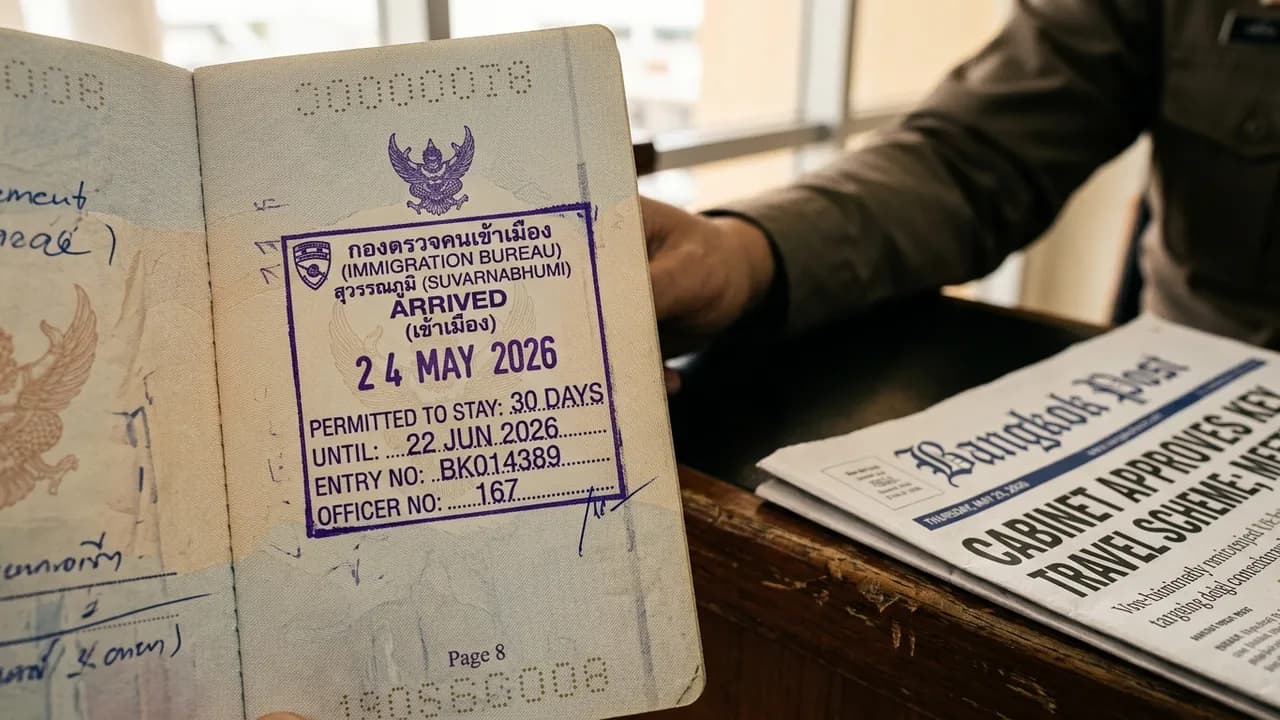
Thailand's 30-day visa exemption has been in force since 15 September 2026. Four Ministry of Interior announcements were published in the Royal Gazette on 31 August 2026 (Volume 143, Special Issue 207 Ngor) and replaced the 60-day scheme that had run since July 2024. Passport holders from 60 countries and territories now get 30 days visa-free, Seychelles and Mauritius get 15 days, and visa on arrival is limited to Azerbaijan, Belarus and Serbia, per the Tourism Authority of Thailand (TAT Newsroom, September 2026). For broader context on every 2026 policy shift, see our Thailand visa changes overview and the live visa news tracker.
TL;DR — What you need to know in 60 seconds
The Thailand 30 day visa exemption replaced the 60-day exemption on 15 September 2026. The Cabinet approved the rollback on May 19, 2026. The rules were gazetted on 31 August 2026 and took effect 15 days later.
- Royal Gazette: 31 August 2026 (Volume 143, Special Issue 207 Ngor), four Ministry of Interior announcements
- In force: 15 September 2026. The 60-day scheme of 15 July 2024 is repealed from that date.
- 30-day visa exemption: 60 countries and territories (full list below), down from 60 days
- 15-day visa exemption: Seychelles, Mauritius
- Visa on arrival: Azerbaijan, Belarus, Serbia only
- India and the Maldives: both on the 30-day list. May press reports that put India in the visa-on-arrival tier and the Maldives in the 15-day tier were wrong.
- Tourism only: business or work activity is not permitted under the exemption
- Land border cap: 2 exempt entries per calendar year through land checkpoints, except for nationals of Malaysia, Brunei, Indonesia and Singapore
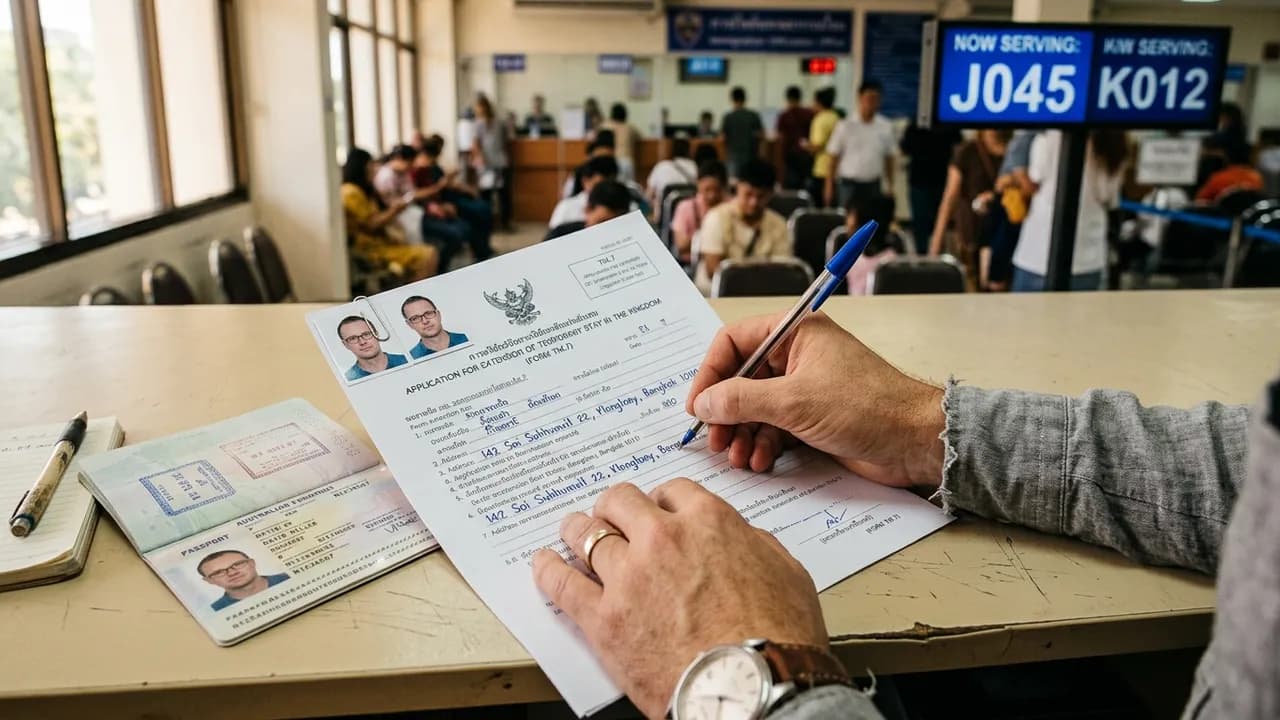
- Extension: one extension of up to 30 days at any immigration office for 1,900 THB, form TM.7 (extension guide)
- Entered before 15 September 2026? You keep the stay you were granted. The cut is not retroactive.
From Cabinet vote to Royal Gazette
On Tuesday, May 19, 2026, the Thai Cabinet approved a tiered rollback of the visa exemption framework that had been in place since July 2024. Government Spokesperson Rachada Dhanadirek told reporters the scheme "has allowed some people to exploit it" and that "security concerns have taken priority," according to Al Jazeera (May 19, 2026). Foreign Minister Sihasak Phuangketkeow was named as the senior official driving the policy reset. Tourism and Sports Minister Surasak Phancharoenworakul said in Nation Thailand (May 19, 2026) that the emphasis "must be on quality tourists, not simply on making entry easy."
The Cabinet decision set the rule to take effect 15 days after publication in the Royal Gazette. Publication came on 31 August 2026, so the rule took effect on 15 September 2026.
| Milestone | Date | Status |
|---|---|---|
| Cabinet approval | 2026-05-19 | Done |
| Four Ministry of Interior announcements published in the Royal Gazette (Vol. 143, Special Issue 207 Ngor) | 2026-08-31 | Done |
| New 30-day, 15-day and visa-on-arrival rules in force | 2026-09-15 | In force |
| 60-day scheme of 15 July 2024 | Repealed 2026-09-15 | Ended |
| Travelers who entered before 15 September 2026 | — | Keep the stay granted on entry |
The gazetted lists differ from what was reported in May. Press coverage after the Cabinet vote (including our own first version of this page) said about 54 countries would get 30 days, India would move to visa on arrival, and the Maldives would drop to 15 days. The official list has 60 countries and territories. India, the Maldives, Taiwan, Georgia, Jordan, Kyrgyzstan, Ukraine, Bhutan and Fiji are all in the 30-day tier. Only Seychelles and Mauritius are in the 15-day tier.
The new tier structure
Looking for one passport? Our visa-free countries table lists every nationality's stay and the legal basis for it, and it's free to cite.
Thailand moved from a flat 60-day scheme back to a tiered structure. Below is the framework in force since 15 September 2026, per the TAT Newsroom.
| Tier | Stay | Who qualifies | Change from the 60-day scheme |
|---|---|---|---|
| 30-day visa exemption | 30 days | 60 countries and territories (full list below) | Down from 60 days |
| 15-day visa exemption | 15 days | Seychelles, Mauritius | Down from 60 days |
| Visa on arrival | Reported as 15 days | Azerbaijan, Belarus, Serbia | These three only |
| Bilateral agreements | 90, 30 or 14 days, depending on the agreement | Countries with their own agreement with Thailand | Not changed by the Gazette |
| Visa required | — | All other passports | — |
Bilateral agreements: Separate bilateral arrangements continue and give 90, 30 or 14 days depending on the agreement. Some countries, such as China, South Korea and Brazil, are left off the new lists because they have their own agreement. If your country is not on any list below, check the current stay length with the Thai mission before you travel. Find yours in our embassy and consulate directory.
Thailand 30-day visa exemption: all 60 countries and territories
This is the official list published by TAT for entries from 15 September 2026, grouped by region.
Americas (2): Canada, United States Europe (33): Austria, Belgium, Bulgaria, Croatia, Cyprus, Czech Republic, Denmark, Estonia, Finland, France, Germany, Greece, Hungary, Iceland, Ireland, Italy, Latvia, Liechtenstein, Lithuania, Luxembourg, Malta, Netherlands, Norway, Poland, Portugal, Romania, Slovakia, Slovenia, Spain, Sweden, Switzerland, Ukraine, United Kingdom Caucasus and Central Asia (2): Georgia, Kyrgyzstan Middle East (9): Bahrain, Israel, Jordan, Kuwait, Oman, Qatar, Saudi Arabia, Turkey (Türkiye), United Arab Emirates Asia (10): Bhutan, Brunei, India, Indonesia, Japan, Malaysia, Maldives, Philippines, Singapore, Taiwan Oceania (3): Australia, Fiji, New Zealand Africa (1): South Africa
Not on the list: our May version of this page also listed Andorra, Monaco, San Marino and Vatican City in the 30-day tier. None of them is on the official 60-country list. If you hold one of those passports, check with the Thai mission before travel.
The 15-day tier: Seychelles and Mauritius
Seychelles and Mauritius drop from 60 days to 15 days. They are the only two countries in this tier. The Maldives, which May reports placed here, is on the 30-day list. No official rationale has been published for the choice of these two countries.
Visa on arrival: Azerbaijan, Belarus and Serbia only
From 15 September 2026, visa on arrival applies to passport holders from Azerbaijan, Belarus and Serbia only. The terms are reported as a 15-day stay, a 2,000 THB fee paid in cash, and no extension. Applicants are reported to need a passport photo, an onward ticket and proof of accommodation. See our visa on arrival guide.
If your nationality used visa on arrival before 15 September 2026 and is not on any of the new lists, do not assume you can still get it at the airport. Some countries, such as China, have their own bilateral arrangement. Check the current rules with the Thai mission before you book.
India: 30 days visa-free
Indian passport holders are on the 30-day list. In May, several outlets reported that India would lose visa-free entry and move to visa on arrival. The gazetted announcements did not do that. Indians can enter for tourism for 30 days without a visa and extend once by up to 30 days at immigration for 1,900 THB. For longer stays or non-tourist purposes, apply for the right visa through the official e-Visa portal, thaievisa.go.th. India-specific guide: Thailand visa for Indian citizens.
Tourism only
The 30-day and 15-day exemptions are for tourism. Business or work activity is not permitted under them, per the TAT announcement. If you are coming for meetings, work or study, apply for the matching visa on thaievisa.go.th. Since 1 January 2025, standard Thai visas are applied for online there, and the portal routes each file to the mission covering your place of residence.
Land border cap: 2 entries per calendar year
Entries on the 30-day exemption through land-border checkpoints are capped at twice per calendar year. Nationals of Malaysia, Brunei, Indonesia and Singapore are exempt from the cap. The cap was also reported at the time of the May 19 Cabinet decision by Al Jazeera. The published rule is written for land checkpoints.
The effect on the visa-run economy is large. Anyone who used back-to-back "border bounces" through Nong Khai, Mae Sai or the Malaysian crossings to refresh a 60-day stamp is now limited to two exempt land entries a year, each for 30 days. For the legal framework, see what is a visa run.
Why the rollback: the government's rationale
The Cabinet cited three reasons in May: nominee-firm exploitation, illegal work under tourist entry, and a tourism conversion gap. Each is documented in the reporting record.
- Nominee and scam-firm exploitation. The May 12–14 Koh Phangan raids exposed 32 suspected nominee companies sitting on 150 million THB in land, much of it linked to foreigners using tourist entries to set up illegal corporate structures. Detailed coverage in our Koh Phangan crackdown article.
- Illegal work and call-centre crime. A string of high-profile arrests since late 2025 (drug offences, sex trafficking, unlicensed hotels and schools, and call-centre scam operations) were tied to foreigners on visa-free entries. Business Standard reporting (May 20, 2026) summarises the case stack the Cabinet cited.
- Tourism conversion gap. Tourism Ministry data showed the average actual stay was about 9 days, making 60 days more useful to non-tourists than to tourists, per Nation Thailand (May 19, 2026). Q1 2026 foreign arrivals also fell 3.4% year-on-year and Middle Eastern arrivals dropped nearly 30%, per Al Jazeera, undercutting the original tourism-boost argument for the 60-day scheme.
Impact per nationality: what to actually do
Tourists from the 30-day tier (US, UK, EU, Canada, Australia, India, etc.)
You keep visa-free entry, but for 30 days instead of 60. Plan trips of up to 30 days, or extend once by up to 30 days at any immigration office for 1,900 THB (extension process). That brings one entry to about 60 days in total, down from 90 under the old scheme. If you need longer than that, apply for a tourist visa (TR) on thaievisa.go.th before travel, or look at the DTV if you qualify.
Tourists from Seychelles and Mauritius
You drop from 60 days to 15 days. For longer stays, apply for a tourist visa before travel. If you plan to extend a 15-day entry instead, confirm with a Thai immigration office first that the extension is available to you.
Azerbaijan, Belarus and Serbia
Use visa on arrival. It is reported as 15 days for 2,000 THB cash, with no extension. For longer trips, apply for an e-Visa in advance.
Nationalities not on any of the new lists
Check before you fly. Some countries have their own bilateral agreement with Thailand. Others may now need a visa. The Thai mission covering your place of residence can confirm your stay length.
Frequent land-border crossers
You are capped at 2 exempt land entries per calendar year, unless you hold a Malaysian, Bruneian, Indonesian or Singaporean passport. This is the rule most likely to disrupt long-stay visitors who relied on border runs to Cambodia, Laos, Malaysia or Myanmar. The Thai-Cambodia land borders were closed as of May 2026; check their current status before planning a crossing. The practical options are flights or a longer-term visa.
Travelers who entered before 15 September 2026
You keep the stay you were granted on entry. The new rules are not retroactive. A 60-day stamp issued before 15 September 2026 stays valid to its expiry date, per Newland Chase. The Cabinet had already said in May that current entries would be honoured, per Travel Trade Journal (May 20, 2026) and Business Standard.
The proposed 300 THB landing fee
A separate measure was also discussed in May: a 300 THB landing fee for air arrivals. Tourism Minister Surasak Phancharoenworakul told Nation Thailand the revenue would go to the Tourism Promotion Fund. The fee was not part of the visa-exemption decision or the 31 August 2026 Gazette announcements, and we have not seen a confirmed implementation date.
What this article replaces
This article replaces our earlier coverage of the permanent 60-day scheme. From July 2024 until 14 September 2026, the exemption was 60 days. That scheme was repealed on 15 September 2026.
For analysis of why the 60-day window was reversed and the 2024 to 2026 timeline, see Thailand 60 vs 30-day visa-free: what actually changed. For who moved tier, see which countries lose Thailand visa-free entry.
Frequently asked questions
When did the new 30-day rule take effect?
On 15 September 2026. The four Ministry of Interior announcements were published in the Royal Gazette on 31 August 2026, and the rules took effect 15 days later. The 60-day scheme ended on the same date.
Which countries get 30 days visa-free in Thailand?
60 countries and territories: Australia, Austria, Bahrain, Belgium, Bhutan, Brunei, Bulgaria, Canada, Croatia, Cyprus, Czech Republic, Denmark, Estonia, Fiji, Finland, France, Georgia, Germany, Greece, Hungary, Iceland, India, Indonesia, Ireland, Israel, Italy, Japan, Jordan, Kuwait, Kyrgyzstan, Latvia, Liechtenstein, Lithuania, Luxembourg, Malaysia, Maldives, Malta, Netherlands, New Zealand, Norway, Oman, Philippines, Poland, Portugal, Qatar, Romania, Saudi Arabia, Singapore, Slovakia, Slovenia, South Africa, Spain, Sweden, Switzerland, Taiwan, Turkey (Türkiye), Ukraine, United Arab Emirates, United Kingdom and the United States.
Will my 60-day stamp from before the change still be valid?
Yes. Anyone who entered Thailand before 15 September 2026 keeps the stay they were granted on entry. The cut is not retroactive.
Can I still extend my visa-free stay by 30 days?
Yes. You can extend once by up to 30 days at any Thai immigration office for 1,900 THB, using form TM.7. On a 30-day entry that gives about 60 days in total (30 + 30). Seychelles and Mauritius passport holders on a 15-day entry should confirm with immigration before relying on an extension. See the visa exemption extension guide.
Did India lose visa-free entry?
No. India is on the official 30-day list. Reports in May said India would move to visa on arrival, but the gazetted announcements put Indian passport holders in the 30-day tier. Details in which countries lose visa-free entry.
Can I work or do business on the 30-day exemption?
No. The exemption is for tourism only. Business or work activity is not permitted under it. Apply for the matching visa on thaievisa.go.th instead.
Is this permanent or temporary?
The Cabinet framed it as a permanent reset to the pre-2024 framework, not a temporary suspension. The TAT announcement gives a start date of 15 September 2026 and no end date.
Does this apply at land borders too?
Yes, with an extra limit. Entries on the 30-day exemption through land-border checkpoints are capped at twice per calendar year. Nationals of Malaysia, Brunei, Indonesia and Singapore are exempt from the cap.
Will the 300 THB landing fee apply to me?
The 300 THB landing fee is a separate proposal. It was not part of the visa exemption decision or the 31 August 2026 Gazette announcements. If implemented, it would apply to foreign tourists arriving by air, with revenue directed to the Tourism Promotion Fund per Tourism Minister Surasak Phancharoenworakul. We have not seen a confirmed start date.
Does this change anything for DTV, LTR, or retirement visa holders?
No. The new announcements cover the visa exemption and visa on arrival only. The Destination Thailand Visa (DTV), Long-Term Resident (LTR), retirement visa, Non-Imm O, and all paid visa categories are unaffected. If you are a long-stay foreigner who relied on back-to-back visa-free entries, this is the point to switch to a proper long-term visa.
Practical planning now the rule is in force
Your entry date decides which rules apply. Anyone arriving on or after 15 September 2026 gets the new stay lengths.
Scenario 1: you entered before 15 September 2026
Your existing stamp stands. Leave by the date on it. If you want to stay longer, ask a Thai immigration office what applies to your entry.
Scenario 2: you are arriving now for 30 days or less
Travel as planned on the 30-day exemption if your passport is on the list. File the Thailand Digital Arrival Card (TDAC) at tdac.immigration.go.th before arrival. It replaced the paper TM.6.
Scenario 3: you want to stay 31 to 60 days
Enter on the 30-day exemption and budget 1,900 THB for one extension of up to 30 days. Apply at an immigration office before your 30 days run out.
Scenario 4: you want to stay longer than 60 days
Apply for a tourist visa (TR) or another suitable visa on thaievisa.go.th before travel. Seychelles and Mauritius passport holders should do the same for anything over 15 days.
Sources
- Tourism Authority of Thailand, TAT Newsroom, "Thailand introduces new 30-day and 15-day visa exemption rules from 15 September" (September 2026)
- Khaosod English, coverage of the Royal Gazette publication (September 1, 2026)
- Nation Thailand, coverage of the gazetted rules (September 2026)
- Newland Chase, "Update on Thailand's new visa exemption and visa on arrival measures" (September 2026)
- Al Jazeera, "Thailand to slash tourist visa-free stays" (May 19, 2026)
- Nation Thailand, "Thailand scraps 60-day free visa, restores old exemption rules" (May 19, 2026)
- Nation Thailand, "Thailand updates visa-free rules after scrapping 60-day scheme" (May 20, 2026)
- Bangkok Post, "Thailand ends 60-day visa-free stay" (May 19, 2026)
- Bangkok Post, "Thai visa exemptions cut by cabinet" (May 20, 2026)
- Business Standard, "Thailand ends 60-day visa-free entry in major tourism policy rollback" (May 20, 2026)
- Travel Trade Journal, "Thailand to roll back 60-day visa-free scheme" (May 20, 2026)
The May 2026 reports are kept as background on the Cabinet decision. Where they differ from the gazetted lists (India, the Maldives, the country count), the Gazette and TAT figures above apply.
Need help planning around the new rules? See our agency reviews before paying anyone for visa advice.