Thailand visa changes in 2026 continue an evolving immigration landscape, as the government balances tourism promotion, economic development, and border security. This article summarizes the key visa and immigration changes that have taken effect or are under consideration in 2026.
Overview of Recent Changes
Thailand has made several significant immigration policy changes since 2024:
| Change | Status | Impact |
|---|---|---|
| 60-day visa exemption (permanent) | Effective | All exempt nationals now get 60 days instead of 30 |
| Destination Thailand Visa (DTV) | Active | 5-year visa for remote workers and creatives |
| LTR visa program expansion | Ongoing | Additional qualifying categories under discussion |
| Digital arrival/departure cards | Rolling out | Replacing paper TM.6 cards at major airports |
| Electronic Travel Authorization (ETA) | Under development | Planned online pre-screening for visa-exempt travelers |
| Tax on foreign income remittances | Effective from 2024 | Impacts long-term residents bringing money into Thailand |
The 60-Day Visa Exemption: Now Permanent
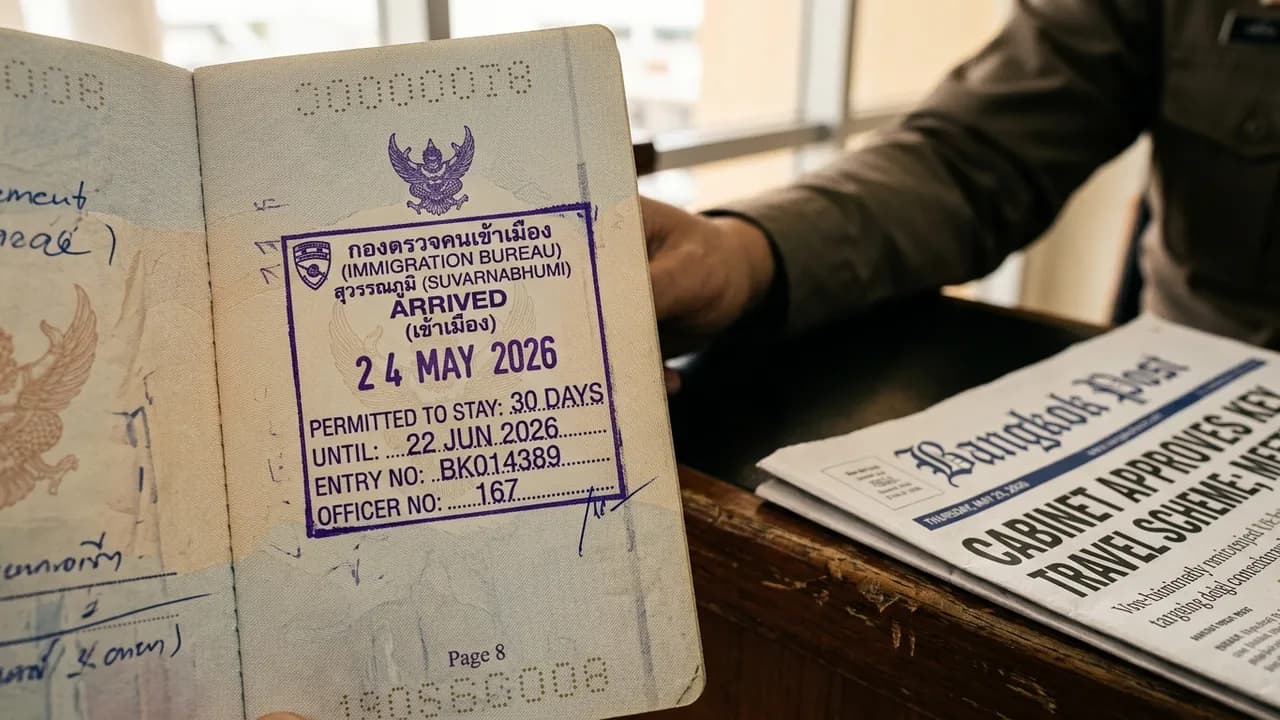
Perhaps the most impactful change for tourists is the permanent extension of the visa exemption period from 30 days to 60 days for all eligible nationalities.
Background
- Before 2024: Most visa-exempt nationals received a 30-day entry stamp
- Mid-2024: Thailand temporarily extended the exemption to 60 days to boost tourism
- Late 2024/2025: The 60-day exemption was made permanent by Cabinet resolution
What This Means
- Nationals of 93+ countries now receive 60 days upon arrival, no visa needed
- The 30-day extension at immigration (1,900 THB) remains available, bringing the maximum to 90 days
- This effectively gives tourists 3 months in Thailand without needing to apply for any visa in advance
- The change has significantly reduced demand for tourist visas at Thai embassies
Who Benefits Most
- Short-term tourists who previously felt rushed with 30 days
- Travelers exploring multiple Thai regions (Bangkok, north, south, islands)
- Digital nomads on brief visits
- Snowbirds who want a winter escape without visa paperwork
See our full permanent 60-day exemption update for eligibility lists and extension details.
Destination Thailand Visa (DTV) Updates
The DTV, launched in June 2024, has matured in its second year of operation.
Current DTV Features (2026)
| Feature | Details |
|---|---|
| Validity | 5 years, multiple entry |
| Stay per entry | 180 days |
| Extension | 180-day extension available |
| Cost | 10,000 THB |
| Work permit | Not included |
2026 DTV Developments
- Broader acceptance at embassies — More Thai embassies worldwide are now processing DTV applications smoothly, with clearer guidance on documentation requirements
- Digital application improvements — The e-visa system for DTV has been streamlined, reducing processing delays
- Enforcement clarity — Thai authorities have continued to signal tolerance of remote work under DTV, though a formal work permit is still not part of the package
- Eligibility discussions — There have been discussions about expanding DTV eligibility to include more categories of professionals and creatives
DTV Challenges
- The lack of a formal work permit remains the DTV's biggest limitation
- Some embassies still interpret eligibility requirements differently
- The 10,000 THB fee has been criticized as high compared to visa exemptions
- Confusion persists about what documentation is sufficient for "remote worker" status
Read our detailed DTV visa updates for 2026 for expanded categories and processing-time changes.
LTR Visa Program Developments
The Long-Term Resident visa program continues to grow but with modifications.
2026 Updates
- Application numbers increasing — The BOI reports growing interest, particularly from North American and European applicants
- Processing improvements — Online application processing has become more efficient, with some applications completing in under 15 business days
- Category refinements — The BOI has provided clearer guidance on what qualifies under each of the four categories, reducing application confusion
- Targeted industry list updates — The list of qualifying industries for the "Highly Skilled Professional" category has been updated to include emerging sectors
Ongoing Limitations
- The USD 80,000 income threshold remains unchanged and continues to exclude many potential applicants
- The employer revenue requirement (USD 150M+) for the Work-from-Thailand category restricts many freelancers and small-business employees
Full details in our LTR visa expansion in 2026 breakdown.
Tax Changes Affecting Visa Holders
A major change that took effect in 2024 continues to impact long-term residents in 2026.
Foreign Income Remittance Tax
What changed: Thailand previously exempted foreign income from tax if it was not remitted to Thailand in the same calendar year it was earned. Since January 2024, all foreign income remitted to Thailand is subject to Thai personal income tax, regardless of when it was earned.
Who is affected:
- Thai tax residents (anyone spending 180+ days per year in Thailand)
- Retirees bringing pension income into Thailand
- Remote workers depositing foreign earnings into Thai bank accounts
- Investors transferring investment returns to Thailand
Who is exempt or reduced:
- LTR visa holders in the Wealthy Global Citizen, Pensioner, and Work-from-Thailand categories (0% tax on foreign income)
- LTR Highly Skilled Professionals (flat 17% on Thai income)
- Countries with Double Taxation Agreements (DTAs) with Thailand — tax credits may apply
Impact:
- Retirement visa holders who bring 65,000+ THB/month into Thailand may now have tax obligations
- Filing Thai tax returns has become more important for long-term residents
- Tax planning and the use of DTAs have become essential for high-income expatriates
What to Do
- Determine your Thai tax residency status — If you spend 180+ days in Thailand, you are a tax resident
- Review your country's DTA with Thailand — Many DTAs prevent double taxation
- Consult a tax professional — The intersection of Thai tax law and your home country's rules requires professional advice
- Consider the LTR visa — Its tax benefits have become significantly more valuable since the foreign income tax change
Digital Immigration Systems
Thailand is gradually modernizing its immigration infrastructure.
Digital TM.6 (Arrival/Departure Card)
- Major airports including Suvarnabhumi and Don Mueang have been phasing out paper TM.6 cards
- Digital arrival information is captured during the flight booking or at automated kiosks
- Some airports still use paper cards — carry a pen just in case
- The full transition to digital is expected to continue through 2026-2027
Electronic Travel Authorization (ETA)
Thailand has been developing an Electronic Travel Authorization system similar to those used by the US (ESTA), EU (ETIAS), and others.
Proposed features:
- Online pre-screening for visa-exempt travelers before departure
- Linked to airline systems for automated boarding verification
- Expected to reduce processing time at immigration counters
- May include a small fee
Status: The ETA system has been announced but implementation timelines have shifted. As of early 2026, no launch date has been confirmed. Monitor official announcements.
Online 90-Day Reporting Improvements
The online 90-day reporting system has seen incremental improvements:
- More reliable uptime compared to previous years
- Expanded compatibility with more browsers and devices
- Improved error messaging when submissions fail
- Some immigration offices now accept online first-time reports (previously in-person only)
Visa-on-Arrival Changes
Thailand's visa-on-arrival (VOA) program has seen adjustments:
| Update | Details |
|---|---|
| VOA fee | 2,000 THB (periodically waived during promotional periods) |
| Stay duration | 15 days (some nationalities, check current list) |
| Eligible nationalities | List updated periodically — currently 19+ countries |
| Digital application | Some airports offer pre-registration for VOA to speed processing |
Visa-on-arrival is separate from the visa exemption and applies to different nationalities.
Border Control and Land Border Updates
Increased Scrutiny at Land Borders
Thai immigration has increased scrutiny of frequent land border crossers:
- Automated systems now track entry/exit patterns
- Officers may question travelers with multiple back-to-back entries
- "Visa run" patterns (entering for the maximum period, leaving briefly, and returning immediately) are increasingly flagged
- Some travelers have been given shortened entry stamps (less than 60 days) at officer discretion
Border Hours and Infrastructure
Several land border crossings have seen infrastructure improvements:
- Updated facilities at Thai-Malaysian border crossings
- Extended hours at some crossings during peak travel periods
- Improved coordination with neighboring countries' immigration systems
What to Expect for the Rest of 2026
Based on current government direction and policy discussions:
- Continued digital transformation — More immigration processes will move online
- ETA launch possible — The electronic travel authorization may launch in late 2026 or 2027
- Potential DTV improvements — Work permit integration for DTV holders remains under discussion
- Visa fee adjustments — Some visa fees may be updated to reflect inflation
- Continued tax enforcement — The foreign income remittance tax will likely see more enforcement and clearer guidelines
- LTR program review — The BOI typically reviews program terms periodically; income thresholds or categories may be adjusted
How to Stay Updated
- Thai Immigration Bureau website — immigration.go.th
- Board of Investment (BOI) — boi.go.th for LTR visa updates
- Thai Ministry of Foreign Affairs — mfa.go.th for visa exemption lists and embassy information
- Thai embassies — Follow the social media accounts and websites of your nearest Thai embassy
- Reputable expat forums — ThaiVisa (Asean Now), Reddit r/Thailand, and similar communities often share real-time updates
Final Thoughts
Thailand's immigration system is becoming more digital, more accommodating of long-term residents and remote workers, and more complex from a tax perspective. The permanent 60-day exemption and the DTV represent genuine improvements for visitors, while the foreign income tax change adds a new consideration for anyone spending significant time in the country. Stay informed, plan ahead, and consult professionals for tax and immigration advice specific to your situation.