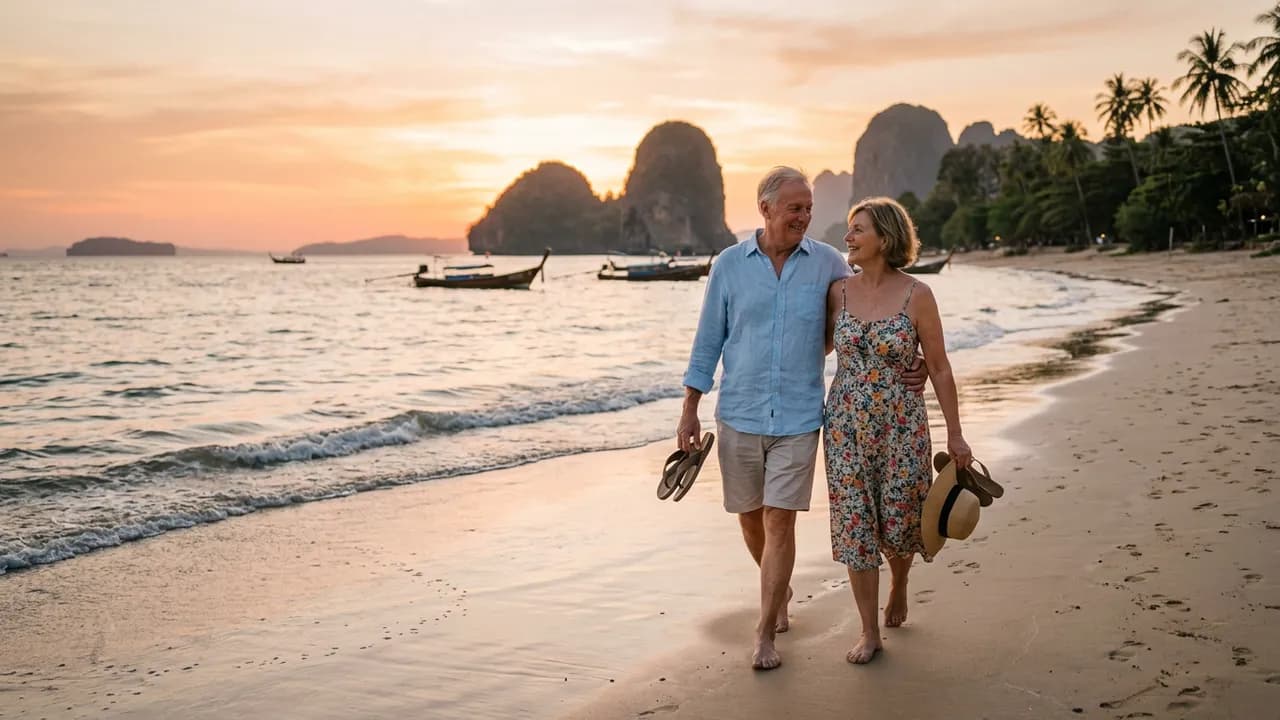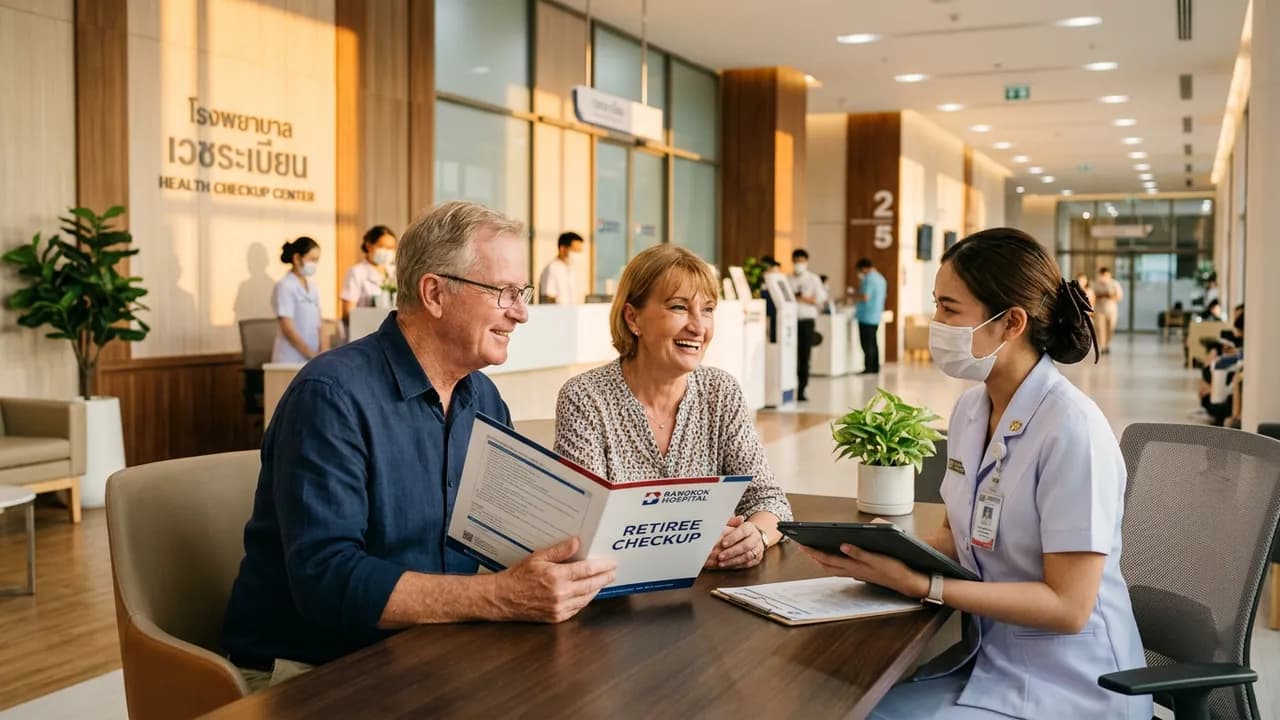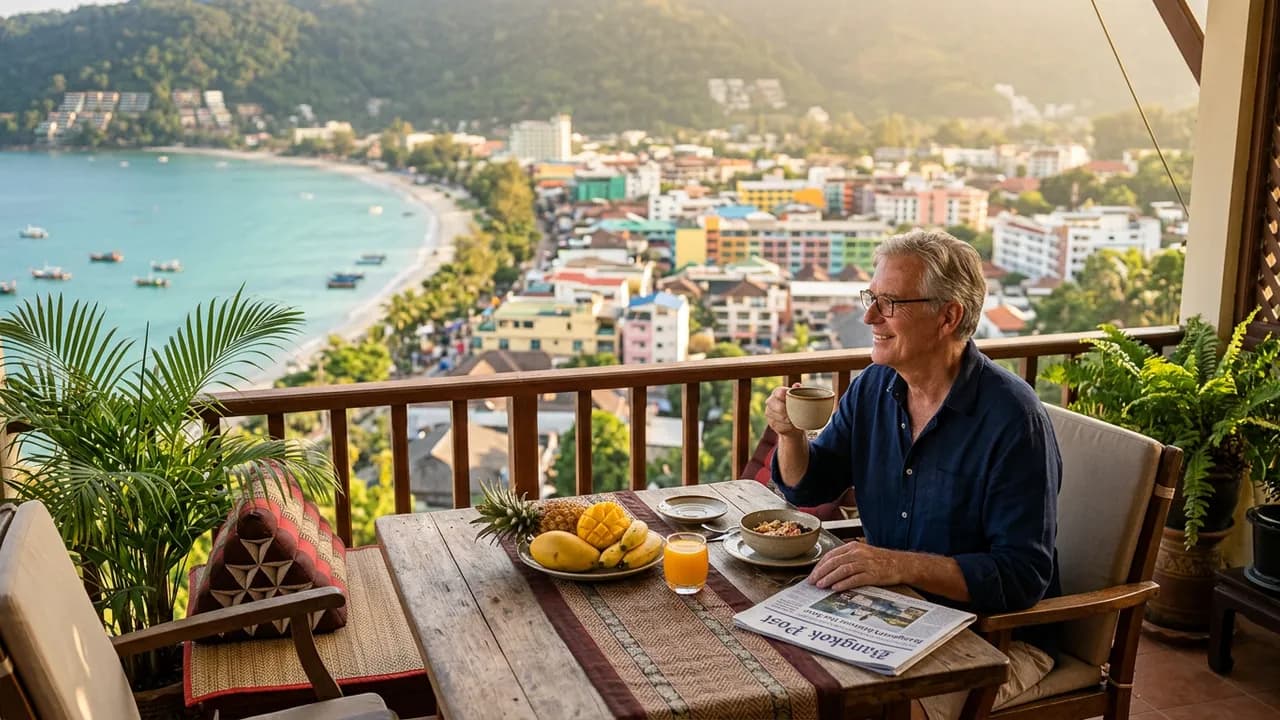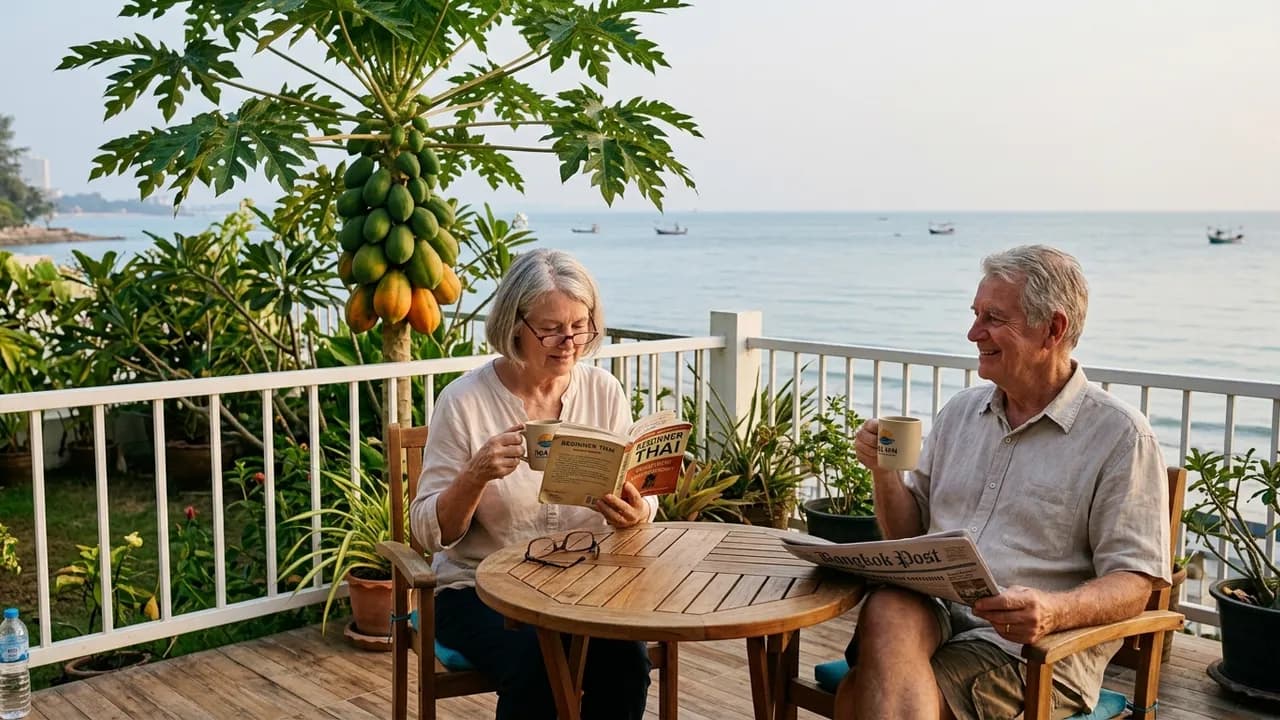
Choosing to retire in Thailand puts you in one of the world's most popular retirement destinations, a status the country has held for decades. The reasons are straightforward: warm weather year-round, affordable cost of living, excellent healthcare at a fraction of Western prices, rich culture, welcoming locals, and an established expat community that makes the transition easier. Tens of thousands of retirees from North America, Europe, Australia, and Japan have made Thailand their permanent home.
This guide covers everything you need to know about retiring in Thailand in 2026, from visa requirements and financial planning to healthcare, lifestyle, and the practical realities of daily life.
Why Retire in Thailand?
The Financial Case
For many retirees, the math is simple. Thailand offers a quality of life that costs 50-70% less than most Western countries. A retired couple can live comfortably in Thailand on $2,000-3,000 USD per month — an amount that would barely cover housing in many American or European cities. For city-by-city breakdowns and current 2026 numbers, see our detailed cost of retirement in Thailand guide.
| Expense | Thailand (Monthly) | United States (Monthly) | Savings |
|---|---|---|---|
| Housing (nice 2-bed condo) | $500-800 | $1,500-3,000 | 60-75% |
| Food (mix of local + Western) | $300-600 | $800-1,500 | 60% |
| Healthcare (insurance) | $150-400 | $500-1,500 | 70% |
| Transportation | $100-200 | $400-800 | 75% |
| Utilities | $50-150 | $200-400 | 65% |
| Entertainment | $200-500 | $300-800 | 35% |
| Total | $1,300-2,650 | $3,700-8,000 | 55-67% |
Beyond Money
Thailand's appeal extends well beyond cost savings:
- Climate — Warm year-round with temperatures between 25-35C. No snow, no heating bills, and outdoor living is the norm.
- Healthcare — Thai private hospitals rank among the best in the world. Many doctors trained in the US, UK, or Australia. Medical tourism is a major industry.
- Food — Thai cuisine is among the world's best, and eating out is cheaper than cooking at home.
- Culture — Buddhist temples, festivals, traditional arts, and a cultural richness that rewards long-term immersion.
- Safety — Thailand is generally safe for foreigners. Violent crime against expats is rare.
- Infrastructure — Modern shopping malls, international supermarkets, high-speed internet, and excellent domestic travel options.
- Established expat community — You will not be pioneering. Thousands of retirees have been through the process and built communities, clubs, and support networks.
Visa Options for Retirees
Non-Immigrant O-A Visa (Retirement Visa)
This is the standard retirement visa, also known as the "O-A Long Stay" visa. It is the most common choice for retirees.
| Feature | Details |
|---|---|
| Eligibility | Age 50 or older, any nationality |
| Validity | 1 year (renewable annually) |
| Entry type | Multiple entry |
| Application location | Royal Thai Embassy/Consulate in your home country |
| Financial requirement | 800,000 THB in a Thai bank account, OR monthly income of at least 65,000 THB, OR combination totaling 800,000 THB |
| Health insurance | Required — minimum 40,000 THB outpatient and 400,000 THB inpatient coverage |
| Application fee | Approximately 2,000 THB |
Non-Immigrant O Visa (Extended for Retirement)
An alternative path that some retirees find more flexible:
- Obtain a single-entry Non-Immigrant O visa at a Thai embassy (based on retirement purpose)
- Enter Thailand
- Extend the visa to one year at a local Immigration office
| Feature | Details |
|---|---|
| Eligibility | Age 50 or older |
| Initial validity | 90 days |
| Extension | To 1 year at Thai Immigration |
| Financial requirement | Same as O-A (800,000 THB or 65,000 THB monthly) |
| Health insurance | Not always required for the initial O visa (but mandatory for O-A) |
| Advantage | More flexibility on insurance requirements initially |
Thailand Elite Visa
For retirees who want to avoid annual paperwork and have the budget, the Thailand Elite Visa is worth considering:
| Feature | Details |
|---|---|
| Cost | 600,000 THB (5 years) to 2,000,000 THB (20 years) |
| Age requirement | None |
| Financial proof | Not required beyond the membership fee |
| Benefits | VIP airport service, dedicated concierge, no 90-day reporting hassle |
| Renewal | Based on membership tier |
Long-Term Resident (LTR) Visa
Introduced in 2022, the LTR visa targets wealthy pensioners:
| Feature | Details |
|---|---|
| Duration | 10 years |
| Financial requirement | $80,000 USD annual income, OR $250,000+ in assets with $40,000+ income |
| Tax benefit | Flat 17% personal income tax rate on Thai-sourced income |
| Work authorization | Digital work permit included |
| Age requirement | 50+ for the "Wealthy Pensioner" category |
The LTR is excellent for high-net-worth retirees but the income requirements put it out of reach for most.
Financial Requirements in Detail
The financial requirements for the standard retirement visa are the most scrutinized aspect of the process. See our dedicated guide on Retirement Visa Financial Requirements for a deep dive. Here is a summary:
Option 1: Bank Deposit Method
- Deposit 800,000 THB (approximately $23,000 USD) in a Thai bank account
- The money must be "seasoned" — in the account for at least 2 months before your visa extension application
- After the extension is granted, you must maintain at least 400,000 THB in the account for the first 3 months, then the full 800,000 THB must be restored at least 2 months before the next annual renewal
Option 2: Monthly Income Method
- Demonstrate monthly income of at least 65,000 THB (approximately $1,860 USD)
- Proof is typically an income letter from your embassy or consulate (note: some embassies have stopped issuing these)
- Alternative proof includes pension statements, social security letters, or bank transfer records
Option 3: Combination Method
- Combine bank deposits and monthly income to reach the 800,000 THB threshold
- Calculated as: annual income (monthly income x 12) + bank balance = 800,000 THB or more
Choosing Where to Live
Popular Retirement Destinations
| Location | Cost Level | Healthcare | Expat Community | Lifestyle |
|---|---|---|---|---|
| Chiang Mai | Low | Excellent | Very large | Culture, mountains, temples |
| Bangkok | Medium-High | World-class | Very large | Urban, everything accessible |
| Pattaya | Low-Medium | Good | Large | Beach, nightlife, resort town |
| Hua Hin | Low-Medium | Good | Large | Quiet beach, royal resort town |
| Phuket | Medium-High | Good | Medium | Island, beaches, international |
| Koh Samui | Medium | Fair | Small-Medium | Island life, relaxed |
| Udon Thani | Very Low | Fair | Medium (Isaan expats) | Authentic Thai, near Laos |
| Khon Kaen | Very Low | Fair | Small | University town, Thai lifestyle |
Chiang Mai for Retirees
Chiang Mai is the most popular retirement destination in Thailand, particularly for retirees who prioritize culture, community, and affordability.
Monthly budget for a couple: 40,000-70,000 THB ($1,140-2,000 USD)
Advantages: Lowest cost of the major cities, excellent private hospitals (Chiang Mai Ram, Lanna Hospital), massive expat community with clubs and social groups, cool season weather (November-February) is genuinely pleasant, proximity to nature.
Disadvantages: Burning season air quality (February-April), limited beach access, smaller international airport.
Bangkok for Retirees
Bangkok offers unmatched convenience and the best healthcare in Thailand.
Monthly budget for a couple: 60,000-120,000 THB ($1,715-3,430 USD)
Advantages: World-class hospitals (Bumrungrad, BNH, Samitivej), international food and shopping, entertainment, domestic and international flights from two airports, public transit.
Disadvantages: Higher cost, traffic and pollution, overwhelming size, heat.
Pattaya for Retirees
Pattaya has a large retirement community and is conveniently close to Bangkok (2 hours by car).
Monthly budget for a couple: 35,000-65,000 THB ($1,000-1,860 USD)
Advantages: Close to Bangkok hospitals and airports, beach access, large expat community with clubs and activities, good value accommodation.
Disadvantages: Reputation for nightlife tourism (though it has diversified significantly), beach quality is average, traffic.
Hua Hin for Retirees
Hua Hin is a more refined coastal option, popular with Thai royalty and well-heeled retirees.
Monthly budget for a couple: 35,000-60,000 THB ($1,000-1,715 USD)
Advantages: Quiet and respectable atmosphere, good night markets and seafood, less touristy than Pattaya, close to Bangkok.
Disadvantages: Limited hospital options (Bangkok Hospital Hua Hin is the main facility), smaller expat community, quieter nightlife.
Healthcare for Retirees
Healthcare is a critical consideration. See our comprehensive guide on Healthcare for Retirees in Thailand for full details.
Key Points
- Private healthcare is excellent — Thai private hospitals offer first-world standards at developing-world prices
- Health insurance is required for O-A visa holders (minimum 40,000 THB outpatient / 400,000 THB inpatient)
- Insurance becomes more expensive with age — Premiums increase significantly after 60, 65, and 70
- Pre-existing conditions — Many insurers exclude pre-existing conditions or charge substantial surcharges
- Government hospitals — Very affordable (walk-in consultations from 30-100 THB) but crowded, with long waits and limited English
Estimated Healthcare Costs Without Insurance
| Service | Approximate Cost |
|---|---|
| GP consultation | 500-1,500 THB |
| Specialist consultation | 1,000-3,000 THB |
| Blood work (comprehensive panel) | 2,000-5,000 THB |
| Annual health checkup | 5,000-20,000 THB |
| Dental cleaning | 800-1,500 THB |
| MRI scan | 8,000-15,000 THB |
| Hip replacement surgery | 300,000-600,000 THB |
| Cataract surgery (per eye) | 30,000-80,000 THB |
Cost of Living: Detailed Breakdown
Monthly Budget for a Retired Couple
| Expense | Budget | Comfortable | Premium |
|---|---|---|---|
| Rent (furnished condo/house) | 10,000-15,000 | 20,000-35,000 | 40,000-70,000 |
| Utilities (electric, water, internet) | 2,000-4,000 | 3,000-6,000 | 5,000-10,000 |
| Food and dining | 10,000-15,000 | 15,000-25,000 | 25,000-45,000 |
| Health insurance | 4,000-8,000 | 8,000-15,000 | 15,000-30,000 |
| Transportation | 2,000-4,000 | 4,000-8,000 | 8,000-15,000 |
| Entertainment/social | 3,000-5,000 | 5,000-15,000 | 15,000-30,000 |
| Miscellaneous | 2,000-4,000 | 5,000-10,000 | 10,000-20,000 |
| Monthly Total | 33,000-55,000 | 60,000-114,000 | 118,000-220,000 |
| USD equivalent | $940-1,570 | $1,715-3,260 | $3,370-6,285 |
Practical Considerations
Banking
Opening a Thai bank account is essential for the retirement visa financial requirement. Most retirees use:
- Bangkok Bank — Most foreigner-friendly, branches everywhere
- Kasikorn Bank (KBank) — Excellent mobile app
- SCB (Siam Commercial Bank) — Good service, wide network
Requirements: passport, Non-Immigrant visa, proof of address, and a minimum deposit. Some branches are more accommodating than others.
Driving
- International Driving Permit (IDP) — Valid for use in Thailand
- Thai driving license — Obtainable with a valid IDP, medical certificate, and a visit to the Department of Land Transport. Practical for long-term residents.
- Motorbikes — Many retirees use motorbikes for local transport. International license or Thai license required.
- Car ownership — Foreigners can own cars in Thailand. Used cars are available for 200,000-500,000 THB.
Communication
- Thai SIM card — Essential. AIS, True, and DTAC/True offer affordable plans from 300 THB/month.
- LINE app — The dominant communication app in Thailand. Used by everyone from friends to businesses to government services.
- Internet — Fiber broadband from 500 THB/month. Reliable in all major cities.
Social Life
The expat retirement community in Thailand is well-organized:
- Expat clubs — Rotary, Lions, VFW posts, national groups (British Club, American Club)
- Activity groups — Golf, cycling, swimming, bridge, photography, cooking
- Volunteer organizations — Opportunities to contribute to local communities
- Online forums — Thai Visa Forum, Facebook expat groups, city-specific communities
- Religious organizations — Churches, mosques, synagogues, and Buddhist meditation centers
Language
Learning Thai is not required but significantly enhances your experience:
- Basic phrases go a long way in daily interactions
- Many retirees take Thai classes at language schools (1,000-3,000 THB/month for group classes)
- Thai people deeply appreciate foreigners who make an effort to learn their language
- English is sufficient in tourist areas and hospitals but limited in everyday Thai life
Legal and Tax Considerations
Thai Tax Residency
If you spend 180+ days per year in Thailand, you are a tax resident. As of 2024, Thailand taxes worldwide income for residents who remit funds into the country. This means:
- Pension income transferred to Thailand may be subject to Thai tax
- Double taxation agreements (DTAs) between Thailand and your home country may eliminate or reduce double taxation
- Social security benefits may be exempt under specific DTAs
- Consult a tax advisor familiar with both Thai law and your home country's regulations
Wills and Estate Planning
Thai law governs assets located in Thailand. If you own property, have Thai bank accounts, or have other Thai assets, you should:
- Create a separate Thai will (in addition to your home country will) for Thai assets
- Use a Thai lawyer familiar with estate planning for foreigners
- Understand that Thai inheritance laws differ from Western systems
- Consider the implications for your Thai bank account upon death (accounts are typically frozen until estate procedures are completed)
Property Ownership
Foreigners can own condominium units outright (up to 49% of a building's units can be foreign-owned). Land ownership is restricted, but long-term leases (30 years, renewable) are common for houses and villas. Thai companies with majority foreign ownership can also hold land under certain conditions, though this approach has legal complexities.
Common Challenges and How to Handle Them
Immigration Bureaucracy
Annual visa renewals require patience. Expect 2-4 hours at Immigration offices. Some retirees use visa agents (2,000-5,000 THB) to handle the process.
Cultural Adjustment
Thailand operates differently from Western countries. The concept of "saving face," indirect communication, and different attitudes toward time and efficiency can frustrate newcomers. Patience and respect are your best tools.
Loneliness and Isolation
Retirement abroad can be lonely, especially for those who come without a partner. Actively joining clubs, volunteering, and learning Thai helps build a social network.
Healthcare as You Age
Insurance becomes harder to obtain and more expensive after 70-75. Some retirees self-insure by maintaining a significant emergency fund. Planning for this in advance is essential.
Financial Management
Managing finances across two countries requires attention to exchange rates, transfer fees, and tax obligations. Services like Wise (formerly TransferWise) offer better exchange rates than traditional banks.
Step-by-Step: Your First Year in Thailand
- 6 months before: Research locations, apply for passport renewal if needed, gather financial documents
- 4 months before: Apply for Non-Immigrant O-A visa at Thai embassy
- 2 months before: Open a Thai bank account (some embassies can facilitate this) or arrange transfer of 800,000 THB
- Arrival month: Enter Thailand, set up SIM card, temporary accommodation, explore your chosen city
- Month 1-2: Find long-term accommodation, set up banking, arrange health insurance
- Month 3: Settle into routine, join expat groups, explore local area
- Month 6: Start planning your first visa renewal (ensure financial requirements are maintained)
- Month 10-11: Begin visa renewal paperwork at Immigration (apply 30+ days before expiration)
- Month 12: Renewal complete, you are now into your second year
Frequently Asked Questions
Do I need to stay in Thailand full-time?
No. The retirement visa allows multiple entries. Many retirees split time between Thailand and their home country or travel extensively. Just ensure you meet the financial requirements at renewal time and maintain your 90-day reporting.
Can I work in Thailand on a retirement visa?
No. The retirement visa does not authorize any form of employment. Working requires a separate work permit.
What happens if I run out of money?
If you cannot meet the financial requirements at renewal, your visa will not be extended. You would need to leave Thailand or switch to another visa category. Having a financial cushion beyond the minimum is strongly advised.
Can I bring my pet to Thailand?
Yes, with proper documentation including a health certificate, rabies vaccination, and import permit from the Thai Department of Livestock Development. The process takes 2-4 weeks of preparation.
Is Thailand safe for retirees?
Generally very safe. Violent crime against foreigners is rare. Scams targeting tourists exist but are avoidable. The biggest safety risk is road accidents — Thailand has one of the highest traffic fatality rates in the world.
What about internet and staying connected with family?
Thailand has excellent internet infrastructure. Video calls via WhatsApp, LINE, Zoom, and Skype work perfectly. Fiber broadband starts at 500 THB/month with speeds of 100+ Mbps.
Conclusion
Retiring in Thailand is not just about saving money — though the financial advantages are substantial. It is about choosing a life enriched by a different culture, warmer climate, excellent food, and a pace of life that prioritizes enjoyment over obligation. The practical requirements — visa paperwork, financial thresholds, insurance — are manageable with proper planning. The key is to visit Thailand first (ideally for a month or more), experience daily life beyond the tourist bubble, and make an informed decision. Thousands of retirees have successfully made the transition, and the infrastructure to support you — from immigration agents to expat clubs to international hospitals — is well-established.