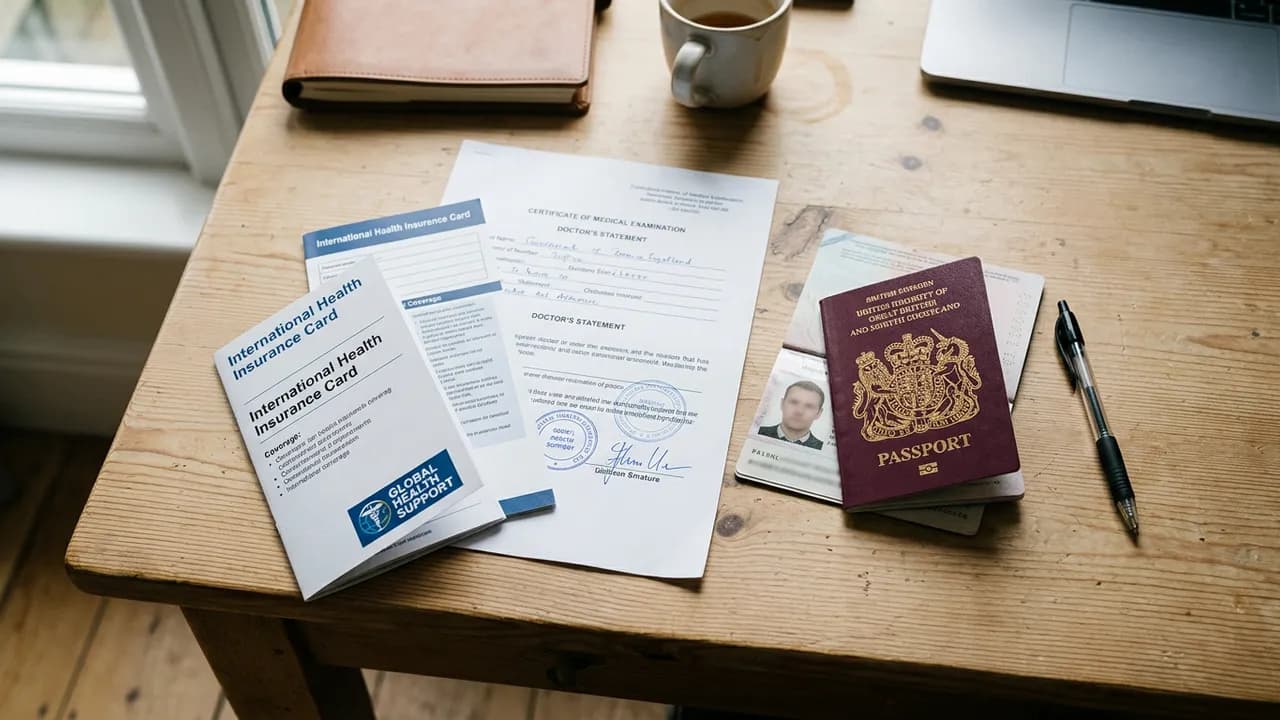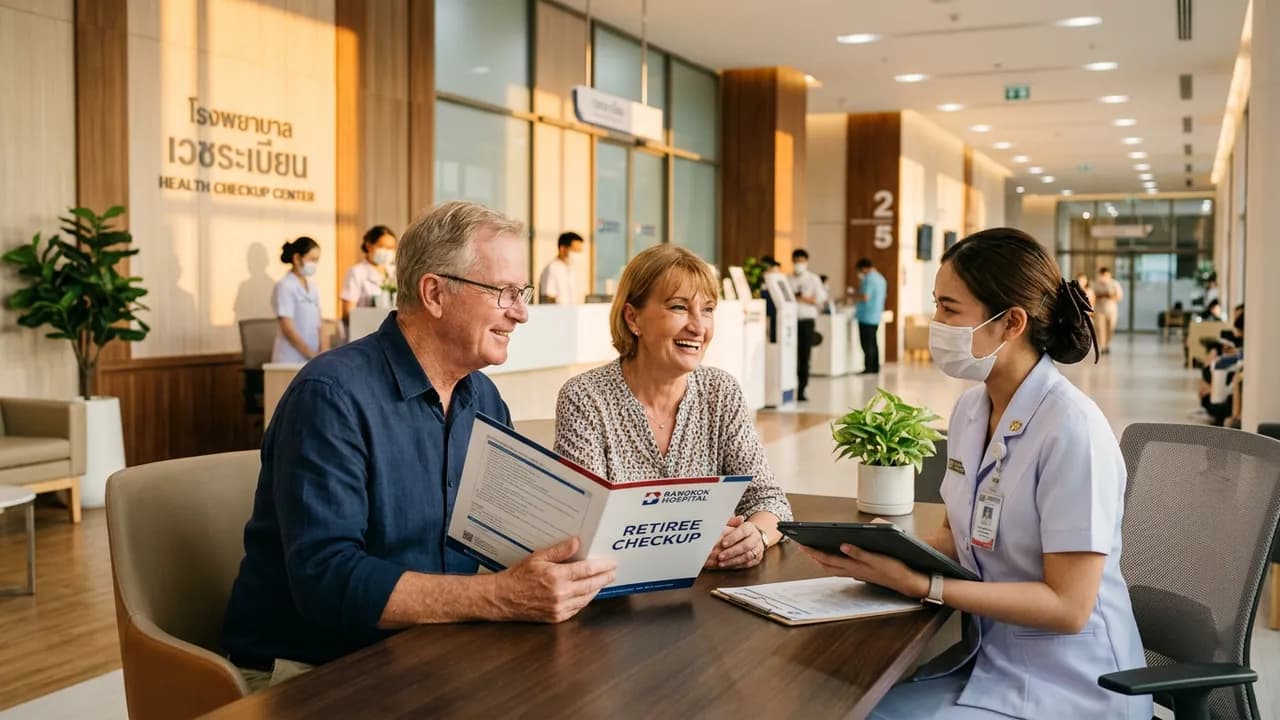
Healthcare for retirees in Thailand is often the deciding factor for retirement abroad, and the country excels here in ways that surprise most newcomers. Thailand excels here in ways that surprise most newcomers. The country has world-class private hospitals staffed by internationally trained doctors, a robust medical tourism industry that generates over $5 billion annually, and costs that are typically 50-80% lower than in the United States, Europe, or Australia. For retirees, this combination of quality and affordability is transformative. For the full overview of moving abroad as a retiree, see our retire in Thailand guide.
However, navigating healthcare in Thailand requires understanding the system's structure, securing appropriate insurance, and knowing where to go when you need care. This guide covers everything retirees need to know about healthcare in Thailand in 2026.
Thailand's Healthcare System Overview
Thailand operates a dual healthcare system: a government (public) system and a private system. As a foreign retiree, you will primarily use private healthcare, though understanding both systems is useful.
Public Hospitals
Thailand's government hospitals provide universal coverage to Thai citizens through three main schemes: the Universal Coverage Scheme (30-Baht Scheme), Social Security, and the Civil Servant Medical Benefit Scheme. Foreign retirees are not covered under any of these programs.
| Aspect | Details |
|---|---|
| Cost | Very low (walk-in consultations 30-200 THB) |
| Quality of care | Generally good, especially at university hospitals |
| English ability | Limited — most staff speak little to no English |
| Wait times | Long — 2-6 hours for walk-in patients is common |
| Facilities | Functional but basic. Shared wards standard. |
| Accessibility | Available throughout the country |
When to use public hospitals: Emergencies (they will treat you regardless of insurance), specialized treatments available only at university hospitals (Siriraj, Ramathibodi, Chulalongkorn), or if you are comfortable navigating a Thai-language environment and want to save money on routine care.
Private Hospitals
Private hospitals are where most foreign retirees receive care. They operate as businesses, with modern facilities, English-speaking staff, shorter wait times, and a service-oriented approach.
| Aspect | Details |
|---|---|
| Cost | Moderate by international standards, significantly below Western prices |
| Quality of care | World-class at top-tier hospitals |
| English ability | Excellent — many doctors trained abroad |
| Wait times | Minimal — 15-60 minutes typical |
| Facilities | Modern, clean, hotel-like rooms |
| Accessibility | Concentrated in major cities |
Private Clinics
Smaller private clinics fill the gap for routine care. They are found in every neighborhood and town.
| Aspect | Details |
|---|---|
| Cost | Low (consultations 200-500 THB including basic medication) |
| Services | General practice, basic diagnostics, common illnesses |
| English ability | Variable |
| Hours | Often open evenings and weekends |
| Best for | Colds, minor injuries, basic prescriptions, routine checks |
Health Insurance for Retirees
O-A Visa Insurance Requirement
Since 2019, holders of the Non-Immigrant O-A (retirement) visa are required to have health insurance meeting minimum coverage levels:
| Coverage Type | Minimum Amount |
|---|---|
| Outpatient | 40,000 THB per incident |
| Inpatient | 400,000 THB per incident |
This insurance must be from a Thai insurance company approved by the Office of Insurance Commission (OIC). Foreign insurance policies are generally not accepted for visa purposes, though you may carry them as supplementary coverage.
Note: The Non-Immigrant O visa (extended for retirement) does not have this mandatory insurance requirement at most immigration offices, which is one reason some retirees choose the O visa path over the O-A visa. See our retirement visa extension guide for details on the annual renewal process. However, having insurance regardless of visa type is strongly recommended.
Types of Insurance Available
Thai Insurance Companies (OIC-Approved)
These satisfy the visa requirement and are the primary option for most retirees.
| Insurer | Annual Premium (Age 60-65) | Inpatient Limit | Outpatient Included |
|---|---|---|---|
| Pacific Cross | 25,000-60,000 THB | 1,000,000-3,000,000 THB | Optional |
| AIA Thailand | 20,000-50,000 THB | 500,000-2,000,000 THB | Some plans |
| Thai Health Insurance (Deves) | 15,000-40,000 THB | 400,000-1,000,000 THB | Optional |
| Muang Thai Insurance | 18,000-45,000 THB | 500,000-2,000,000 THB | Some plans |
| Luma | 20,000-55,000 THB | 1,000,000-5,000,000 THB | Included in some plans |
Premiums vary significantly based on age, coverage level, deductibles, and pre-existing conditions.
International Insurance Companies
These do not satisfy the O-A visa requirement but offer broader coverage, including treatment in other countries.
| Insurer | Annual Premium (Age 60-65) | Coverage Area | Key Features |
|---|---|---|---|
| BUPA International | $3,000-8,000 USD | Worldwide | Comprehensive, strong reputation |
| Cigna Global | $2,500-7,000 USD | Worldwide | Wide hospital network |
| Allianz Care | $2,000-6,000 USD | Worldwide or regional | Flexible plans |
| Aetna International | $2,500-7,000 USD | Worldwide | Strong US connection |
| AXA Global Healthcare | $2,000-6,000 USD | Worldwide | European-based |
Some retirees carry both a Thai OIC-approved policy (for visa compliance) and an international policy (for comprehensive coverage including evacuation and overseas treatment).
The Age Factor in Insurance
Health insurance premiums increase significantly with age. This is the single biggest healthcare planning challenge for retirees.
| Age Range | Typical Annual Premium (Thai insurer, mid-range plan) |
|---|---|
| 50-55 | 15,000-30,000 THB |
| 55-60 | 25,000-50,000 THB |
| 60-65 | 40,000-80,000 THB |
| 65-70 | 60,000-120,000 THB |
| 70-75 | 80,000-180,000 THB |
| 75-80 | 100,000-250,000 THB |
| 80+ | Very limited availability; 200,000+ THB where available |
Critical ages:
- 65 — Many policies increase premiums sharply
- 70 — Some insurers will not issue new policies to applicants over 70
- 75 — Renewal may become increasingly difficult or expensive
- 80 — Very few insurers will cover individuals over 80
Pre-Existing Conditions
This is the most problematic area for retiree health insurance. Most Thai insurers:
- Exclude pre-existing conditions entirely, or
- Apply a waiting period (typically 12-24 months) before covering pre-existing conditions, or
- Charge a significant surcharge (50-100% premium increase)
Common pre-existing conditions that affect coverage:
- Heart disease, hypertension, previous heart attacks or bypass surgery
- Diabetes (Type 1 or Type 2)
- Cancer (previous or current)
- Stroke history
- Chronic kidney disease
- COPD and chronic respiratory conditions
- Joint conditions requiring replacement
Strategy: Apply for insurance as early as possible — ideally before you develop conditions that would be excluded. If you already have pre-existing conditions, compare policies carefully and consider self-insuring for those specific conditions while maintaining insurance for new, unexpected events.
Self-Insurance
Some retirees, particularly those over 70 or with extensive pre-existing conditions, choose to self-insure. This means maintaining a dedicated healthcare fund instead of paying insurance premiums.
Advantages:
- No premium increases with age
- No exclusions for pre-existing conditions
- No claims process
- Full control over your healthcare spending
Risks:
- A major medical event (cancer treatment, heart surgery, extended ICU stay) can cost 500,000-3,000,000+ THB
- Without insurance, you bear 100% of the risk
- Catastrophic events can deplete retirement savings
Recommended self-insurance fund: At least 2,000,000-3,000,000 THB ($57,000-86,000 USD) set aside specifically for healthcare, in addition to your retirement visa deposit and living expenses.
Best Hospitals for Retirees by City
Bangkok
Bangkok has the highest concentration of world-class hospitals in Thailand. Several are JCI-accredited (Joint Commission International), the gold standard for international hospital accreditation.
| Hospital | JCI Accredited | Specialties | English Service | Cost Level |
|---|---|---|---|---|
| Bumrungrad International | Yes | All major specialties, medical tourism leader | Excellent | High |
| BNH Hospital | Yes | Orthopedics, cardiology, women's health | Excellent | Medium-High |
| Samitivej (Sukhumvit/Srinakarin) | Yes | Pediatrics, emergency medicine, all specialties | Excellent | Medium-High |
| Bangkok Hospital | Yes | Cardiology, oncology, neurology | Excellent | High |
| Phyathai Hospital (multiple) | Some | General, orthopedics, rehabilitation | Good | Medium |
| Praram 9 Hospital | Yes | Oncology, cardiology, gastro | Good | Medium |
| Vejthani Hospital | Yes | Orthopedics, spine, general | Good | Medium |
| Ramathibodi Hospital (public/university) | N/A | Complex cases, research, transplant | Limited | Low |
Bumrungrad International is frequently cited as the best hospital in Southeast Asia. It treats over 1.1 million patients annually, including over 520,000 international patients from 190 countries. The facility includes international patient floors with translation services in over 30 languages.
Chiang Mai
| Hospital | Specialties | English Service | Cost Level |
|---|---|---|---|
| Chiang Mai Ram Hospital | General, orthopedics, cardiology | Good | Medium |
| Bangkok Hospital Chiang Mai | Part of Bangkok Hospital chain, all specialties | Good | Medium-High |
| Lanna Hospital | General, popular with expats | Good | Medium |
| Rajavej Chiang Mai | General, emergency | Moderate | Low-Medium |
| Maharaj Nakorn (Suan Dok) - public | University hospital, complex cases | Limited | Low |
Phuket
| Hospital | Specialties | English Service | Cost Level |
|---|---|---|---|
| Bangkok Hospital Phuket | Part of Bangkok Hospital chain | Good | Medium-High |
| Siriroj Hospital | General, popular with expats | Good | Medium |
| Phuket International Hospital | General, emergency | Good | Medium |
| Dibuk Hospital | General, cost-effective | Moderate | Low-Medium |
Pattaya
| Hospital | Specialties | English Service | Cost Level |
|---|---|---|---|
| Bangkok Hospital Pattaya | All major specialties | Good | Medium-High |
| Pattaya Memorial Hospital | General, well-established | Good | Medium |
| Phyathai Sriracha | General, orthopedics | Good | Medium |
Hua Hin
| Hospital | Specialties | English Service | Cost Level |
|---|---|---|---|
| Bangkok Hospital Hua Hin | General, only major private hospital | Good | Medium-High |
| San Paulo Hua Hin | General | Moderate | Medium |
| Hua Hin Hospital (public) | General, emergency | Limited | Low |
Healthcare Costs: What to Expect
Outpatient Services
| Service | Private Hospital | Private Clinic | Public Hospital |
|---|---|---|---|
| GP consultation | 500-1,500 THB | 200-500 THB | 30-200 THB |
| Specialist consultation | 1,000-3,000 THB | N/A | 100-500 THB |
| Basic blood test | 500-1,500 THB | 300-800 THB | 100-300 THB |
| Comprehensive blood panel | 3,000-8,000 THB | N/A | 500-2,000 THB |
| X-ray | 500-2,000 THB | N/A | 200-500 THB |
| MRI scan | 8,000-18,000 THB | N/A | 3,000-8,000 THB |
| CT scan | 5,000-15,000 THB | N/A | 2,000-6,000 THB |
| Ultrasound | 1,500-4,000 THB | N/A | 500-1,500 THB |
Dental Care
Thailand is also a dental tourism destination. Private dental clinics offer high-quality care at competitive prices.
| Service | Cost Range |
|---|---|
| Dental checkup and cleaning | 800-2,000 THB |
| Filling (composite) | 800-2,500 THB |
| Root canal | 5,000-15,000 THB |
| Crown (porcelain) | 8,000-20,000 THB |
| Dental implant (per tooth) | 35,000-80,000 THB |
| Full dentures (upper or lower) | 8,000-30,000 THB |
| Teeth whitening | 5,000-15,000 THB |
Major Procedures (Private Hospital)
| Procedure | Thailand Cost | US Cost (approximate) | Savings |
|---|---|---|---|
| Heart bypass surgery (CABG) | 400,000-800,000 THB | $75,000-200,000 USD | 85-90% |
| Hip replacement | 300,000-600,000 THB | $40,000-80,000 USD | 75-85% |
| Knee replacement | 300,000-550,000 THB | $35,000-70,000 USD | 75-85% |
| Cataract surgery (per eye) | 30,000-80,000 THB | $3,500-7,000 USD | 65-75% |
| Colonoscopy | 15,000-35,000 THB | $2,000-5,000 USD | 75% |
| Angioplasty with stent | 200,000-500,000 THB | $30,000-50,000 USD | 80% |
| Cancer treatment (varies widely) | 200,000-2,000,000+ THB | $50,000-500,000+ USD | 70-85% |
| MRI scan | 8,000-18,000 THB | $1,000-3,000 USD | 75-85% |
Annual Health Checkup Packages
Most private hospitals offer comprehensive health checkup packages designed for different age groups and risk profiles:
| Package Level | Includes | Cost |
|---|---|---|
| Basic | Physical exam, blood panel, chest X-ray, urinalysis | 3,000-6,000 THB |
| Standard | Basic + ECG, liver/kidney function, diabetes screening | 6,000-12,000 THB |
| Comprehensive | Standard + tumor markers, thyroid, bone density | 12,000-25,000 THB |
| Executive/Premium | Comprehensive + CT scan, stress test, colonoscopy | 25,000-60,000 THB |
Annual checkups are recommended for all retirees over 50. Packages at Thai hospitals include direct consultation with doctors who explain results, unlike many Western systems where you wait weeks for a follow-up appointment.
Prescription Medications
Thailand offers significant savings on prescription medications, and many drugs that require a prescription in Western countries are available over the counter at Thai pharmacies.
Pharmacy Access
- Hospital pharmacies — Widest selection, guaranteed quality, prices marked up from wholesale
- Chain pharmacies (Boots, Watsons, Fascino) — Common medications, competitive prices
- Independent pharmacies — Found everywhere, often staffed by licensed pharmacists, lowest prices
- Some medications require a prescription — Antibiotics, controlled substances, and certain specialty medications
Common Medication Costs
| Medication | Monthly Cost (Thailand) | Monthly Cost (US, without insurance) |
|---|---|---|
| Metformin (diabetes) | 100-300 THB | $30-100 USD |
| Amlodipine (blood pressure) | 150-400 THB | $30-80 USD |
| Atorvastatin (cholesterol) | 200-600 THB | $50-200 USD |
| Omeprazole (acid reflux) | 100-300 THB | $20-60 USD |
| Levothyroxine (thyroid) | 100-200 THB | $15-50 USD |
| Insulin (diabetes) | 500-1,500 THB | $200-500 USD |
Important: Bring a written list of your current medications (generic names, dosages) when you move to Thailand. Your doctor at a Thai hospital can prescribe equivalent medications. Some brand-name medications may not be available, but generic equivalents almost always are.
Navigating the Thai Medical System
How Hospital Visits Work
The typical private hospital visit follows this process:
- Registration — Present your passport and insurance card (if applicable). First-time patients create a hospital file. Takes 10-20 minutes.
- Triage/Vitals — Nurse takes blood pressure, weight, temperature. Brief description of symptoms.
- Wait — Typically 15-45 minutes at private hospitals. During busy periods, up to an hour.
- Doctor consultation — Usually 10-20 minutes. Doctors at private hospitals generally speak good English.
- Tests/procedures — If needed, blood tests, X-rays, etc. are done at the hospital. Results for basic blood tests often available in 1-2 hours.
- Follow-up consultation — Doctor reviews test results and provides treatment plan.
- Pharmacy — Prescriptions filled at the hospital pharmacy. Medications dispensed immediately.
- Payment — Pay at the cashier. If insured, the hospital may bill the insurer directly (if they have a direct billing agreement) or you pay and submit receipts for reimbursement.
Tips for Hospital Visits
- Bring your passport — Required for registration
- Bring a list of current medications — Include generic names and dosages
- Bring previous medical records — Especially for chronic conditions
- Ask about costs upfront — Before agreeing to tests or procedures, ask what they will cost
- Request itemized bills — Helpful for insurance claims and verifying charges
- Get a second opinion — For major procedures, consult another hospital
- Choose a "regular" doctor — At most hospitals, you can request the same doctor for continuity of care
Emergency Services
In a medical emergency:
- Call 1669 — Thailand's emergency medical number (English available but limited)
- Call the hospital directly — Most private hospitals have 24/7 emergency departments with their own ambulances
- Go directly to the nearest hospital — If you can get there faster than waiting for an ambulance
- Emergency rooms at private hospitals do not require insurance or upfront payment for life-threatening emergencies — they will stabilize you first and discuss payment later
Medical Tourism: Combining Retirement and Treatment
Many retirees choose Thailand partly because of the medical tourism infrastructure. This means:
- Procedures are routine — Thai hospitals perform thousands of joint replacements, cardiac procedures, and other surgeries annually on international patients
- International patient departments — Major hospitals have dedicated departments for foreign patients with translators, international insurance coordination, and concierge services
- Visiting specialists — Some retirees fly family members to Thailand for medical procedures, combining treatment with vacation
- Recovery in paradise — Post-surgical recovery in a warm climate with affordable home care and rehabilitation services
Long-Term Care and Aging in Thailand
Home Care Services
For retirees who need daily assistance, Thailand offers affordable home care:
| Service | Monthly Cost |
|---|---|
| Part-time caregiver (4-6 hours/day) | 10,000-15,000 THB |
| Full-time live-in caregiver | 15,000-25,000 THB |
| Registered nurse (part-time) | 20,000-35,000 THB |
| Physical therapist (home visits) | 1,000-2,000 THB per session |
These costs are a fraction of equivalent services in Western countries, where home care can cost $3,000-8,000 USD per month.
Assisted Living and Nursing Homes
Thailand's assisted living sector for foreigners is growing but still limited compared to Western countries:
| Facility Type | Monthly Cost | Availability |
|---|---|---|
| Thai-standard nursing home | 15,000-30,000 THB | Widely available |
| International-standard assisted living | 40,000-100,000 THB | Bangkok, Chiang Mai, Phuket |
| Premium retirement communities | 80,000-200,000 THB | Limited, mostly Bangkok |
Notable facilities include:
- Baan Kamlangchay (Chiang Mai) — Dementia care facility founded by a Swiss psychologist
- Vivobene Village (near Bangkok) — European-standard retirement village
- Cherish Chiang Mai — Long-term care for foreign retirees
Planning for Declining Health
Retirees should plan for the possibility that their health will decline to the point where living independently in Thailand is no longer feasible:
- Maintain insurance or a substantial emergency fund — Medical evacuation to your home country can cost $50,000-200,000 USD
- Have a plan for cognitive decline — Consider power of attorney arrangements under Thai law
- Build a support network — Friends, expat groups, and community organizations can provide early warning and assistance
- Keep family informed — Ensure family members in your home country know your medical history, insurance details, and wishes
- Consider medical evacuation insurance — Covers the cost of transporting you to your home country for treatment if needed
Frequently Asked Questions
Can I use my home country's health insurance in Thailand?
Most domestic health insurance policies do not cover treatment abroad. Some travel insurance policies provide limited coverage. For long-term residence, you need Thai or international health insurance.
What if I need a specialist not available in my city?
Bangkok has every medical specialty. If you live in a smaller city, you may need to travel to Bangkok for specialized treatment. Domestic flights are affordable (1,000-3,000 THB) and take 1-2 hours.
Can I get emergency dental care easily?
Yes. Most private hospitals have dental departments, and standalone dental clinics are abundant. Walk-in emergency dental treatment is available.
What about mental health services?
Psychiatrists and psychologists are available at major private hospitals. English-speaking therapists can be found in Bangkok and Chiang Mai, though the selection is more limited than in Western countries. Online therapy platforms also serve expats in Thailand.
Do Thai pharmacies sell controlled substances over the counter?
No. Thailand strictly controls narcotics and psychotropic medications. Bring a doctor's prescription and a letter from your physician for any controlled medications you bring into the country. Some medications legal in your home country may be restricted in Thailand.
Is medical marijuana available in Thailand?
Thailand decriminalized cannabis in 2022 but has since implemented new restrictions. Medical use through licensed clinics is available, but regulations continue to evolve. Consult a Thai physician for current rules.
How do I transport my medical records to Thailand?
Request complete medical records from your current healthcare providers before moving. Bring physical copies and digital copies (USB drive or cloud storage). Most Thai hospitals can accept records in English. For other languages, arrange certified translations.
What vaccinations should retirees get before moving to Thailand?
Consult a travel medicine specialist. Common recommendations include: Hepatitis A and B, Typhoid, Tetanus/Diphtheria booster, and seasonal flu vaccine. Rabies pre-exposure vaccination is recommended if you will be in rural areas or around animals.
Conclusion
Healthcare is one of Thailand's strongest selling points for retirees. The combination of high-quality private hospitals, internationally trained doctors, and costs dramatically lower than Western countries creates a healthcare environment that is genuinely better and more affordable than what most retirees experience at home. The challenges are real — insurance becomes expensive and harder to obtain with age, pre-existing conditions complicate coverage, and the best hospitals are concentrated in major cities. But with proper planning, appropriate insurance (or a well-funded self-insurance strategy), and an understanding of how the system works, retirees in Thailand can access world-class healthcare throughout their retirement years.
For a detailed breakdown of monthly costs across Thai cities, see our Cost of Retirement in Thailand guide. Start your healthcare planning before you move: secure insurance while you are healthy, establish relationships with doctors early, get a comprehensive health checkup upon arrival, and maintain regular preventive care. The investment in health planning pays dividends in peace of mind and, ultimately, in quality of life.