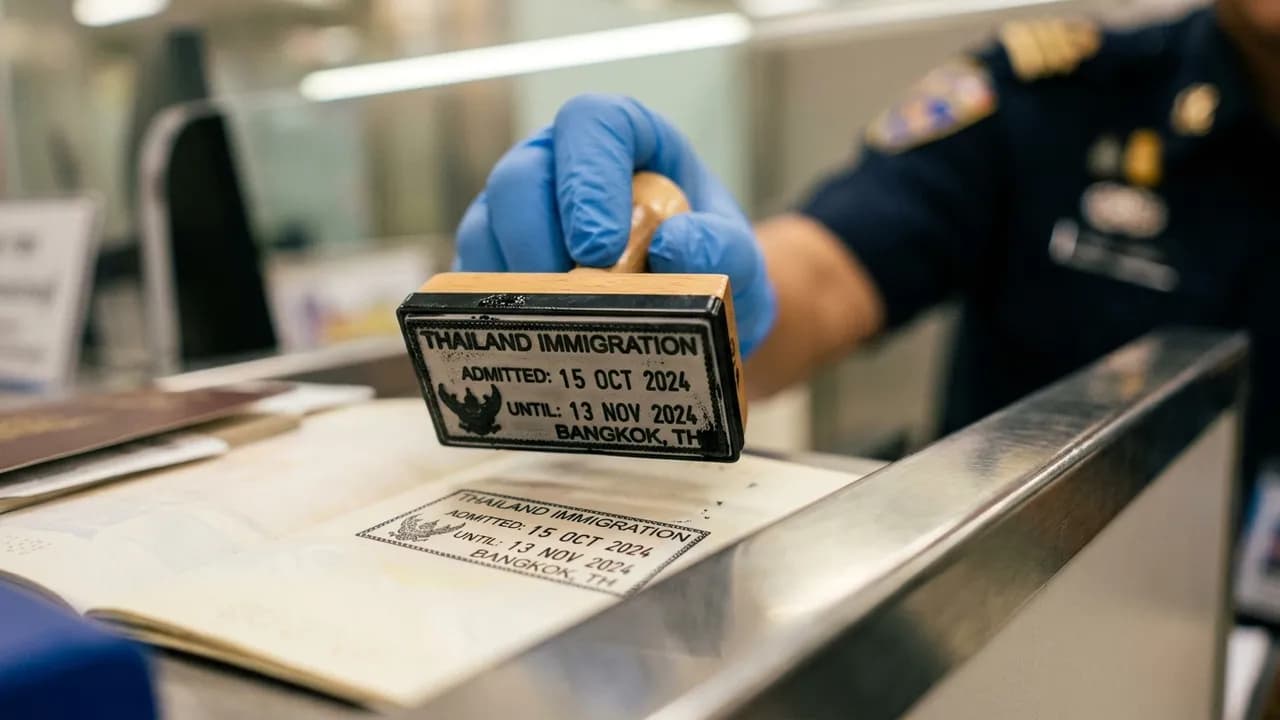
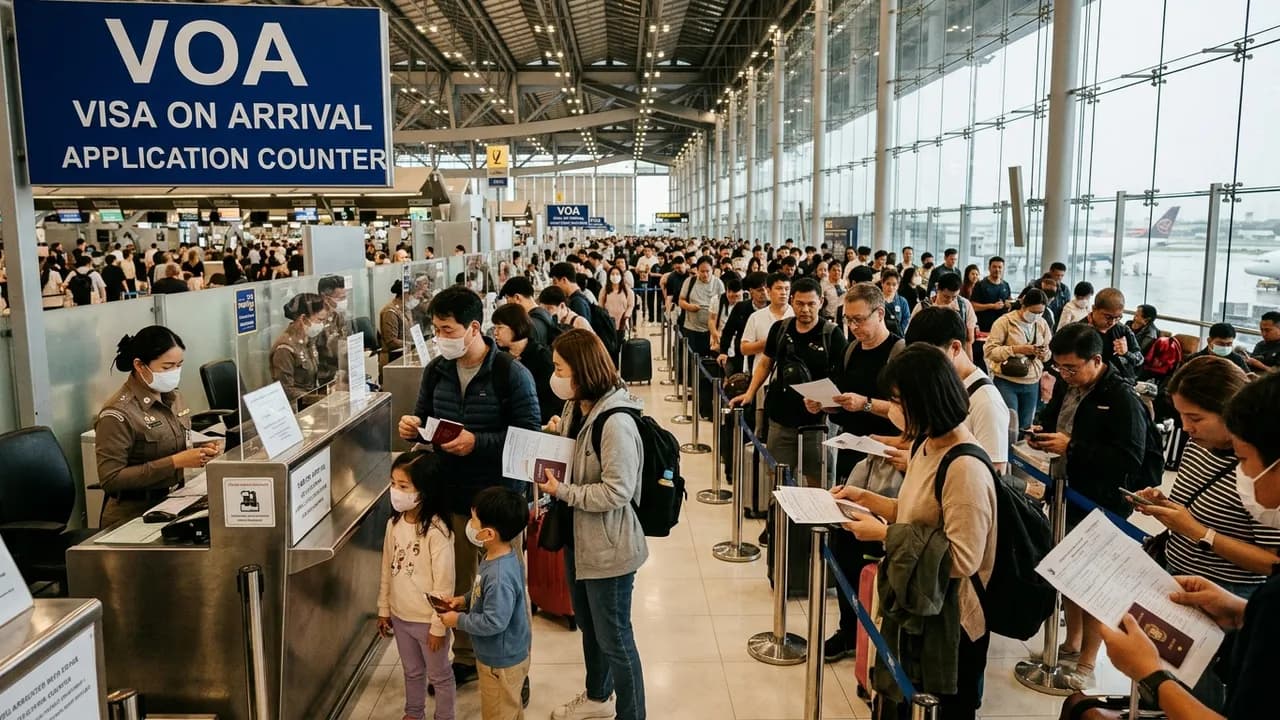
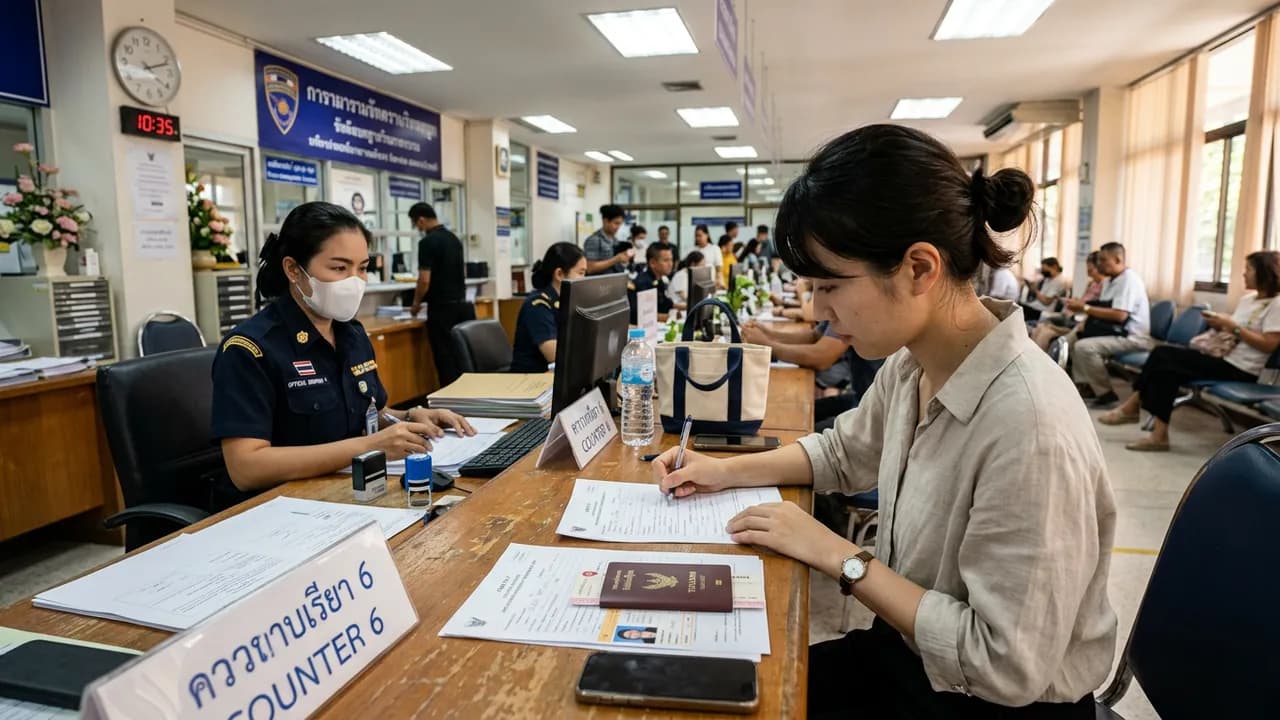
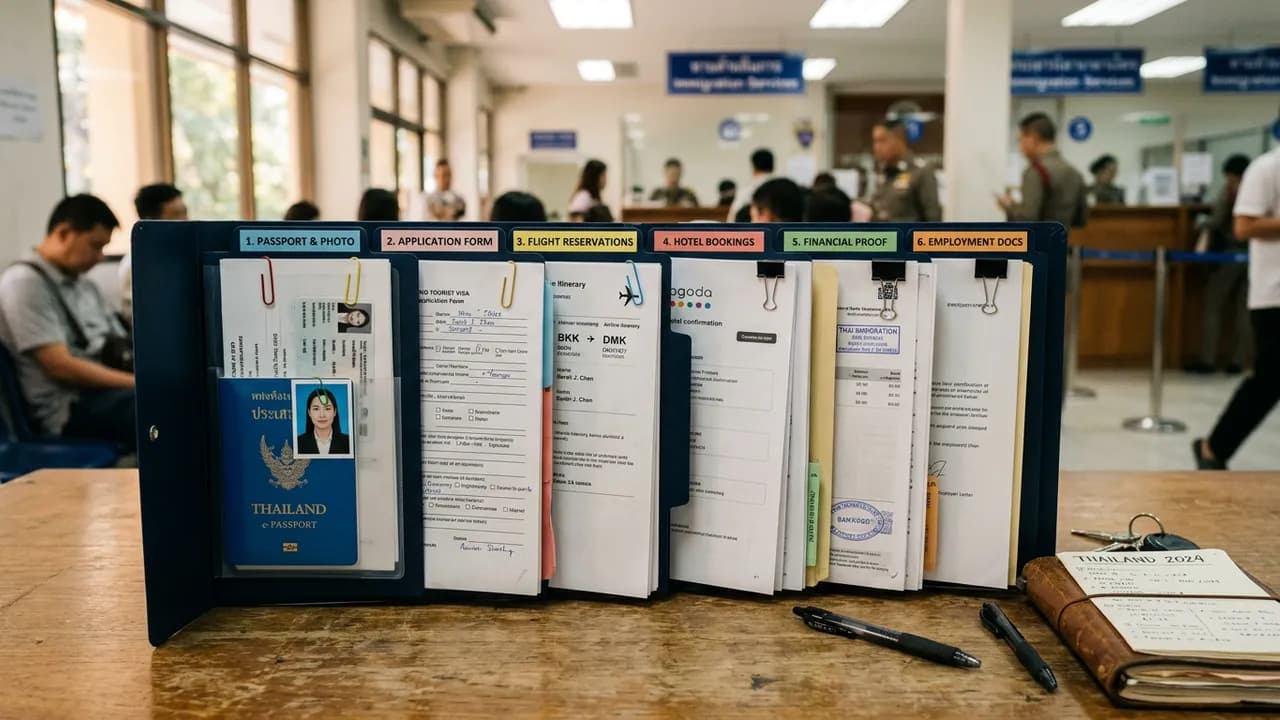
The Thailand Tourist Visa (TR) is the standard single-entry or multiple-entry visa issued to foreign nationals who wish to visit Thailand for tourism, sightseeing, or leisure purposes. Unlike the visa exemption or visa on arrival, the TR visa provides a longer authorized stay and is the right choice for travelers planning extended holidays or those whose nationality does not qualify for visa-free entry.
Quick Facts
| Detail | Information |
|---|---|
| Visa Code | TR (Tourist Visa) |
| Validity | 3 months (single-entry) / 6 months (multiple-entry) |
| Length of Stay | 60 days per entry |
| Extension | 30-day extension available at Thai Immigration |
| Cost | 1,000 THB (single-entry) / 5,000 THB (multiple-entry) |
| Processing Time | 3–5 business days (varies by consulate) |
| Application | At a Royal Thai Embassy or Consulate abroad, or via e-Visa |
| Work Permitted | No |
Who Qualifies for the Tourist Visa (TR)?
The Thailand Tourist Visa is available to nationals of virtually every country. You should apply for a TR visa if:
- Your nationality does not qualify for visa exemption or visa on arrival
- You plan to stay in Thailand for more than 30 days (the typical visa-exempt allowance)
- You want the security of having a pre-approved visa before arrival
- You plan multiple trips to Thailand within a 6-month period (multiple-entry TR)
Single-Entry vs. Multiple-Entry
Single-Entry Tourist Visa (SETV): Valid for 3 months from the date of issue. You must enter Thailand within this validity window. Once you enter, you receive a 60-day stay permit. If you leave Thailand, the visa is used and you cannot re-enter on the same visa.
Multiple-Entry Tourist Visa (METV): Valid for 6 months from the date of issue. You may enter and exit Thailand as many times as you wish during the validity period. Each entry grants a 60-day stay. This is ideal for travelers who want to explore neighboring countries and return to Thailand.
Required Documents
Prepare the following documents before applying. Requirements may vary slightly between consulates, so always confirm with the specific Royal Thai Embassy or Consulate handling your application.
For Single-Entry Tourist Visa
- Passport — Valid for at least 6 months beyond your planned date of entry, with at least 2 blank pages
- Completed Application Form — Available at the embassy/consulate or online via the Thai e-Visa system
- Recent Passport Photo — 4x6 cm, taken within the last 6 months, white background (see photo requirements for detailed specifications)
- Proof of Travel — Confirmed round-trip flight booking or itinerary
- Proof of Accommodation — Hotel bookings, hostel reservations, or a letter of invitation from a host in Thailand
- Proof of Financial Means — Bank statement from the last 3 months showing a minimum balance equivalent to 20,000 THB per person or 40,000 THB per family
- Visa Fee — 1,000 THB (or equivalent in local currency)
For Multiple-Entry Tourist Visa
All documents listed above, plus:
- Bank Statement — Showing a minimum balance equivalent to 200,000 THB maintained for at least 3 months
- Cover Letter — Explaining your travel plans and reason for needing multiple entries
- Visa Fee — 5,000 THB (or equivalent in local currency)
Application Process: Step by Step
Option 1: Apply at a Royal Thai Embassy or Consulate
Step 1: Locate your nearest Thai Embassy or Consulate. Visit the Ministry of Foreign Affairs website for a complete list of Thai diplomatic missions worldwide.
Step 2: Check specific requirements. Each consulate may have slightly different documentation requirements, appointment systems, or submission methods. Call ahead or check their website.
Step 3: Gather all required documents. Ensure your passport has adequate validity, photos meet specifications, and financial documents are recent.
Step 4: Complete the application form. Fill out the visa application form accurately. Any errors or inconsistencies can cause delays or rejection.
Step 5: Submit your application. Visit the consulate in person or submit by post (where accepted). Some consulates require an appointment.
Step 6: Pay the visa fee. Payment methods vary by consulate — cash, bank draft, or money order are common. Credit cards are not always accepted.
Step 7: Wait for processing. Standard processing takes 3–5 business days. Some consulates offer express processing for an additional fee.
Step 8: Collect your passport. Pick up your passport with the visa sticker, or receive it by post if you included a prepaid return envelope.
Option 2: Apply via the Thai e-Visa System
Thailand's e-Visa system allows applicants from many countries to apply online.
Step 1: Create an account at the official Thai e-Visa portal.
Step 2: Select "Tourist Visa (TR)" and fill in the online application form.
Step 3: Upload scanned copies of all required documents (passport bio page, photo, flight booking, accommodation, bank statement).
Step 4: Pay the visa fee online by credit/debit card.
Step 5: Track your application status online. Processing typically takes 5–10 business days.
Step 6: Once approved, you will receive an e-Visa approval email. Print this and present it along with your passport at Thai immigration upon arrival.
Cost Breakdown
| Fee Type | Amount |
|---|---|
| Single-Entry Tourist Visa | 1,000 THB (~$30 USD) |
| Multiple-Entry Tourist Visa | 5,000 THB (~$145 USD) |
| 30-Day Extension (at Immigration) | 1,900 THB (~$55 USD) |
| e-Visa Service Fee | Varies (typically included in visa fee) |
Fees are subject to change. Exchange rate equivalents depend on the consulate's local currency conversion. Always confirm the current fee before applying.
Extending Your Stay
Once in Thailand, you can extend your 60-day stay by an additional 30 days at any Thai Immigration office. This gives you a maximum of 90 days on a single-entry Tourist Visa.
How to Extend
- Visit the nearest Thai Immigration office before your current stay expires
- Bring your passport, a completed TM.7 application form, a 4x6 cm photo, and 1,900 THB
- You will typically receive the extension on the same day
Major Immigration offices are located in Bangkok (Chaeng Wattana), Chiang Mai, Phuket, Pattaya, and other popular destinations.
Overstay Penalties
Do not overstay your visa. Penalties include:
- Fine of 500 THB per day of overstay, up to a maximum of 20,000 THB
- Detention and deportation for extended overstays
- Entry bans ranging from 1 year (overstay of 90+ days) to 10 years (overstay of 1+ year)
Common Mistakes to Avoid
1. Insufficient financial proof. A bank statement showing a balance below the required threshold is one of the most common reasons for rejection. Ensure your balance meets the minimum for at least 3 months before applying.
2. Passport validity too short. Your passport must be valid for at least 6 months from your intended entry date. If it expires sooner, renew it before applying.
3. Missing or incorrect flight details. Your itinerary must show a confirmed departure from Thailand. One-way tickets can raise concerns.
4. Poor quality photo. Follow the exact photo specifications. Photos that are too old, the wrong size, or have a non-white background will be rejected.
5. Applying at the wrong consulate. You generally must apply at the Thai consulate that has jurisdiction over your place of residence. Applying at a consulate in another country while traveling is possible but may require additional documentation.
6. Not allowing enough processing time. Apply at least 2–3 weeks before your travel date. Rush applications are not always possible.
Important Notes and Warnings
- The Tourist Visa does not permit any form of work, including remote work or freelancing. If you plan to work, you need a Non-Immigrant B Visa.
- If you are planning a long-term stay for retirement, family, or education, other visa categories such as the Non-Immigrant O or Non-Immigrant ED may be more appropriate.
- The Destination Thailand Visa (DTV) is designed for digital nomads and remote workers and offers a 180-day stay.
- Immigration officers at the port of entry have final discretion over your admission, even with a valid visa. Be prepared to show your return ticket, accommodation details, and proof of funds if asked.
- Multiple-entry Tourist Visas are subject to the 90-day reporting rule — if your combined stays in Thailand reach 90 consecutive days, you must report your address to Immigration.
Tourist Visa vs. Other Entry Options
| Feature | Tourist Visa (TR) | Visa Exemption | Visa on Arrival |
|---|---|---|---|
| Apply Before Travel | Yes | No | No |
| Stay Duration | 60 days | 30 or 60 days | 15 days |
| Extension Available | +30 days | +30 days | +15 days |
| Cost | 1,000–5,000 THB | Free | 2,000 THB |
| Multiple-Entry Option | Yes (METV) | No | No |
| Best For | Extended holidays | Short trips | Quick visits |
Frequently Asked Questions
Can I convert a Tourist Visa to another visa type while in Thailand?
In most cases, you cannot convert a Tourist Visa to a Non-Immigrant visa inside Thailand. You would typically need to leave the country and apply at a Thai consulate abroad. For more details, see our guide on changing visa type in Thailand. However, immigration policies can change, so check with your local Immigration office for the latest guidance.
How early can I apply for the Tourist Visa?
You can apply up to 3 months before your intended travel date for a single-entry visa, or up to 6 months for a multiple-entry visa. Applying too early means the visa may expire before you travel.
Is travel insurance required?
Travel insurance is not a mandatory requirement for the Tourist Visa, but it is strongly recommended. Some consulates may ask for proof of insurance as supporting documentation. At minimum, ensure you have coverage for medical emergencies while in Thailand.
Can I re-enter Thailand after my single-entry visa is used?
Once a single-entry Tourist Visa is used and you leave Thailand, the visa is consumed. You would need to either qualify for visa exemption on your return, apply for a new visa, or use a Visa on Arrival if eligible. For frequent travelers, the Multiple-Entry Tourist Visa is the better option.
What if my application is denied?
Visa fees are generally non-refundable if your application is denied. Review the reason for denial, correct any issues, and reapply. Common fixes include providing stronger financial proof, clearer travel plans, or additional supporting documents.