The Thailand Non-Immigrant B Visa is the primary visa category for foreign nationals who intend to work, conduct business, or engage in professional activities in Thailand. Whether you have been offered a job by a Thai company, are being transferred by a multinational employer, or plan to establish your own business in Thailand, the Non-Immigrant B visa is almost certainly the visa you need.
This visa does not grant a work permit by itself. You must obtain a separate Thai work permit after entering the country on a Non-Immigrant B visa. The two go hand-in-hand: the visa allows entry and stay, while the work permit authorizes employment.
Quick Facts
| Detail | Information |
|---|---|
| Visa Code | Non-Immigrant B |
| Purpose | Employment, business, teaching, investment |
| Validity | 3 months (single-entry) / 1 year (multiple-entry) |
| Length of Stay | 90 days per entry |
| Extension | Extendable to 1 year at Thai Immigration |
| Cost | 2,000 THB (single-entry) / 5,000 THB (multiple-entry) |
| Work Permit Required | Yes (separate application after arrival) |
| Processing Time | 5–10 business days |
| Application | Royal Thai Embassy/Consulate abroad or e-Visa |
Who Needs a Non-Immigrant B Visa?
You need this visa if you plan to:
- Work as an employee for a Thai-registered company
- Teach at a school, university, or language institute in Thailand
- Conduct business on behalf of a foreign company in Thailand
- Invest in or manage a Thai business
- Attend extended business meetings that go beyond what a standard business trip allows
- Serve as a company director of a Thai-registered business
Non-Immigrant B vs. Other Visa Types
If you are a digital nomad or remote worker employed by a company outside Thailand, the Destination Thailand Visa (DTV) may be more appropriate. If you are visiting for tourism, use the Tourist Visa (TR) or visa exemption. If your stay is for family, retirement, or volunteering, see the Non-Immigrant O Visa.
Required Documents
Document requirements vary depending on whether you are applying as an employee, business owner, or teacher. Below are the standard requirements and category-specific additions.
Standard Documents (All Applicants)
- Valid Passport — At least 6 months validity remaining, with 2+ blank pages
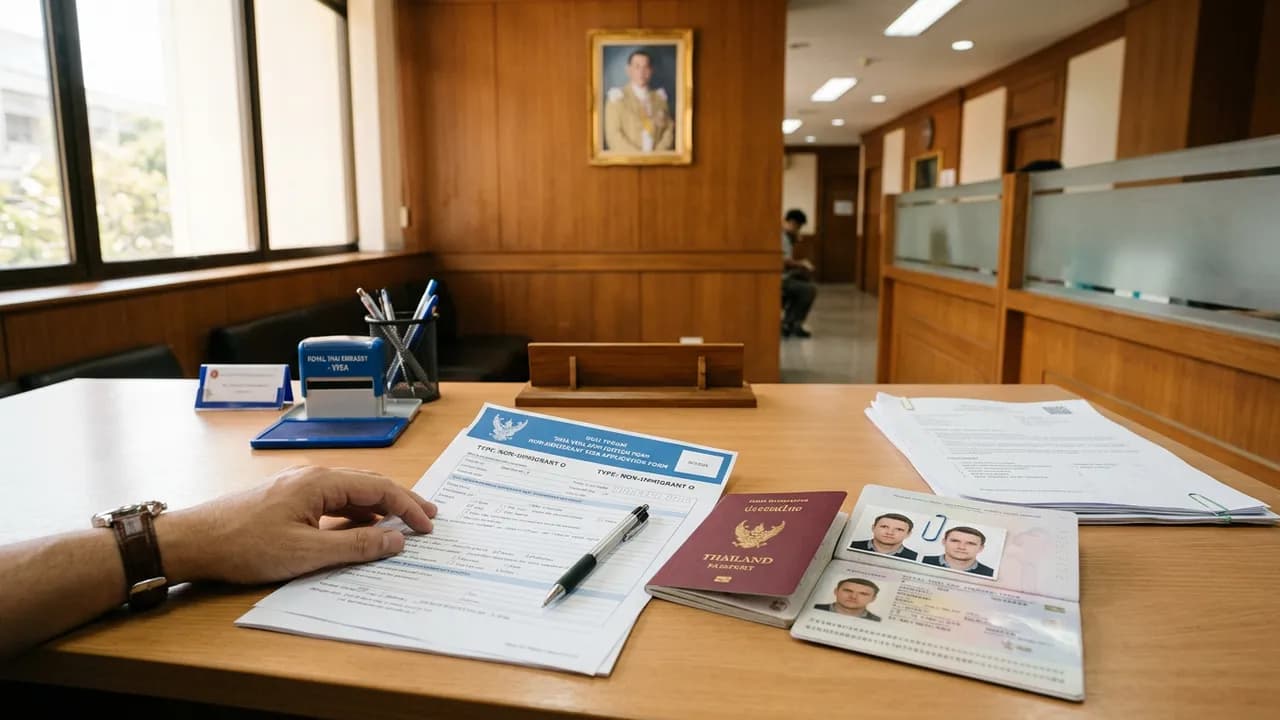
- Completed Visa Application Form — Available at the embassy or via the Thai e-Visa portal
- Recent Passport Photo — 4x6 cm, white background, taken within 6 months
- Proof of Travel — Confirmed flight booking to Thailand
- Visa Fee — 2,000 THB (single-entry) or 5,000 THB (multiple-entry)
For Employment (Hired by a Thai Company)
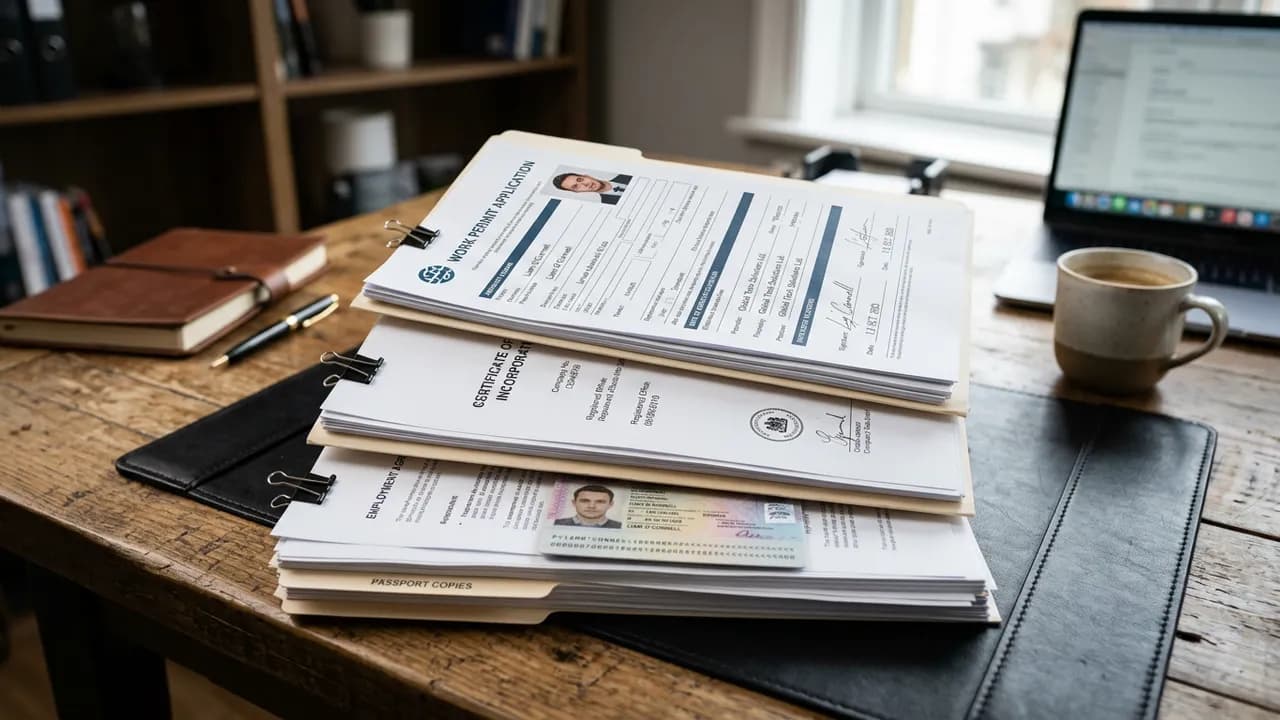
- Invitation/Offer Letter — From the Thai employer, on company letterhead, specifying your position, salary, and employment terms
- Company Documents — Business registration certificate, shareholder list, and latest audited financial statements of the Thai company
- WP.3 Form — Preliminary work permit approval from the Thai Ministry of Labour (your employer applies for this on your behalf)
- Employer's Tax ID — Company's tax registration documentation
- Employment Contract — Signed by both parties
For Business Owners/Investors
- Business Registration — Thai company registration documents showing your directorship or shareholding
- Business Plan — Overview of business activities, registered capital, and revenue projections
- Capital Investment Proof — Bank statements or transfer records showing investment into the Thai company
- Company Financial Statements — Audited accounts from the most recent fiscal year (for existing businesses)
For Teachers
- Employment Contract — From the Thai educational institution
- Academic Credentials — Degree certificates, TEFL/TESOL certification (if applicable)
- School License — Copy of the institution's operating license from the Thai Ministry of Education
- Criminal Background Check — From your home country, apostilled or authenticated
Application Process: Step by Step
Step 1: Secure Employment or Business Arrangements
Before you can apply for a Non-Immigrant B visa, you need a concrete reason to be in Thailand professionally. This means having a signed employment contract, a registered business, or an established teaching position.
Step 2: Employer Prepares Support Documents
Your Thai employer or business partner must prepare company registration documents, the invitation letter, and in most cases, apply for a WP.3 (pre-approval for work permit) at the Ministry of Labour. This can take 1–3 weeks.
Step 3: Apply at a Royal Thai Embassy or Consulate
Submit your complete application at the Thai embassy or consulate with jurisdiction over your place of residence. Some consulates accept walk-ins; others require appointments.
Alternatively, apply through the Thai e-Visa system if your country is supported.
Step 4: Attend an Interview (If Required)
Some consulates conduct brief interviews to verify the authenticity of your employment arrangement. Be prepared to explain your role, the company's business, and your qualifications.
Step 5: Receive Your Visa
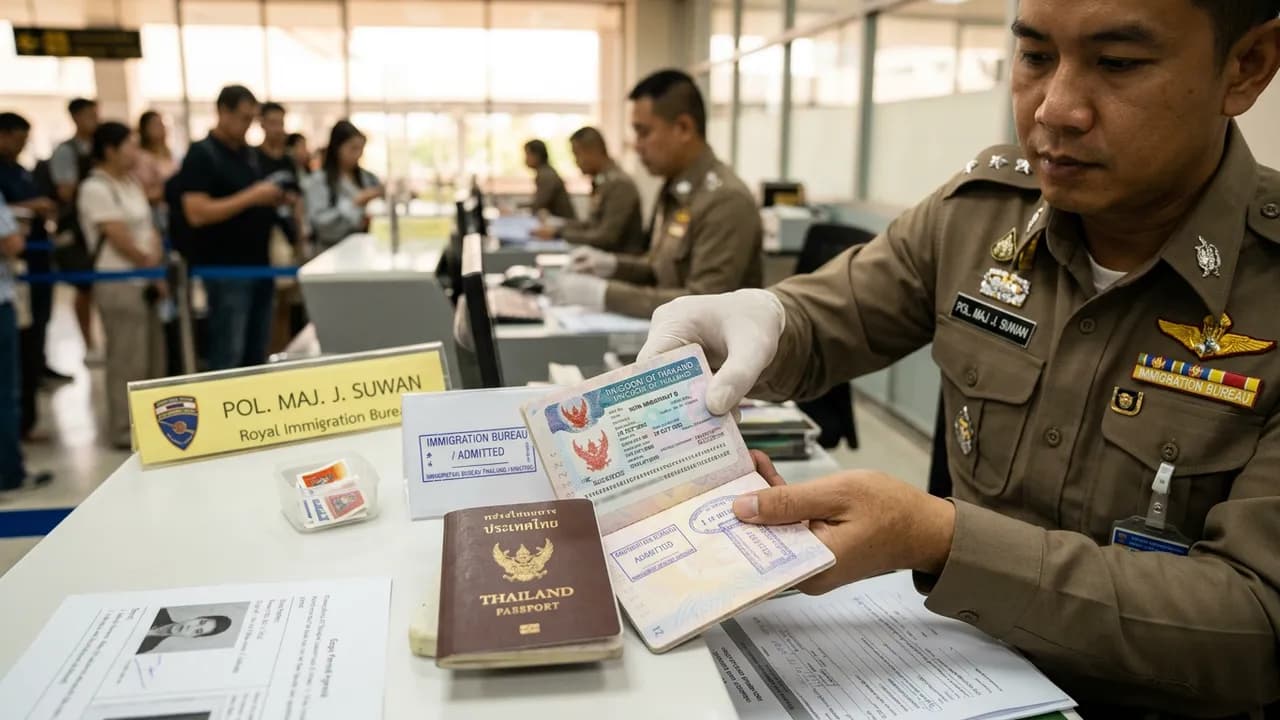
Processing takes 5–10 business days. Collect your passport with the Non-Immigrant B visa sticker, or receive it by post.
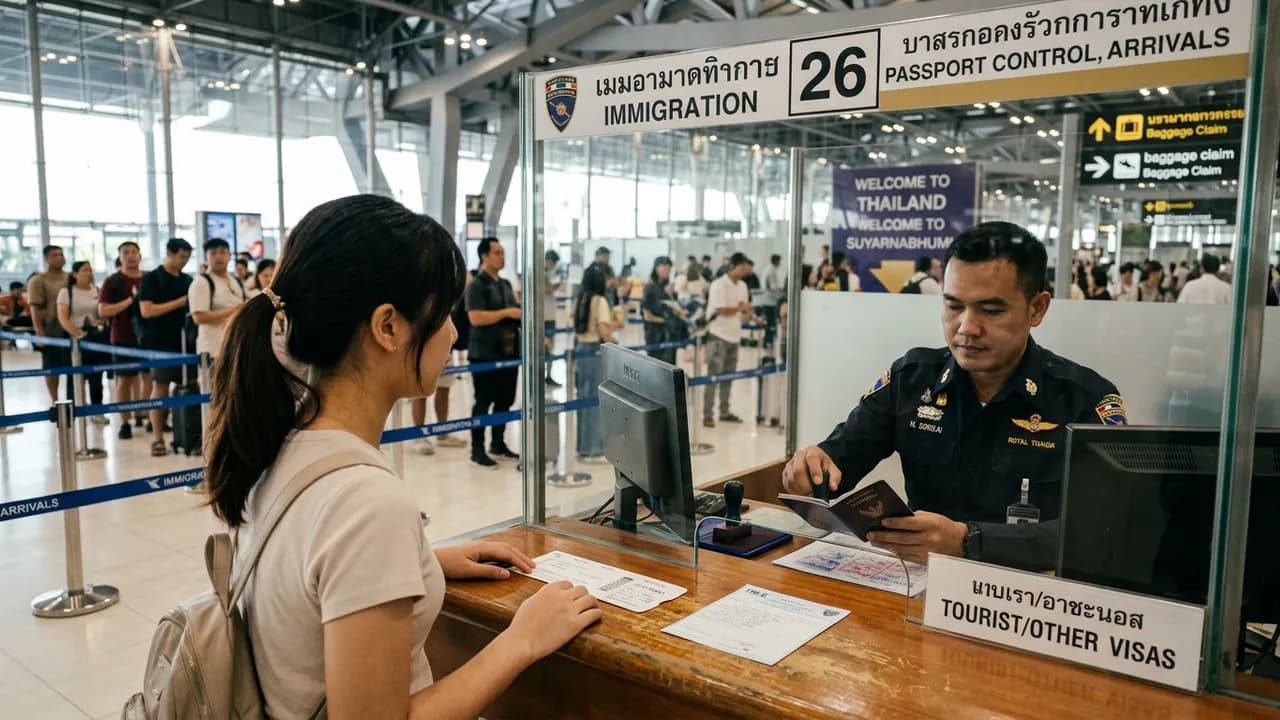
Step 6: Enter Thailand
You must enter Thailand within the visa's validity period (3 months for single-entry, 1 year for multiple-entry). Upon entry, you receive a 90-day stay permit.
Step 7: Apply for a Work Permit
Within 90 days of entry, your employer must apply for your work permit at the Ministry of Labour. You cannot legally begin working until the work permit is issued. See our Thailand work permit guide for a detailed walkthrough of this process.
Step 8: Extend Your Visa
Before the initial 90-day stay expires, apply for a 1-year extension of stay at your local Thai Immigration office. This is typically granted on the basis of employment and a valid work permit.
Cost Breakdown
| Fee Type | Amount |
|---|---|
| Single-Entry Non-Immigrant B Visa | 2,000 THB (~$58 USD) |
| Multiple-Entry Non-Immigrant B Visa | 5,000 THB (~$145 USD) |
| Work Permit Application | 750–3,000 THB (depending on duration) |
| 1-Year Extension of Stay | 1,900 THB |
| 90-Day Reporting | Free |
| Re-Entry Permit (single) | 1,000 THB |
| Re-Entry Permit (multiple) | 3,800 THB |
Work Permit Essentials
The work permit is as critical as the visa itself. Without it, working in Thailand is illegal and carries severe penalties including fines, imprisonment, and deportation.
Key Work Permit Requirements
- The employer applies on your behalf at the Ministry of Labour or the One Stop Service Center (for BOI-promoted companies)
- The Thai company must have a minimum registered capital of 2 million THB per foreign worker
- The company must employ at least 4 Thai employees per 1 foreign worker
- Your position must not be on the list of occupations prohibited for foreigners
- The work permit is tied to your specific employer and position — changing jobs requires a new work permit
BOI and Smart Visa Advantages
Companies promoted by the Board of Investment (BOI) enjoy streamlined processing and relaxed ratios for foreign workers through the BOI work permit pathway. Certain highly skilled professionals may qualify for the Smart Visa, which combines visa and work permit privileges.
90-Day Reporting
Every foreign national staying in Thailand for 90 consecutive days or more must report their address to Thai Immigration every 90 days. This can be done:
- In person at an Immigration office
- Online via the Thai Immigration 90-day reporting system
- By post (registered mail with a return envelope)
Failure to report on time results in a 2,000 THB fine.
Common Mistakes to Avoid
1. Working before the work permit is issued. Your Non-Immigrant B visa allows you to enter Thailand, but you cannot legally work until the work permit is in hand. Starting work early can result in arrest, fines, and deportation.
2. Applying without proper company documentation. Incomplete or missing company documents are the number one reason for visa delays and rejections. Ensure your employer provides all necessary paperwork.
3. Forgetting re-entry permits. If you leave Thailand without a re-entry permit, your extension of stay is voided. Apply for a single or multiple re-entry permit at Immigration before any international travel.
4. Not renewing on time. Both your visa extension and work permit must be renewed before they expire. Late renewals can result in loss of legal status.
5. Misunderstanding the visa vs. work permit distinction. The Non-Immigrant B visa and the work permit are separate documents issued by different government agencies. You need both to legally work in Thailand.
6. Ignoring 90-day reporting. This is a legal obligation, not optional. Set calendar reminders.
Important Notes and Warnings
- Salary requirements: The Thai government sets minimum salary thresholds for foreign workers based on nationality. These range from approximately 25,000–50,000 THB per month depending on your country of origin.
- Prohibited occupations: Certain jobs (manual labor, farming, some service roles) are reserved for Thai nationals. Check the Foreign Employment Act's prohibited occupations list.
- Tax obligations: Foreign workers in Thailand are subject to Thai income tax. Your employer should deduct tax at source. You may also have tax obligations in your home country.
- Family members: Your spouse and dependents can apply for a Non-Immigrant O Visa based on your Non-Immigrant B status. They will need their own visas but typically do not need work permits unless they also intend to work.
Frequently Asked Questions
Can I apply for a Non-Immigrant B Visa from inside Thailand?
Generally, no. You must apply from outside Thailand at a Royal Thai Embassy or Consulate. In some cases, you can convert a different non-immigrant visa to a Non-Immigrant B while inside Thailand, but this depends on Immigration policy and is not guaranteed.
How long does the full process take?
From initial application to having a work permit in hand, expect 4–8 weeks. This includes employer preparation (1–3 weeks), visa processing (1–2 weeks), and work permit application (1–2 weeks after arrival).
Can I change employers on the same visa?
You must cancel your existing work permit and have your new employer apply for a new one. The visa extension may need to be transferred or re-applied. Consult an immigration lawyer for smooth transitions.
Is the Non-Immigrant B Visa required for short business trips?
For short business meetings, conferences, or negotiations (not involving actual employment in Thailand), you may enter under a visa exemption or Tourist Visa. However, any activity that constitutes "work" under Thai law requires a Non-Immigrant B visa and work permit.
Can I start my own business on this visa?
Yes, but the process is complex. You typically need to register a Thai company (with specific Thai/foreign ownership ratios unless BOI-promoted or under a treaty), serve as a director, and have the company sponsor your work permit. Legal and accounting advice is strongly recommended.