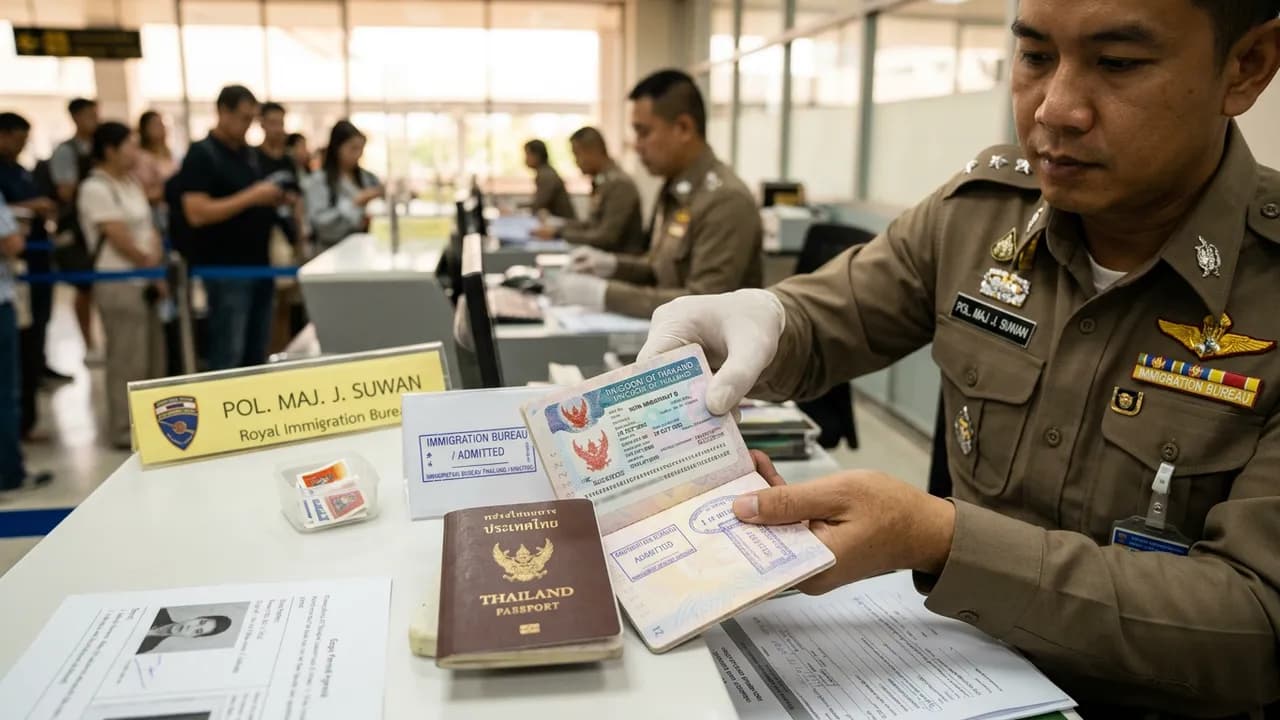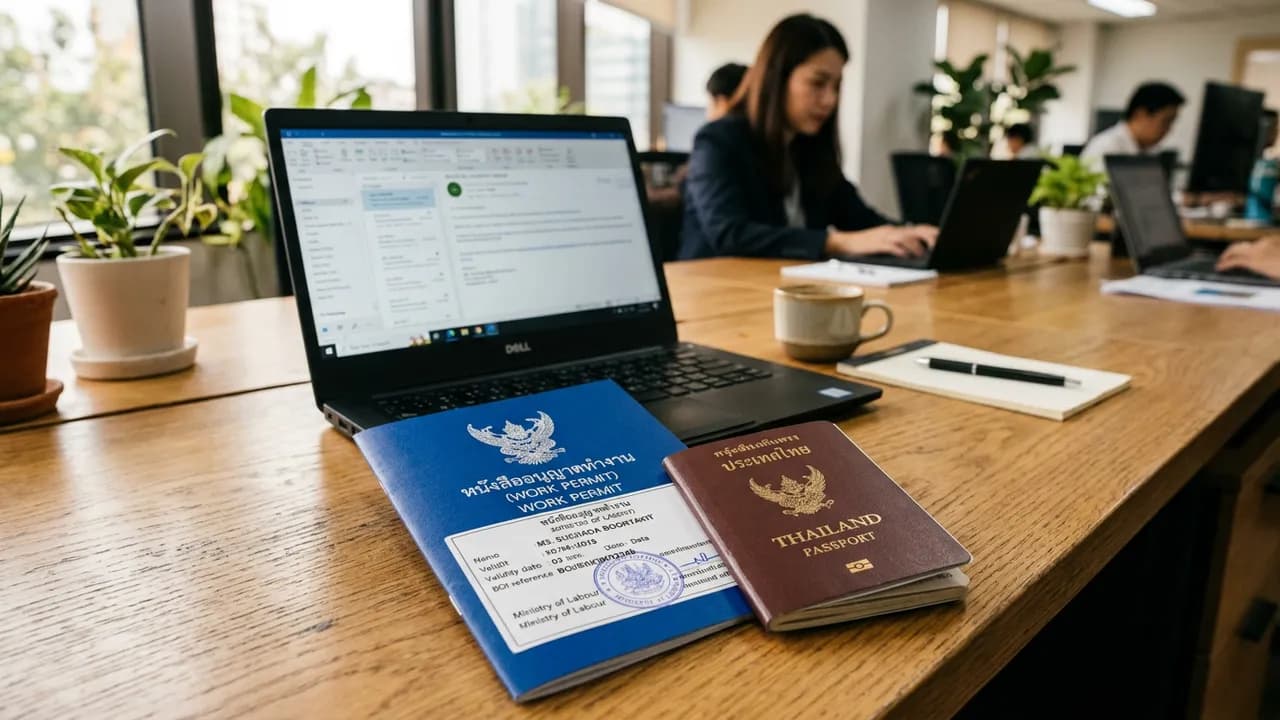
A BOI work permit in Thailand comes through the Board of Investment, the country's primary agency for attracting foreign investment. Companies that receive BOI promotion enjoy a range of incentives, and one of the most practical benefits for foreign employees is a dramatically simplified work permit process. If you are joining a BOI-promoted company or your employer is considering applying for BOI status, understanding these advantages can save weeks of paperwork and frustration. For the full overview of work permits in Thailand, see our Thailand work permit guide.
This guide explains what BOI promotion means, how the fast-track work permit system works, and what both employers and employees need to know in 2026.
What Is the Thailand Board of Investment (BOI)?
The Board of Investment of Thailand, established under the Investment Promotion Act B.E. 2520 (1977) and its subsequent amendments, is a government agency that encourages domestic and foreign investment in targeted industries. BOI promotion is not automatic — companies must apply and demonstrate that their business falls within eligible activity categories and meets specific criteria.
When a company receives BOI promotion, it gains access to both tax and non-tax incentives. The non-tax incentives are particularly relevant to foreign workers because they include streamlined immigration and work authorization procedures.
BOI-Promoted Activity Categories
BOI promotion covers a wide range of industries organized into categories. As of 2026, key promoted sectors include:
- Agriculture and food processing — Biotechnology, food innovation, cold chain logistics
- Technology and innovation — Software development, data centers, cloud services, AI and robotics
- Manufacturing — Automotive, electronics, medical devices, aerospace
- Services — International headquarters (IHQ), international trading centers (ITC), R&D centers
- Infrastructure — Smart cities, alternative energy, environmental management
- Digital economy — Fintech, e-commerce platforms, digital content
- BCG (Bio-Circular-Green) economy — Sustainable industries, recycling, bioplastics
The full list of eligible activities is published annually by BOI and is available on their official website. Each activity category has its own set of conditions, minimum investment requirements, and incentive tiers.
Why BOI Work Permits Are Different
The standard Thai work permit process, managed by the Department of Employment under the Ministry of Labour, involves significant paperwork, strict employer requirements, and processing times of one to several weeks. BOI-promoted companies bypass much of this through the BOI One Stop Service Center (OSSC).
Key Advantages of BOI Work Permits
| Feature | Standard Work Permit | BOI Work Permit |
|---|---|---|
| Processing time | 3-7 business days (often longer) | 1-3 business days |
| Registered capital requirement | 2 million THB per foreign worker | Reduced or waived depending on promotion |
| Thai-to-foreign employee ratio | 4:1 (four Thai employees per foreigner) | Relaxed — based on project needs |
| Number of foreign workers allowed | Limited by capital and ratio | Determined by BOI-approved staffing plan |
| Application location | Provincial Employment Office or DOE | BOI One Stop Service Center (OSSC) |
| Visa and work permit coordination | Separate applications at different agencies | Combined processing at one location |
| Land ownership facilitation | Not applicable | BOI can facilitate land ownership for promoted projects |
Reduced Employer Requirements
This is where the BOI advantage is most significant. Standard work permit rules require the sponsoring company to have 2 million THB in registered capital per foreign employee and maintain a 4:1 ratio of Thai to foreign workers. These requirements can be extremely limiting for startups, tech companies, and businesses in their early stages.
BOI-promoted companies can bring in foreign workers based on the staffing plan approved during their BOI application. If your BOI promotion approval states that your project requires 10 foreign experts, you can bring in those 10 workers without needing 20 million THB in registered capital or 40 Thai employees.
Who Qualifies for a BOI Work Permit?
Not every employee at a BOI-promoted company qualifies for the fast-track process. The BOI work permit is specifically for:
- Foreign experts and technicians working on the promoted project
- Management personnel overseeing the promoted activities
- Specialists with skills not readily available in the Thai labor market
- Trainers providing technology transfer to Thai employees
- Spouses and dependents of the above (for visa purposes, not separate work permits)
The positions must be justified in the company's BOI staffing plan. The BOI reviews whether the number and type of foreign workers requested are reasonable for the promoted project's scope and timeline.
Position and Duration Limits
BOI work permits are tied to the promoted project and have time limits:
| Position Type | Typical Maximum Duration |
|---|---|
| Expert/Specialist | Up to 4 years (extendable based on project needs) |
| Management | Duration of the promoted project |
| Trainer/Technology Transfer | Up to 2 years |
| Temporary positions | As specified in BOI approval |
These durations can be extended by applying to BOI with justification. The key principle is that foreign positions at BOI companies are expected to involve knowledge transfer — the long-term goal is for Thai employees to eventually take over the roles.
Step-by-Step BOI Work Permit Application Process
Prerequisites
Before applying, ensure the following are in place:
- The company holds a valid BOI promotion certificate
- The company has notified BOI of its operational start (for new projects)
- The foreign employee's position is included in the BOI-approved staffing plan
- The employee has the qualifications specified in the staffing plan
Step 1: Company Prepares BOI Application
The employer submits a request to BOI for the specific foreign worker, including:
- BOI promotion certificate number
- Details of the promoted project
- Justification for the foreign position
- Employee's qualifications and experience
- Proposed salary and employment terms
- Duration of employment needed
This is typically handled by the company's BOI liaison officer or an external BOI consultant.
Step 2: Obtain Visa Approval from BOI
BOI issues a recommendation letter that the employee can use to obtain a Non-Immigrant B visa at a Thai embassy or consulate abroad. For employees already in Thailand on another visa type, BOI can facilitate visa conversion through the One Stop Service Center.
Documents the employee needs:
- Valid passport (at least 12 months remaining)
- BOI recommendation letter
- Employment contract
- Educational certificates and transcripts
- Professional certifications (if applicable)
- Resume/CV
- Passport-sized photographs (3 x 4 cm)
- Medical certificate (can be obtained after arrival in Thailand)
Step 3: Visit the BOI One Stop Service Center (OSSC)
The OSSC is located at the Chamchuri Square Building, 18th Floor, in Bangkok. It houses representatives from:
- Board of Investment
- Department of Employment (Ministry of Labour)
- Immigration Bureau (Royal Thai Police)
This means you can handle your visa stamp, work permit, and re-entry permit in a single visit.
OSSC operating hours: Monday to Friday, 8:30 AM to 4:30 PM (closed on public holidays)
Address: Chamchuri Square Building, 18th Floor, 319 Phayathai Road, Pathumwan, Bangkok 10330
Step 4: Submit the Work Permit Application at OSSC
At the OSSC, the employer (or authorized representative) submits:
- Completed work permit application form (BOI format)
- BOI promotion certificate (copy)
- BOI approval letter for the foreign employee
- Employee's passport with valid visa
- Photographs
- Medical certificate from a Thai hospital
- Educational documents
- Company registration documents
Step 5: Receive Your Work Permit
BOI work permits are typically processed within 1-3 business days. In many cases, same-day processing is possible for straightforward applications with complete documentation. You will receive the standard blue work permit booklet.
Step 6: Apply for One-Year Visa Extension and Re-Entry Permit
At the same OSSC visit (or a follow-up visit), you can:
- Extend your visa to one year
- Obtain a re-entry permit (single or multiple) so you can leave and return to Thailand without losing your visa
Costs for BOI Work Permits
| Item | Cost |
|---|---|
| BOI work permit application | 3,000 THB (1-year validity) |
| Visa extension (1 year) | 1,900 THB |
| Multiple re-entry permit | 3,800 THB |
| Single re-entry permit | 1,000 THB |
| Medical certificate | 500-1,500 THB |
| BOI consultant fees (if used) | 15,000-50,000 THB per application |
The government fees are identical to standard work permits. The savings come from reduced processing time, fewer document requirements, and the convenience of one-stop service.
BOI Smart Visa Connection
In addition to the standard BOI work permit, Thailand offers the Smart Visa program, which is closely linked to BOI-promoted industries. The Smart Visa provides additional benefits:
| Smart Visa Type | Eligibility | Key Benefits |
|---|---|---|
| Smart T (Talent) | Highly skilled professionals in targeted industries | Up to 4-year visa, no work permit needed, spouse can work |
| Smart I (Investor) | Investors in targeted industries (minimum 20M THB) | Up to 4-year visa, no work permit needed |
| Smart E (Executive) | Senior executives at BOI/targeted companies (salary 200K+ THB/month) | Up to 4-year visa, no work permit needed |
| Smart S (Startup) | Startup entrepreneurs in targeted industries | Up to 2-year visa, incubation support |
| Smart O (Other) | Spouses and dependents of Smart Visa holders | Duration matches primary holder |
Smart Visa holders are exempt from the work permit requirement entirely — a significant advantage over the standard BOI work permit. However, eligibility criteria are stricter, particularly regarding salary thresholds and qualifications.
Renewal and Ongoing Obligations
Annual Renewal
BOI work permits must be renewed annually. The renewal process at the OSSC is straightforward:
- Submit renewal application at least 30 days before expiration
- Provide updated company documents and BOI status confirmation
- Confirm the position is still needed for the promoted project
- Pay renewal fees
Ongoing Compliance
BOI-promoted companies and their foreign employees must comply with:
- BOI reporting requirements — Regular progress reports on the promoted project
- Technology transfer obligations — Demonstrating knowledge transfer to Thai staff
- 90-day address reporting — Foreign employees must report their address to Immigration every 90 days (can be done online)
- Personal income tax filing — All work permit holders must file Thai tax returns
- Notification of changes — Any change in position, salary, or workplace must be reported to BOI
What Happens If BOI Promotion Expires or Is Revoked?
If the company's BOI promotion is revoked or expires:
- Existing BOI work permits remain valid until their stated expiration date
- Renewal must be done through the standard Department of Employment process
- The company must then meet standard work permit requirements (2M THB capital, 4:1 ratio)
- Employees should plan the transition well in advance
Common Mistakes to Avoid
-
Assuming all positions qualify — Only positions in the BOI-approved staffing plan are eligible for fast-track processing. Adding new positions requires a separate BOI request.
-
Neglecting the staffing plan — If your company's BOI promotion was approved with a staffing plan for 5 foreigners but you now need 10, you must amend the plan with BOI first.
-
Working before the permit is issued — Even at BOI companies, working without a valid work permit is illegal. The fast processing times make this less of an issue, but plan accordingly.
-
Ignoring technology transfer requirements — BOI expects foreign experts to train Thai replacements. Companies that fail to demonstrate this may face difficulties renewing work permits or BOI status.
-
Missing 90-day reporting — This is an Immigration requirement that applies to all foreigners, including BOI work permit holders. Fines for late reporting are 2,000 THB, and repeated violations can cause problems.
-
Not coordinating visa and work permit timing — Your visa and work permit should expire around the same time. Renew both simultaneously at the OSSC to avoid gaps.
Practical Tips
- Use the OSSC appointment system — Book appointments online when possible to avoid long queues
- Bring originals and copies — Bring original documents plus at least two sets of photocopies
- Designate a company liaison — Having one person handle all BOI and work permit matters ensures consistency
- Keep BOI informed — Proactive communication with your BOI officer prevents surprises during renewal
- Consider a BOI consultant — For companies new to the BOI system, a consultant familiar with the process can prevent costly delays
Frequently Asked Questions
Can I switch from a standard work permit to a BOI work permit?
Yes, if your employer obtains BOI promotion and your position is included in the approved staffing plan. You would cancel your existing work permit and apply for a new one through the OSSC.
Can I work at a non-BOI company while holding a BOI work permit?
No. Your BOI work permit is specifically tied to the promoted company and project. Working elsewhere requires a separate work permit.
Do BOI work permit holders pay the same taxes as regular workers?
Yes. BOI tax incentives apply to the company, not to individual employees. Foreign workers pay personal income tax at standard Thai rates.
How quickly can I get a BOI work permit in an emergency?
Same-day processing is possible at the OSSC for complete applications, but this depends on workload and is not guaranteed. Plan for 1-3 business days.
Can my spouse work in Thailand on my BOI visa?
Not automatically. Your spouse receives a dependent visa but needs a separate work permit to work. However, if you hold a Smart Visa, your spouse may be eligible to work without a separate work permit.
Conclusion
The BOI work permit pathway offers significant advantages for both employers and foreign employees in Thailand. Faster processing, reduced capital and staffing ratio requirements, and the convenience of one-stop service make it the preferred option for companies in promoted industries. If your employer holds or is considering BOI promotion, the benefits extend well beyond tax incentives — the streamlined immigration process alone can be a compelling reason to pursue it.