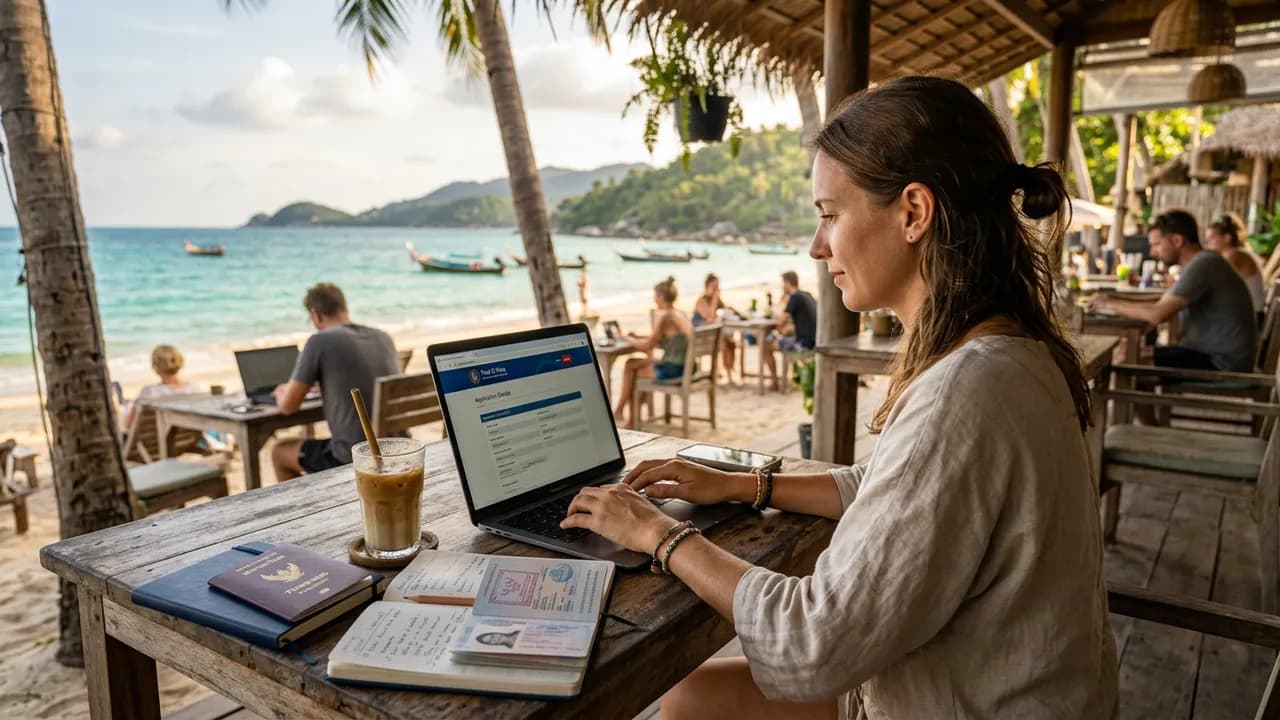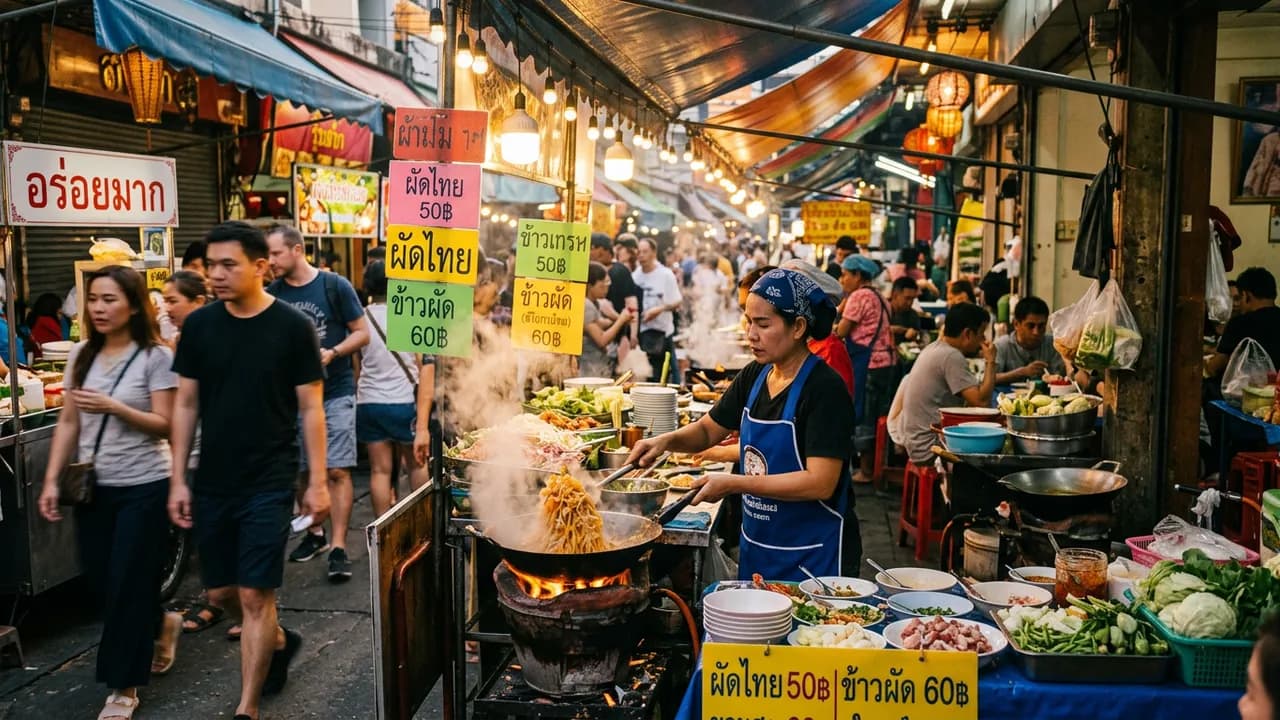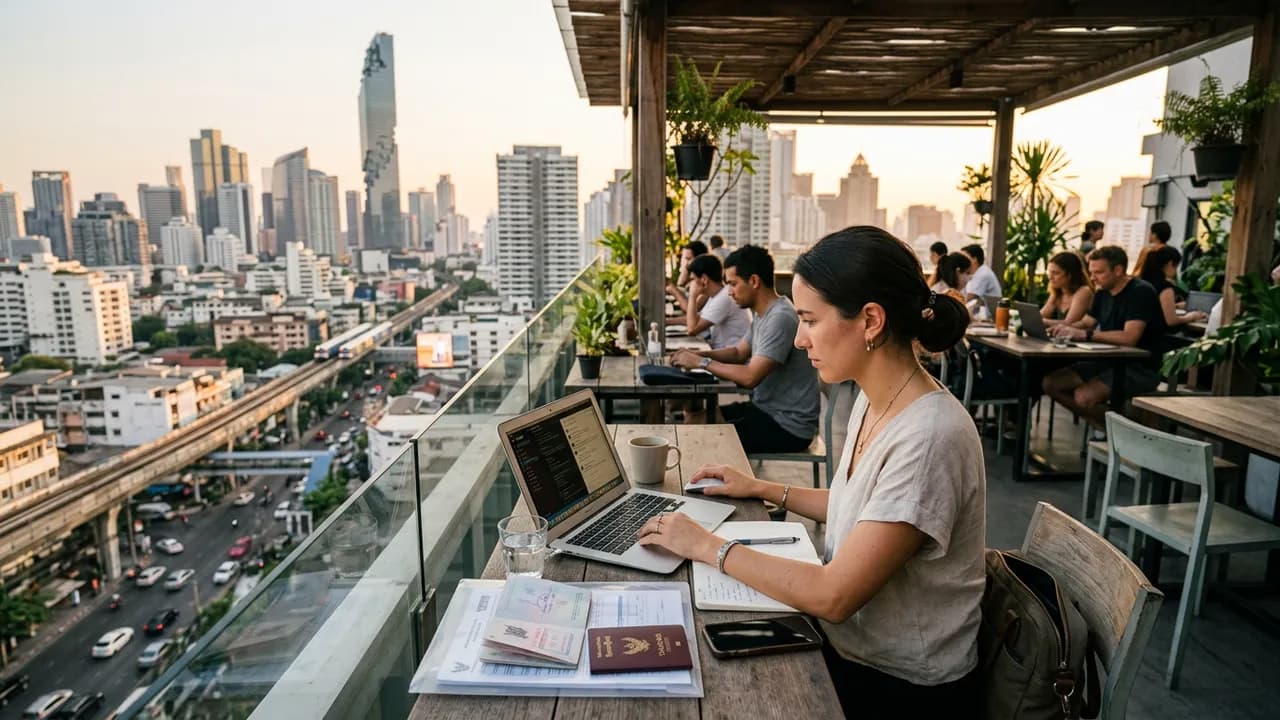
This digital nomad Thailand guide covers a country that has been the unofficial capital of digital nomadism for over a decade. Affordable living, reliable internet, world-class food, warm weather, and a welcoming culture have drawn remote workers from every corner of the globe. What has changed in recent years is Thailand's legal framework — the introduction of the Destination Thailand Visa (DTV) in 2024 gave digital nomads their first legitimate long-term visa option, ending years of legal ambiguity.
This guide covers everything remote workers need to know about living and working in Thailand in 2026, from visa options and legal considerations to cost of living, coworking infrastructure, and the best cities for different lifestyles.
Legal Status: Understanding Your Options
The single biggest concern for digital nomads in Thailand has always been legal status. Working on a tourist visa is technically illegal under Thai law, regardless of whether your employer and clients are overseas. For years, this was an open secret — millions of remote workers used tourist visas and visa exemptions, and enforcement was essentially nonexistent for people working on laptops in cafes.
That legal gray area still exists to some degree, but the DTV visa has created a legitimate path. Here are your options in 2026.
Visa Options for Digital Nomads
| Visa Type | Duration | Cost | Work Legality | Best For |
|---|---|---|---|---|
| DTV (Destination Thailand Visa) | 5 years (180-day stays) | 10,000 THB | Legal for remote work | Long-term nomads |
| Tourist Visa (TR) | 60 days (extendable to 90) | 1,000 THB | Work not permitted | Short visits |
| Visa Exemption | 60 days (extendable to 90) | Free | Work not permitted | Short visits |
| Non-Immigrant B Visa | 90 days (extendable to 1 year) | 2,000 THB | Legal with work permit | Employed by Thai company |
| Thailand Elite Visa | 5-20 years | 600,000-2,000,000 THB | Work not permitted without work permit | Wealthy long-term residents |
| Smart Visa | Up to 4 years | Varies | Legal for specified work | Tech professionals, investors |
The DTV Visa: The Digital Nomad Solution
The Destination Thailand Visa, launched in mid-2024, is the most significant development for digital nomads in Thailand. It is a 5-year multiple entry visa that allows stays of up to 180 days per entry (extendable by another 180 days). While not officially called a "digital nomad visa," it explicitly covers remote workers among its qualifying categories.
Key features:
- Validity: 5 years from date of issue
- Stay per entry: 180 days, extendable by 180 days
- Multiple entries: Unlimited during the 5-year validity
- Cost: 10,000 THB
- Qualifying activities: Remote work, freelancing, Muay Thai training, Thai cooking courses, medical treatment, attending seminars/workshops, and other activities
- Dependents: Spouse and children under 20 can apply on the same visa
For a detailed application walkthrough, see our DTV Visa Application Guide.
Thailand Elite Visa
For digital nomads with significant savings or high income, the Thailand Elite visa offers hassle-free long-term residency. The entry-level membership costs 600,000 THB (approximately $17,000 USD) for a 5-year visa with VIP airport services, dedicated concierge, and no 90-day reporting hassles.
The Elite visa does not grant work authorization, but it can be combined with a work permit if you establish or join a Thai company. For most nomads, the DTV visa is more practical and affordable.
What About Tourist Visas?
Many digital nomads still use tourist visas or visa exemptions. While enforcement against laptop workers in cafes remains essentially zero, the risks include:
- Legal exposure — Working on a tourist visa is technically a violation
- Entry denials — Frequent tourist visa entries can trigger scrutiny from immigration officers
- No stability — Constant visa runs and uncertainty about re-entry
- Insurance complications — Some travel insurance policies exclude coverage for people working illegally
With the DTV visa available, there is little reason for serious digital nomads to rely on tourist visas for extended stays.
Cost of Living
Thailand's cost of living is one of its biggest draws. However, costs vary dramatically depending on the city and your lifestyle choices. See our detailed cost-of-living breakdown for digital nomads for category-by-category 2026 numbers.
Monthly Budget Breakdown
| Expense | Budget Level | Mid-Range | Comfortable |
|---|---|---|---|
| Accommodation | 8,000-12,000 THB | 15,000-25,000 THB | 30,000-50,000 THB |
| Food | 6,000-9,000 THB | 10,000-15,000 THB | 15,000-25,000 THB |
| Coworking | 0 (cafes) | 3,000-5,000 THB | 5,000-8,000 THB |
| Internet (home) | 500-800 THB | 800-1,200 THB | 800-1,200 THB |
| Transportation | 1,500-3,000 THB | 3,000-5,000 THB | 5,000-10,000 THB |
| Health insurance | 2,000-4,000 THB | 4,000-8,000 THB | 8,000-15,000 THB |
| Phone/SIM | 300-500 THB | 500-1,000 THB | 500-1,000 THB |
| Entertainment | 2,000-4,000 THB | 5,000-10,000 THB | 10,000-20,000 THB |
| Total | 20,000-33,000 THB | 41,000-70,000 THB | 74,000-130,000 THB |
| USD equivalent | $570-940 | $1,170-2,000 | $2,110-3,710 |
Exchange rate used: 1 USD = approximately 35 THB (as of early 2026)
City-by-City Cost Comparison
| City | Studio Apartment | Meal (local) | Coworking (monthly) | Overall Cost Index |
|---|---|---|---|---|
| Chiang Mai | 8,000-18,000 THB | 40-80 THB | 3,000-5,000 THB | Low |
| Bangkok | 12,000-35,000 THB | 50-100 THB | 4,000-8,000 THB | Medium |
| Phuket | 12,000-30,000 THB | 60-120 THB | 4,000-7,000 THB | Medium-High |
| Koh Phangan | 10,000-25,000 THB | 60-100 THB | 3,500-6,000 THB | Medium |
| Koh Samui | 12,000-30,000 THB | 60-120 THB | 4,000-6,000 THB | Medium-High |
| Pai | 5,000-12,000 THB | 30-60 THB | Limited | Low |
| Hua Hin | 8,000-20,000 THB | 40-80 THB | 3,000-5,000 THB | Low-Medium |
For detailed city profiles, see our guide to the Best Cities for Digital Nomads in Thailand.
Internet and Connectivity
Reliable internet is non-negotiable for remote workers. Thailand delivers well on this front, though quality varies by location.
Home Internet
Thailand's major ISPs — AIS Fibre, True Online, 3BB, and NT (formerly TOT and CAT) — offer fiber-optic connections in most urban areas:
| Speed | Monthly Cost | Availability |
|---|---|---|
| 100 Mbps | 500-600 THB | Most urban areas |
| 300 Mbps | 700-900 THB | Urban areas |
| 500 Mbps | 900-1,100 THB | Major cities |
| 1 Gbps | 1,200-1,500 THB | Select areas in Bangkok, Chiang Mai |
Installation takes 1-3 days in most cases. You will need your passport and a Thai phone number. Some providers require a minimum contract of 12 months, but many offer month-to-month plans for slightly higher fees.
Mobile Data
Thailand's mobile networks (AIS, True, DTAC/True merged) provide excellent 4G/5G coverage:
- Prepaid tourist SIM: 299-599 THB for 15-30 days with 15-50 GB data
- Monthly postpaid plans: 500-1,200 THB for unlimited data (speeds throttled after high-speed allocation)
- 5G coverage: Available in Bangkok, Chiang Mai, Phuket, and other major cities
Mobile hotspots serve as reliable backup connections for nomads who cannot afford internet downtime.
Coworking Spaces
Thailand's coworking scene is mature, particularly in Bangkok and Chiang Mai. Most spaces offer:
- High-speed WiFi (100+ Mbps)
- Air conditioning
- Meeting rooms
- Printing and scanning
- Coffee and drinks
- Community events and networking
Day pass: 200-500 THB Weekly pass: 1,500-3,000 THB Monthly membership: 3,000-8,000 THB Dedicated desk: 5,000-12,000 THB/month Private office: 8,000-25,000 THB/month
Popular coworking chains include Hubba, The Hive, JustCo, and WeWork (Bangkok). Chiang Mai has dozens of independent spaces like Punspace, CAMP, and Yellow. See our full coworking spaces guide for Thailand for detailed reviews of every major hub.
Accommodation
Finding a place to live is straightforward in Thailand. Unlike many Western countries, you can typically find and move into an apartment within a day or two.
Accommodation Types
Serviced apartments and condos — The most popular choice for nomads. Fully furnished, often including WiFi, cleaning, and gym access. Monthly rates from 10,000 THB in Chiang Mai to 30,000+ THB in central Bangkok.
Condominiums (lease) — Renting directly from an owner, usually through an agent or listing site. Cheaper than serviced apartments but may require a deposit of 2 months' rent. Monthly rates from 8,000 THB.
Co-living spaces — Purpose-built for nomads, combining accommodation with coworking, community events, and included utilities. Monthly rates from 12,000-30,000 THB. Popular options include Sun and Co (Koh Phangan), Draper Startup House, and various co-living condos in Chiang Mai.
Houses — Available for longer stays, particularly in Chiang Mai and smaller cities. Monthly rates from 8,000-25,000 THB for a basic house with garden.
Finding Accommodation
- Facebook groups — City-specific groups (e.g., "Chiang Mai Digital Nomads," "Bangkok Expats") have daily listings
- Listing websites — DDproperty, Hipflat, FazWaz, Renthub
- Walk-in — In many areas, simply walking into apartment buildings and asking about availability works well
- Airbnb — Good for initial stays while you search for longer-term options; negotiate monthly discounts
Rental Tips
- Always negotiate — Listed prices are rarely final, especially for stays of 3+ months
- Check the internet speed — Test WiFi before committing. Ask about the ISP and plan
- Inspect the air conditioning — AC units vary widely in quality and efficiency
- Understand utility costs — Many apartments charge above-market rates for electricity (7-9 THB per unit vs. the government rate of 4-5 THB)
- Read the contract — Look for early termination clauses, deposit return conditions, and maintenance responsibility
Healthcare and Insurance
Health Insurance Options
Digital nomads should carry health insurance. Thailand's private hospitals are excellent, but costs can escalate quickly for serious conditions.
| Insurance Type | Monthly Cost | Coverage |
|---|---|---|
| Travel insurance (basic) | 2,000-4,000 THB | Emergency medical, trip interruption |
| International health insurance | 5,000-15,000 THB | Comprehensive medical, outpatient, dental |
| Thai local insurance | 2,000-5,000 THB | Local coverage, may have restrictions for foreigners |
| SafetyWing (nomad-specific) | $45-85 USD/month | Medical, some travel coverage, designed for nomads |
Thai Healthcare System
Thailand is a medical tourism hub for good reason. Private hospitals like Bumrungrad, Bangkok Hospital, and Chiang Mai Ram offer world-class care at a fraction of Western prices:
- Doctor visit (specialist): 500-1,500 THB
- Basic blood panel: 1,000-3,000 THB
- Dental cleaning: 800-1,500 THB
- MRI scan: 8,000-15,000 THB
- Emergency room visit: 3,000-10,000 THB
No appointment is needed at most hospitals — walk-in service is standard.
Banking and Money
Opening a Thai Bank Account
Having a Thai bank account makes daily life significantly easier. Requirements have tightened in recent years, but it is still possible for non-residents:
Requirements:
- Passport
- Proof of Thai address (rental contract, utility bill, or letter from hotel/apartment)
- Minimum deposit (usually 500-5,000 THB)
- Possible: Letter from your embassy or a long-term visa
Bangkok Bank, Kasikorn Bank (KBank), and SCB are the most foreigner-friendly banks. KBank's mobile app is particularly well-regarded.
Tip: DTV visa holders have an easier time opening bank accounts than tourist visa holders. Some branches are more accommodating than others — the Silom and Asoke branches in Bangkok are known for processing foreigner accounts.
Payment Methods
- PromptPay/QR payments — Thailand is increasingly cashless. QR code payments are accepted almost everywhere, including street vendors. Linked to Thai bank accounts.
- Cash — Still widely used, especially outside Bangkok. ATM withdrawals from foreign cards incur fees of 220 THB per transaction.
- Credit/debit cards — Accepted at malls, hotels, and larger restaurants. Not accepted at street food stalls, markets, or small shops.
- Wise/Revolut — Popular for receiving payments and converting currency with low fees.
Taxes and Legal Considerations
Thai Tax Residency
If you spend 180 days or more in Thailand during a calendar year, you are considered a Thai tax resident. As of 2024, Thailand revised its tax rules to tax worldwide income for tax residents (previously, only income remitted to Thailand in the same year it was earned was taxed).
What this means for digital nomads:
- If you stay fewer than 180 days per year, Thai income tax generally does not apply
- If you stay 180+ days, you may be subject to Thai tax on income brought into Thailand
- Double taxation agreements (DTAs) between Thailand and many countries may prevent double taxation
- Consult a qualified tax advisor for your specific situation — see our Thailand tax guide for expats for more details
Business Registration
Some nomads choose to register a Thai company to formalize their presence. This is complex and generally only worthwhile if you plan to do business locally, hire Thai employees, or need a work permit for non-DTV activities. Minimum registered capital for a Thai limited company is typically 2 million THB if employing foreign workers.
Practical Tips for Digital Nomad Life in Thailand
Communication
- WhatsApp and LINE — LINE is the dominant messaging app in Thailand. You will need it for communicating with landlords, service providers, and Thai contacts.
- Language — English is widely spoken in tourist areas and among younger Thais, but learning basic Thai phrases makes a significant difference in daily life and shows respect.
Transportation
- Grab — The dominant ride-hailing app. Available for cars, motorbikes, and food delivery.
- Motorbike rental — 2,500-5,000 THB/month. An international driving permit or Thai license is technically required.
- BTS/MRT — Bangkok's rail system is efficient for getting around the city center. Fares: 16-62 THB per trip.
- Songthaews and tuk-tuks — Cheap local transport in Chiang Mai and smaller cities.
Safety
Thailand is generally safe for foreigners. Common-sense precautions apply:
- Motorbike accidents are the biggest risk — always wear a helmet
- Petty theft can occur in tourist areas — watch your belongings
- Scams targeting tourists exist but are avoidable with basic awareness
- Natural disasters (flooding in rainy season) can affect travel plans
Community
The digital nomad community in Thailand is large and well-organized:
- Nomad List — Community forums and meetup coordination
- Facebook groups — Every major city has active nomad groups
- Meetup.com — Regular events in Bangkok and Chiang Mai
- Coworking space events — Workshops, networking, and social events
- Nomad conferences — Events like Nomad Summit are held in Thailand regularly
Month-by-Month Climate Guide
Understanding Thailand's seasons helps you plan your stays:
| Month | Weather | Best Regions | Notes |
|---|---|---|---|
| Nov-Feb | Cool and dry | Everywhere | Peak season, busiest |
| Mar-May | Hot season (35-40C) | Islands, coast | Songkran (Thai New Year) in April |
| Jun-Oct | Rainy season | Cities (less affected) | Lower prices, fewer crowds |
Many nomads follow the weather, spending the cool season in northern Thailand (Chiang Mai, Pai) and the hot/rainy season on the islands or heading to other countries.
Getting Started: Your First 30 Days
- Before arrival: Apply for DTV visa, arrange travel insurance, book 1-2 weeks of temporary accommodation
- Days 1-3: Arrive, get a Thai SIM card, explore the neighborhood, overcome jet lag
- Days 4-7: Visit coworking spaces, set up your workspace, test internet speeds
- Days 8-14: Search for longer-term accommodation, set up a routine, explore the city
- Days 15-21: Open a Thai bank account, handle 90-day reporting registration, join community events
- Days 22-30: Settle into your routine, optimize your setup, start planning weekend trips
Conclusion
Thailand remains one of the best countries in the world for digital nomads in 2026. The DTV visa has resolved the biggest historical concern — legal status — and the infrastructure for remote work continues to improve. Whether you are drawn to the mountains of Chiang Mai, the energy of Bangkok, or the beaches of the south, Thailand offers a combination of affordability, quality of life, and community that is hard to match anywhere else. The key is to plan your visa and insurance properly, manage your tax obligations, and embrace the unique rhythm of life in the Land of Smiles.