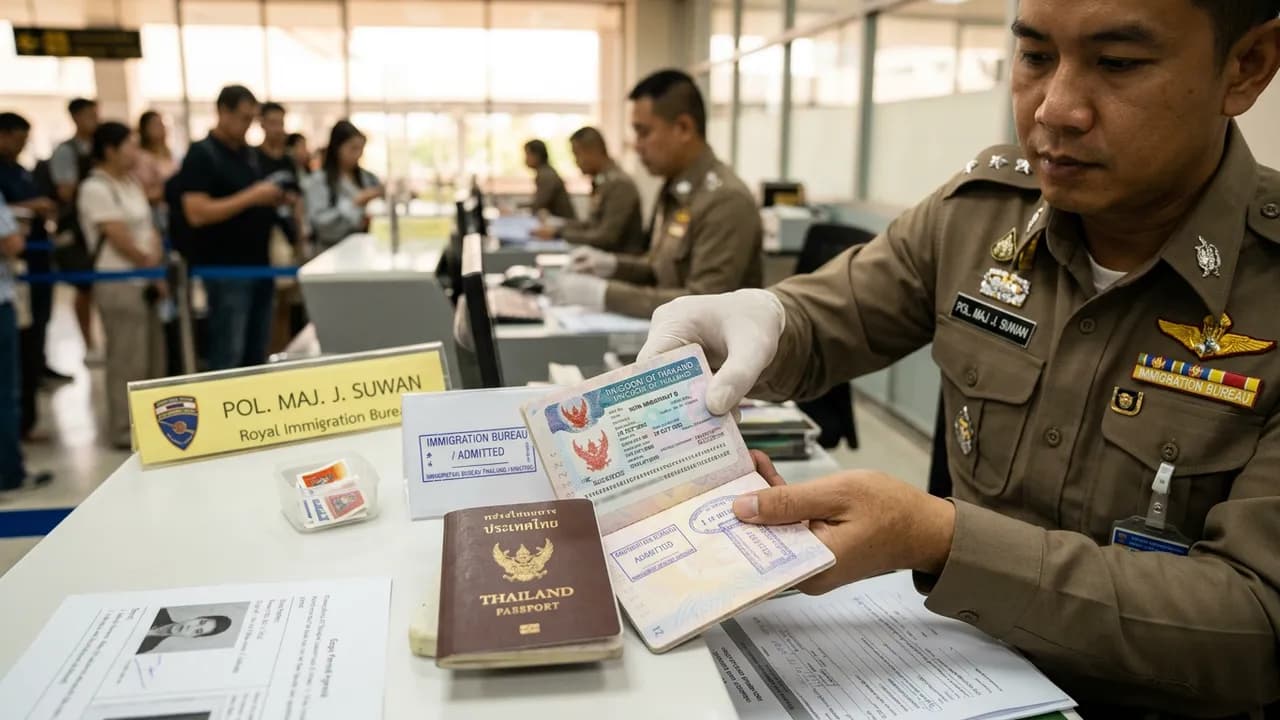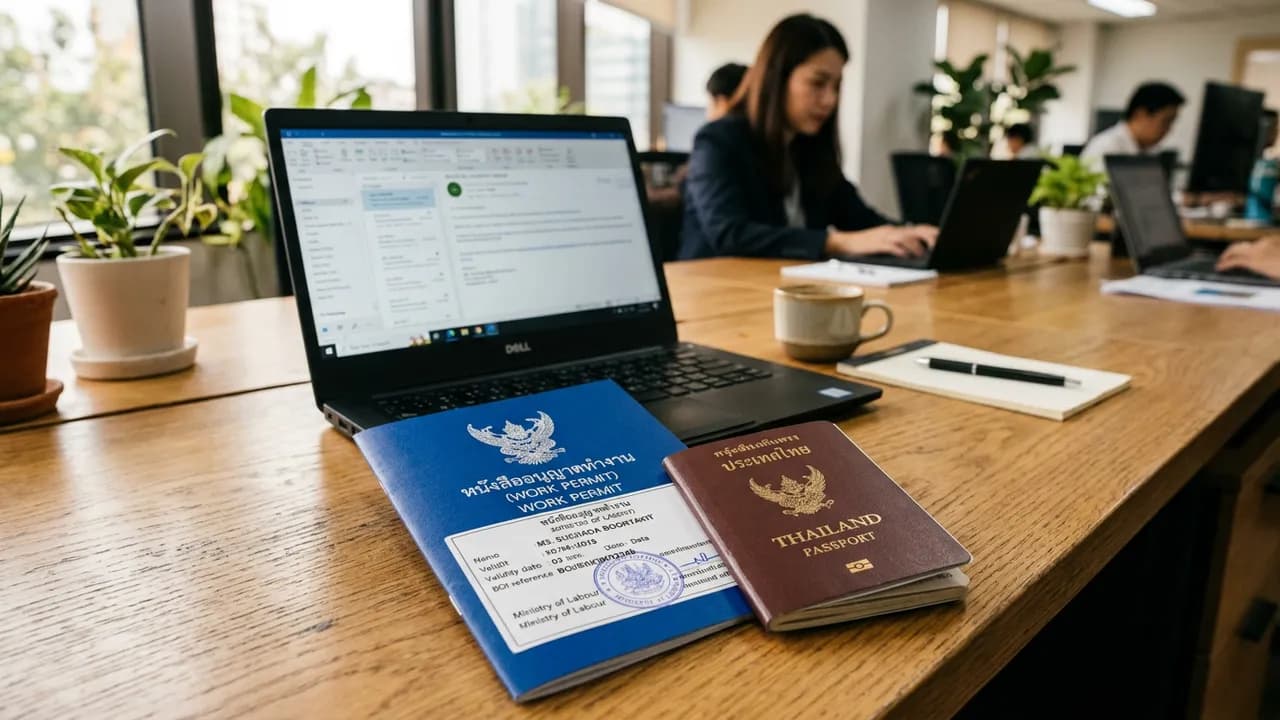
This Thailand tax guide for expats explains the country's tax system, which is essential for any foreigner living, working, or retiring in Thailand. Whether you hold a work permit, a retirement visa, a DTV, or an LTR visa, your tax obligations depend on several factors including your residency status, the source of your income, and recent regulatory changes that have significantly expanded Thailand's tax reach over foreign-sourced income.
This guide provides a comprehensive overview of the Thai tax system as it applies to foreign nationals, including the landmark 2024 changes to remittance-based taxation.
Quick Facts
| Detail | Information |
|---|---|
| Tax year | Calendar year (January 1 - December 31) |
| Tax residency threshold | 180 days or more in Thailand in a calendar year |
| Filing deadline | March 31 of the following year |
| Online filing | Available via the Revenue Department website (rd.go.th) |
| Tax ID (TIN) | Required for all tax-resident foreigners earning income |
| Currency | All taxes assessed and paid in Thai Baht (THB) |
| Governing body | Thai Revenue Department (Ministry of Finance) |
Tax Residency: The 180-Day Rule
The foundation of Thai taxation for foreigners is the 180-day residency rule. If you spend 180 days or more in Thailand in a single calendar year (January 1 to December 31), you are considered a tax resident of Thailand.
What Tax Residency Means
| Status | Tax Obligation |
|---|---|
| Tax resident (180+ days) | Taxed on Thai-sourced income AND foreign-sourced income remitted to Thailand |
| Non-resident (under 180 days) | Taxed only on Thai-sourced income |
Key points:
- The 180 days do not need to be consecutive
- All days physically present in Thailand count, including arrival and departure days
- The count resets each calendar year
- Having a visa or work permit does not automatically make you a tax resident; physical presence determines residency
How Days Are Counted
Immigration records (TM.6 arrival/departure cards and electronic passport scans) form the basis for determining days present. The Revenue Department can cross-reference with Immigration Bureau records.
Thailand Income Tax Rates (2026)
Thailand uses a progressive tax rate system for personal income tax. The following rates apply to annual assessable income after deductions and allowances:
| Taxable Income (THB) | Tax Rate |
|---|---|
| 0 - 150,000 | Exempt |
| 150,001 - 300,000 | 5% |
| 300,001 - 500,000 | 10% |
| 500,001 - 750,000 | 15% |
| 750,001 - 1,000,000 | 20% |
| 1,000,001 - 2,000,000 | 25% |
| 2,000,001 - 5,000,000 | 30% |
| Over 5,000,000 | 35% |
Deductions and Allowances
Before applying the tax rates, you can deduct certain amounts:
| Deduction | Amount (THB) |
|---|---|
| Personal allowance | 60,000 |
| Spouse allowance (if spouse has no income) | 60,000 |
| Child allowance (per child, up to 3) | 30,000 |
| Social security contributions | Actual amount, up to 9,000 |
| Life insurance premiums | Up to 100,000 |
| Health insurance premiums | Up to 25,000 |
| Provident fund contributions | Up to 10,000 |
| Charitable donations | Up to 10% of income after deductions |
| Expense deduction (employment income) | 50% of income, up to 100,000 |
Deduction amounts are subject to change. Consult the Revenue Department or a qualified tax advisor for the most current figures.
The 2024 Remittance Rule Change
This is the most significant recent development in Thai taxation for foreigners. Prior to 2024, Thailand only taxed foreign-sourced income if it was remitted to Thailand in the same year it was earned. This created a simple loophole: earn income abroad in Year 1, remit it to Thailand in Year 2, and pay no Thai tax on it.
What Changed
Effective January 1, 2024, the Thai Revenue Department issued a directive eliminating the same-year rule. Under the new interpretation:
Foreign-sourced income remitted to Thailand by a tax resident is now taxable regardless of when the income was earned.
This means:
- Income earned in previous years and remitted to Thailand is now potentially taxable
- Savings accumulated abroad before becoming a Thai tax resident may be subject to tax when transferred to Thailand
- Pension payments, investment returns, and rental income from abroad are all potentially in scope
Practical Impact by Situation
| Scenario | Tax Implication |
|---|---|
| Working in Thailand with Thai employer | No change - already taxed at source |
| Receiving pension from abroad while living in Thailand | Now potentially taxable when remitted |
| Transferring savings to a Thai bank account | May be taxable if accumulated as income |
| Receiving dividends/interest from overseas investments | Taxable when remitted to Thailand |
| Selling foreign property and remitting proceeds | Capital gains portion may be taxable |
| Living on credit cards funded by overseas accounts | Potentially taxable (enforcement unclear) |
Important Caveats
- The Revenue Department has indicated that income earned before January 1, 2024 and remitted afterward should not be subject to the new rule, though guidance has been evolving
- Enforcement mechanisms are still being developed
- Tax treaties may reduce or eliminate the tax burden (see below)
- The distinction between capital (already taxed savings) and income (new earnings) remains a critical question
Double Tax Treaties
Thailand has signed Double Taxation Agreements (DTAs) with over 60 countries. These treaties prevent the same income from being taxed twice and may provide relief for expats.
Key Treaty Benefits
| Benefit | Explanation |
|---|---|
| Tax credit | Tax paid in one country can be credited against tax owed in the other |
| Reduced withholding rates | Lower tax rates on dividends, interest, and royalties |
| Pension exemptions | Some treaties exempt government pensions from Thai tax |
| Permanent establishment rules | Clarify when business activities create a tax obligation |
Countries with Thai Tax Treaties
Thailand has DTAs with major countries including: United States, United Kingdom, Australia, Germany, France, Japan, China, India, South Korea, Canada, Sweden, Norway, Netherlands, Singapore, and many others.
Important: Treaty benefits are not automatic. You must claim them during the filing process, and specific provisions vary by treaty. Consult a tax professional to understand how your country's treaty applies to your situation.
Tax Implications by Visa Type
Non-Immigrant B (Work Permit Holders)
- Thai-sourced employment income is taxed at standard rates
- Employer withholds income tax monthly (withholding tax)
- Social security contributions are mandatory (employer and employee each contribute 5%, capped at THB 750/month)
- Must file an annual tax return (PND.91) by March 31
- Foreign income remitted to Thailand is also taxable under the new rules
Non-Immigrant O / O-A (Retirees)
- No Thai employment income (work is not permitted)
- Foreign pension, investment income, and savings transfers are now potentially taxable when remitted
- Tax treaty provisions may exempt certain pension types
- Should obtain a Tax ID and file if receiving taxable remittances
- The THB 800,000 maintained in a Thai bank for visa purposes may trigger reporting obligations
LTR Visa Holders
The Long-Term Resident (LTR) visa offers significant tax advantages for qualifying individuals:
| LTR Category | Tax Treatment |
|---|---|
| Wealthy Global Citizens | 17% flat tax on Thai-sourced income; foreign income exempt |
| Wealthy Pensioners | 17% flat tax on Thai-sourced income; foreign income exempt |
| Work-from-Thailand Professionals | 17% flat tax on Thai-sourced income; foreign income exempt |
| Highly Skilled Professionals | 17% flat tax on Thai-sourced income; foreign income exempt for income from previous employer |
The LTR visa's tax benefits make it one of the most attractive options for high-income foreigners. The 17% flat rate (compared to the standard top rate of 35%) and the exemption from foreign-sourced income tax represent substantial savings.
DTV (Destination Thailand Visa)
- The DTV does not include any special tax provisions
- DTV holders who become tax residents (180+ days) are subject to standard Thai tax rules
- Remote work income earned while in Thailand is a gray area; the income source (Thai or foreign) depends on where the employer and clients are located
- Remittances of foreign income to Thailand are taxable under the 2024 rules
- DTV holders should monitor developments, as the Revenue Department may issue specific guidance
Filing Your Thai Tax Return
Who Must File
You must file a Thai tax return if you earned assessable income in Thailand, you are a tax resident who remitted foreign-sourced income, or your employer withheld income tax during the year.
How to File
Step 1: Obtain a Tax Identification Number (TIN)
Visit your local Revenue Department office with your passport, work permit (if applicable), proof of address, and visa page. You will receive a 13-digit TIN for all tax filings.
Step 2: Gather Your Documents
Collect withholding tax certificates (form 50 Tawi), bank statements showing foreign remittances, income records, and receipts for deductible expenses.
Step 3: Choose Your Filing Method
| Method | Details |
|---|---|
| Online (e-filing) | Through rd.go.th — available in Thai (use browser translation) |
| In person | Visit any Revenue Department office |
| Through a tax agent | Licensed Thai accountants can file on your behalf |
Step 4: Complete the Appropriate Form
| Form | For |
|---|---|
| PND.91 | Employment income only |
| PND.90 | Multiple income sources (employment + other) |
Step 5: Pay Any Tax Due
- Payment can be made at the Revenue Department office, via bank transfer, or through the e-filing system
- If you owe more than THB 3,000, you may be eligible to pay in three monthly installments
Filing Deadline
The annual filing deadline is March 31 of the year following the tax year. For example, 2025 income must be filed by March 31, 2026.
Late filing incurs a penalty of up to THB 2,000 plus 1.5% monthly interest on any unpaid tax.
Social Security
Foreign workers with valid work permits are enrolled in Thailand's social security system.
| Detail | Information |
|---|---|
| Employee contribution | 5% of salary, capped at THB 750/month |
| Employer contribution | 5% of salary, capped at THB 750/month |
| Benefits | Medical care, disability, death, maternity, unemployment |
| Eligibility | After contributing for at least 3 months (medical) |
Social security medical benefits provide access to a designated hospital at no additional cost for covered treatments. This is separate from private health insurance.
Tips for Expat Tax Planning
- Track your days carefully — If you are near the 180-day threshold, careful travel planning can affect your tax residency status.
- Consult a Thai tax professional — The remittance rule change has created significant complexity. A qualified Thai accountant (THB 5,000-20,000 for annual filing) is a worthwhile investment.
- Understand your home country obligations — Some countries (notably the US) tax citizens on worldwide income regardless of residence. Thai obligations exist in addition to home country obligations.
- Consider the LTR visa — If you qualify, the 17% flat rate and foreign income exemption can result in substantial tax savings.
- Document the source of remittances — Keep clear records showing whether funds represent income, capital, or gifts. This distinction matters for tax purposes.
- Use tax treaties proactively — Claim treaty benefits in your filing rather than waiting for the Revenue Department to apply them.
- Do not confuse visa status with tax status — Your visa type does not determine tax residency; physical presence does.
- Keep records for 5 years — Maintain records of all income, remittances, and tax documents.
Frequently Asked Questions
Do retirees pay tax in Thailand?
If you are a tax resident (180+ days) and remit foreign income to Thailand, that income may be taxable. Pension income may be exempt or reduced under a tax treaty. Consult a tax advisor for your specific situation.
Is remote work income taxed in Thailand?
This depends on where the work is performed and who pays you. If you are physically in Thailand and performing work, the income may be considered Thai-sourced. The rules around DTV and remote work are still evolving.
Do I need a tax ID if I am retired?
If you are a tax resident and remitting foreign income, you should obtain a TIN and file a return. Even if no tax is ultimately owed (due to treaty benefits or deductions), filing demonstrates compliance.
What happens if I do not file?
Penalties include fines of up to THB 2,000 for late filing plus 1.5% monthly interest on unpaid tax. Persistent non-compliance can affect visa renewals and create legal issues.
Can I get a tax refund?
Yes. If your employer withheld more tax than your actual liability, you can claim a refund through your annual tax return. Refunds are processed within 3-6 months.
How does the LTR visa help with taxes?
LTR visa holders benefit from a flat 17% tax rate on Thai-sourced income and exemption from tax on foreign-sourced income. This is significantly better than the standard progressive rates for high earners.
Final Thoughts
Thailand's tax landscape for foreigners has changed dramatically with the 2024 remittance rule reform. The days of simply keeping foreign income offshore to avoid Thai tax are over for tax residents. Whether you are a retiree living on pension transfers, a worker earning a Thai salary, or a digital nomad on a DTV, understanding your tax obligations is now more important than ever. Invest in professional tax advice, keep meticulous records, and file on time. The cost of compliance is far less than the cost of penalties and complications down the road.