To extend a business visa in Thailand, you first need a Non-Immigrant B visa, which is the foundation for legally working in the country. While the initial visa is obtained at a Thai embassy or consulate abroad, the extension process happens inside Thailand at an immigration office. For most employees, this means an annual extension tied directly to employment and a valid work permit. This guide covers the full process for extending your Non-Immigrant B visa, including the employer documentation that makes or breaks your application.
Quick Facts: Business Visa Extension
| Detail | Information |
|---|---|
| Extension length | 1 year from current expiry date |
| Fee | 1,900 THB (cash only) |
| Where | Immigration office in your registered work province |
| Processing time | Same day to 2 weeks (varies by office) |
| Application window | Within 30 days before current stamp expires |
| Prerequisite | Valid work permit linked to sponsoring employer |
| Renewals | Annually, indefinitely while employed |
Who Is Eligible?
You can apply for a one-year extension of stay based on employment if you meet all of the following conditions:
- You hold a valid Non-Immigrant B visa stamp in your passport
- You have a valid Thai work permit issued by the Ministry of Labour
- Your employer is a legally registered Thai company or a registered branch of a foreign company
- Your employer meets the minimum capitalization and Thai employee ratio requirements
- You are actively employed and receiving a salary that meets the minimum income threshold for your nationality
Minimum Salary Requirements
| Nationality | Minimum Monthly Salary |
|---|---|
| Citizens of developed countries (US, UK, EU, Australia, Japan, etc.) | 50,000 THB |
| Citizens of South Korea, Singapore, Hong Kong, Taiwan | 50,000 THB |
| Citizens of South Asian and African countries | 25,000–35,000 THB |
| Citizens of neighboring countries (Myanmar, Laos, Cambodia) | 25,000 THB |
These thresholds are set by the Ministry of Labour and are checked during both work permit and visa extension processing.
The Work Permit Connection
Your Non-Immigrant B visa extension and your work permit are inseparable:
- No work permit = no extension. Immigration will deny your extension without a valid work permit.
- Work permit expires = visa in jeopardy. If your work permit is cancelled or not renewed, your extension can be revoked.
- Employer change = new process. Changing employers requires transferring your work permit and may require a new extension application.
Your employer's HR or legal team should coordinate both processes simultaneously.
Documents You Need
The document list for a business visa extension is significantly longer than for a tourist visa extension. Most of these documents must come from your employer.
Documents You Provide
-
Passport — Valid for at least 6 months. Original plus photocopies of:
- Bio page
- Non-Immigrant B visa sticker page
- Most recent entry stamp
- All previous extension stamps
- Departure card (TM.6)
-
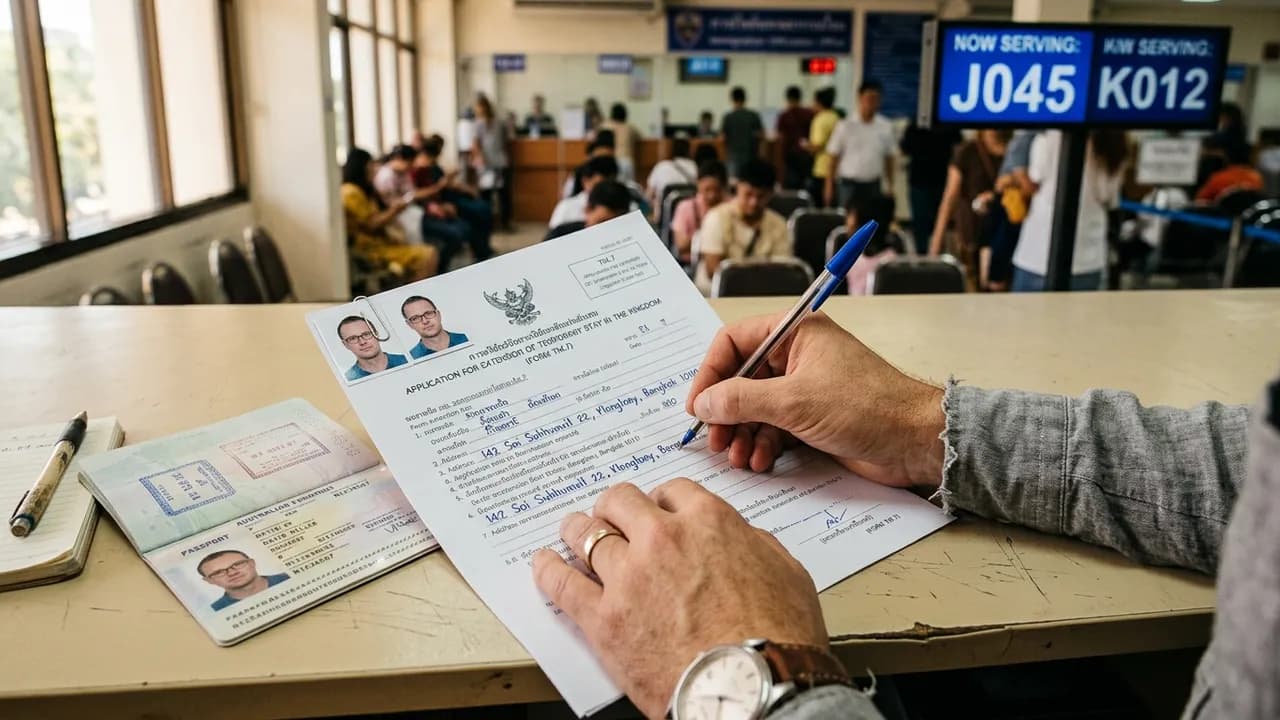
TM.7 Application Form — Completed in English, blue or black ink.
-
One passport-sized photo (4x6 cm) — White background, recent.
-
1,900 THB in cash — Government fee.
-
Work permit — Original and photocopies of all pages. Your work permit must be current and valid.
-
Personal income tax filings — Copies of your personal income tax returns (PND.91) and withholding tax certificates (Section 50 Bis) for the past year. These prove you are paying taxes on the salary your employer reports.
Documents Your Employer Provides
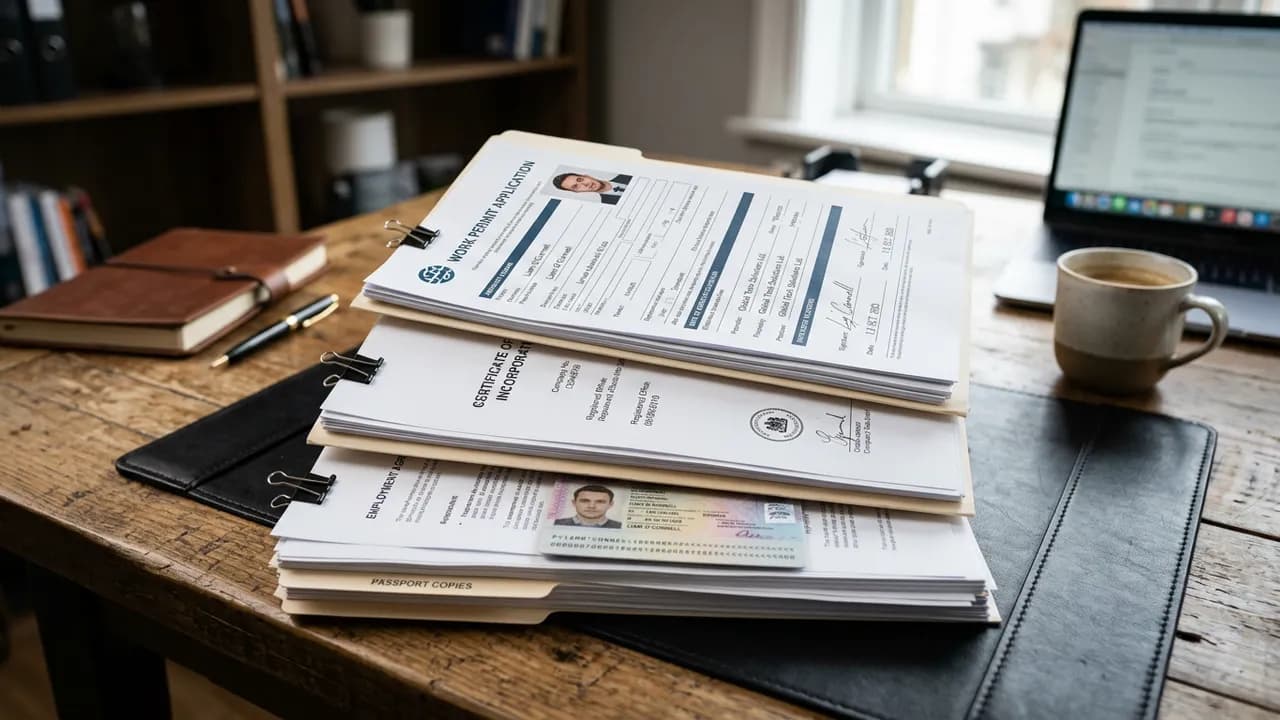
This is where the bulk of the paperwork lies. Your employer must provide:
-
Company registration documents:
- Certificate of incorporation (Bor Or Jor 5)
- Company objectives
- List of shareholders (Bor Or Jor 6) — updated to the most recent filing
- Memorandum of Association
-
Company financial documents:
- Most recent audited financial statements (balance sheet and profit/loss)
- Corporate tax filing (PND.50) for the most recent fiscal year
- VAT registration certificate (Por Por 20), if applicable
-
Social Security contributions — SSO payment receipts for the most recent 3 months.
-
Employee list — Showing the Thai-to-foreign employee ratio (general rule: 4 Thai employees per 1 foreign work permit holder).
-
Employer letter — Official letter on company letterhead signed by an authorized director, confirming your position, salary, continued employment, and requesting the extension.
-
Map to company office — A simple map showing the company's registered office location.
Additional Documents That May Be Required
- Lease agreement for company premises — Proving the company has a physical office.
- Photos of the office — Some offices request photos showing the company's signage and employees at work.
- BOI certificate — If your company is BOI-promoted, requirements differ. BOI companies use the One Stop Service Center.
Step-by-Step Extension Process
Step 1: Coordinate with Your Employer Early
Begin the extension process at least 30 days before your current stamp expires. Gathering all employer documents takes time, especially financial statements and updated shareholder lists. Many HR departments begin preparation 45–60 days in advance.
Step 2: Verify Your Work Permit Is Current
Check that your work permit is valid through the period you are requesting the extension for. If expiring soon, your employer should renew it before or simultaneously with your visa extension.
Step 3: Compile and Organize All Documents
Organize documents in the order listed on the official checklist. Sign every photocopy. Have your employer's authorized director sign and stamp company documents. Well-organized paperwork speeds up processing.
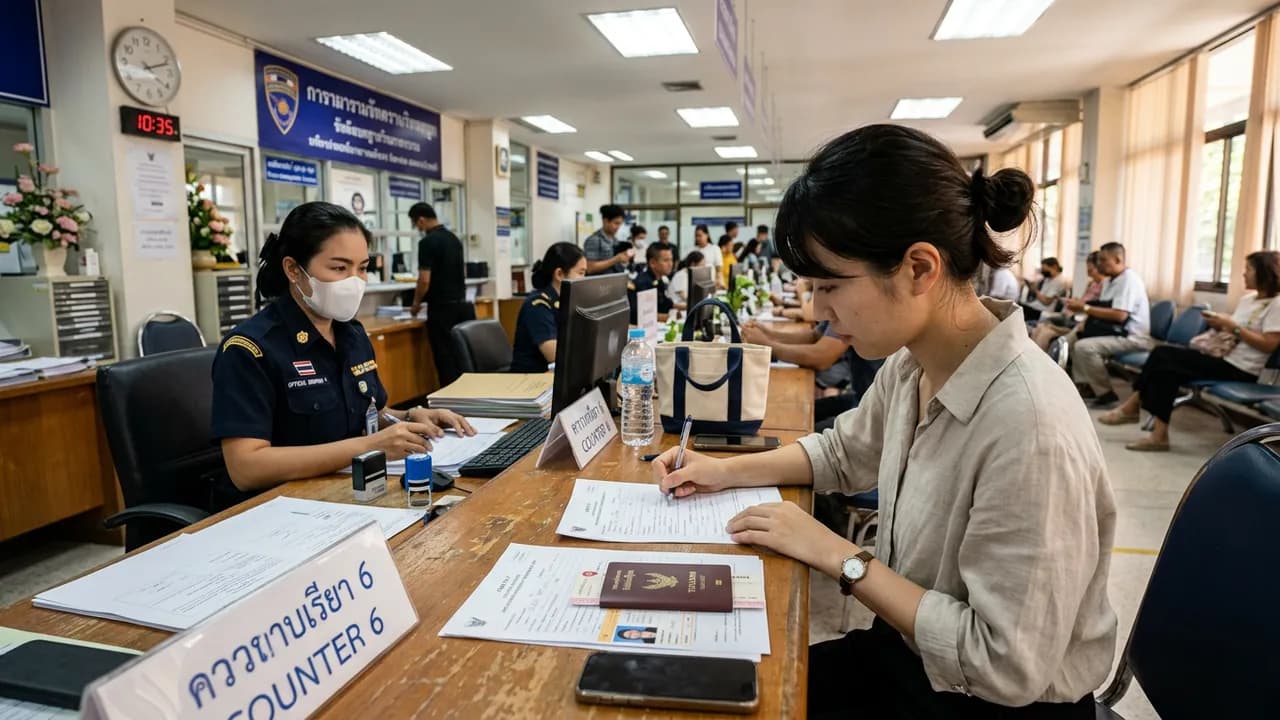
Step 4: Visit Immigration
Go to the immigration office in the province where your company is registered. For Bangkok-based companies, this is typically the Bangkok Immigration Bureau at Chaeng Watthana (Government Complex, Building B, Floor 2).
Step 5: Submit Your Application
At the business visa counter, submit your complete document package. The officer will:
- Cross-reference your work permit with their records
- Verify your employer's registration and compliance status
- Check your tax filings against your stated salary
- Review the Thai-to-foreign employee ratio
- Examine the company's financial health
If anything is missing or incorrect, you may be asked to return with additional documents. This is common and not a denial — it is a request for supplementary information.
Step 6: Processing and Possible Inspection
Processing times vary:
| Office | Typical Processing Time |
|---|---|
| Bangkok Chaeng Watthana | Same day to 7 days |
| Chiang Mai | Same day to 3 days |
| Phuket | Same day to 5 days |
| Smaller provincial offices | Usually same day |
In some cases, immigration may schedule an office inspection before approving your extension. An officer will visit your company's registered address to verify the office exists, employees are working there, and company signage is visible. Inspections are more common for new applications than renewals.
Step 7: Collect Your Passport
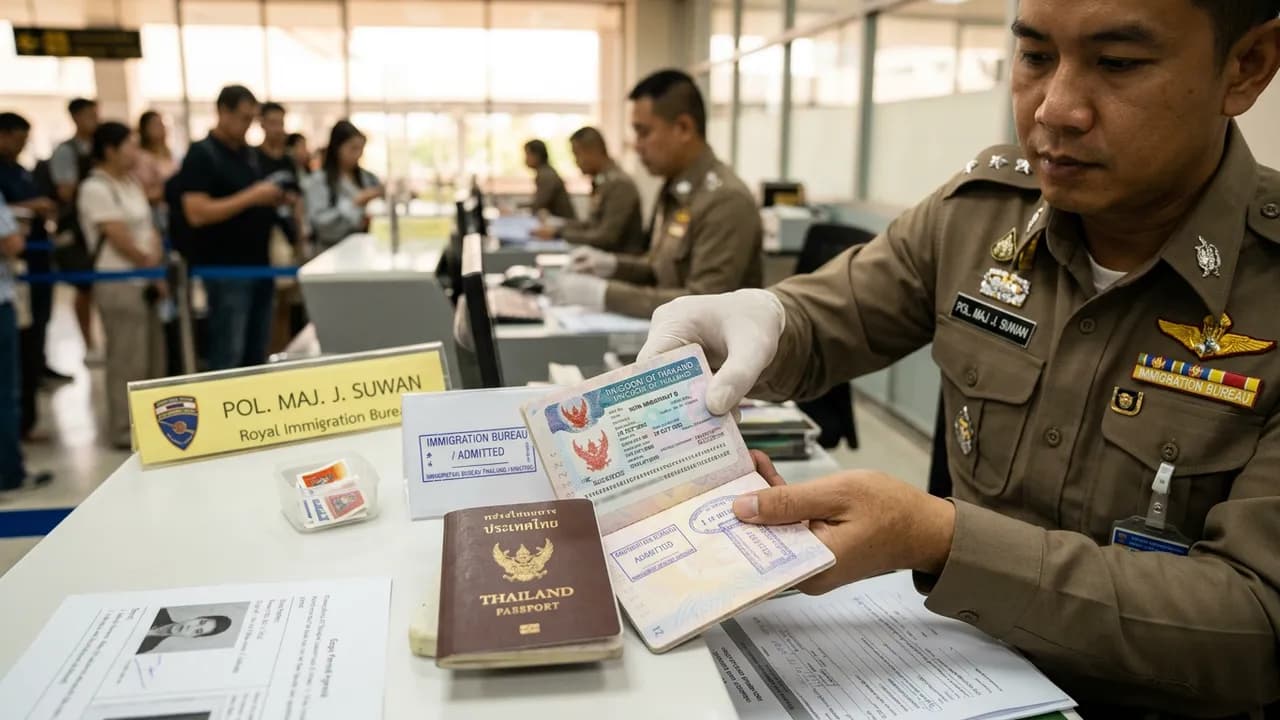
Once approved, your passport will receive a new stamp with a permitted stay date one year from your current expiry date.
Annual Renewal Cycle
The business visa extension follows an annual cycle:
| Month | Action |
|---|---|
| Month 10–11 | Begin gathering employer documents |
| Month 11 | Verify work permit renewal status |
| Month 11–12 | Submit extension application at immigration |
| Month 12 | Receive new one-year extension stamp |
| Every 90 days | Complete 90-day reporting |
90-Day Reporting
While on a Non-Immigrant B extension, you must file a 90-day report with immigration every 90 days. This can be done in person, by registered mail, or online. The fine for late reporting is 2,000 THB.
Re-Entry Permits
If you leave Thailand during your one-year extension, you must obtain a re-entry permit before departure. Without it, your extension is cancelled upon exit.
| Permit Type | Cost | Validity |
|---|---|---|
| Single re-entry | 1,000 THB | One departure and return |
| Multiple re-entry | 3,800 THB | Unlimited departures during extension period |
For frequent travelers, the multiple re-entry permit is strongly recommended. Apply at any immigration office or at the airport before departure.
Changing Employers
If you change jobs while on a Non-Immigrant B extension:
- Cancel your current work permit with the old employer (within 15 days of leaving).
- Your new employer applies for a new work permit in your name.
- Apply for a visa extension transfer to the new employer at immigration.
There is typically a window of 7–15 days to complete the changeover. Consider using an immigration lawyer for this process.
Costs Breakdown
| Item | Cost |
|---|---|
| Annual extension fee | 1,900 THB |
| Passport photos | 100–200 THB |
| Photocopies | 50–100 THB |
| Multiple re-entry permit (optional) | 3,800 THB |
| Total (annual) | 2,050–6,000 THB |
Most employer-related document costs (company registration, financial statements, etc.) are borne by the company, not the employee.
Common Reasons for Denial
- Work permit issues — Expired, cancelled, or mismatched work permit details.
- Company non-compliance — Employer has not paid taxes, Social Security contributions are missing, or the Thai-to-foreign employee ratio is not met.
- Salary below minimum — Tax filings show income below the required threshold.
- Company deemed inactive — No real business operations at the registered address.
- Incomplete documentation — Missing financial statements or unsigned company letters.
Tips for a Smooth Extension
Let Your Employer Lead the Process
In most companies, HR handles the visa extension as a routine annual task. Your main responsibility is providing your passport, photos, and personal tax documents on time.
Keep Your Tax Records Clean
Immigration cross-references your stated salary with your tax filings. Discrepancies between your work permit salary and tax returns are a common cause of problems.
Maintain Your 90-Day Reporting
A missed 90-day report does not cancel your visa, but it creates complications during your annual extension.
Get a Multiple Re-Entry Permit Immediately After Extension
If you travel outside Thailand for any reason, you need a re-entry permit. Get the multiple re-entry permit on the same day you receive your extension.
Frequently Asked Questions
Can I extend a Non-Immigrant B visa without a work permit?
Generally, no. The one-year extension based on employment requires a valid work permit. If you have not yet obtained a work permit, you may be eligible for a short-term 90-day extension while it is being processed. Consult your employer or immigration lawyer.
What happens if I am laid off during my extension year?
Your work permit must be cancelled within 15 days of employment ending. Once cancelled, your visa extension is no longer valid. You will typically be given a grace period (7–30 days) to leave Thailand or find new employment.
Can I extend at any immigration office?
You should apply at the immigration office in the province where your employer is registered. Applying at a different province's office will likely be refused.
Is the extension guaranteed if all documents are correct?
No extension is guaranteed — immigration officers have discretion. However, if your documents are complete, your employer is compliant, and your work permit is valid, approval is the standard outcome.
Summary
Extending a Non-Immigrant B visa in Thailand is an annual process that requires close coordination between you and your employer. The key to a smooth extension is a valid work permit, a compliant employer with proper documentation, and clean tax records. Start the process early, keep your paperwork organized, and maintain your 90-day reporting throughout the year. With the right preparation, the annual renewal becomes a routine administrative task rather than a source of stress.