Thailand's visa exemption scheme allows passport holders from eligible countries to enter Thailand without applying for a visa in advance. This is the simplest and most common way to visit Thailand for tourism, and it covers citizens of dozens of countries worldwide. If you hold a passport from a qualifying nation, you can simply fly to Thailand and receive a stamp at immigration allowing you to stay for a set number of days.
Quick Facts
| Detail | Information |
|---|---|
| Visa Required | No |
| Stay Duration | 60 days (most nationalities) or 30 days (select nationalities) |
| Extension | 30-day extension available at Thai Immigration |
| Cost | Free (no visa fee at entry) |
| Extension Fee | 1,900 THB |
| Work Permitted | No |
| Application | None — stamp granted at port of entry |
| Entry Method | Air or land border |
Who Qualifies for Visa Exemption?
Thailand grants visa exemptions based on bilateral agreements and government policy. The duration of stay varies by nationality.
60-Day Visa Exemption (Most Common)
As of 2026, citizens of the following countries and territories receive a 60-day visa exemption upon arrival in Thailand. This list includes the most common nationalities but may not be exhaustive — always confirm with the Thai Ministry of Foreign Affairs or your nearest Thai embassy.
Europe: Austria, Belgium, Czech Republic, Denmark, Estonia, Finland, France, Germany, Greece, Hungary, Iceland, Ireland, Italy, Latvia, Liechtenstein, Lithuania, Luxembourg, Monaco, Netherlands, Norway, Poland, Portugal, Slovakia, Slovenia, Spain, Sweden, Switzerland, United Kingdom
Americas: Argentina, Brazil, Canada, Chile, Peru, United States
Asia-Pacific: Australia, Bahrain, Hong Kong (SAR), Indonesia, Israel, Japan, Kuwait, Malaysia, New Zealand, Oman, Philippines, Qatar, Saudi Arabia, Singapore, South Korea, Taiwan, UAE
Africa: South Africa
This list was expanded in recent years from the previous 30-day allowance to 60 days for most nationalities, as part of Thailand's efforts to boost tourism.
30-Day Visa Exemption
A smaller number of countries receive a 30-day visa exemption. These include several nations with specific bilateral agreements. Check the Thai MFA website for the current list.
Special Cases
- ASEAN nationals from certain countries (e.g., Malaysia, Laos, Cambodia, Myanmar, Vietnam) have separate bilateral arrangements that may allow stays of 14–30 days depending on the agreement.
- Chinese and Indian passport holders gained visa exemption privileges in recent years — check the latest Thai government announcements for current status and duration.
Entry Requirements
Even though no visa application is needed, you must still meet these requirements at the port of entry:
Documents Required at Immigration
- Valid Passport — Must be valid for at least 6 months from the date of entry, with at least 1 blank page for the entry stamp (see full passport requirements)
- Completed Arrival/Departure Card (TM.6) — Distributed on flights or available at the immigration counter (some airports have transitioned to digital arrival cards)
- Proof of Onward Travel — A confirmed return or onward ticket showing you will leave Thailand within the allowed stay period
- Proof of Accommodation — Hotel booking or address where you will be staying
- Proof of Sufficient Funds — Immigration officers may ask you to demonstrate that you have at least 20,000 THB per person (or 40,000 THB per family) in cash or equivalent
Important: Fund Checks Are Real
While not every traveler is asked to prove their finances, Thai immigration does conduct random checks, particularly at land borders. If you cannot demonstrate sufficient funds, you may be denied entry. Carry the equivalent in cash or have bank statements readily accessible on your phone.
How the Visa Exemption Works: Step by Step
Step 1: Confirm your eligibility. Verify that your nationality qualifies for the visa exemption and check the current duration allowed.
Step 2: Book your travel. Ensure you have a round-trip or onward ticket. One-way tickets may cause problems at check-in or immigration.
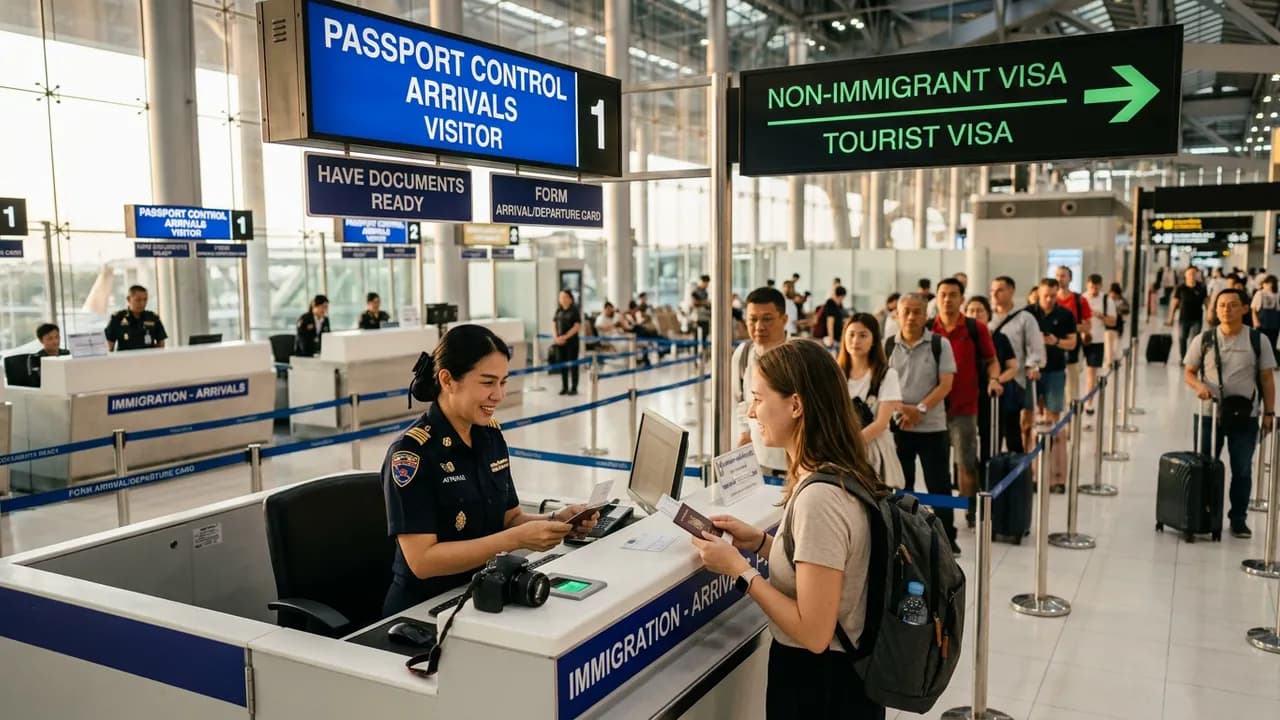
Step 3: Arrive in Thailand. Proceed to the immigration counter at your port of entry (airport or land border).
Step 4: Present your documents. Hand over your passport, completed arrival card, and have your accommodation and return flight details ready if asked.
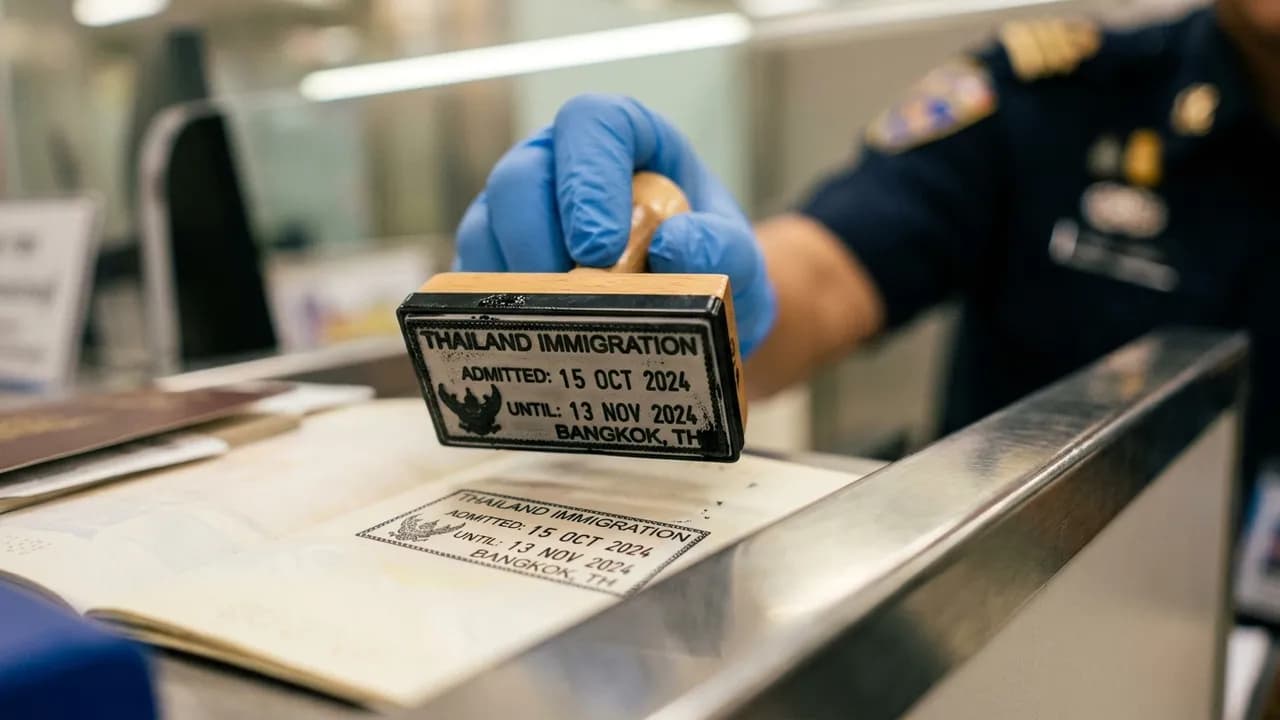
Step 5: Receive your entry stamp. The immigration officer will stamp your passport with the entry date and the date by which you must leave (60 or 30 days from entry). Verify the stamp is correct before walking away.
Step 6: Keep track of your permitted stay. Your allowed stay is calculated from the date of entry, not the date printed on your ticket. Count carefully.
Extending Your Visa-Exempt Stay
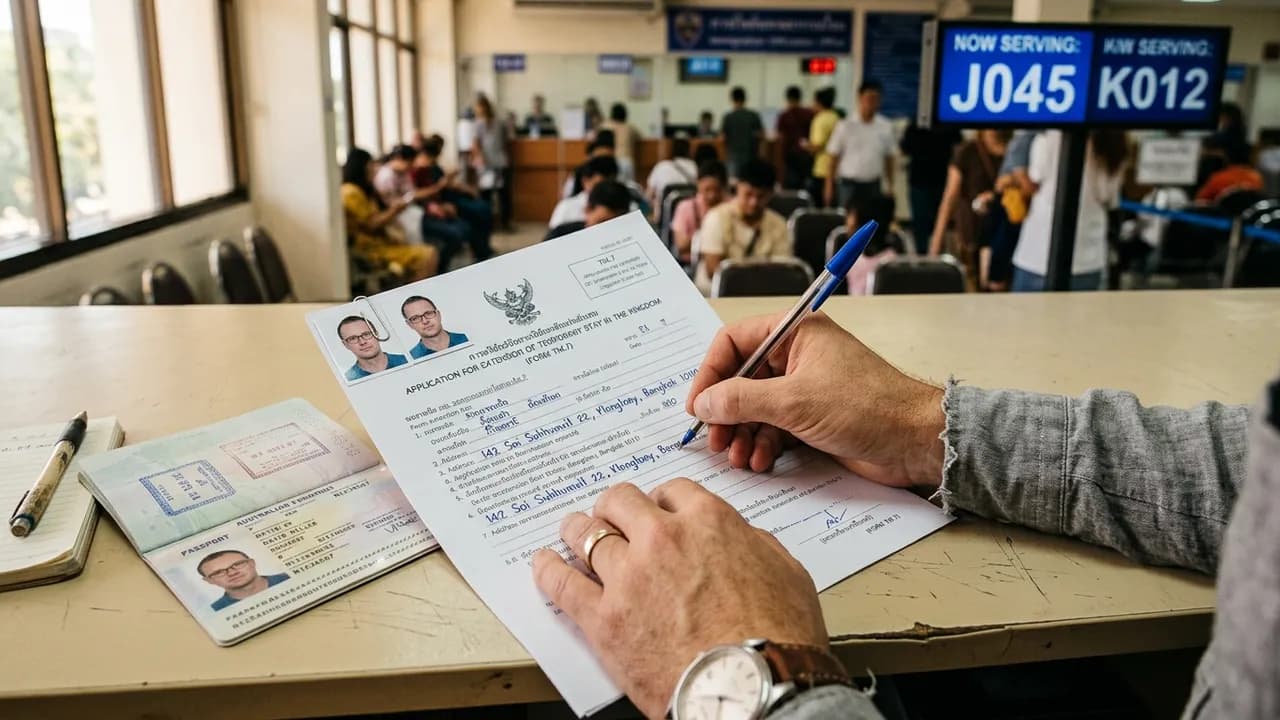
You can extend your visa-exempt stay by 30 days at any Thai Immigration office. This means a 60-day visa exemption can become up to 90 days total.
Extension Process
- Visit a Thai Immigration office before your permitted stay expires
- Bring the following:
- Passport
- Completed TM.7 extension application form
- One 4x6 cm passport photo
- Photocopy of your passport bio page and current entry stamp
- 1,900 THB fee
- Extensions are typically processed on the same day, often within 1–2 hours
- The new departure date will be stamped in your passport
Where to Extend
Immigration offices are located in every major city and tourist destination:
- Bangkok — Immigration Bureau, Chaeng Wattana Government Complex
- Chiang Mai — Chiang Mai Immigration, Promenada Mall area
- Phuket — Phuket Immigration, Phuket Town
- Pattaya — Pattaya Immigration, Jomtien
- Koh Samui — Koh Samui Immigration, Nathon
Arrive early in the morning for the shortest wait times. Some offices accept online queue reservations.
Land Border Entries
The visa exemption applies at both air and land borders, but there are some nuances:
- Consecutive land border entries may attract scrutiny. If immigration officers determine you are using repeated border runs to live in Thailand indefinitely, they may deny entry or reduce your permitted stay.
- There is no hard legal limit on the number of visa-exempt entries per year, but a pattern of back-to-back entries (particularly at land borders) raises red flags.
- Air entries generally receive less scrutiny than land border entries.
If you plan to stay in Thailand long-term, consider applying for a proper visa such as the Tourist Visa (TR), Non-Immigrant O, or Destination Thailand Visa (DTV).
Cost Breakdown
| Item | Cost |
|---|---|
| Visa exemption entry | Free |
| 30-day extension at Immigration | 1,900 THB (~$55 USD) |
| Photos at Immigration office | 100–200 THB |
| Photocopies at Immigration office | 5–20 THB |
Common Mistakes to Avoid
1. Not checking passport validity. Your passport must have at least 6 months of validity remaining. Travelers have been denied boarding or denied entry for passports expiring within 6 months.
2. No proof of onward travel. Airlines may refuse to board you, and immigration may deny entry if you cannot show a flight or bus ticket leaving Thailand within your stay period. If your plans are flexible, book a refundable ticket or a cheap onward flight.
3. Overstaying. Even a single day of overstay results in a 500 THB/day fine and goes on your immigration record. Extended overstays lead to detention, deportation, and multi-year entry bans. Take your departure date seriously.
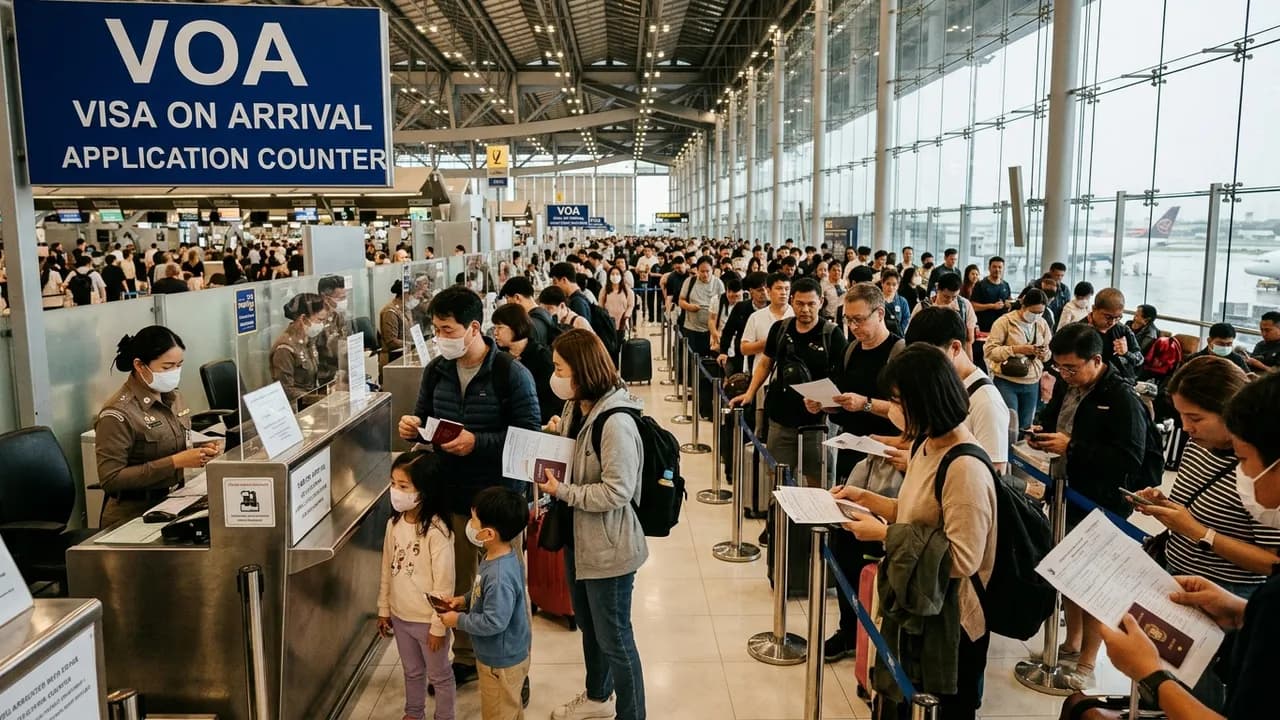
4. Confusing visa exemption with visa on arrival. These are different schemes. Visa on Arrival is for nationalities that do not qualify for visa exemption and involves a fee and application at the airport. If your country is on the visa-exempt list, you do not need to go through the VOA process.
5. Relying on border runs for long-term stays. While technically possible, repeated border runs are increasingly scrutinized. Immigration officers may refuse entry, shorten your permitted stay, or direct you to apply for a proper visa.
6. Not verifying the entry stamp. Always check that the immigration officer stamped the correct date and entry type in your passport. Errors happen, and an incorrect stamp can cause problems when you try to extend or leave.
Visa Exemption vs. Other Entry Options
| Feature | Visa Exemption | Tourist Visa (TR) | Visa on Arrival | DTV |
|---|---|---|---|---|
| Pre-Application | None | Required | At airport | Required |
| Stay Duration | 60 days | 60 days | 15 days | 180 days |
| Extension | +30 days | +30 days | +15 days | +180 days |
| Cost | Free | 1,000 THB+ | 2,000 THB | 10,000 THB |
| Best For | Short holidays | Longer holidays | Quick trips | Remote workers |
Important Notes and Warnings
- Visa exemption is not a visa. It is permission to enter and stay for a limited time. It does not appear as a visa sticker in your passport — only as an entry stamp.
- You cannot work on a visa exemption, including remote work or freelancing. For remote work, consider the Destination Thailand Visa (DTV).
- 90-day reporting does not apply to short-stay visa-exempt visitors, but it does apply if you extend and your total stay approaches 90 days.
- Re-entry permits are not applicable to visa-exempt entries. If you leave Thailand, your permission to stay ends. You will receive a fresh entry stamp when you return.
- Policy changes happen. Thailand's visa exemption list and duration have been updated multiple times in recent years. Always verify current rules before traveling.
Frequently Asked Questions
Can I enter Thailand visa-free by land?
Yes. The visa exemption applies at both air and land borders. However, repeated land border entries may be questioned by immigration officers.
What happens if I arrive without a return ticket?
You risk being denied boarding by the airline or denied entry by Thai immigration. Always have proof of onward travel, even if it is a flexible or refundable booking.
Can I extend more than once?
No. You can only extend a visa-exempt stay once for 30 days. After that, you must leave Thailand. You can then re-enter for a new visa-exempt stay, but repeated back-to-back entries may be refused.
Do I need travel insurance?
Travel insurance is not a mandatory requirement for the visa exemption, but it is strongly recommended. Thailand has excellent private hospitals, but costs can be significant without insurance.
How to Confirm Your Country Is Visa-Exempt
Check the Thai Ministry of Foreign Affairs official announcements, contact your nearest Royal Thai Embassy, or check with your airline before travel. You can also read our first-time Thailand visa guide for an overview of all entry options.