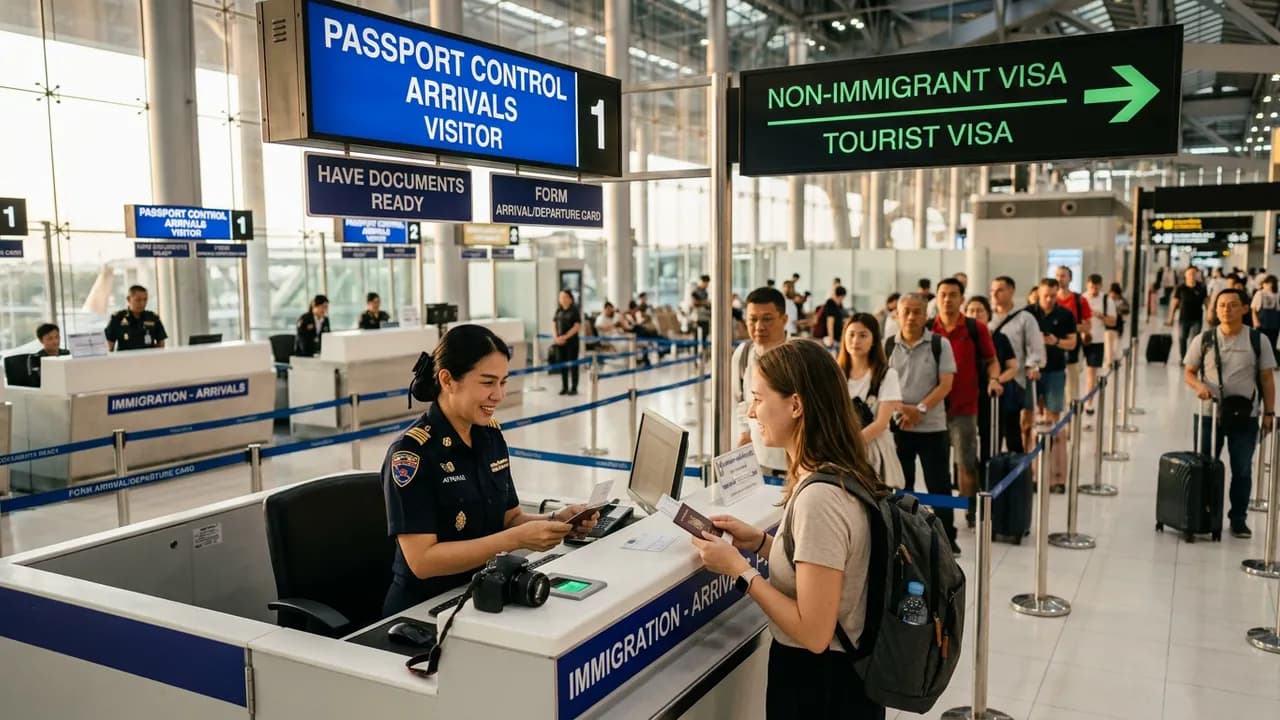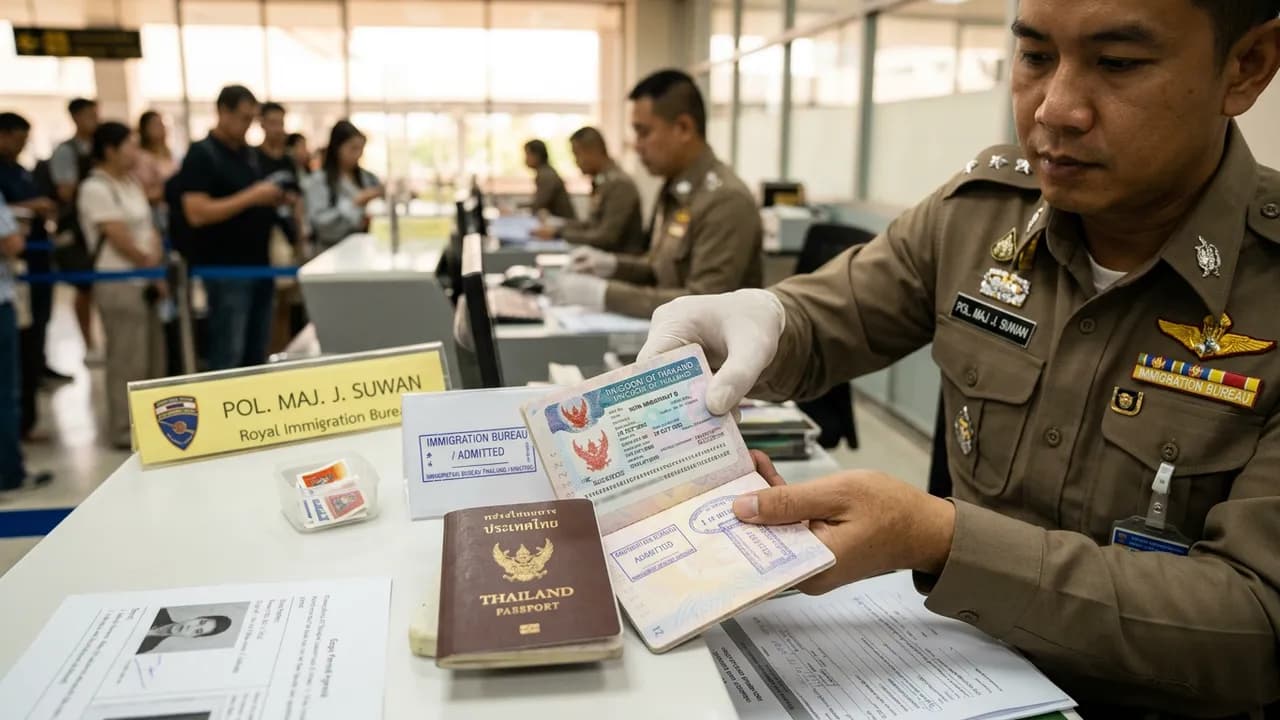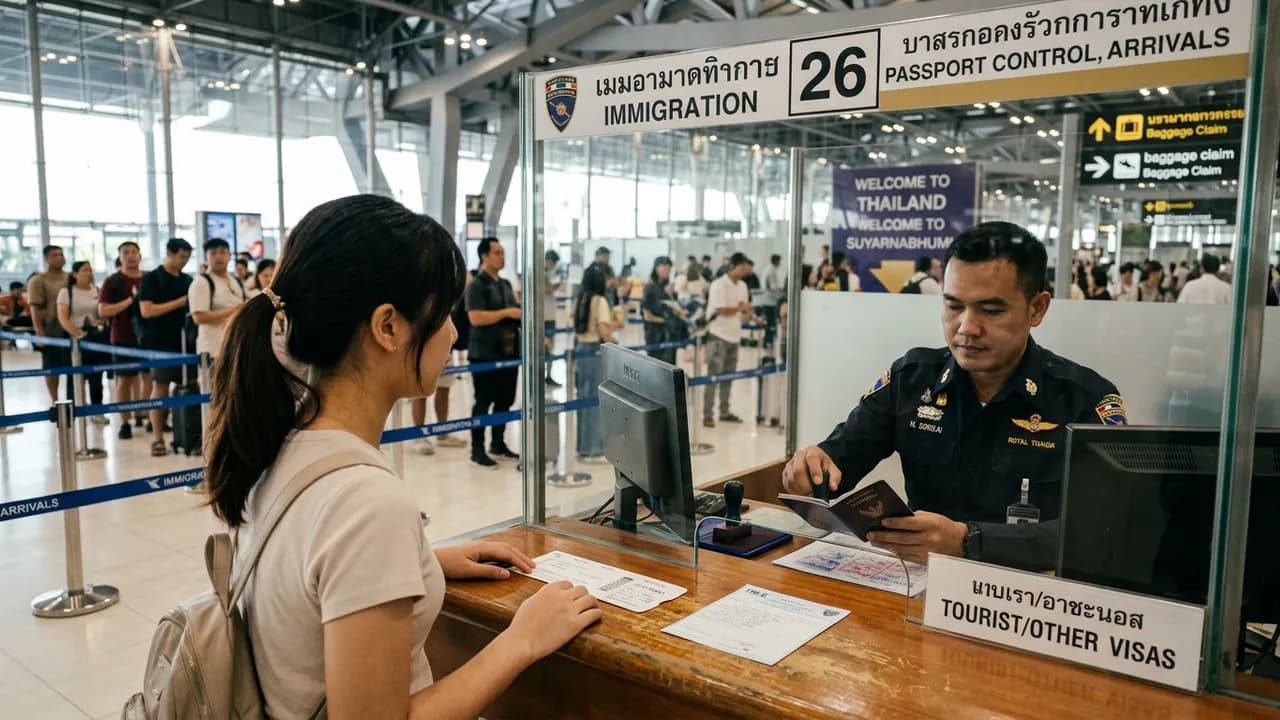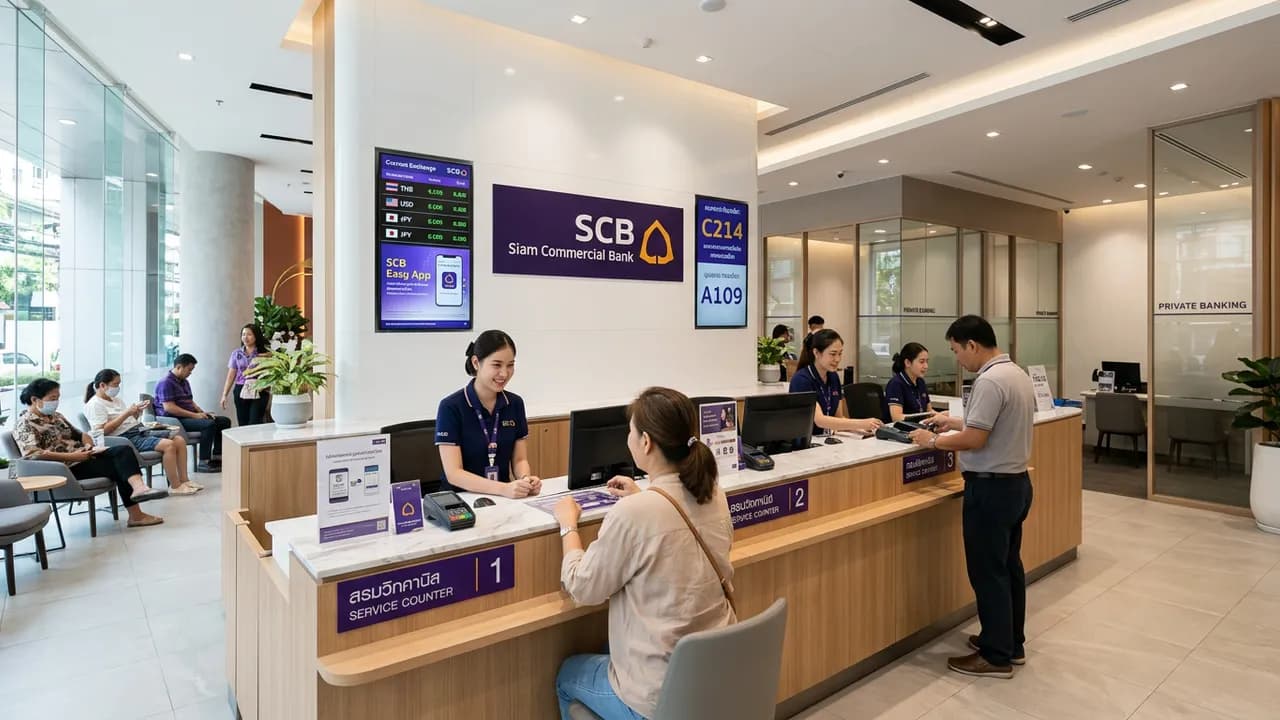
Opening a bank account in Thailand is one of the most important practical steps for any foreigner planning an extended stay. Whether you are retiring, working, studying, or living as a digital nomad, a Thai bank account simplifies daily life enormously. You can pay rent, receive salary, handle utility bills, and use mobile payment systems that have become essential in Thai society.
However, the process is not always straightforward. Thai banks have varying requirements for foreigners, and the documents you need depend largely on your visa type. This guide walks you through the entire process, bank by bank.
Quick Facts
| Detail | Information |
|---|---|
| Can tourists open accounts? | Difficult but sometimes possible at select branches |
| Best visa types for opening | Non-Immigrant B, O, O-A, ED, LTR, DTV |
| Minimum deposit | Usually THB 500 - 5,000 |
| Time to open | 30 minutes to 2 hours (same day) |
| Key document | Passport + valid Non-Immigrant visa |
| Online banking | Available at all major banks, mobile apps included |
| ATM/Debit card | Issued immediately or within 1-2 weeks |
Which Banks Accept Foreign Customers?
Thailand has several major banks, but not all branches are equally welcoming to foreign account holders. The following banks have the strongest track records for serving foreigners.
Bangkok Bank
| Feature | Details |
|---|---|
| Foreign-friendliness | High - historically the most accommodating for foreigners |
| English services | Good English-speaking staff at main branches |
| International presence | Branches in multiple countries (useful for transfers) |
| Mobile app | Bangkok Bank Mobile Banking |
| Recommended for | Retirees, workers, general expats |
Bangkok Bank is widely considered the most foreigner-friendly bank in Thailand. Their main branches in tourist and expat areas (Silom, Sukhumvit, Chiang Mai) are accustomed to foreign customers and have English-speaking staff. Some branches may open accounts for tourists with a passport and proof of address, though this varies.
Kasikornbank (KBank)
| Feature | Details |
|---|---|
| Foreign-friendliness | Moderate to high |
| English services | Good at major branches, limited at smaller ones |
| Technology | Excellent mobile app (K PLUS), widely used for transfers |
| QR payments | Strong integration with Thai QR payment systems |
| Recommended for | Digital nomads, younger expats, tech-savvy users |
Kasikornbank's K PLUS app is arguably the best mobile banking app in Thailand, with a clean English interface and seamless QR code payments. KBank generally requires a Non-Immigrant visa and a work permit or residence certificate, but some branches in expat-heavy areas are more flexible.
Siam Commercial Bank (SCB)
| Feature | Details |
|---|---|
| Foreign-friendliness | Moderate |
| English services | Available at major branches |
| Technology | SCB Easy app, solid mobile banking |
| Special programs | SCB has programs for LTR visa holders |
| Recommended for | Workers, LTR visa holders, established expats |
SCB tends to have stricter requirements for foreign account opening but offers competitive products for long-term residents. LTR visa holders may find SCB particularly accommodating due to government coordination with the bank.
Other Options
- Krungthai Bank (KTB): Government-owned bank. May be required for certain government-related transactions. Can open accounts for foreigners with proper documentation.
- Bank of Ayudhya (Krungsri): Part of the MUFG group. Reasonable for foreigners, especially those with Japanese connections.
- TMBThanachart (TTB): Generally requires a work permit for foreign account opening.
Documents Required
The documents you need depend on your visa type and the specific bank branch. Here is a general guide.
Essential Documents (All Banks)
- Passport — Original with at least 6 months validity
- Valid Thai visa — Non-Immigrant type strongly preferred (B, O, O-A, ED, LTR, DTV)
- Proof of Thai address — One or more of the following:
- Lease agreement or rental contract
- Utility bill with your name
- Letter from your landlord or hotel (for recent arrivals)
- Yellow house book (tabien baan) if registered
- Minimum opening deposit — Cash, typically THB 500 to 5,000
Additional Documents by Visa Type
| Visa Type | Additional Documents |
|---|---|
| Non-Immigrant B (Work) | Work permit, employment letter from Thai company |
| Non-Immigrant O (Retirement) | Retirement visa stamp, pension documentation |
| Non-Immigrant O-A | Same as O retirement |
| Non-Immigrant ED (Student) | Enrollment letter from Thai educational institution |
| LTR Visa | LTR visa endorsement, relevant qualification documents |
| DTV | DTV visa stamp, proof of remote employment |
| Tourist Visa / Visa Exemption | Embassy letter or residence certificate from immigration (some banks) |
The Residence Certificate
Some banks require a residence certificate (also called a certificate of residence) issued by Thai Immigration. This document confirms your address in Thailand and is obtained from your local immigration office (such as Chaeng Wattana in Bangkok or Chiang Mai Immigration).
How to get a residence certificate:
- Visit your local immigration office
- Bring your passport, two photos, TM.30 receipt, and proof of address
- Pay the fee (approximately THB 500)
- Processing takes 1-3 working days
Alternatively, some embassies issue a letter of residence for their nationals, which certain bank branches accept.
Step-by-Step Account Opening Process
Step 1: Choose Your Bank and Branch
Select a bank that fits your needs and visit a main branch in an area with a significant foreign population. Smaller branches in rural areas often lack experience with foreign customers and may decline your application regardless of your documentation.
Recommended branches for foreigners:
- Bangkok: Silom, Sukhumvit (Asok/Nana area), Sathorn
- Chiang Mai: Main branches near Tha Phae Gate or Nimman
- Phuket: Patong or Phuket Town main branches
- Pattaya: Central Pattaya main branches
Step 2: Visit During Opening Hours
Thai banks are typically open Monday to Friday, 8:30 AM to 3:30 PM. Some branches in shopping malls operate on weekends and have extended hours (until 7:00 PM or later). Mall branches can be more convenient but may have higher customer volumes.
Step 3: Request Account Opening
Tell the staff you would like to open a savings account (the most common type for foreigners). Bring all your documents. The staff will review your paperwork and may ask:
- Why you are in Thailand
- How long you plan to stay
- The source of your funds
- Whether you are employed
Step 4: Complete the Application
- Fill out the account opening form (available in English at most major branches)
- Provide copies of your passport pages (the bank will usually photocopy these for you)
- Make your initial deposit
- Choose your account preferences (ATM card, passbook, online banking)
Step 5: Receive Your Account
- Passbook: Issued immediately at most banks
- ATM/Debit card: Some banks issue same-day, others mail it within 1-2 weeks
- Online/Mobile banking: Set up with staff assistance during the visit or activate later
Setting Up Online and Mobile Banking
Thai mobile banking apps are excellent and widely used for daily transactions. Here is how to set up each:
Bangkok Bank Mobile Banking
- Download the app from the App Store or Google Play
- Register using your account number and ATM card details
- Set up a PIN and biometric login
- Link your phone number for OTP verification
K PLUS (Kasikornbank)
- Download K PLUS
- Register with your account number
- Verify your identity (may require branch visit for initial setup)
- Set up PIN/biometric authentication
- Enable QR payment scanning
SCB Easy (Siam Commercial Bank)
- Download SCB Easy
- Register using your account and card information
- Complete identity verification
- Set up security preferences
All major Thai banking apps support:
- Real-time transfers between Thai bank accounts (free or minimal fee)
- QR code payments (accepted nearly everywhere in Thailand)
- Bill payments (utilities, phone, internet)
- International transfers (fees vary)
- Account balance and transaction history
Account Types for Foreigners
Savings Account
The most common and easiest account type for foreigners. Features include:
- Low or no minimum balance
- Passbook-based record keeping
- ATM/debit card access
- Online banking access
- Minimal interest (currently around 0.25-0.50% for basic accounts)
Fixed Deposit Account
Available once you have a savings account. Offers higher interest rates for locking funds for a fixed term (3 months, 6 months, 12 months, etc.). Useful for retirees maintaining the THB 800,000 balance requirement.
Current Account (Checking)
Less common for foreigners. Typically requires a business or work-related reason. Offers checkbook functionality.
International Transfers
Receiving Money from Abroad
- SWIFT transfer: All major Thai banks accept international SWIFT transfers. You will need your SWIFT code, account number, and bank branch details.
- Wise (TransferWise): Supports transfers to Thai bank accounts. Often cheaper than SWIFT for smaller amounts.
- Western Union / MoneyGram: Can deposit directly to Thai bank accounts.
Sending Money Abroad
- Thai banks offer outgoing SWIFT transfers, but fees can be high (THB 400-800 per transaction plus exchange rate margins).
- Wise or similar services often provide better exchange rates for outgoing transfers.
- Daily and annual transfer limits apply for foreign nationals.
Common Challenges and Solutions
"We Cannot Open Accounts for Tourists"
Problem: Many branches decline tourist visa holders or visa-exempt visitors. Solution: Visit a main branch in a major expat area. Bring a residence certificate from immigration. Consider getting a Non-Immigrant visa first if you plan to stay long-term.
"You Need a Work Permit"
Problem: Some branches insist on a work permit even if you have a Non-Immigrant visa. Solution: Try a different branch of the same bank, preferably one in an area with many foreign residents. Bangkok Bank branches tend to be more flexible on this requirement.
Tips for Success
- Go to a main branch in an expat area — This is the single most important factor. Branch managers have discretion, so if refused at one branch, try another.
- Bring more documents than you think you need — Extra documentation never hurts and demonstrates seriousness.
- Be patient and polite — The process may involve waiting and paperwork. Thai banking culture values courtesy.
- Dress neatly — First impressions matter at Thai banks. Business casual is appropriate.
- Go early in the day — Banks are less crowded in the morning, and staff have more time to assist with foreign account applications.
- Have your TM.30 receipt ready — This proof of address registration is increasingly requested by banks.
- Set up mobile banking before you leave — Have the staff help you download and configure the mobile app during your visit.
Frequently Asked Questions
Can I open a bank account on a tourist visa?
It is possible but difficult. Some Bangkok Bank branches in tourist areas will open accounts for tourists with a passport and proof of accommodation. Most other banks require a Non-Immigrant visa.
Do I need a Thai phone number?
Yes. Thai mobile banking requires a Thai phone number for OTP verification. Get a Thai SIM card before visiting the bank.
Can I open an account online?
Generally no. The initial account opening must be done in person at a branch. Once opened, all subsequent banking can be done through the mobile app.
What is the minimum deposit?
Usually THB 500 to 5,000, depending on the bank and account type.
Will my account be closed if I leave Thailand?
Not automatically. Thai bank accounts remain open indefinitely as long as the balance stays above the minimum. However, some banks may flag dormant accounts after 12 months of inactivity.
Can I have accounts at multiple banks?
Yes. Many foreigners maintain accounts at two or more banks for convenience.
What documents do I need to open a Thai bank account?
Bring your passport, a Non-Immigrant visa (or expect extra scrutiny on a tourist visa), proof of a Thai address such as a rental contract or a certificate of residence from immigration, and in many cases a work permit or a reference letter. A Thai phone number for OTP verification and the minimum opening deposit complete the set. Requirements vary by bank and even by branch, so bring more documentation than you think you need.
Which Thai bank is easiest for foreigners to open an account with?
Bangkok Bank is generally the most foreigner-friendly, and some of its branches in tourist areas will open accounts even for visitors on a tourist visa with a passport and proof of accommodation. Kasikornbank (KBank) and SCB are also common choices for long-term residents holding a Non-Immigrant visa. Branch discretion matters more than official policy, so if one branch declines, try another.
Final Thoughts
Opening a Thai bank account transforms your experience as a foreigner in Thailand. It allows you to participate fully in the country's increasingly cashless economy, receive transfers cheaply, and manage your finances locally. The key to success is choosing the right bank and branch, bringing comprehensive documentation, and having the right visa type. For long-term residents, this is one of the first practical tasks to complete after settling in.