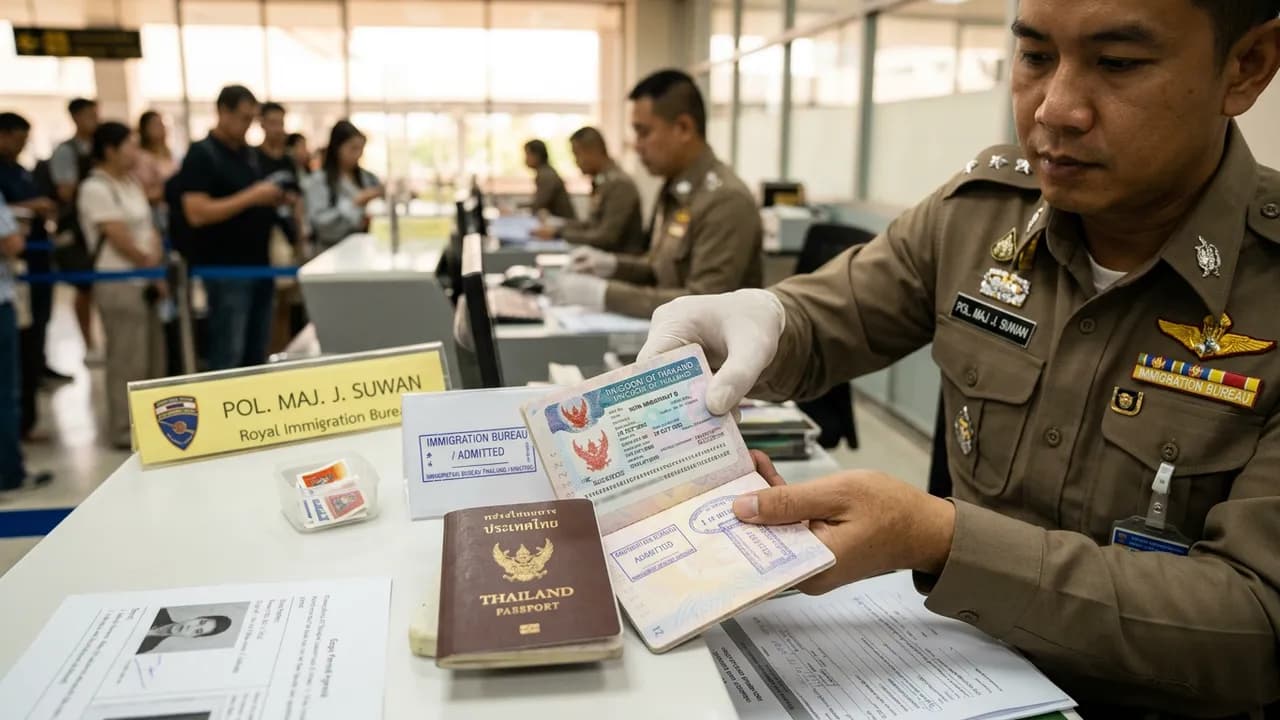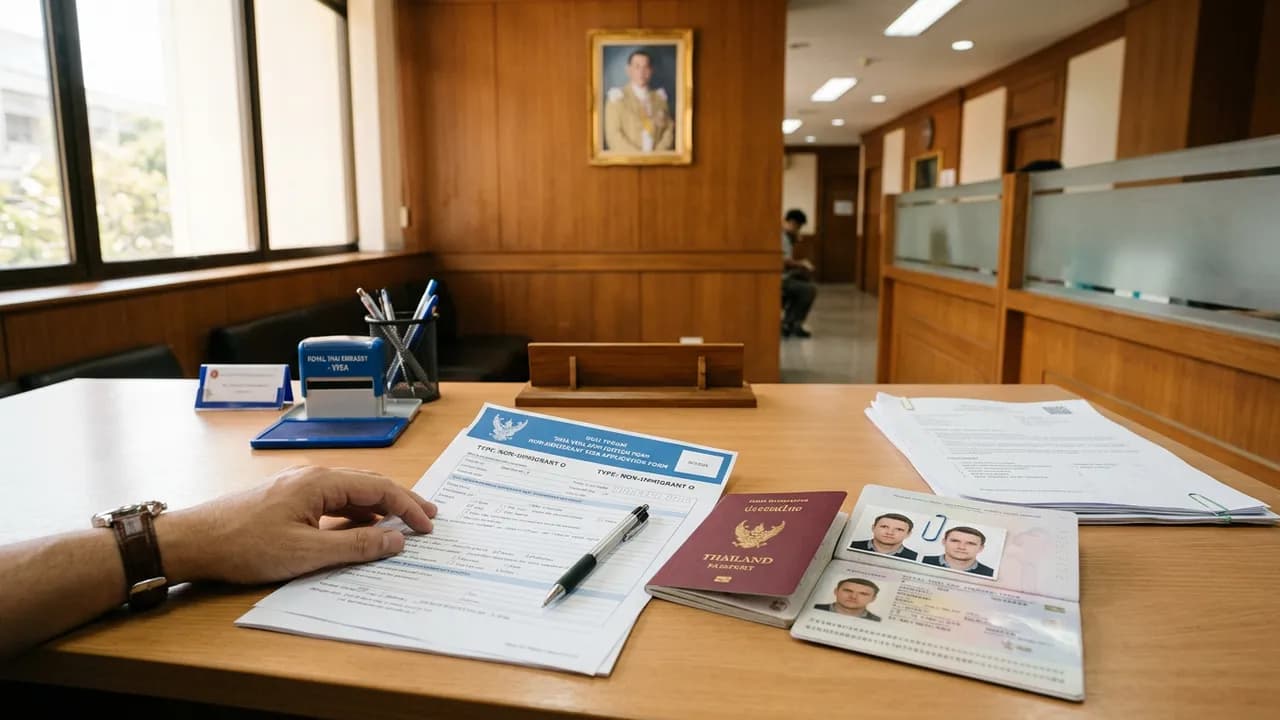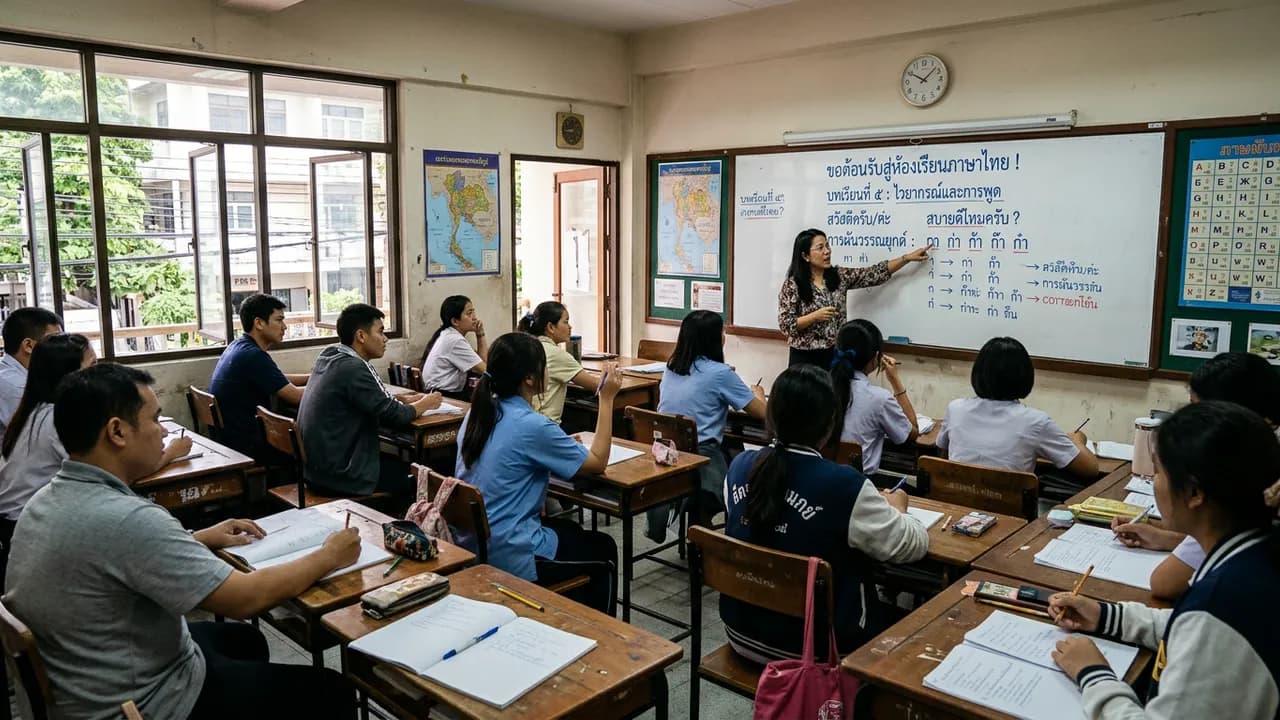
The Thailand Non-Immigrant ED Visa (Education Visa) is issued to foreign nationals who wish to study in Thailand. This includes enrolling in a Thai university degree program, studying the Thai language at an accredited school, participating in a seminary or religious training, or attending an approved educational course. The ED visa is one of the most accessible long-term visa options, as it does not require the financial thresholds associated with retirement visas and is open to applicants of all ages.
Quick Facts
| Detail | Information |
|---|---|
| Visa Code | Non-Immigrant ED |
| Purpose | Study at a Thai educational institution |
| Validity | 3 months (single-entry) / 1 year (multiple-entry) |
| Length of Stay | 90 days per entry |
| Extension | Extendable in 90-day increments (up to 1 year total, renewable) |
| Cost | 2,000 THB (single-entry) / 5,000 THB (multiple-entry) |
| Processing Time | 5–10 business days |
| Work Permitted | No |
| Application | Royal Thai Embassy/Consulate abroad or e-Visa |
Who Qualifies for the Education Visa?
The Non-Immigrant ED visa is available to anyone who has been accepted into an eligible educational program in Thailand. Qualifying programs include:
University Programs
- Bachelor's degree programs at Thai universities (public or private)
- Master's and doctoral programs at accredited Thai universities
- Exchange programs and semester-abroad programs at Thai institutions
Language Schools
- Thai language courses at Ministry of Education-approved language schools
- Other language courses (English, Chinese, etc.) at accredited institutions, though Thai language study is the most common basis for ED visas
Vocational and Professional Training
- Muay Thai training at certified training camps registered with the Ministry of Education
- Cooking courses at accredited culinary schools
- Other vocational programs approved by the Ministry of Education
Religious Training
- Buddhist ordination — studying as a monk or novice at a registered temple
- Seminary studies and religious education programs
International Schools
- Students enrolled in international schools in Thailand (for minors, a parent or guardian may receive a Non-Immigrant O visa as an accompanying family member)
Required Documents
Standard Documents (All Applicants)
- Valid Passport — At least 6 months validity, 2+ blank pages
- Visa Application Form — Completed and signed
- Recent Passport Photo — 4x6 cm, white background
- Proof of Travel — Flight booking to Thailand
- Visa Fee — 2,000 THB (single-entry) or 5,000 THB (multiple-entry)
Education-Specific Documents
- Acceptance Letter — From the Thai educational institution, confirming your enrollment, course name, duration, and start date
- School License — Copy of the institution's operating license from the Thai Ministry of Education
- Course Details — Curriculum outline, schedule, and total course hours
- Academic Transcripts — Previous educational records (required for university programs; may not be needed for language schools)
- Financial Proof — Bank statement or evidence that you can support yourself during your studies (amount varies by consulate, but typically 50,000–100,000 THB equivalent)
- Criminal Background Check — Required by some consulates (from home country, apostilled or authenticated)
For Minors
- Birth Certificate — Certified copy
- Parental Consent Letter — If the minor is not accompanied by both parents
- Guardian Documentation — If the child will be in the care of a guardian in Thailand
Application Process: Step by Step
Step 1: Choose and enroll in a program. Research accredited schools, universities, or training programs in Thailand. Ensure the institution is registered with the Thai Ministry of Education and can provide the documentation needed for an ED visa. Apply and receive a formal acceptance letter.
Step 2: Request visa support documents from the school. Ask the school to provide the acceptance letter, school license, and any other documents required by the Thai consulate. Reputable schools are familiar with this process and will prepare a complete document package.
Step 3: Apply at a Thai Embassy or Consulate. Submit your application at the Thai embassy or consulate in your country of residence. Bring all standard and education-specific documents — refer to our education visa checklist to make sure you have everything. Some consulates accept e-Visa applications.
Step 4: Pay the visa fee and wait for processing. Processing typically takes 5–10 business days. Some consulates may contact the school to verify your enrollment.
Step 5: Receive your visa and travel to Thailand. Enter Thailand within the 3-month validity period. At the border, you will receive a 90-day stay permit.
Step 6: Report to the school. Begin your course within the timeframe specified. Most schools will handle visa-related reporting to the Ministry of Education.
Step 7: Extend your stay. Before the initial 90-day stay expires, the school will assist you in applying for a visa extension at Thai Immigration. Extensions are granted in 90-day increments for the duration of your course.
Extending the Education Visa
Unlike retirement or marriage visas, the ED visa extension process works on a 90-day cycle. Every 90 days, you must visit Thai Immigration with updated documents from your school to extend your stay.
Extension Requirements
- TM.7 Extension Application Form
- Passport with current visa and entry stamp
- Letter from the school confirming ongoing enrollment, attendance record, and course progress
- Passport photo (4x6 cm)
- Extension fee: 1,900 THB per 90-day extension
How Long Can You Stay?
- Extensions can be granted for the full duration of your course, up to 1 year at a time
- University degree programs may support ED visa extensions for 2–4+ years
- Language school programs typically support extensions for 1–2 years
- Muay Thai and vocational programs vary by institution and course length
Attendance Requirements
Thai Immigration and the Ministry of Education monitor attendance. If you stop attending classes or your attendance falls below the required threshold, the school is obligated to report this, and your visa extension may be revoked.
Minimum attendance requirements vary by program type but are generally:
- University programs: Regular attendance per university policy
- Language schools: Minimum 4 hours of classes per week; many schools require more
- Muay Thai programs: Regular training attendance as specified by the camp
Cost Breakdown
| Fee Type | Amount |
|---|---|
| Single-Entry ED Visa | 2,000 THB (~$58 USD) |
| Multiple-Entry ED Visa | 5,000 THB (~$145 USD) |
| 90-Day Extension | 1,900 THB per extension |
| Re-Entry Permit (single) | 1,000 THB |
| Re-Entry Permit (multiple) | 3,800 THB |
| School Tuition | Varies widely (5,000–50,000+ THB per term) |
Typical Tuition Costs
- Thai language schools: 10,000–30,000 THB per term (3–6 months)
- Muay Thai camps (with ED visa support): 15,000–40,000 THB per term
- International universities: 50,000–200,000+ THB per semester
- Cooking schools: 15,000–35,000 THB for a course that supports an ED visa
Choosing the Right School
Not all schools can sponsor an ED visa. The institution must be licensed by the Thai Ministry of Education and specifically authorized to enroll foreign students for visa purposes.
Red Flags to Watch For
- Schools that promise an ED visa with "no attendance required" — this is a violation of Thai law
- Extremely low tuition paired with no real classes
- Schools that cannot provide a copy of their Ministry of Education license
- Institutions that have been blacklisted or had their visa support privileges revoked
How to Verify a School
- Ask for the school's Ministry of Education license number
- Check with the Thai consulate to see if the school is recognized
- Read reviews from other foreign students
- Visit the school in person before committing, if possible
Common Mistakes to Avoid
1. Choosing an unaccredited school. If the school loses its license or is not properly accredited, your visa becomes invalid. Do your due diligence before enrolling.
2. Skipping classes. Even if you are in Thailand primarily for lifestyle reasons, you must attend classes. Non-attendance leads to visa cancellation and potential overstay penalties.
3. Working on an ED visa. The Education Visa does not permit any form of employment, including freelancing, remote work, or teaching. Working illegally can result in arrest, fines, and deportation. If you want to work, you need a Non-Immigrant B Visa.
4. Forgetting re-entry permits. If you leave Thailand without obtaining a re-entry permit, your visa extension is cancelled. Apply for a re-entry permit at Immigration or at the airport before departure.
5. Missing extension deadlines. You must apply for your 90-day extension before the current period expires. Overstaying even by one day results in fines and a record of overstay.
6. Not coordinating with the school. The school handles much of the documentation for extensions. Stay in close communication with their visa support staff and provide any documents they request promptly.
Important Notes and Warnings
- Age is not a barrier. The ED visa is available to applicants of all ages. Many retirees use it to study Thai language while enjoying a long-term stay, often as an alternative to the retirement visa.
- Muay Thai visa crackdowns. Thai authorities have periodically cracked down on Muay Thai camps that provided ED visa sponsorship without genuine training programs. Ensure your camp has current Ministry of Education accreditation.
- Language school quality varies dramatically. Some schools offer excellent instruction; others are essentially "visa mills." Investing in a quality school not only protects your visa status but also provides genuine value.
- 90-day reporting still applies. In addition to your 90-day visa extensions, you must comply with the separate 90-day address reporting requirement at Immigration.
- Changing schools. You can transfer your ED visa to a different school, but this requires cancelling your enrollment at the current school, obtaining new documents from the new school, and processing the transfer at Immigration. It is not a simple process.
- Transitioning to other visas. If you find employment while studying, you can potentially convert to a Non-Immigrant B Visa either from inside Thailand or by exiting and applying at a consulate. Consult Immigration or a visa agent for the current process.
Frequently Asked Questions
Can I study part-time on an ED visa?
The course must meet minimum hour requirements set by the Ministry of Education for visa purposes. While you do not need to study full-time in all cases, a course that is only a few hours per month will generally not qualify.
Can my family join me on an ED visa?
Your spouse and children may be eligible for a Non-Immigrant O Visa as dependents. This must be applied for separately, and financial requirements apply.
Is online/distance learning eligible for an ED visa?
No. The ED visa requires enrollment in an in-person program at a physical institution in Thailand. Online courses do not qualify.
Can I travel outside Thailand during my studies?
Yes, provided you obtain a re-entry permit before leaving. Without one, your visa extension is voided and you would need to start the visa process over.
How long can I stay in Thailand on an ED visa total?
There is no hard limit, but each extension must be justified by genuine, ongoing enrollment in an accredited program. Immigration may scrutinize applicants who have been on consecutive ED visas for many years without completing a program or demonstrating genuine academic progress.
Can I switch from an ED visa to a retirement visa?
If you are 50 or older and meet the financial requirements, you can transition from an ED visa to a Non-Immigrant O Visa for retirement. This typically requires exiting Thailand and applying at a consulate, though in-country conversions may be possible depending on current Immigration policy.