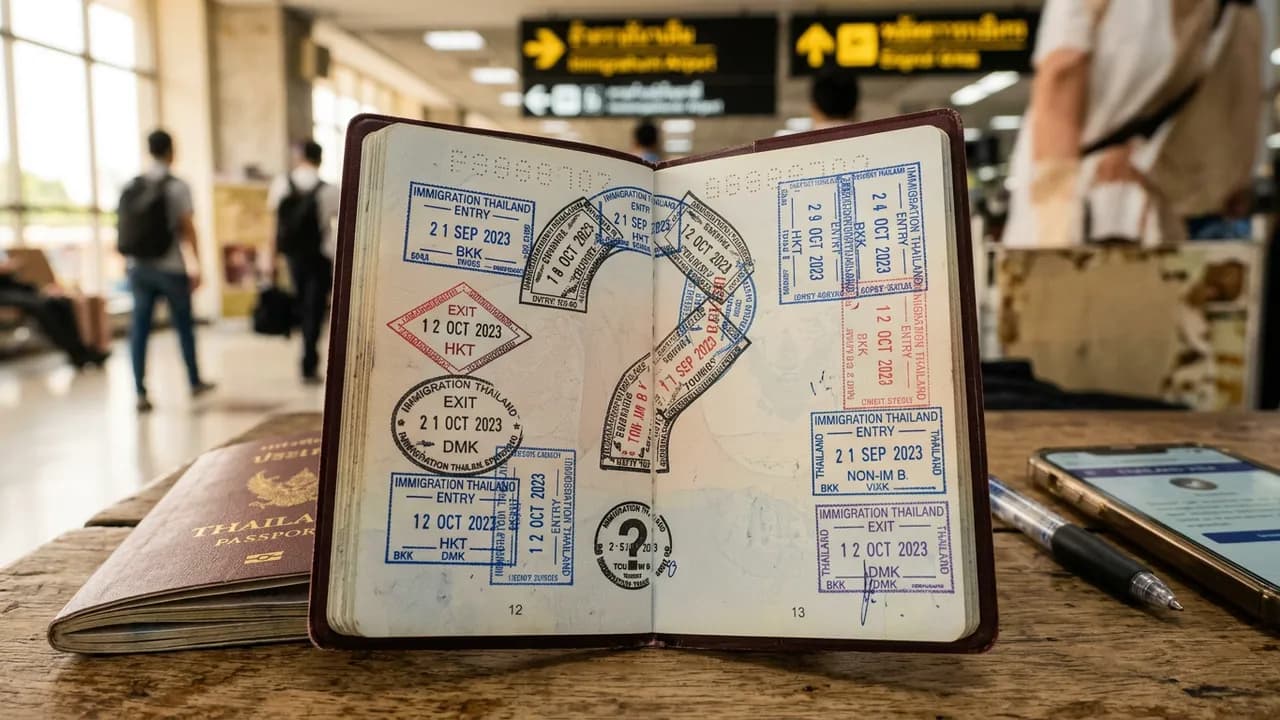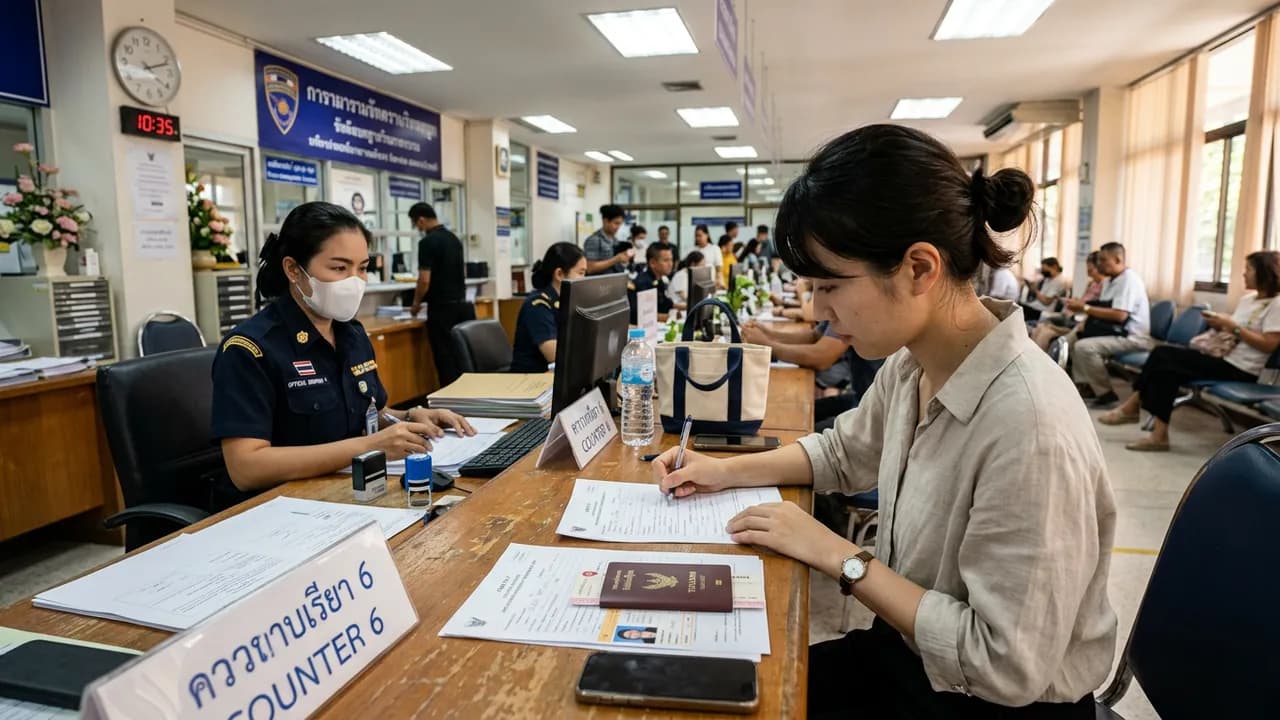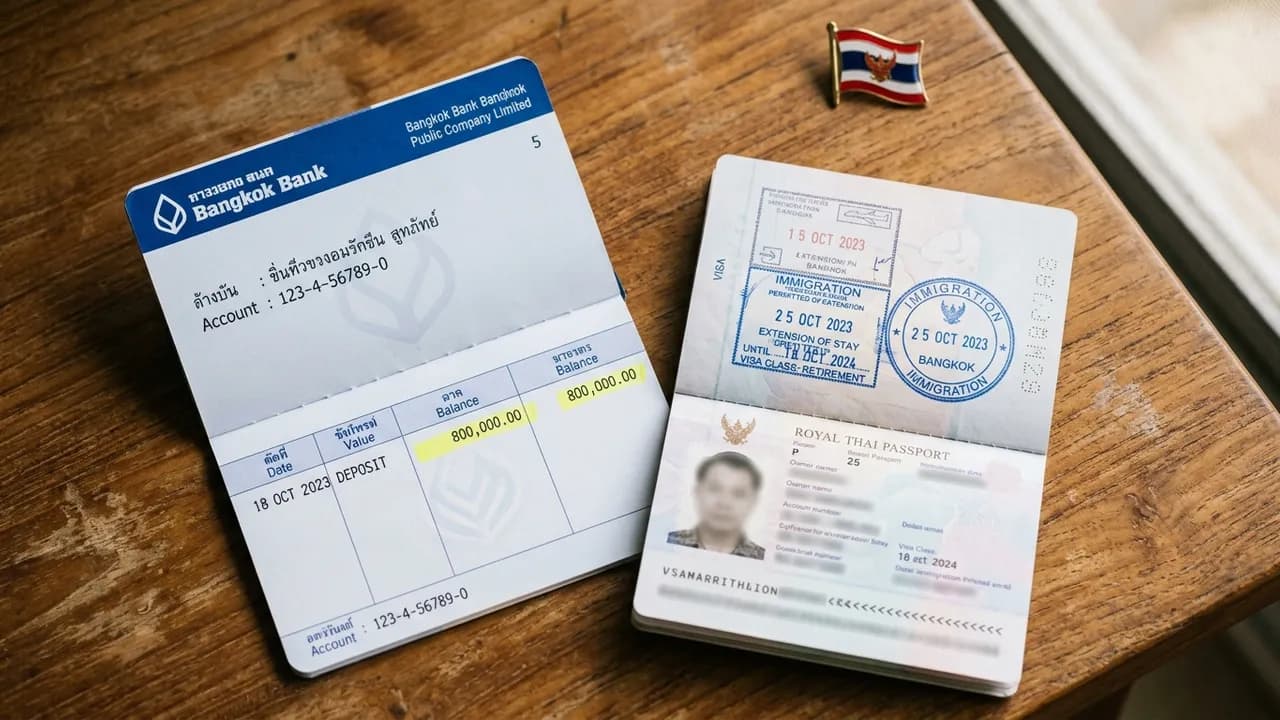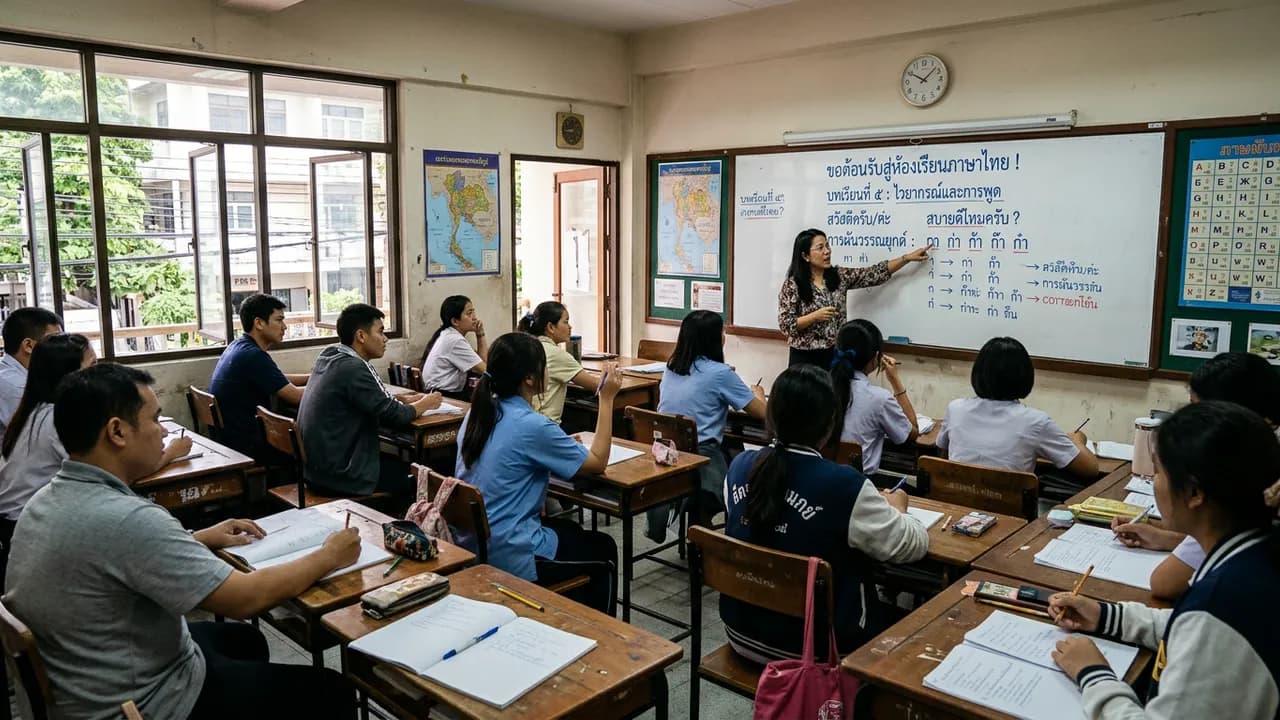
How to extend your Thai visa is a straightforward process if you know the rules, have the right documents, and visit the correct immigration office. This FAQ covers every common question about visa extensions in Thailand, from short tourist stays to long-term retirement and education visas. For the broader set of visa questions, see our Thailand visa FAQ.
Quick Facts
| Detail | Information |
|---|---|
| Where to Extend | Any Thai Immigration office (main offices or branch offices) |
| Tourist Visa Extension | 30 days, costs 1,900 THB |
| Visa Exemption Extension | 30 days, costs 1,900 THB |
| Retirement Extension | 1 year, costs 1,900 THB |
| Education Extension | 90 days at a time, costs 1,900 THB |
| Processing Time | Usually same-day for tourist extensions; 1–4 weeks for long-term extensions |
| Payment Method | Cash only (Thai Baht) at most offices |
| Can You Apply Online? | No — all extensions require an in-person visit |
Can I extend my tourist visa in Thailand?
Yes. If you entered Thailand on a Tourist Visa (TR), you receive an initial 60-day stay. You can extend this by 30 additional days at any Thai Immigration office, giving you a maximum stay of 90 days on a single-entry tourist visa.
The same applies if you entered under a visa exemption — you receive 60 days initially and can extend for 30 more days.
Extension Summary by Entry Type
| Entry Type | Initial Stay | Extension | Maximum Stay |
|---|---|---|---|
| Visa Exemption | 60 days | +30 days | 90 days |
| Tourist Visa (TR) Single-Entry | 60 days | +30 days | 90 days |
| Tourist Visa (TR) Multiple-Entry | 60 days per entry | +30 days per entry | 90 days per entry |
| Visa on Arrival | 15 days | +15 days | 30 days |
How much does a visa extension cost?
The standard fee for a visa extension in Thailand is 1,900 THB (approximately $55 USD) for most visa types. This applies to:
- Tourist visa 30-day extension
- Visa exemption 30-day extension
- Retirement visa annual extension
- Education visa 90-day extension
- Non-Immigrant B (business) annual extension
Payment must be made in cash (Thai Baht) at the immigration office. Credit cards and mobile payments are generally not accepted. Bring exact change when possible, as some smaller offices may have limited change available.
Where do I go to extend my visa?
You can extend your visa at any Thai Immigration Bureau office in the country. You do not need to go to the office closest to where you are staying, although it is recommended.
Major Immigration Offices
- Bangkok: Immigration Division 1, Government Center B, Chaeng Watthana Road (the main and busiest office)
- Chiang Mai: Promenada Resort Mall, 3rd Floor
- Phuket: Phuket Town, Phuket Road
- Pattaya: Soi 5, Jomtien Beach Road
- Koh Samui: Near Nathon Pier
Arrive early. The busiest offices, particularly Bangkok Chaeng Watthana, can have long queues. Many offices begin accepting applications between 8:30 AM and 9:00 AM. Arriving by 8:00 AM is advisable at popular locations.
What documents do I need for a tourist visa extension?
For a standard 30-day tourist visa or visa exemption extension, you will need:
- Passport (original) with at least 6 months validity remaining
- Departure card (TM.6) stapled into your passport
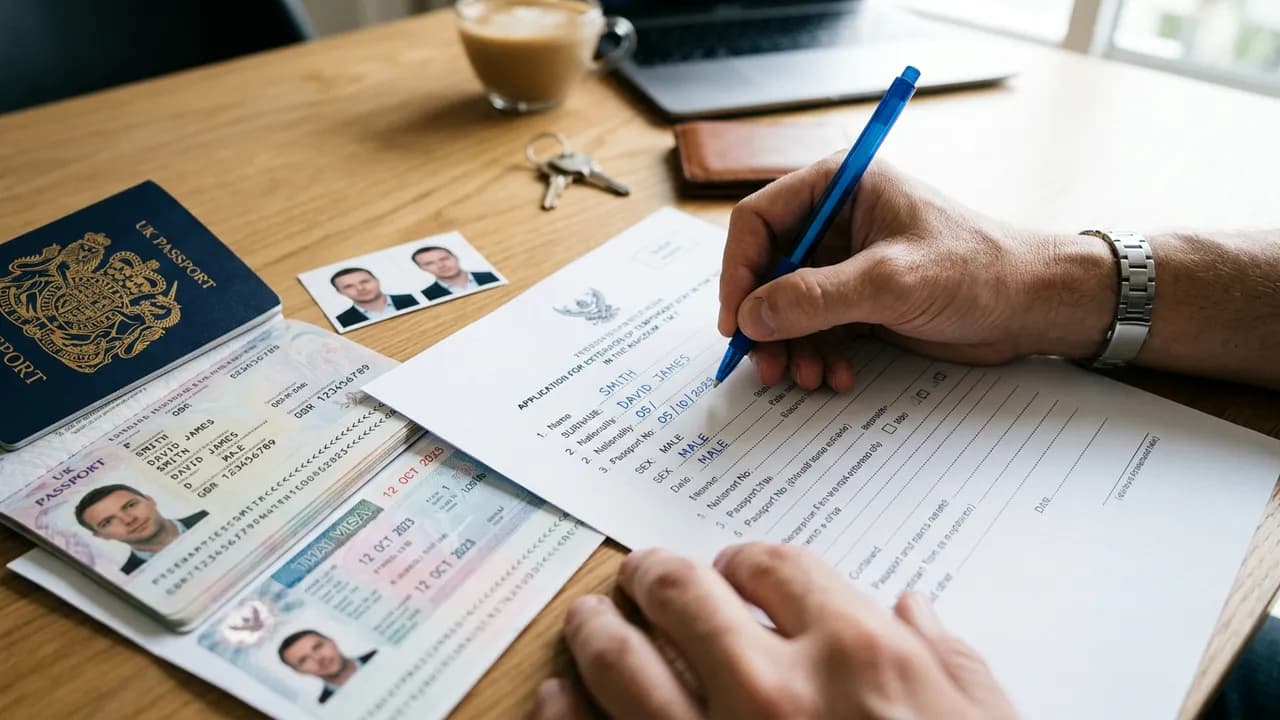
- TM.7 application form — available at the immigration office or downloadable from the Thai Immigration Bureau website
- One passport-sized photo (4x6 cm) taken within the last 6 months
- Photocopy of passport pages — biographical page, current visa page, most recent entry stamp page, and departure card (front and back)
- 1,900 THB in cash
- Proof of accommodation — some offices request a hotel booking confirmation or a letter from your landlord
Tips for a Smooth Application
- Bring a pen — forms must be completed in blue or black ink
- Dress respectfully — immigration offices enforce a loose dress code (no tank tops, shorts above the knee, or flip-flops at some offices)
- Photos can often be taken at small shops near immigration offices for 100–200 THB if you do not have one
- Some offices provide photocopying services on-site for a small fee
How do I extend a retirement visa?
The retirement visa extension (based on a Non-Immigrant O or O-A visa) is a 1-year extension of stay. This is fundamentally different from a short tourist extension.
Key Requirements
- Age: 50 years or older
- Financial proof (one of the following):
- 800,000 THB deposited in a Thai bank account for at least 2 months before application
- Monthly income of at least 65,000 THB (with embassy income letter or bank transfers)
- Combination of bank deposit and annual income totaling at least 800,000 THB
- TM.7 application form
- Passport with valid Non-Immigrant O or O-A visa
- Passport photocopies of all relevant pages
- Photos (one or two 4x6 cm)
- Bank letter and updated bank book showing the required balance
- Proof of address: rental agreement or house registration (Tabien Baan)
- Map to your residence — hand-drawn or printed, required at many offices
- 1,900 THB processing fee
Important Financial Rules
Your 800,000 THB deposit must remain in your Thai bank account for at least 2 months before the extension application and 3 months after the extension is granted. After the 3-month post-approval period, you may withdraw funds but must maintain a minimum balance of 400,000 THB throughout the rest of the year.
How do I extend an education visa?
If you hold a Non-Immigrant ED (Education) visa, you can extend your stay in 90-day increments. Your language school or educational institution will assist with much of the paperwork.
Required Documents
- TM.7 application form
- Passport with valid Non-Immigrant ED visa
- Passport photocopies (biographical page, visa page, latest entry stamp, departure card)
- Photos (one or two 4x6 cm)
- Letter from your school confirming ongoing enrollment, attendance record, and study progress
- School registration documents (the school's license or accreditation certificate)
- Receipt of tuition payment
- 1,900 THB processing fee
Attendance Matters
Immigration officers may review your attendance record. If your school reports poor attendance, your extension could be denied. Some immigration offices have begun conducting spot checks and interviews to verify that students are genuinely studying.
How long does the extension process take?
Processing time varies by visa type and immigration office:
| Extension Type | Typical Processing Time |
|---|---|
| Tourist visa / visa exemption (30-day) | Same day (30 minutes to 3 hours) |
| Retirement visa (1-year) | Same day to 2 weeks |
| Education visa (90-day) | Same day to 1 week |
| Business visa (1-year) | 1–4 weeks |
| Marriage visa (1-year) | 1–4 weeks |
For long-term extensions (retirement, business, marriage), some offices issue a temporary stamp in your passport while they process your application. This stamp allows you to remain in Thailand legally while awaiting the decision.
Can I extend my visa multiple times?
This depends on the visa type:
Tourist Visa / Visa Exemption
No. You can only extend once per entry for 30 additional days. After the extension expires, you must leave Thailand. You can re-enter on a new visa exemption or tourist visa, but immigration may question travelers who make frequent entries and exits (sometimes called "visa runs").
Retirement Visa
Yes. You can renew your 1-year retirement extension indefinitely, as long as you continue to meet the age and financial requirements. Each renewal must be applied for before the current extension expires.
Education Visa
Yes. You can extend in 90-day increments for the duration of your enrolled course. Most Thai language schools offer programs of 1 year, and extensions can continue as long as you maintain enrollment and satisfactory attendance.
Business Visa (Non-Immigrant B)
Yes. Annual extensions are available as long as you maintain valid employment and your employer continues to meet the required Thai-to-foreign employee ratio and other regulatory conditions.
What happens if my extension is denied?
If your extension is denied, you will typically receive a 7-day order to leave Thailand. This is stamped in your passport and means you must depart within 7 days of the denial.
Common reasons for denial include:
- Insufficient financial documentation (retirement visas)
- Poor attendance or dropped enrollment (education visas)
- Incomplete paperwork
- Passport validity too short
- Previous overstays or immigration violations on record
If denied, you can sometimes reapply after addressing the issue, but you may need to leave and re-enter Thailand on a new visa first.
Can I extend my visa at any immigration office?
Technically yes for short-term extensions (tourist visa, visa exemption). You can walk into any immigration office in Thailand.
For long-term extensions (retirement, education, business, marriage), you are generally required to apply at the immigration office that has jurisdiction over your registered address. This means if you live in Chiang Mai, you should apply at the Chiang Mai Immigration office, not in Bangkok or Phuket.
Do I need to do 90-day reporting during my extension?
If you are in Thailand on a long-term visa and your cumulative stay exceeds 90 consecutive days, you must file a 90-day report with immigration. This is a notification of your current address, not a visa extension.
- How: In person, by mail, or online through the Thai Immigration Bureau website
- When: Within 15 days before or 7 days after the 90-day deadline
- Penalty for missing it: 2,000 THB fine
This requirement applies to all long-term visa holders, including retirement, education, business, and marriage visa holders.
Can I leave Thailand and come back during my extension?
If you have a single-entry visa and leave Thailand, your visa and extension are cancelled. You will need a new visa or visa exemption to re-enter.
To preserve your extension while traveling, you must obtain a re-entry permit before leaving Thailand:
- Single re-entry permit: 1,000 THB (one trip out and back)
- Multiple re-entry permit: 3,800 THB (unlimited trips during the extension period)
Re-entry permits are available at immigration offices and at international airports (near the departure gates). Always get your re-entry permit before passing through passport control on your way out.
Can I switch visa types without leaving Thailand?
In some cases, yes. This is known as a change of visa category or conversion. Common conversions include:
- Tourist visa or visa exemption to Non-Immigrant O (retirement or marriage)
- Tourist visa to Non-Immigrant ED (education)
- Tourist visa to Non-Immigrant B (business), though this has become more restricted
Not all immigration offices process conversions, and the rules change periodically. Bangkok Chaeng Watthana is the most reliable office for in-country visa conversions. You will need the full set of documents for the new visa type plus your current valid entry stamp or visa.
What if my visa expires while I am waiting for an extension decision?
If you submitted your extension application before your current stay expired and the decision is still pending, you are generally covered by the temporary stamp or receipt issued by the immigration office. Keep this receipt with your passport at all times.
Do not let your visa or permitted stay expire without either applying for an extension or leaving the country. Overstaying — even by one day — results in a 500 THB per day fine (capped at 20,000 THB) and can lead to future entry bans for serious overstays.
Summary
Extending a visa in Thailand is routine, but preparation is essential. Bring complete documents, arrive early, and pay attention to deadlines. For tourist stays, the process is quick and straightforward. For long-term stays, plan ahead and ensure your financial and enrollment documentation is in order well before your current extension expires.
For specific document checklists, see our detailed guides: