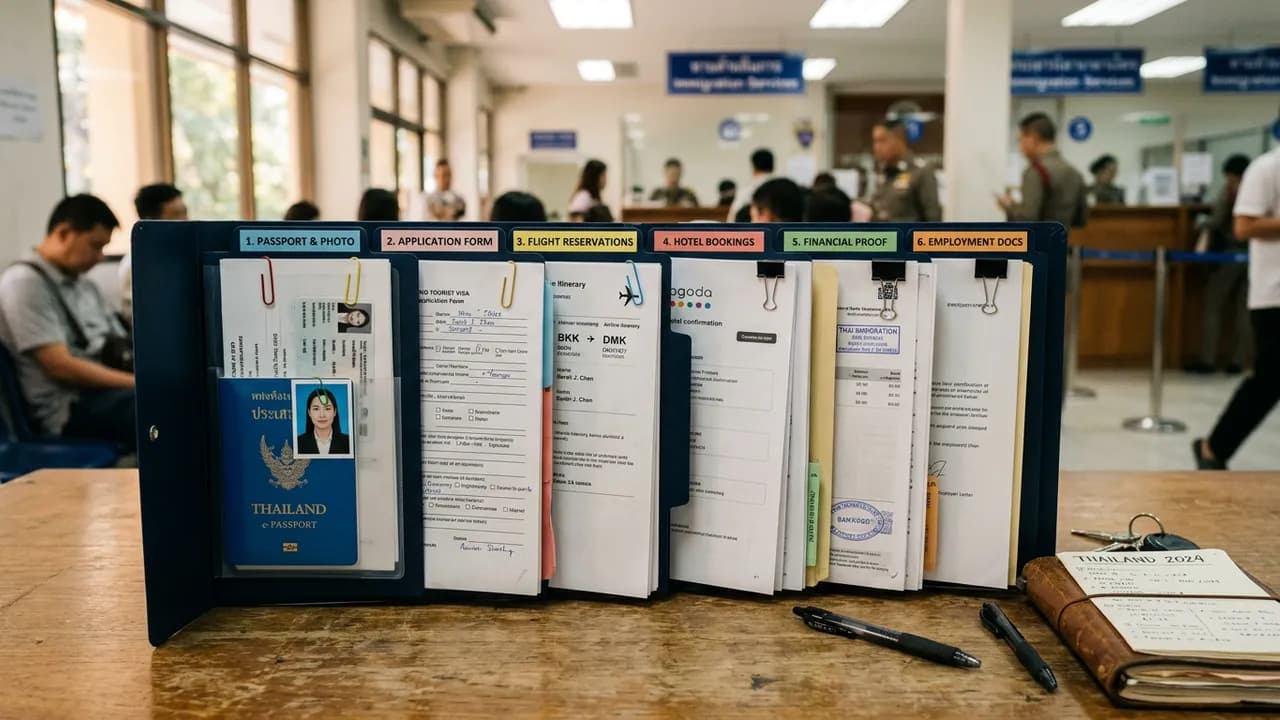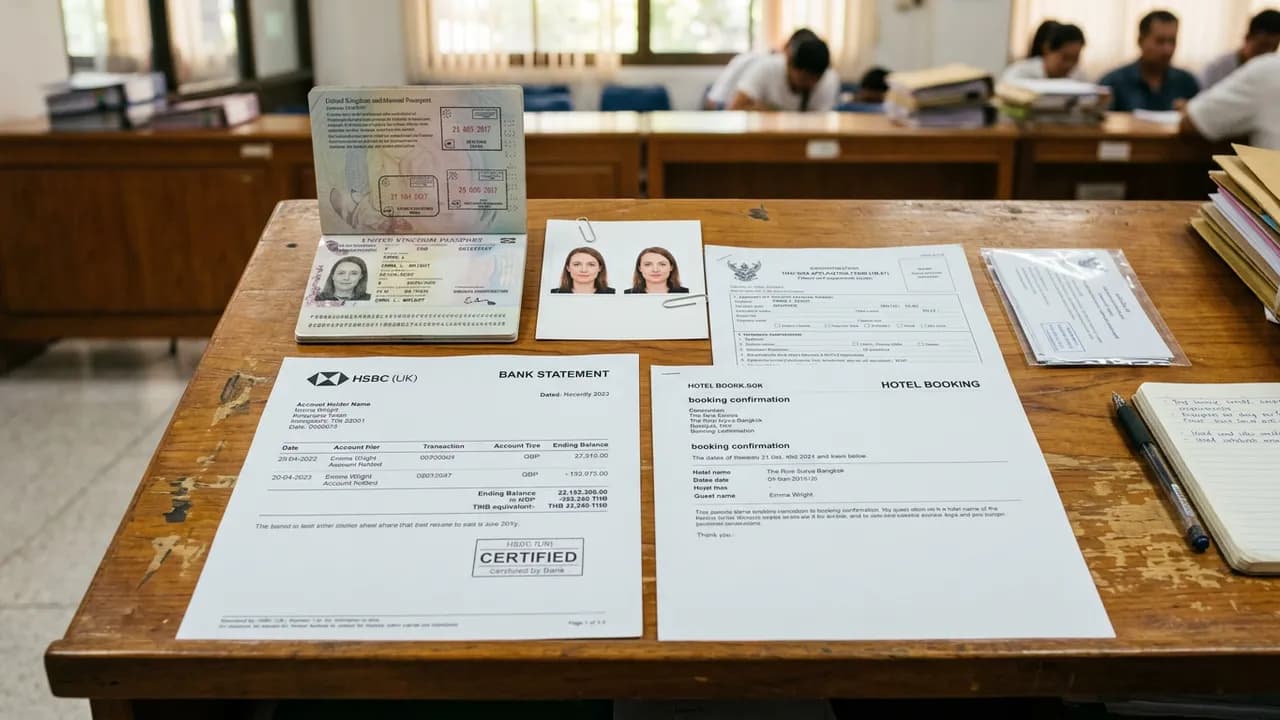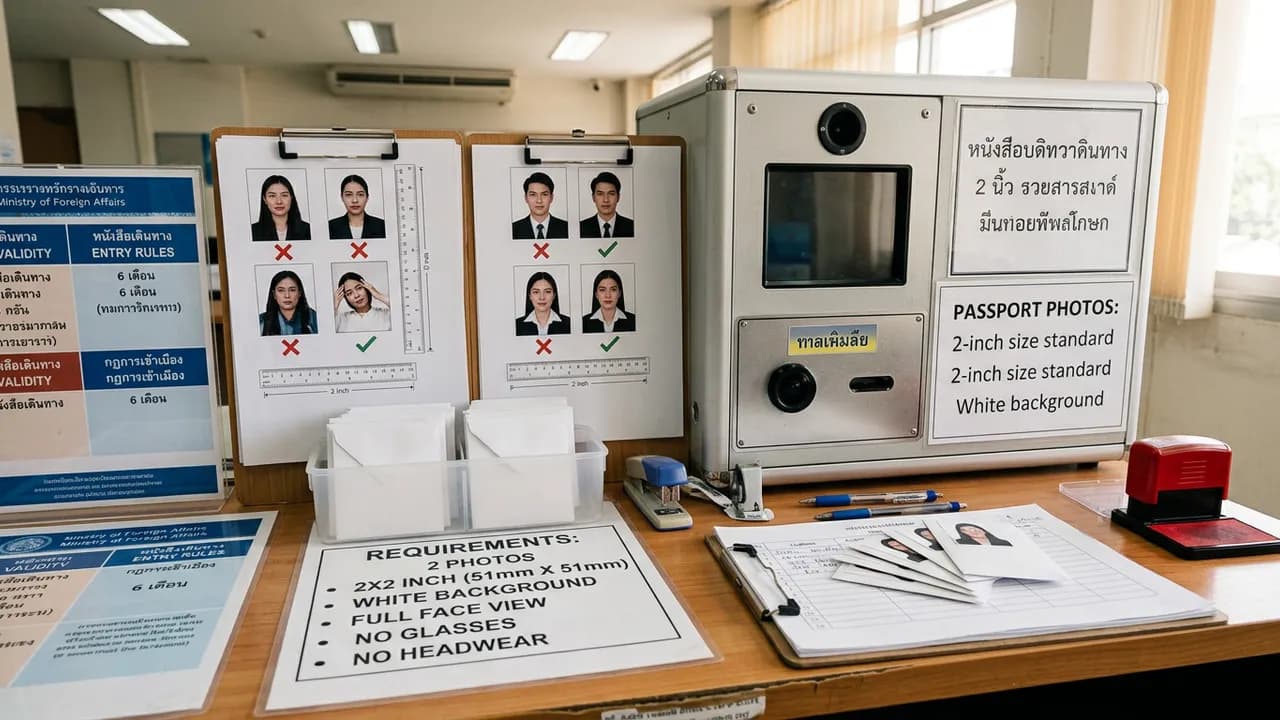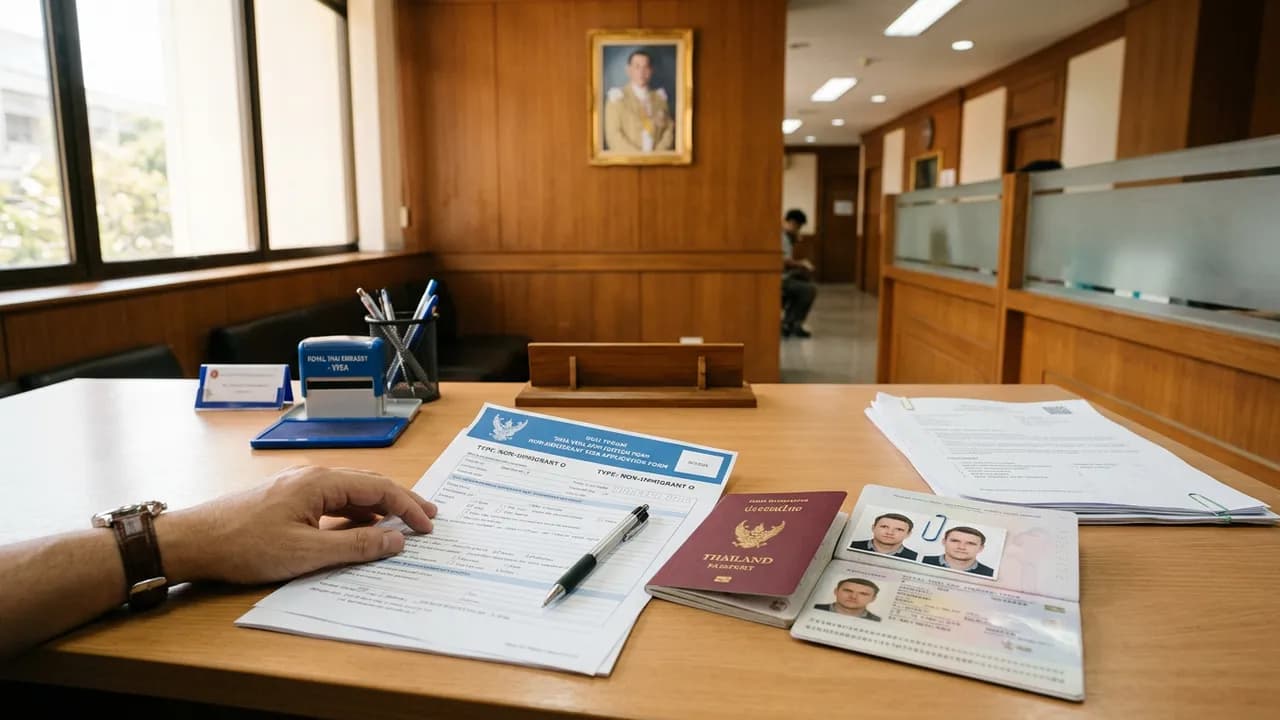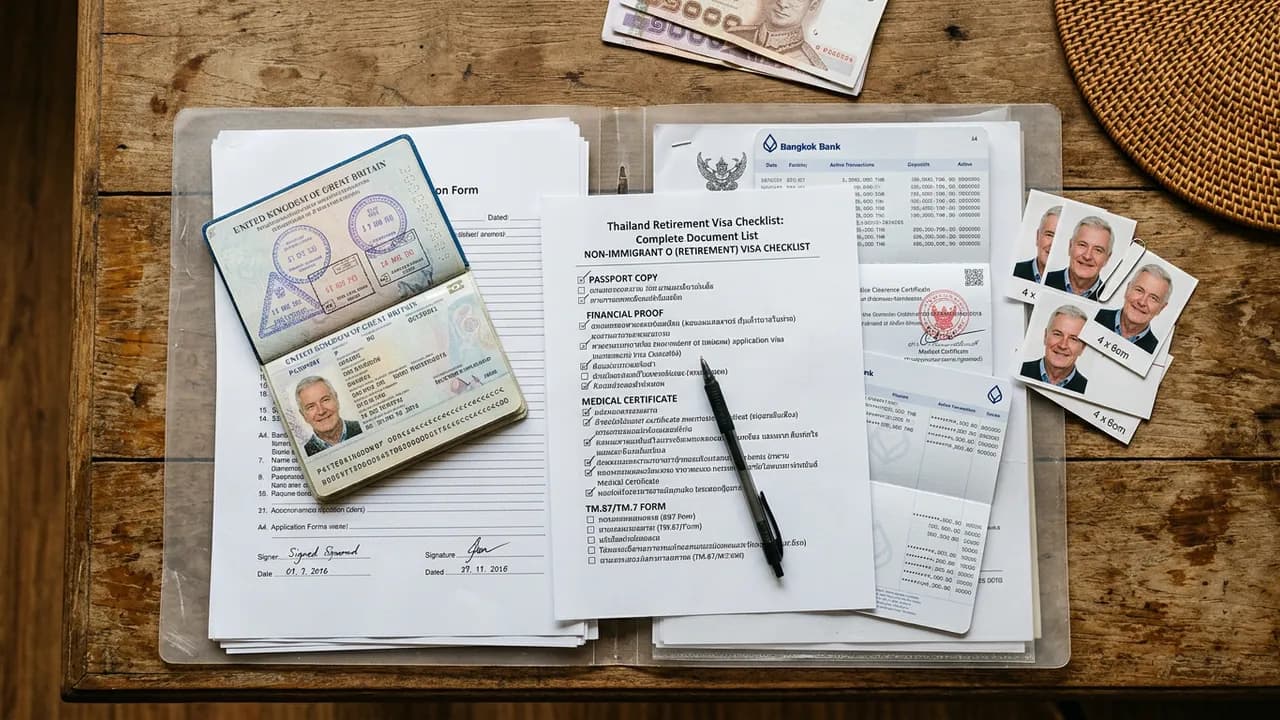
This Thailand retirement visa checklist covers one of the most popular long-term stay options for foreigners aged 50 and over. The documentation requirements differ significantly between the initial visa application (at a Thai embassy) and the annual extension of stay (at a Thai immigration office in Thailand). This checklist covers both stages comprehensively.
Understanding the Two Stages
Stage 1: Initial Visa Application (At a Thai Embassy Abroad)
Before entering Thailand, you apply for a Non-Immigrant O-A (Long Stay) visa at a Thai embassy or consulate in your home country. This visa is specifically designed for retirees.
Alternatively, some retirees enter Thailand on a different visa (tourist, visa exemption, or Non-Immigrant O) and then convert to a retirement extension at a Thai immigration office. The document requirements differ for each path.
Stage 2: Annual Extension of Stay (At a Thai Immigration Office)
Once in Thailand on a qualifying visa, you apply for a 1-year extension of stay at a Thai immigration office. This extension must be renewed annually.
Stage 1: Non-Immigrant O-A Visa (Embassy Application)
This checklist is for applying at a Thai embassy abroad. Requirements vary slightly by embassy — always confirm with your specific embassy.
Personal Documents
-
Completed visa application form — Downloaded from the embassy website or completed via the e-visa system. All fields filled in, signed and dated.
-
Passport (original) — Valid for at least 18 months from the application date. At least 2 blank visa pages. Note: the O-A requires longer passport validity than most other visas.
-
Passport photocopy — Clear copy of the biographical page.
-
Passport photographs — Two recent photos, 4x6 cm, white background, taken within 6 months.
-
Proof of age — Your passport serves as proof if your date of birth shows you are 50 years or older. Some embassies may request a birth certificate if the passport does not clearly establish age.
Criminal Background Check
- Police clearance certificate — From your country of residence, issued within the past 3 months. Requirements by country:
| Country | Document | How to Obtain |
|---|---|---|
| United States | FBI background check | fbi.gov (channeler services for faster processing) |
| United Kingdom | ACRO Police Certificate | acro.police.uk |
| Australia | National Police Check | afp.gov.au |
| Canada | RCMP Criminal Record Check | rcmp-grc.gc.ca |
| EU countries | Varies by country | National police or justice ministry |
- Apostille or authentication — Some embassies require the police clearance to be apostilled or authenticated by the appropriate government authority. Check your embassy's requirements.
Financial Documents
-
Bank statement — From your home-country bank, covering the past 3-6 months, showing:
- Option 1: Savings balance equivalent to 800,000 THB (~$22,800 USD)
- Option 2: Monthly income/pension of at least 65,000 THB (~$1,850 USD)
- Option 3: Combination of savings and annual income totaling 800,000 THB
-
Pension statement or income proof — If using the income method:
- Official pension statement (Social Security, military pension, private pension)
- Employment pension letter
- Investment income documentation
- Must be current and clearly show monthly amounts
-
Bank certification letter — A letter from your bank confirming the account balance, ideally dated within 30 days of application.
Medical Documents
-
Medical certificate — Issued by a licensed physician within the past 3 months, certifying:
- You are free from prohibited diseases (leprosy, tuberculosis, elephantiasis, drug addiction, third-stage syphilis)
- You are physically fit to reside in Thailand
- Some embassies have a specific form; others accept a standard medical letter
-
Health insurance policy — Required for O-A visa applications at most embassies. Minimum coverage:
- Outpatient: 40,000 THB ($1,140 USD)
- Inpatient: 400,000 THB ($11,400 USD)
- Coverage must be valid in Thailand
- The policy must cover the duration of the visa (1 year)
- Thai or international insurance companies accepted (check if your embassy has a preferred list)
Additional Documents (Embassy-Specific)
-
Cover letter — Some embassies request a letter explaining your intention to retire in Thailand.
-
Proof of accommodation — Hotel booking for initial arrival or rental agreement if you already have housing arranged.
-
Previous Thai visa/stamps — Copies of previous Thai visas and entry stamps, if applicable.
-
Visa fee — Approximately $80 USD / £50 GBP / €70 EUR (varies by embassy). Check accepted payment methods.
Stage 2: Annual Extension of Stay (Thai Immigration Office)
This checklist is for renewing your retirement extension at a Thai immigration office in Thailand. This is the annual process you will repeat every year.
Core Documents
-
TM.7 application form — The official extension of stay form. Available at immigration offices or downloadable from the Immigration Bureau website. Complete all fields and sign.
-
Passport (original) — With current visa and extension stamps. Must be valid for the period of the requested extension. If your passport expires soon, renew it first.
-
Photocopies of passport pages:
- Biographical page
- Current visa page
- Most recent entry stamp
- Previous extension of stay stamp
- Departure card (TM.6), if applicable
- Sign each photocopy in blue ink
-
Passport photograph — One recent photo, 4x6 cm, taken within 6 months. Glued (not stapled) to the TM.7 form.
-
Extension fee — 1,900 THB in cash. No credit cards accepted.
Financial Documents (Critical)
This is the most scrutinized part of the retirement extension application.
Option 1: Bank Deposit Method
-
Thai bank passbook (original) — Updated to show current balance of at least 800,000 THB
- The 800,000 THB must have been in the account for at least 2 months before the extension application date
- Passbook must be updated (stamped by the bank) within the past few days
-
Thai bank passbook (photocopy) — Copy of the cover page and the most recent transaction pages showing the balance history
-
Bank certification letter — A letter from your Thai bank confirming:
- Account holder name (matching passport)
- Account number
- Current balance (must show 800,000+ THB)
- Must be dated within 7 days of your immigration appointment
Option 2: Monthly Income Method
-
Proof of monthly income of 65,000 THB — Options include:
- Embassy income verification letter (note: the US Embassy discontinued this service in 2019; alternatives include affidavits)
- Thai bank statements showing regular monthly deposits of 65,000+ THB
- Pension payment slips
- Official pension or Social Security statements
-
Thai bank passbook — Showing the monthly deposits/transfers over the past 12 months
Option 3: Combination Method
- Thai bank passbook and letter — Showing bank deposit amount
- Income proof — For the income portion
- Combined total must equal 800,000 THB annually (bank balance + 12 months of income)
Address and Residence Documents
-
TM30 receipt — Proof that your TM30 has been filed for your current address. Many immigration offices will not process your extension without a valid TM30.
-
Proof of address — One or more of the following:
- Lease agreement or rental contract
- Utility bill in your name or your landlord's name
- House registration book (tabien baan) showing your address
-
Map to your residence — A hand-drawn or printed map showing how to reach your home from the nearest main road or landmark. This is a standard requirement at many immigration offices.
-
Photos of your residence — Some offices require 2-4 photos showing:
- The front of your building/house
- Your room/living area
- Your house number visible
Previous Reporting Documents
-
Most recent 90-day reporting receipt — If applicable. Your 90-day reporting should be up to date.
-
Previous extension of stay receipt — Your receipt from the last annual extension (if this is not your first).
Post-Extension: Maintenance Requirements
After your extension is approved, you must maintain the financial requirements throughout the year:
Bank Balance Maintenance Schedule
| Period | Minimum Balance Required |
|---|---|
| 2 months before extension application | 800,000 THB |
| Day of extension application | 800,000 THB |
| 0-3 months after extension approval | 400,000 THB |
| 3-12 months after extension approval | Must return to 800,000 THB before next extension cycle |
Warning: Withdrawing below 400,000 THB at any point in the 3 months after extension, or failing to have 800,000 THB two months before your next extension, can result in denial of your next renewal.
Ongoing Obligations
- Complete 90-day reporting every 90 days of continuous stay
- Maintain a valid TM30 filing for your address
- Obtain a re-entry permit before any international travel (or your extension is voided)
- Keep your health insurance current (required for O-A visa holders)
- Maintain the required bank balance per the schedule above
Re-Entry Permit Checklist
Before traveling internationally, you must obtain a re-entry permit or your extension will be cancelled.
- TM.8 form — Available at immigration offices and airports
- Passport (original)
- Passport photo (4x6 cm)
- Fee:
- Single re-entry: 1,000 THB
- Multiple re-entry: 3,800 THB
Re-entry permits can be obtained at immigration offices or at international airport immigration counters (before passing through departure immigration).
Quick Reference: Key Numbers
| Requirement | Amount |
|---|---|
| Minimum age | 50 years |
| Bank deposit (in Thai bank) | 800,000 THB |
| Monthly income alternative | 65,000 THB |
| Extension fee | 1,900 THB |
| Deposit seasoning period | 2 months |
| Post-extension minimum balance | 400,000 THB (3 months) |
| Re-entry permit (single) | 1,000 THB |
| Re-entry permit (multiple) | 3,800 THB |
| 90-day reporting | Every 90 days |
| Bank letter validity | 7 days |
Common Mistakes to Avoid
- Bank letter too old — The letter must be dated within 7 days of your immigration visit. Getting it 2 weeks early will likely result in rejection.
- Passbook not updated — Always visit your bank to update your passbook on the same day or the day before your immigration appointment.
- Missing TM30 — Many offices check TM30 status before processing extensions. File it in advance.
- Unsigned photocopies — Every photocopy submitted must be signed in blue ink. Officers will reject unsigned copies.
- Passport photos not glued — The photo on the TM.7 form should be glued, not stapled. Bring glue or use the supplies at the immigration office.
- Forgetting the map — The residence map seems trivial but is a standard requirement at many offices.
- Withdrawing money too early — Do not dip below 400,000 THB in the 3 months after extension, and have 800,000 THB back in the account well before the 2-month pre-extension window.
- No re-entry permit before travel — Leaving Thailand without a re-entry permit instantly cancels your extension. This is perhaps the most costly mistake retirees make.
Tips for a Smooth Process
- Start preparing 2 weeks before your appointment — Gather all documents, update your passbook, and check that your TM30 is current.
- Get your bank letter 1-2 days before — This keeps it within the 7-day freshness requirement.
- Arrive early at immigration — Especially at Bangkok Chaeng Wattana. Bring water, a book, and patience.
- Bring extra passport photos — At least 3. They are needed for the form and sometimes for additional paperwork.
- Bring extra photocopies — Immigration officers occasionally request copies you did not expect. Having extras saves a trip to the copy shop.
- Make friends at your bank branch — Thai bank staff who know you will produce your bank letter faster and more accurately. Visit the same branch each time.
- Use an agent if overwhelmed — Immigration agents handle the entire extension process for 5,000-15,000 THB (including the government fee). Worth considering if you find the process stressful.
- Apply 30-45 days before your extension expires — Do not wait until the last week. If something goes wrong, you need time to fix it.
Final Thoughts
The Thailand retirement visa is a well-established program that thousands of expatriates renew successfully every year. The documentation requirements are specific but predictable — once you complete your first extension, the annual renewal becomes routine. The critical factor is financial preparation: maintain the required bank balance throughout the year, time your bank letter correctly, and never forget a re-entry permit before traveling. Follow this checklist methodically, and the process will be straightforward.