Thailand Retirement Visa Cost 2026: Fees, Funds & Renewals
Most people asking "how much does a Thailand retirement visa cost" expect one number. There isn't one. There's a small government fee, a much larger sum of money you have to show but don't spend, and an annual renewal cost that depends entirely on which route you take.
So let's separate the three. The official fee is the cheap part. The financials are the real barrier. And the route you pick on day one decides whether you pay for mandatory health insurance every year for the rest of your life — or never.
This page covers the cost of the visa. If you want to know what daily life actually costs, see our cost of retirement in Thailand breakdown instead.
A caveat before the numbers: Thai immigration rules change, and individual offices interpret them differently. The figures below were verified in June 2026 and are accurate for the main routes, but always confirm current requirements with your local immigration office (or your visa service) before you move money.
The two main routes — and why one is cheaper
Almost every retiree ends up on one of two paths. Both require you to be 50 or older and both ask for the same money. The difference is where you start and whether insurance is forced on you.
Route 1: Non-O retirement extension (done in-country)
You enter Thailand, convert to a Non-Immigrant O visa, then apply for a one-year extension based on retirement. You renew that extension every year at immigration.
- Official extension fee: 1,900 THB per year.
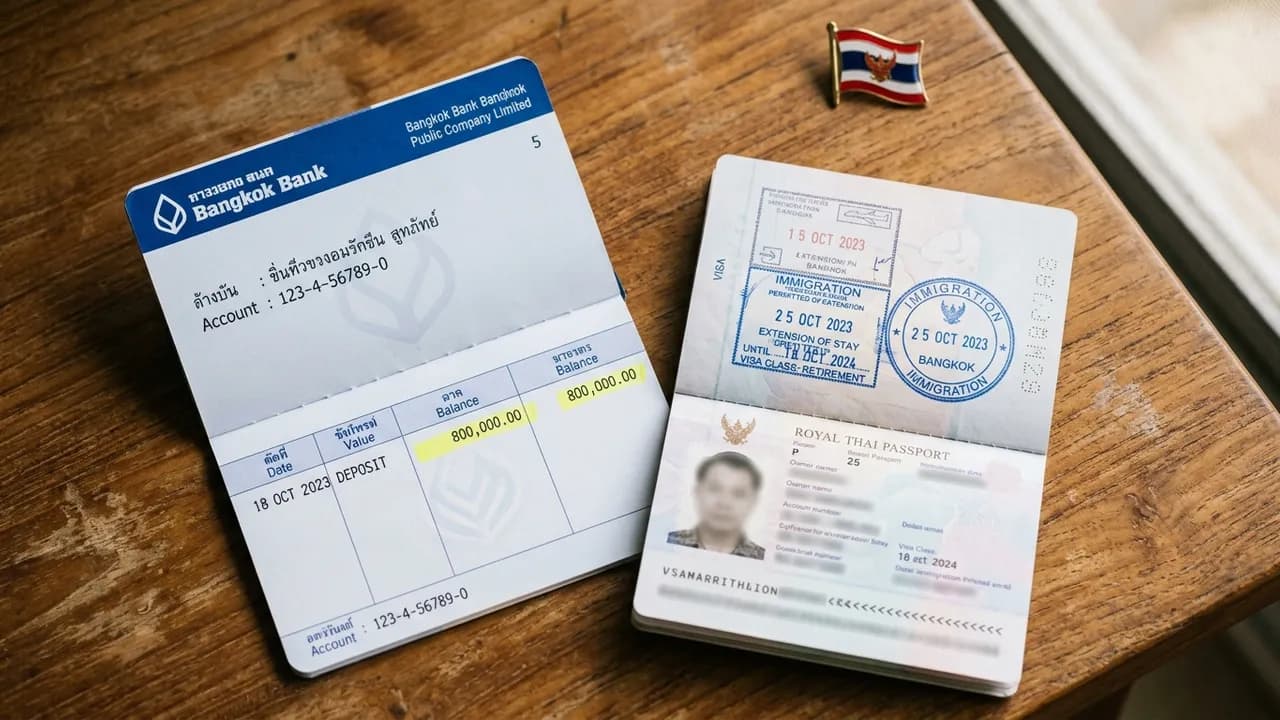
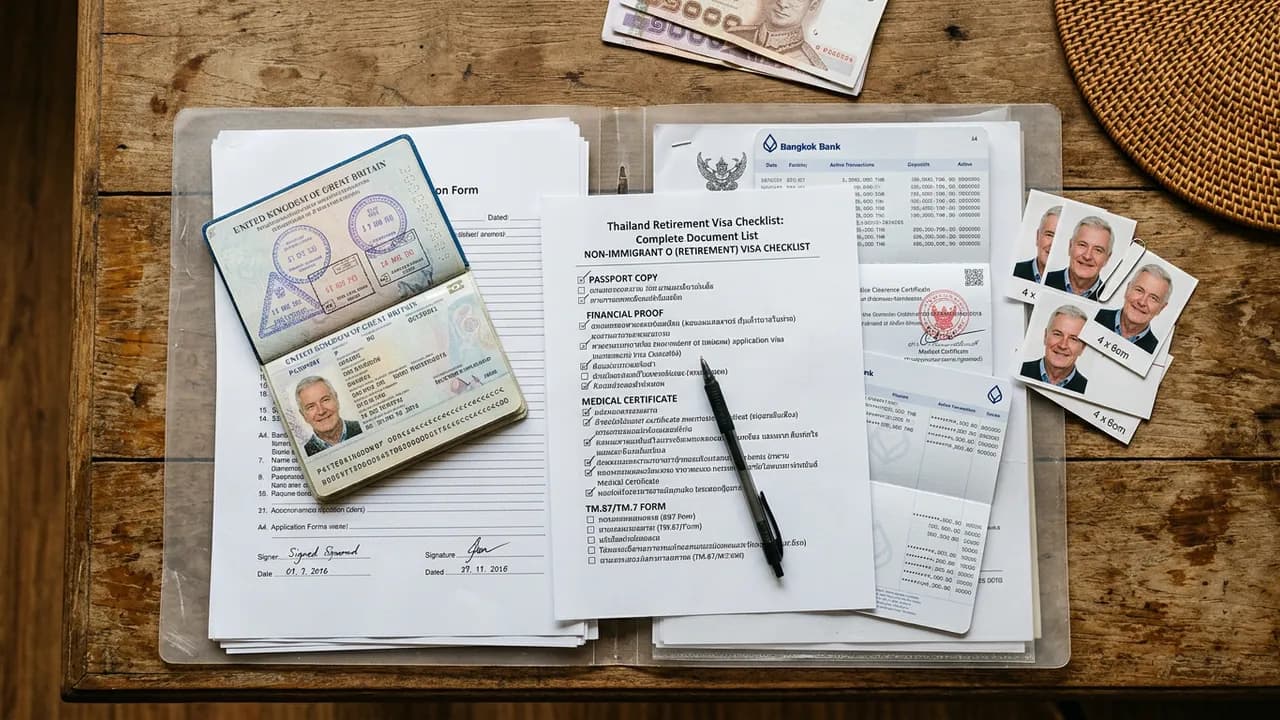
- Financial requirement: 800,000 THB seasoned in a Thai bank account for 2-3 months, or 65,000 THB/month in provable income, or a combination that totals 800,000 THB across the year.
- Health insurance: Not mandated. This is the big one.
Because the in-country Non-O extension carries no insurance requirement, it's usually the cheaper route over a 20-year retirement. You're paying 1,900 THB a year and nothing else to the government.
Route 2: O-A visa (applied for from abroad)
The O-A is applied for in your home country before you arrive. It looks convenient, and for some people it is — but it comes with a string attached.
- Official fee: 5,000 THB.
- Financial requirement: Same 800,000 THB / 65,000 THB/month.
- Health insurance: Mandatory Thai-compliant health insurance. Budget anywhere from ~5,000 THB/year for a young, healthy 50-year-old to 40,000 THB/year or more as you age or want fuller cover.
That insurance mandate is the reason many retirees who could do an O-A choose the in-country Non-O instead. Over ten years, mandatory insurance can quietly cost more than every government fee combined.
We compare these two head-to-head in detail in our Non-O vs Non-O-A guide. For the exact bank-seasoning rules, see retirement visa financial requirements.
The costs people forget
The headline fee isn't the whole bill. Two recurring items catch retirees off guard:
- Re-entry permit. Your extension is single-entry by default. The moment you leave Thailand and want to come back without voiding it, you need a re-entry permit: 1,000 THB single use, or 3,800 THB multiple use. If you travel even twice a year, the multiple-entry permit pays for itself.
- 90-day reporting. Every 90 days you must report your address to immigration. This is free. It costs nothing but your time — though it's one of the chores people most often pay a service to handle (more on that below).
Comparison: Non-O vs O-A vs LTR Pensioner
| Non-O (in-country) | O-A (from abroad) | LTR Wealthy Pensioner | |
|---|---|---|---|
| Government fee | 1,900 THB/year | 5,000 THB | 50,000 THB / 10 years |
| Funds required | 800k THB or 65k/mo income | 800k THB or 65k/mo income | ~USD 80k/yr pension/passive income (or USD 40k/yr + USD 250k investment) |
| Health insurance | Not required | Mandatory | Required (health cover terms apply) |
| 90-day reporting | Yes (free) | Yes (free) | No |
| Renewal cadence | Annual | Annual / yearly extension | Every 5 years (within the 10) |
The LTR Wealthy Pensioner is a different animal. At 50,000 THB it's far more expensive up front, but it buys ten years, drops the 90-day reporting chore entirely, and never asks you to season 800,000 THB. For retirees with a strong pension or passive income, it can be the better deal once you do the math over a decade.
Not sure which fits you? Run your numbers through our visa finder — it matches your age, income, and travel habits to a route in a couple of minutes.
What it actually costs per year
Here's a realistic annual picture once you're set up:
- Non-O in-country, organised retiree, no travel: ~1,900 THB/year. That's it.
- Non-O, two trips abroad: 1,900 + 3,800 (multiple re-entry) = ~5,700 THB/year.
- O-A with insurance: 5,000 (first year) + insurance, easily 10,000-40,000+ THB/year depending on your age and cover.
The money you "show" — the 800,000 THB — is not spent. It sits in your account (for the bank route) and remains yours. But it has to genuinely be there and seasoned correctly, which is where most rejections happen.
A note on tax
Thailand now takes a closer interest in foreign income you remit into the country. For most retirees living on a pension this is manageable, and often there's a tax treaty that prevents double taxation — but it's worth understanding before you transfer large sums. We cover it plainly in our tax guide for expats in Thailand. Don't let it scare you off; just don't ignore it.
DIY or use a service? An honest answer
Here's the part most visa agencies won't tell you: the annual Non-O extension is DIY-able. If you're organised, comfortable with a queue, and your bank account is seasoned correctly, you can walk into immigration, pay your 1,900 THB, and walk out. Plenty of retirees do exactly that for years.
So why pay anyone?
Because the renewal isn't hard — it's fiddly and unforgiving. The bank letter has to be dated correctly. The seasoning has to be exact. The 90-day reports have to be filed on time, every time, for the rest of your stay. Miss a step and you're re-doing it, or worse, you've created a gap. Many retirees decide that one missed report or one mis-dated bank letter is more stress than the renewal is worth — so they hand the whole annual cycle to a service.
If that's you, here's our promise on cost: the official fee is the official fee (1,900 or 5,000 THB), plus a flat service fee quoted up front. No markup on government charges. No "express lane" upsell. No surprise add-ons when you arrive. You see the total before you commit. That's the whole model — see our services.
What a sensible service actually does for a retiree:
- Handles the annual extension start to finish.
- Sorts the bank letter and confirms your seasoning is compliant before you apply.
- Files your 90-day reports so you never miss one.
- Sorts re-entry permits when you travel.
That's the recurring, boring, easy-to-mess-up admin — done for a flat fee, year after year. If you'd rather spend your retirement not thinking about immigration paperwork, that's what you're buying.
Frequently Asked Questions
How much does a Thailand retirement visa cost in 2026?
The government fee is 1,900 THB/year for the in-country Non-O extension, or 5,000 THB for an O-A from abroad. On top of that you must show 800,000 THB (or 65,000 THB/month income) — money you keep, not spend. The O-A also requires mandatory health insurance, which adds roughly 5,000-40,000 THB/year.
Do I really need 800,000 baht in the bank?
You need either 800,000 THB seasoned in a Thai bank for 2-3 months, or 65,000 THB/month in provable income, or a combination totalling 800,000 THB over the year. The bank-route money stays yours — it just has to genuinely be there and dated correctly. See financial requirements for the exact seasoning rules.
Which retirement visa is cheapest — Non-O or O-A?
For most retirees the in-country Non-O extension is cheaper over time, because it doesn't force you to buy Thai health insurance. The O-A's mandatory insurance often outweighs its convenience across a multi-year retirement. Compare them in our Non-O vs O-A guide.
Is the LTR Wealthy Pensioner visa worth the 50,000 THB?
It can be, if you have the income. At 50,000 THB it covers ten years, removes 90-day reporting entirely, and skips the 800,000 THB bank seasoning. You need around USD 80,000/year in pension or passive income (or USD 40,000/year plus a USD 250,000 investment). For higher-income retirees it often works out cheaper and far less hassle than annual renewals. See LTR cost and requirements.
Can I renew my retirement visa myself, or do I need an agent?
You can renew it yourself — the annual Non-O extension is genuinely DIY-able if you're organised and your bank account is seasoned correctly. People use a service not because it's impossible, but because the bank letter, seasoning dates, and ongoing 90-day reports are fiddly and unforgiving. If you'd rather not risk a missed report, a flat-fee service handles the whole cycle. See our services.