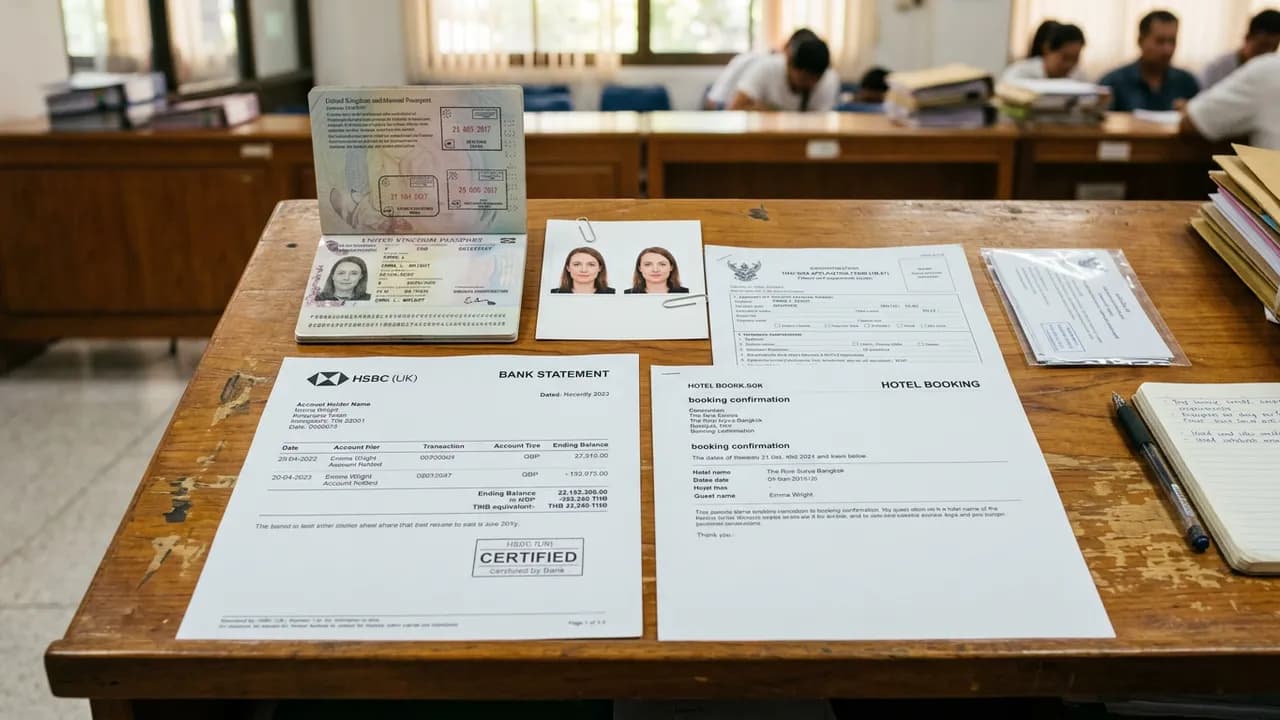
The Thailand LTR (Long-Term Resident) visa costs 50,000 THB in government fees and covers the full 10 years — that single figure is the whole official cost, not a per-year charge. What actually decides whether you get it is the financial requirement for your category: broadly USD 80,000/year in income or USD 1,000,000 in assets, with lower thresholds available to pensioners who add an investment. The criteria were relaxed in January 2025, so a lot of older guides quote numbers that no longer apply.
This page breaks down the cost and the requirements across all four LTR categories, lists the documents you actually need, and is honest about where you do and don't need an agent. (Standard caveat: immigration rules change — verify current requirements with official BOI sources before you apply.)
What the LTR visa costs
| Item | Amount | Notes |
|---|---|---|
| Government visa fee | 50,000 THB | One payment, covers the full 10 years (5+5) |
| Digital work permit (if needed) | Included | Issued through the BOI, not a separate Labour Dept permit |
| Multiple re-entry | Included | No separate re-entry permit purchase |
| Our flat service fee | Quoted up front | No markup on the 50,000 THB, no upsell |
The 50,000 THB is paid once after you're approved and qualified. There's no annual renewal fee inside the 10-year window — you do a once-a-year address report (replacing the usual 90-day reporting) and your second 5-year stamp is issued at the halfway mark subject to a status check.
Most agents won't print their fee. We do: the official fee is 50,000 THB, plus a flat service fee we quote you before you commit. For the LTR specifically we handle your application end to end and deal with the BOI's document portal, but if your case is clean enough to file yourself, we'll tell you. See /services and the /tools/visa-finder to confirm which track fits you.
The four LTR categories and their financial requirements
The LTR isn't one visa with one threshold. It's four separate qualification tracks under one program. You pick the one you fit.
| Category | Core financial test | Health insurance / deposit | Typical applicant |
|---|---|---|---|
| Wealthy Global Citizen | USD 1,000,000 in assets + USD 80,000/yr income + USD 500,000 Thai investment | USD 50,000 cover or deposit | High-net-worth investors |
| Wealthy Pensioner | USD 80,000/yr pension income; or USD 40,000/yr + USD 250,000 Thai investment | USD 50,000 cover or deposit | Retirees 50+ |
| Work-from-Thailand Professional | USD 80,000/yr income (last 2 yrs); USD 40,000/yr allowed with a master's/IP/funding | USD 50,000 cover or deposit | Remote employees of solid foreign firms |
| Highly-Skilled Professional | USD 80,000/yr income; USD 40,000/yr in some cases; no minimum for govt/academic roles | USD 50,000 cover or deposit | Specialists in BOI target industries |
A few things that trip people up:
- The income figure is gross, averaged over the last two years for most tracks.
- Health insurance must show USD 50,000 of coverage valid in Thailand, or you can substitute a USD 100,000 deposit, or show USD 100,000 in Social Security-type benefits. Insurance is usually the cheapest route.
- The Work-from-Thailand track requires your employer to be a registered public company or a private company with USD 50M+ revenue over the last three years. This is the most common rejection reason — a freelance "remote worker" with no qualifying employer doesn't fit here (look at the DTV instead).
What changed in January 2025 (the relaxed criteria)
If you read a 2022–2024 guide, ignore the old income rules. In January 2025 the BOI loosened several requirements to widen the funnel:
- The personal-income minimum for several tracks dropped and the alternative "lower income plus investment" routes were formalised, which is why a Wealthy Pensioner can now qualify on USD 40,000/yr plus a USD 250,000 Thai investment rather than the flat USD 80,000.
- The two-year income requirement for the Wealthy Global Citizen category was eased (it previously demanded a stricter consecutive-income history).
- Dependent rules were widened — you can include a spouse and children, and the dependent cap was raised, with each dependent getting the same 10-year stamp.
Net effect: people who narrowly missed the old USD 80,000 line — early retirees, professionals with a master's degree, investors willing to put money into Thailand — now have a realistic path. This is the single biggest reason the LTR is worth re-checking in 2026 even if you were told "no" before.
Documents you'll actually need
The exact list depends on your track, but every applicant assembles roughly the same core set:
- Passport valid 6+ months, plus any current Thai visa pages.
- Proof of income: tax returns, audited statements, or employer letters covering the last two years.
- Proof of assets (Global Citizen track): brokerage/bank statements showing USD 1,000,000, plus evidence of the USD 500,000 Thai investment (Thai government bonds, property, or BOI-promoted company equity).
- Health insurance certificate showing USD 50,000 Thailand-valid coverage, or the deposit/Social-Security alternative.
- Employment evidence (Work-from-Thailand): employment contract plus your employer's financials or stock-exchange listing to prove the revenue threshold.
- Qualification proof (Highly-Skilled): degrees, professional licences, and a letter tying you to a BOI target industry.
For the asset and investment thresholds — and why a Thai property purchase can both satisfy the Global Citizen investment and serve as a place to live — see our deeper breakdown at /long-term-stays/ltr-visa-property. General financial-proof formatting rules sit at /requirements/financial-requirements.
How the application works
The LTR is processed through the BOI's online endorsement portal, not at an immigration office. The flow:
- Submit the online application with scanned documents. BOI issues a qualification endorsement (target: ~20 working days, often longer in practice).
- Endorsement letter issued. Once approved you have 60 days to collect the visa.
- Collect the stamp at a Thai embassy abroad or at the BOI's One Stop Service Center in Bangkok if you're already in Thailand on a valid visa.
- Pay the 50,000 THB and receive the 10-year (5+5) stamp plus, if applicable, your digital work permit.
The slow, finicky part is step 1 — the BOI sends documents back for clarification more often than people expect, especially on income averaging and employer revenue. That's the part we handle end to end so you're not re-uploading the same statement four times.
LTR vs the alternatives
The LTR isn't automatically the right call. Quick orientation:
| If you... | Consider |
|---|---|
| Meet USD 80k income or USD 1M assets and want to work in Thailand | LTR — best value, work permit included |
| Have the capital but can't meet income/asset tests | Thailand Privilege Card — pay the membership fee, no income test |
| Are a remote worker without a qualifying employer | DTV — 5-year, 500k THB savings |
| Want to compare the two premium options side by side | /guides/elite-visa-vs-ltr-visa |
The honest version: if you genuinely clear the LTR financial test, it's far cheaper than the Thailand Privilege Card (50,000 THB vs a 650,000–5,000,000 THB membership fee) and it actually lets you work. The Privilege Card exists for people who can't or don't want to document income. Neither is permanent residency — for that, see /long-term-stays/permanent-residency.
One more thing worth saying plainly: every other agent hides their fees and upsells you into the most expensive option. We publish every price and tell you when you don't even need us. If the LTR fits, it's usually the smart-money choice — run it through the /tools/visa-finder first.
Frequently Asked Questions
How much does the Thailand LTR visa cost in total?
The government fee is 50,000 THB, paid once, covering the full 10 years (issued 5+5). There's no separate annual visa fee inside that window. On top of the government fee you'll have health insurance costs and, if you use us, a flat service fee quoted up front with no markup on the 50,000 THB.
What is the minimum income for the LTR visa?
Broadly USD 80,000/year in gross income for most tracks. After the January 2025 relaxation, several categories accept USD 40,000/year if you add a qualifying Thai investment (USD 250,000 for Wealthy Pensioners, for example). The Wealthy Global Citizen track uses an asset test of USD 1,000,000 instead of pure income.
Can I get the LTR visa with assets instead of income?
Yes, through the Wealthy Global Citizen category, which requires USD 1,000,000 in assets alongside an income figure and a USD 500,000 Thai investment. Pure remote workers without that capital and without a qualifying employer usually fit the DTV better.
Do I need health insurance for the LTR visa?
Yes — USD 50,000 of Thailand-valid health coverage, or a USD 100,000 bank deposit, or USD 100,000 in Social-Security-type benefits. Insurance is normally the cheapest of the three options and is required across all four categories.
How long does LTR approval take?
The BOI targets around 20 working days for the qualification endorsement, but real-world timelines run longer when documents need clarification. Once endorsed you have 60 days to collect the visa and pay the 50,000 THB fee.
Immigration rules change frequently. The figures here reflect the verified position as of mid-2026, but always confirm current requirements with the official BOI/Thai immigration sources before applying. We'll handle your LTR application end to end — or use the visa finder to check whether the LTR, the Privilege Card, or the DTV is your cheapest route.