Thailand Permanent Residency (PR) is one of the most difficult immigration statuses to obtain in Southeast Asia. With a strict annual quota, high financial requirements, and a lengthy application process, Thai PR is reserved for committed long-term residents who meet rigorous criteria.
This guide covers everything you need to know about qualifying for, applying for, and obtaining permanent residency in Thailand in 2026.
What Is Thailand Permanent Residency?
Thailand PR grants foreigners the right to live in Thailand indefinitely without the need for visa renewals. Unlike other visa types, PR holders receive a Blue Book (Tabien Baan) — a Thai house registration document — and can eventually apply for Thai citizenship.
Key features:
- Indefinite right to reside in Thailand
- No need for annual visa extensions
- Re-entry permit still required for international travel
- Eligible to apply for Thai citizenship after holding PR
- Can be listed on a Thai house registration (Blue Book)
- Annual quota of approximately 100 persons per nationality
Eligibility Requirements
To qualify for Thailand Permanent Residency, you must meet all of the following baseline requirements:
General Requirements
- Hold a valid Non-Immigrant Visa (any category: B, O, O-A, etc.)
- Have lived in Thailand for at least 3 consecutive years on a Non-Immigrant Visa before the application deadline
- Have a valid extension of stay for the current year
- No criminal record in Thailand
- Must not have any communicable diseases
- Must have basic Thai language proficiency (or be exempt by age/category)
- Must have filed Thai tax returns for at least 2 years prior to application
Category-Specific Requirements
PR applications fall into one of four categories:
| Category | Key Requirements |
|---|---|
| Investment | Invest at least 10 million THB in Thailand (government bonds, state enterprise, or BOI-promoted company) |
| Employment/Business | Work in Thailand with a valid work permit; minimum salary of 80,000 THB/month; tax payments for 2+ years |
| Family (Thai spouse) | Married to a Thai national; minimum combined income of 30,000 THB/month |
| Family (PR holder parent) | Child under 20 of an existing PR holder |
| Expert/Academic | Hold expertise in a field beneficial to Thailand; minimum salary of 80,000 THB/month |
Financial Requirements by Category
| Category | Minimum Monthly Income | Minimum Annual Tax Paid |
|---|---|---|
| Employment | 80,000 THB | 100,000 THB |
| Investment | Varies (10M THB invested) | Varies |
| Thai Spouse | 30,000 THB | Varies |
| Expert | 80,000 THB | 100,000 THB |
The Quota System
Thailand imposes an annual quota of approximately 100 permanent residency approvals per nationality. This quota is the single biggest obstacle to obtaining PR. With far more applicants than available slots in popular nationalities (US, UK, Chinese, Japanese, etc.), competition is fierce.
Important points about the quota:
- The quota is set by the Thai Cabinet each year
- Applications are typically accepted only once per year (usually late in the year)
- The announcement window is narrow — often just a few weeks
- Not all approved quotas are filled, but popular nationalities are oversubscribed
- Processing can take 1-3 years from application to final approval
Application Process
Step 1: Confirm Eligibility
Verify that you meet all requirements for your chosen category. Many applicants work with an immigration lawyer to assess their eligibility before the application window opens.
Step 2: Watch for the Annual Announcement
The Thai Immigration Bureau typically announces the PR application window between October and December each year. The window is usually open for only 2-4 weeks.
Monitor:
- The Thai Immigration Bureau website
- The Royal Thai Government Gazette
- Immigration lawyer bulletins
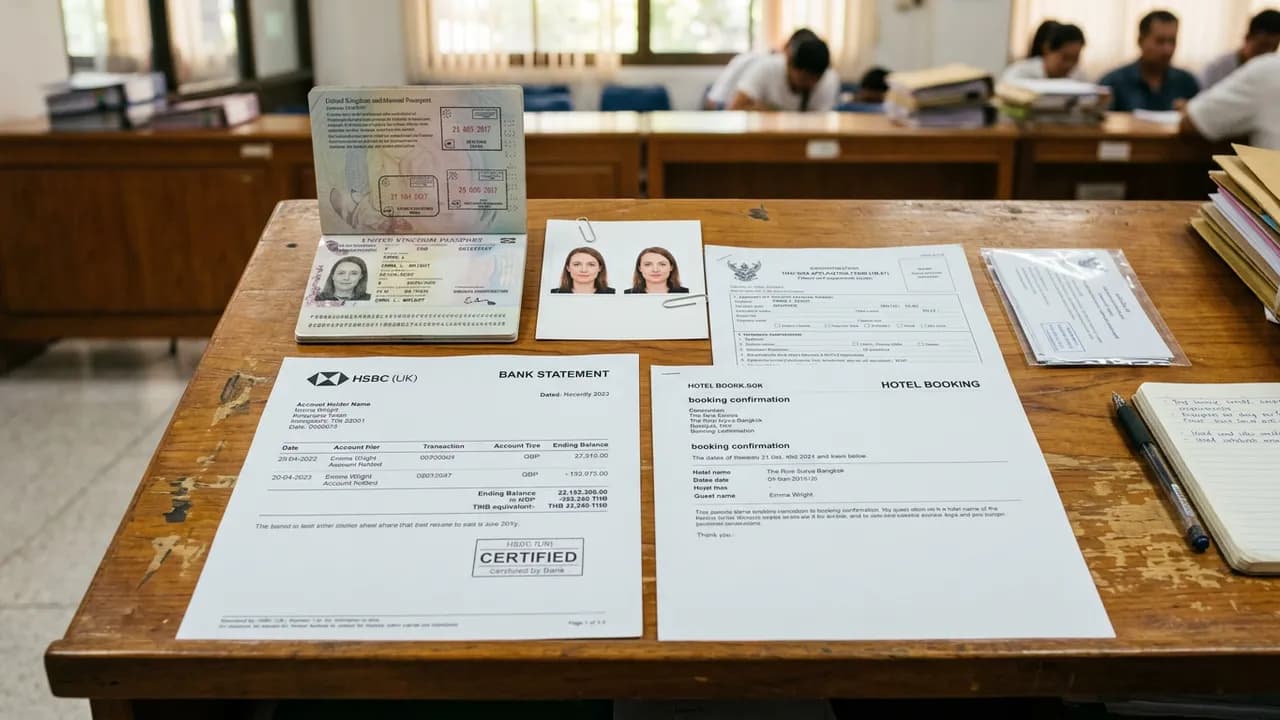
Step 3: Prepare Documents
Document preparation is extensive. Start gathering materials at least 3-6 months before the expected application window.
Required documents generally include:
- Passport and all previous passports
- Non-Immigrant Visa and extension of stay documentation
- Work permit (for employment category)
- Thai tax returns (Por Ngor Dor 91 or 90) for the past 2-3 years
- Tax payment receipts
- Employment letter confirming position and salary
- Company registration documents (for business owners)
- Marriage certificate (for family category, translated and certified)
- Bank statements for the past 12 months
- Medical certificate from a Thai hospital
- Criminal background check (Thai police clearance)
- Passport photos (multiple)
- Letter of recommendation from your embassy
- Proof of Thai language ability (certificate or interview)
- TM.7 application form
All foreign-language documents must be translated into Thai and certified.
Step 4: Submit Application
Submit the application in person at:
- Bangkok: Immigration Division 1, Government Center, Chaeng Wattana
- Outside Bangkok: Your local provincial immigration office
Application fee: 7,600 THB (non-refundable)
Step 5: Interview
Applicants are interviewed by an Immigration Commission panel. The interview is conducted primarily in Thai. You will be asked about:
- Your reasons for wanting PR
- Your work and life in Thailand
- Your knowledge of Thai culture and language
- Your financial situation
Applicants over 50 or those in certain categories may receive more lenient language requirements.
Step 6: Background Investigation
Thai police conduct a thorough background check, including visits to your home and workplace. This process takes several months.
Step 7: Commission Review
The Permanent Residency Consideration Commission reviews all applications and makes recommendations. This stage can take 6-18 months.
Step 8: Royal Thai Government Gazette Publication
Approved applicants are published in the Government Gazette. You are then notified to complete the final steps.
Step 9: Final Payment and PR Book Issuance
- Pay the PR fee of 191,400 THB (for most nationalities — some pay 95,700 THB)
- Receive your Permanent Residency Certificate (blue book entry)
- Obtain a Re-entry Permit if you plan to travel internationally
Costs
| Item | Cost (THB) |
|---|---|
| Application fee | 7,600 |
| PR issuance fee | 191,400 (most nationalities) |
| Document translations | 10,000 - 30,000 |
| Immigration lawyer (optional but recommended) | 100,000 - 300,000 |
| Medical certificate | 1,000 - 3,000 |
| Total estimated cost | 310,000 - 530,000 THB |
Timeline
| Stage | Duration |
|---|---|
| Document preparation | 3-6 months |
| Application window | 2-4 weeks per year |
| Interview and background check | 3-6 months |
| Commission review | 6-18 months |
| Gazette publication and issuance | 1-3 months |
| Total from application to PR | 1-3 years |
Benefits of Thai Permanent Residency
- No more visa renewals — You do not need to extend your stay annually
- Blue Book registration — You can be listed on a Thai house registration
- Path to citizenship — PR holders can apply for Thai nationality after meeting additional requirements
- Greater stability — Your right to stay is not dependent on employment, marriage, or financial proof (after issuance)
- Easier bank and business dealings — Some banks and government offices treat PR holders more favorably
- Children benefit — Children born in Thailand to a PR holder have additional residency rights
Limitations
- Re-entry permit required — Unlike a Thai passport or citizenship, PR holders must obtain a re-entry permit before traveling abroad. Failure to get a re-entry permit before departing Thailand voids your PR status.
- No voting rights — PR holders cannot vote or hold political office
- No property ownership advantages — PR does not grant land ownership rights
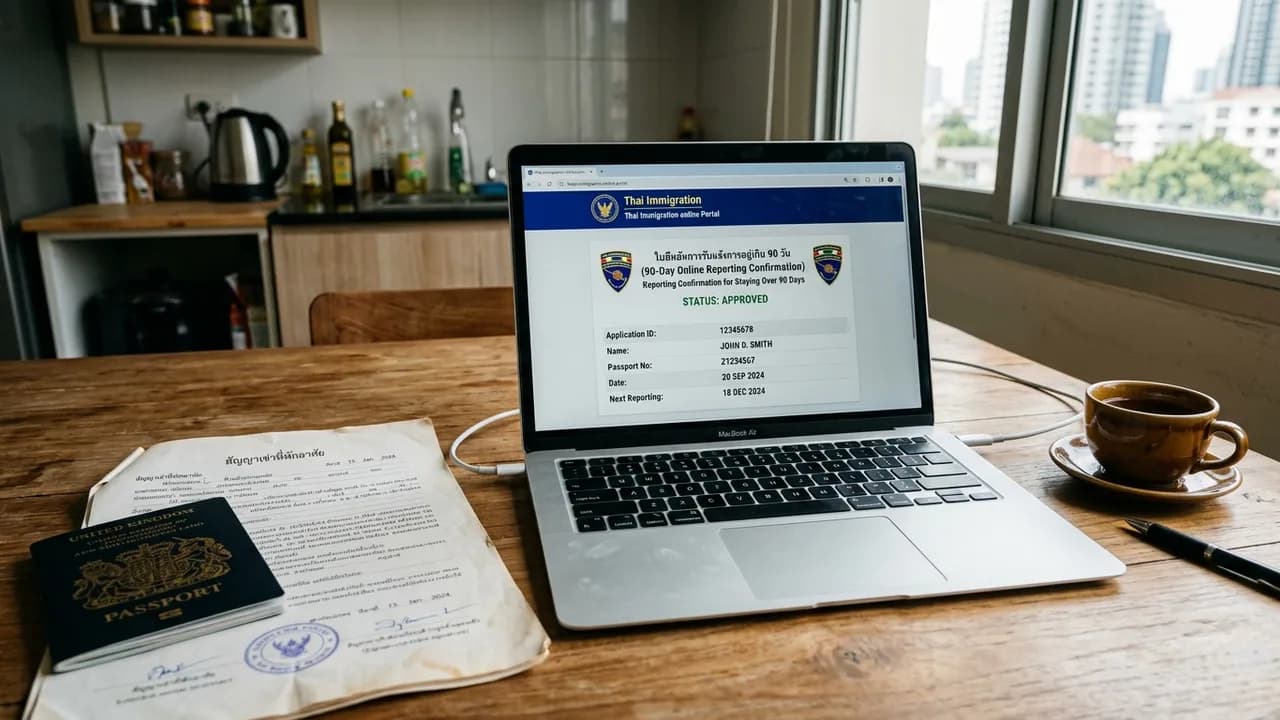
- Annual address reporting — You must still report your address annually
- Non-transferable — PR status applies only to the individual, not family members (who must apply separately)
PR vs. Elite Visa vs. LTR Visa
| Feature | Permanent Residency | Elite Visa | LTR Visa |
|---|---|---|---|
| Duration | Indefinite | 5-20 years | 10 years |
| Cost | ~200,000-500,000 THB | 600,000-2,000,000 THB | 100,000 THB |
| Work permit | Separate (but easier to obtain) | No | Yes (digital) |
| Income requirement | 80,000 THB/month (employment) | None | USD 80,000/year |
| Time in Thailand required | 3+ consecutive years | None | None |
| Thai language required | Yes (interview) | No | No |
| Path to citizenship | Yes | No | No |
| Annual renewal | No | Stamp renewal | No |
| Processing time | 1-3 years | 4-8 weeks | 4-6 weeks |
Tips for a Successful Application
- Start early — Begin document preparation at least 6 months before the expected window
- Hire an immigration lawyer — The process is complex and conducted largely in Thai. A reputable lawyer significantly improves your chances
- Study Thai — Basic conversational Thai is expected at the interview. Consider formal lessons
- Maintain clean tax records — Consistent, accurate Thai tax filings for 2-3 years are critical
- Do not leave Thailand excessively — The commission looks favorably on applicants who demonstrate commitment to living in Thailand
- Keep all documentation — Save every work permit renewal, tax receipt, and immigration stamp from your time in Thailand
- Get your embassy letter early — Some embassies require advance notice for recommendation letters
Frequently Asked Questions
Can I lose my PR status?
Yes. If you leave Thailand without a valid re-entry permit, your PR is automatically revoked. You can also lose PR for criminal convictions or national security concerns.
Does PR time count toward citizenship?
Yes. You generally need to hold PR for at least 5 years before applying for Thai citizenship, along with meeting additional requirements including Thai language proficiency.
Can my spouse get PR through me?
Your Thai spouse does not need PR. If your spouse is also a foreigner, they must apply independently under their own qualifying category.
Is there a minimum stay requirement for PR holders?
There is no formal minimum stay, but you must maintain an active re-entry permit and complete annual address reporting. Extended absences may create complications at the discretion of immigration officials.
Final Thoughts
Thailand Permanent Residency is the gold standard of immigration status for foreigners committed to living in the Kingdom. The process is demanding, the quota is limited, and the timeline is lengthy — but the reward is indefinite residency and a potential path to Thai citizenship. If you are serious about making Thailand your permanent home, start planning your PR application well in advance and consider professional legal assistance.