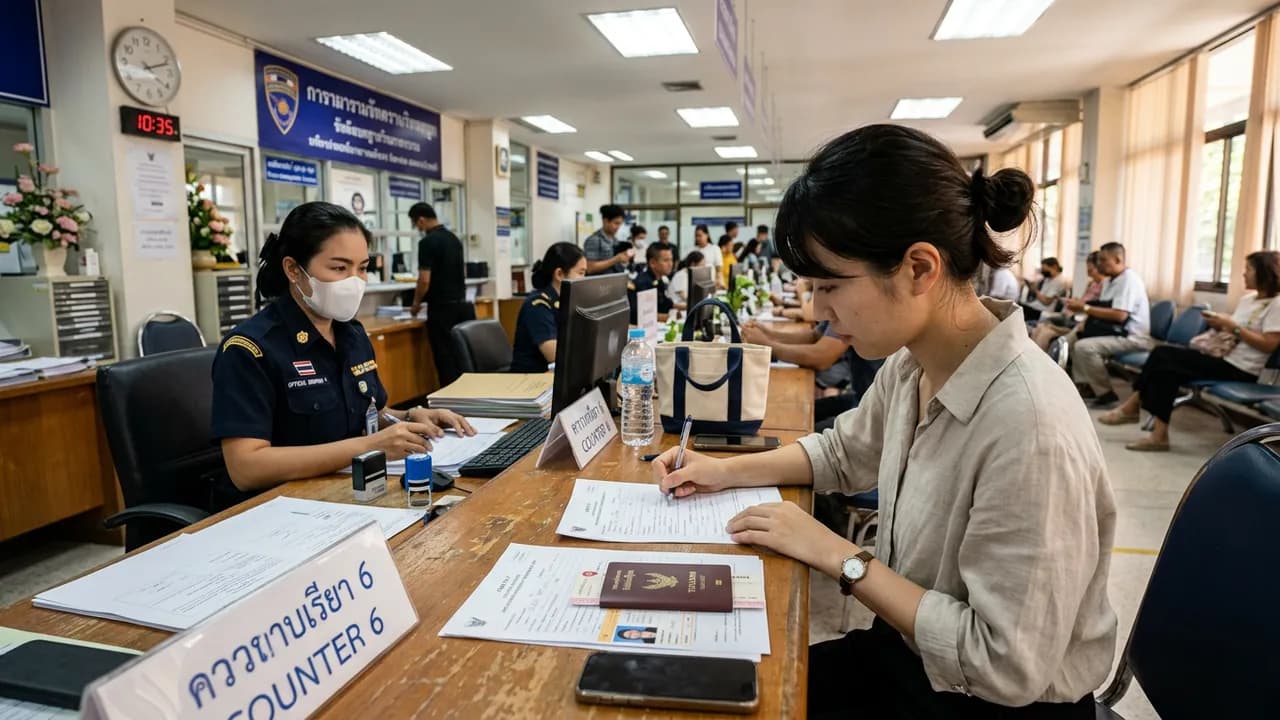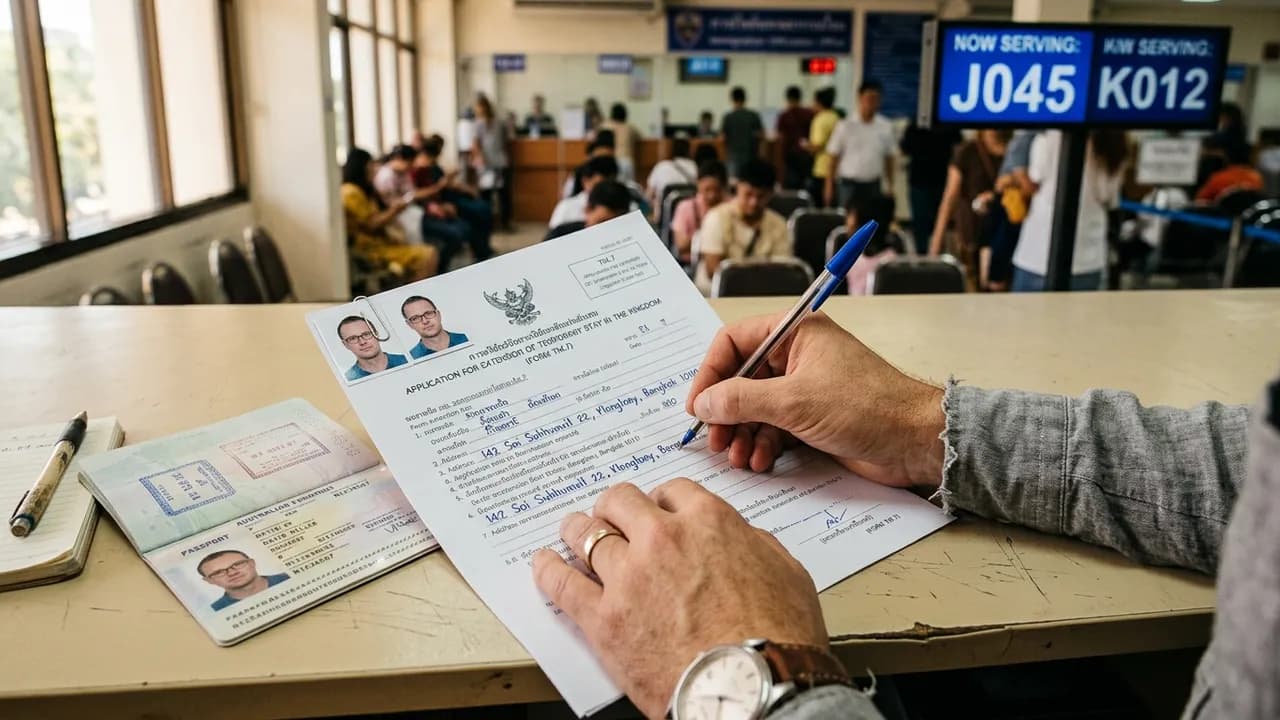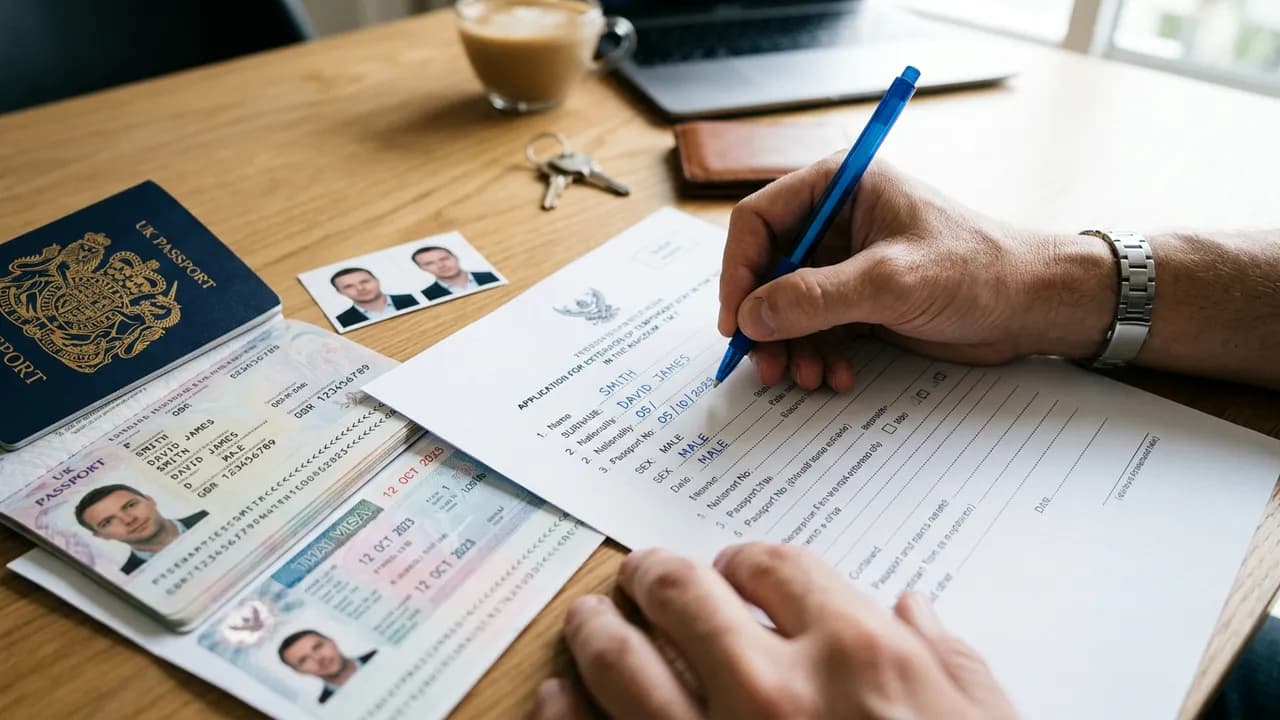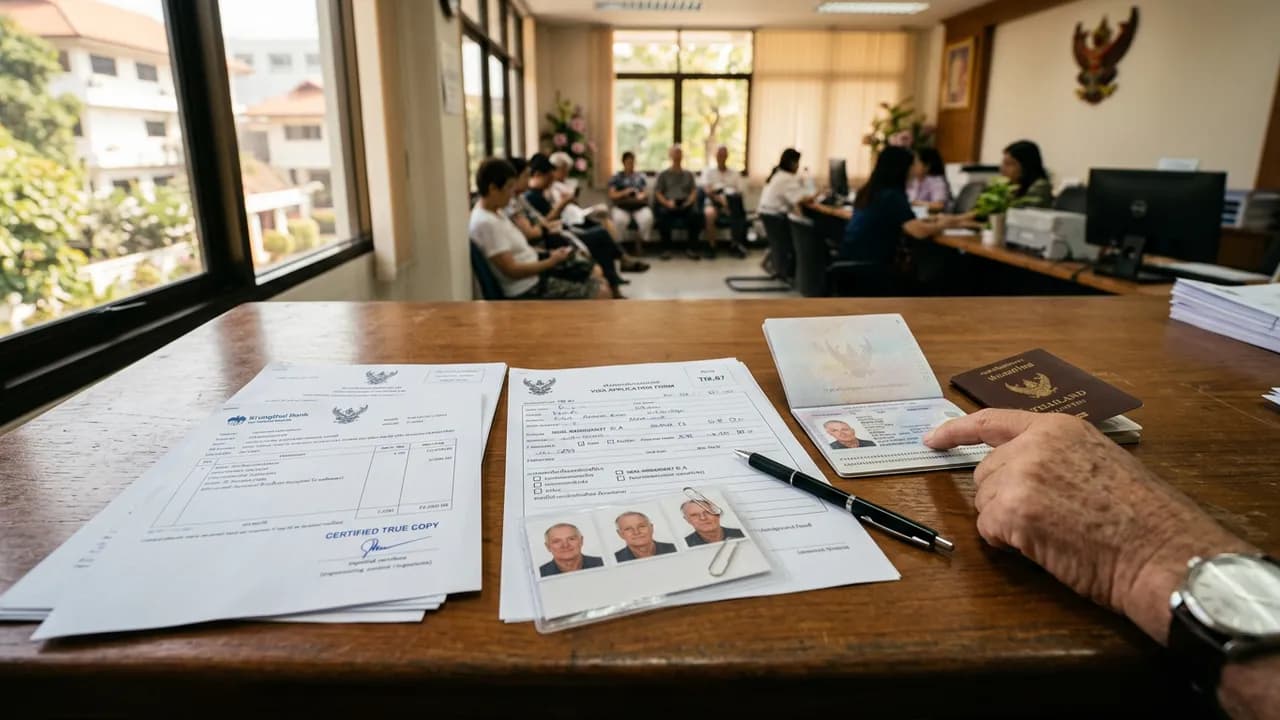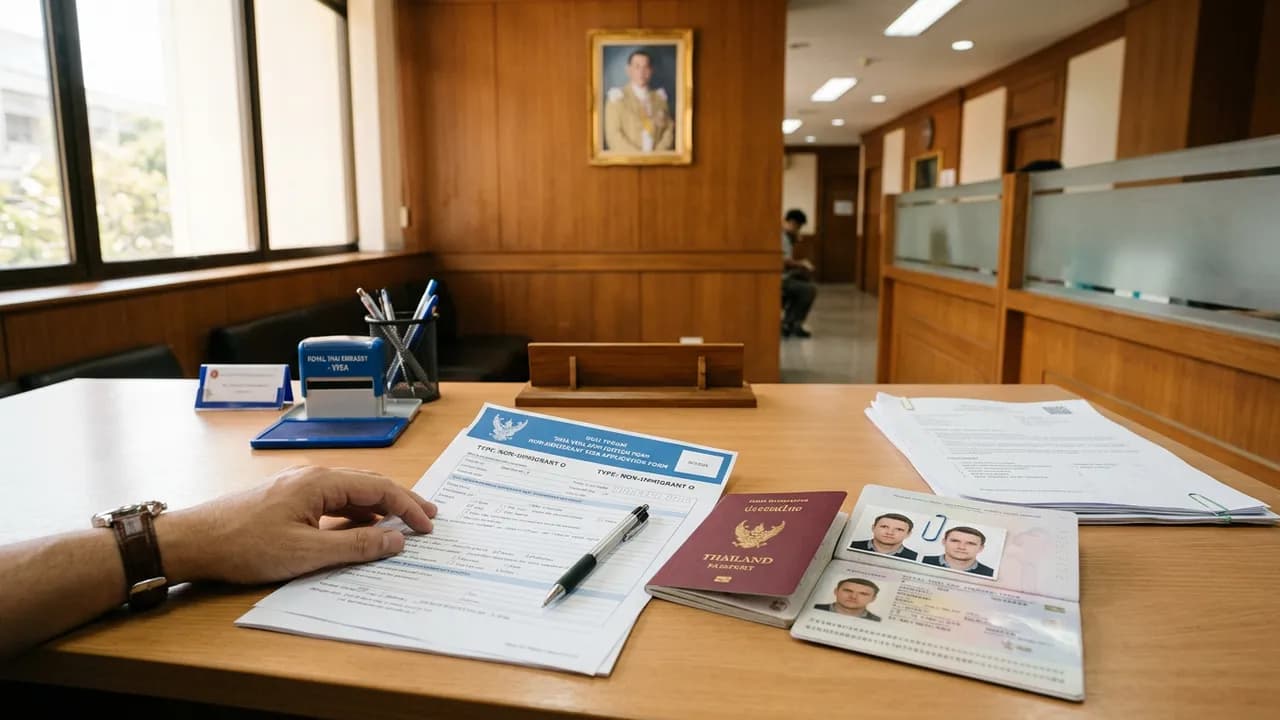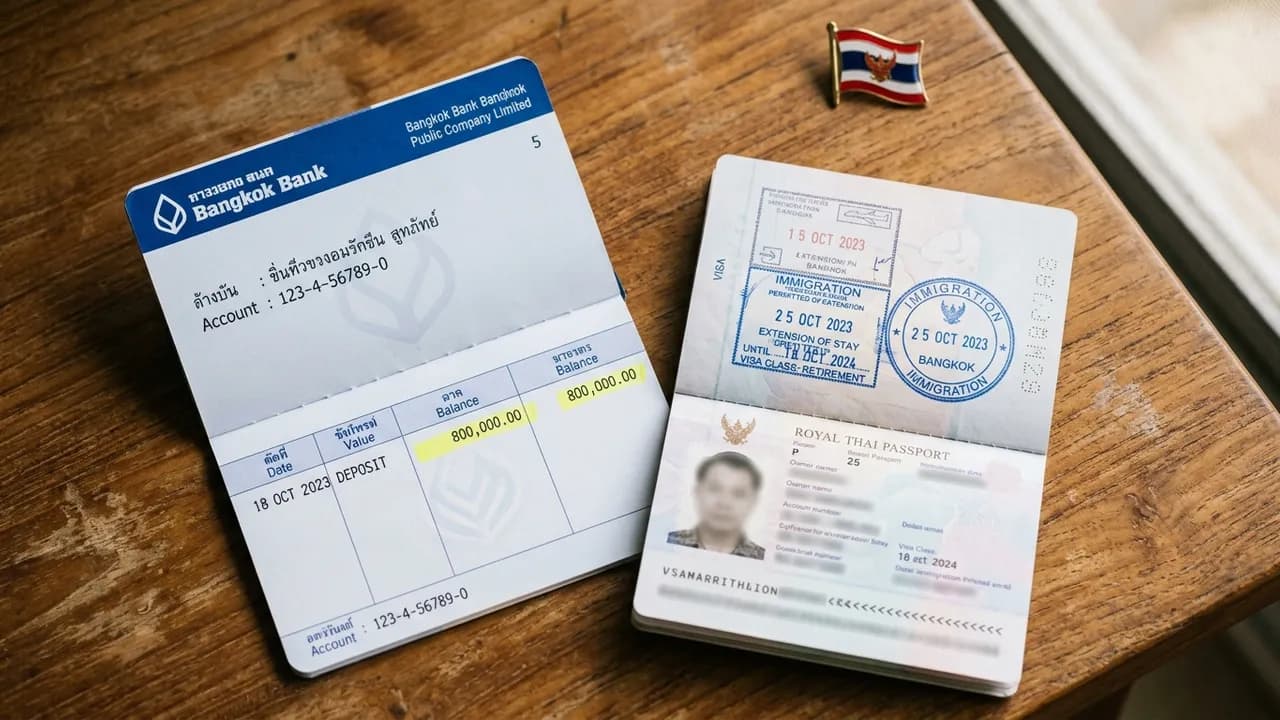
A Thailand retirement visa extension is what keeps tens of thousands of foreigners legally settled in one of the world's most popular retirement destinations, thanks to the country's well-established retirement visa program. The Non-Immigrant O (retirement) and Non-Immigrant O-A (Long Stay) visas allow foreigners aged 50 and above to live in Thailand long-term. However, these visas require annual extensions — a process that demands careful financial planning and document preparation. This guide covers everything you need for a successful renewal in 2026.
Understanding the Two Retirement Visa Types
Before discussing extensions, it is essential to understand the difference between the two main retirement visa pathways.
Non-Immigrant O (Retirement) — Applied for Inside Thailand
| Detail | Information |
|---|---|
| Where obtained | Thai Immigration office (conversion from tourist visa or visa exemption) |
| Initial validity | 90 days, then extended to 1 year |
| Extension | Annual, at Thai Immigration |
| Financial requirement | 800,000 THB in a Thai bank, OR monthly income of 65,000 THB, OR combination |
| Insurance requirement | Not mandatory (but recommended) |
| Age requirement | 50 years or older |
| Work permitted | No |
Non-Immigrant O-A (Long Stay) — Applied for Outside Thailand
| Detail | Information |
|---|---|
| Where obtained | Thai embassy/consulate abroad |
| Initial validity | 1 year (with multiple re-entry permit) |
| Extension | Annual, at Thai Immigration |
| Financial requirement | 800,000 THB in a Thai bank, OR monthly income of 65,000 THB, OR combination |
| Insurance requirement | Mandatory — minimum 40,000 THB outpatient / 400,000 THB inpatient coverage |
| Age requirement | 50 years or older |
| Work permitted | No |
The key practical difference: the Non-O visa obtained inside Thailand does not require health insurance by law (though it is strongly advisable), while the Non-O-A visa requires qualifying health insurance for every extension.
Financial Requirements in Detail
The financial requirement is the most critical element of your retirement visa extension. Immigration officers verify this carefully.
Option 1: 800,000 THB Bank Deposit
You must maintain 800,000 THB (approximately $22,800 USD) in a Thai bank account. The rules for how long the money must be in the account are strict:
| Timeline | Minimum Balance Required |
|---|---|
| 3 months before extension application | 800,000 THB (cannot drop below) |
| 2 months before extension | 800,000 THB |
| Day of application | 800,000 THB |
| For the remaining 9 months after extension | 400,000 THB minimum |
Important: The 800,000 THB must be "seasoned" — it needs to have been in your account for at least 2 months before you apply for your extension (some offices require 3 months). You cannot deposit the money the week before and expect approval.
After your extension is granted, you can withdraw down to 400,000 THB for the next 9 months, but must build it back up to 800,000 THB at least 2–3 months before your next annual extension.
Option 2: Monthly Income of 65,000 THB
If you receive regular income (pension, social security, investment returns), you can qualify by demonstrating monthly transfers of at least 65,000 THB (approximately $1,857 USD) into your Thai bank account.
You will need:
- A letter from your embassy certifying your income (some embassies have stopped providing these — check with yours)
- 12 months of Thai bank statements showing consistent deposits
- Income documentation from your home country (pension statements, social security letters, etc.)
Note on embassy income letters: Several embassies (including the US, UK, and Australian embassies) no longer issue income verification letters. If your embassy does not provide this service, you will likely need to use the bank deposit method instead or provide an affidavit with supporting financial documents. Check your embassy's current policy well in advance.
Option 3: Combination Method
You can combine savings and income to meet the threshold. Your Thai bank balance plus your monthly income multiplied by 12 must equal at least 800,000 THB.
Example: If you have 500,000 THB in the bank and monthly income of 25,000 THB:
- 500,000 + (25,000 x 12) = 500,000 + 300,000 = 800,000 THB — Qualifies
Documents Required for Annual Extension
For Non-Immigrant O (Retirement) Extensions
-
Passport (original) with photocopies of:
- Bio/photo page
- Current visa page
- Most recent entry stamp
- Re-entry permit page (if applicable)
- TM.6 departure card
-
TM.7 Application Form — Completed and signed
-
Passport photos (4x6 cm) — Two recent photos, white background
-
1,900 THB extension fee — Cash only
-
Thai bank passbook (original + photocopy) — Updated within the past week. Go to your bank and have them update and stamp your passbook before visiting Immigration.
-
Bank letter — A letter from your Thai bank confirming your account balance, issued within 7 days of your application. Most banks charge 100–200 THB for this letter. Request it in English.
-
TM.30 notification receipt — Proof that your landlord or property owner has reported your address. This is strictly enforced for retirement visa holders.
-
Proof of residence — Lease agreement, ownership documents, or a letter from your accommodation provider. Must match the address on your TM.30.
-
Map to your residence — Some offices require a hand-drawn or printed map showing your home location. Google Maps screenshots are generally accepted.
-
Photos of your residence — Some immigration offices (notably Bangkok Chaeng Watthana) require 2–4 photos showing the exterior and interior of your home, sometimes with you standing in front of it.
Additional for Non-Immigrant O-A Extensions
All of the above, plus:
- Health insurance policy — Must be from a Thai insurance company or an international insurer on the approved list, with minimum coverage of:
- 40,000 THB for outpatient treatment
- 400,000 THB for inpatient treatment
- Insurance certificate — A letter from your insurer confirming active coverage and the coverage amounts. Must cover the full duration of your extension.
Step-by-Step Extension Process
Step 1: Prepare Finances (3 Months Before)
Ensure your Thai bank account has at least 800,000 THB. If using the income method, gather 12 months of bank statements showing regular deposits. Do not make large withdrawals during this period.
Step 2: Gather Documents (2–3 Weeks Before)
Collect all required documents. Visit your bank to get an updated passbook and a bank letter. Confirm your TM.30 is current. Take residence photos if required by your local office.
Step 3: Obtain Bank Letter (Within 7 Days of Application)
Go to your Thai bank branch and request a balance confirmation letter in English. Some banks can issue it immediately; others take 1–3 business days. Plan accordingly.
Step 4: Visit Immigration Office
When to apply: You can apply up to 45 days before your current extension expires. Applying early is recommended — you receive the full year from your current expiry date, not from the application date.
Where to apply: Your local immigration office. You must apply at the office that has jurisdiction over your registered address (per your TM.30). You cannot apply at a different province's office.
Step 5: Submit Application
At the counter:
- Present all documents in an organized folder
- Pay 1,900 THB
- Answer any questions from the officer
The officer will carefully review your financial documents, particularly your bank passbook and bank letter. They may use a calculator to verify the timeline of your deposits.
Step 6: Interview or Home Visit (Possible)
Some immigration offices conduct brief interviews or even home visits to verify your address. This is more common at:
- Bangkok offices
- First-time extensions
- Cases where the officer has concerns
If a home visit is required, an officer will schedule a time to visit your residence. Be present, be honest, and have your documents available.
Step 7: Collect Your Passport
Processing can take anywhere from a few hours to a few days:
| Office | Typical Processing Time |
|---|---|
| Small provincial offices | Same day (1–3 hours) |
| Chiang Mai | Same day to next day |
| Pattaya | Same day (2–4 hours) |
| Bangkok Chaeng Watthana | Same day to 2 weeks |
When you collect your passport, verify the new expiry date is exactly one year from your previous expiry date.
Re-Entry Permits: Do Not Forget This
A retirement visa extension does not include a re-entry permit. If you leave Thailand without obtaining a re-entry permit, your extension is cancelled and you must start the entire process over.
Types of Re-Entry Permits
| Type | Cost | Details |
|---|---|---|
| Single re-entry | 1,000 THB | Good for one departure and return |
| Multiple re-entry | 3,800 THB | Unlimited departures during your permit period |
You can obtain re-entry permits at:
- Any immigration office
- Major international airports (Suvarnabhumi, Don Mueang, Chiang Mai, Phuket) — look for the re-entry permit counter before passport control
Always get a re-entry permit before any trip outside Thailand. This is one of the most common and costly mistakes retirees make.
90-Day Reporting
All foreigners staying in Thailand for 90 consecutive days or more must report their address to Immigration every 90 days via 90-day reporting. This is separate from your annual extension.
How to Do 90-Day Reporting
| Method | Details |
|---|---|
| In person | Visit your local immigration office with passport and TM.30 receipt |
| Online | Via the Thai Immigration Bureau website (tm47.immigration.go.th) — often unreliable |
| By mail | Send copies of documents to your local immigration office via registered mail |
| Through an agent | 500–2,000 THB depending on location |
You must report within 15 days before or 7 days after the 90-day due date. Late reporting carries a 2,000 THB fine.
Tip: Every time you leave Thailand and return (with a re-entry permit), the 90-day counter resets. If you travel internationally at least once every 90 days, you may never need to file a 90-day report.
Common Reasons for Extension Denial
While most retirement visa extensions are approved, denials do happen. Common causes include:
- Insufficient funds — Bank balance dropped below 800,000 THB during the seasoning period
- Late application — Applying after your current extension has expired (this becomes an overstay situation)
- Missing or expired insurance — For O-A visa holders, lapsed insurance is a deal-breaker
- TM.30 not filed — Increasingly enforced across all offices
- Criminal record or police issues — Any legal trouble in Thailand can result in denial
- Suspected employment — Evidence that you are working without a permit
If denied, you typically have 7 days to leave Thailand. You can appeal or reapply, but it is better to ensure everything is perfect before applying.
Cost Summary
| Item | Cost |
|---|---|
| Extension fee | 1,900 THB |
| Bank letter | 100–200 THB |
| Passport photos | 100–200 THB |
| Photocopies | 20–50 THB |
| Multiple re-entry permit (recommended) | 3,800 THB |
| Health insurance (O-A, annual) | 15,000–60,000 THB |
| Agent fee (optional) | 5,000–15,000 THB |
| Total (Non-O, no agent) | Approximately 6,000–6,200 THB |
| Total (O-A with insurance, no agent) | Approximately 21,000–66,000 THB |
Tips for Long-Term Success
Build a Relationship with Your Local Office
If you extend at the same office every year, officers may begin to recognize you. Being polite, prepared, and consistent makes the process smoother over time.
Keep Meticulous Financial Records
Maintain a spreadsheet tracking your bank balance month by month. Screenshot your balance on the 1st of each month. This helps you ensure you never accidentally dip below the required threshold.
Set Calendar Reminders
- 3 months before extension: Verify 800,000 THB is in your account
- 1 month before: Gather all documents
- 1 week before: Get bank letter, update passbook
- Day of: Visit Immigration
Consider a Visa Agent for Complex Situations
If you have an unusual financial situation, multiple passports, or other complications, a licensed visa agent (5,000–15,000 THB) can be worth the investment. They know the specific requirements of your local office and can prevent issues before they arise.
Stay Updated on Rule Changes
Thai immigration rules change periodically. Follow expat forums, official Thai Immigration announcements, and your embassy's advisories to stay current.
Frequently Asked Questions
Can I switch from an O-A visa to a Non-O visa inside Thailand?
Yes. Many retirees switch to a Non-O visa to avoid the mandatory insurance requirement. You can apply for a change of visa type at Immigration, though the process requires the same financial documentation.
What happens if I cannot maintain 800,000 THB?
You will not be able to extend your visa. You can either provide income proof (65,000 THB/month), use the combination method, or leave Thailand and re-enter on a different visa type.
Can my Thai spouse help me qualify?
If you are married to a Thai national, you may qualify for a Non-Immigrant O visa based on marriage, which has a lower financial requirement of 400,000 THB. This is a different visa category from the retirement visa.
Do I need to be in Thailand for the full year?
No. You can travel freely with a valid re-entry permit. However, you must be present in Thailand to apply for your annual extension and to complete 90-day reporting (unless done by mail or online).
Summary
The Thailand retirement visa extension is an annual process that requires financial planning, document preparation, and a visit to your local immigration office. Maintain at least 800,000 THB in your Thai bank account, keep your insurance current (for O-A holders), file your TM.30 and 90-day reports on time, and always obtain a re-entry permit before traveling. With proper preparation, the annual renewal is a manageable routine that allows you to enjoy retirement in Thailand year after year.