The term "visa run" is deeply embedded in the vocabulary of anyone who has spent extended time in Thailand. Whether you are a digital nomad, a long-term traveler, a retiree exploring your options, or an English teacher between contracts, you have likely heard of — or been advised to do — a visa run. This guide explains exactly what a visa run is, how the process works, the different types, the history behind the practice, and the risks involved in 2026.
Definition: What Is a Visa Run?
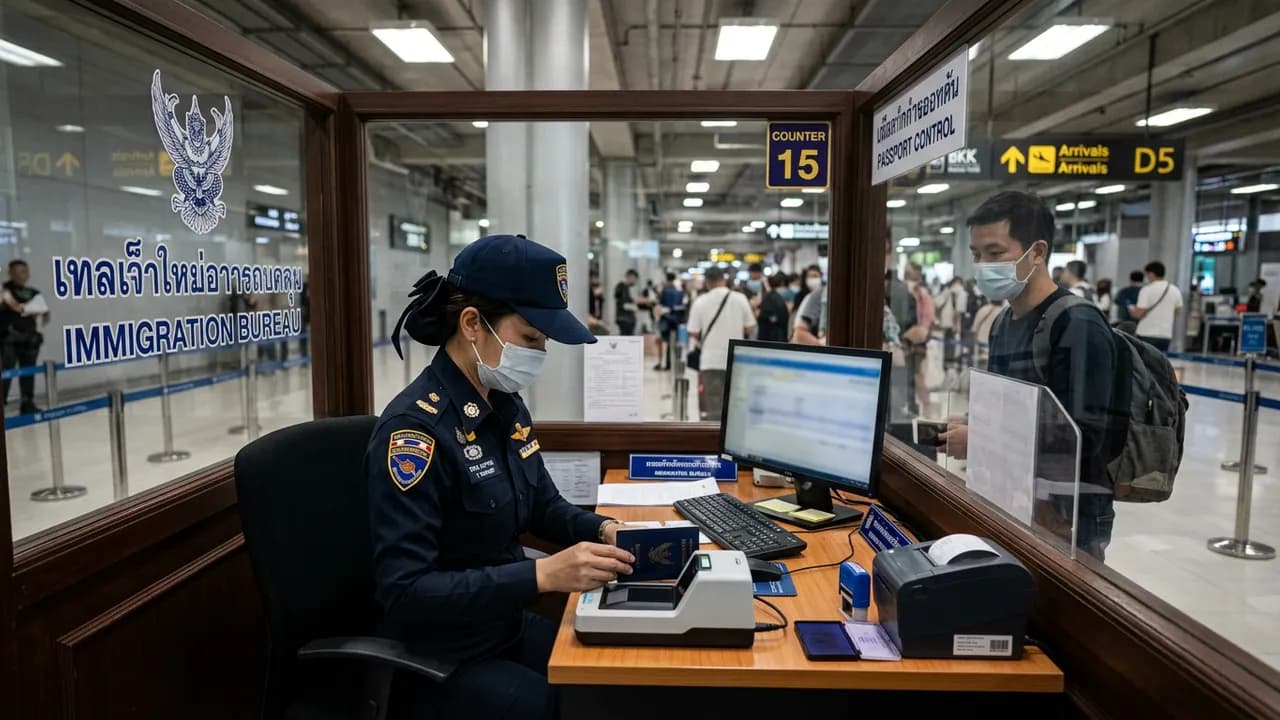
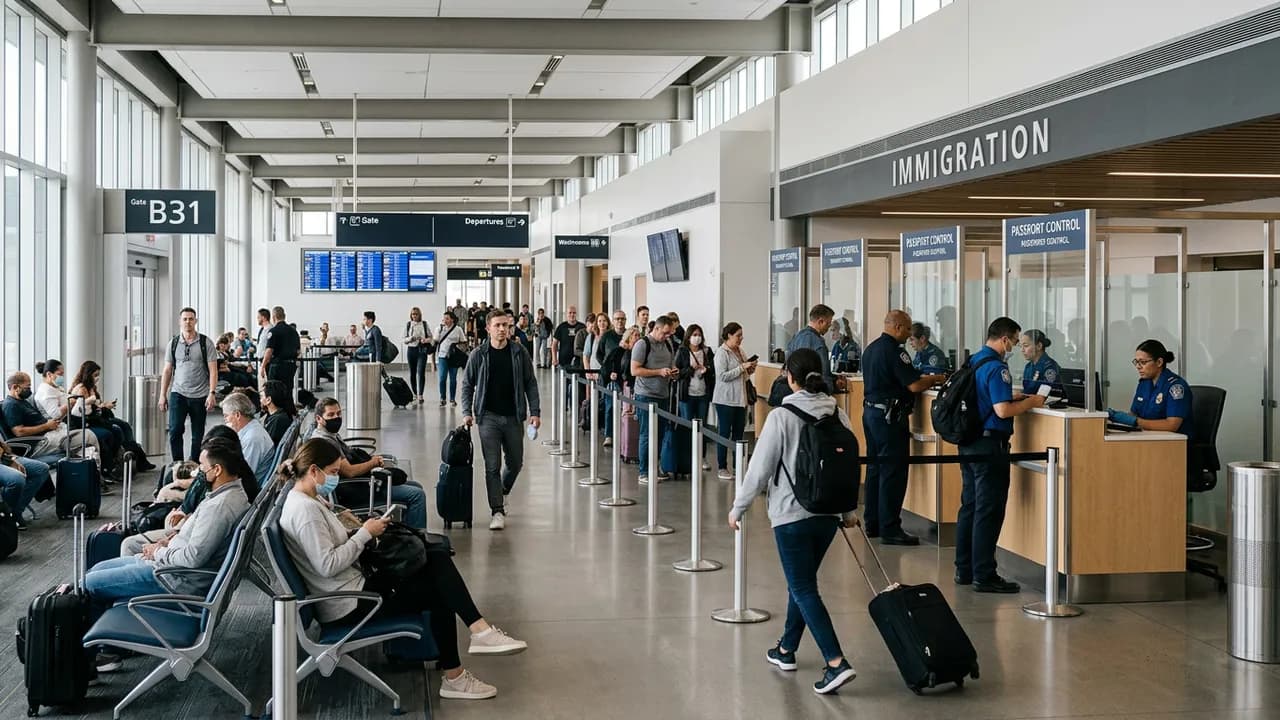
A visa run is the act of leaving Thailand and re-entering in order to receive a new permission-to-stay stamp in your passport. By crossing an international border — whether by land or air — and then returning to Thailand, you effectively reset your allowed time in the country.
The mechanics are simple:
- Your current stay permission is about to expire (or has been extended and that extension is about to expire)
- You travel to a neighboring country (Cambodia, Laos, Myanmar, or Malaysia) or fly to any international destination
- You exit Thailand, receiving an exit stamp
- You enter the neighboring country
- You return to Thailand, receiving a new entry stamp with fresh permitted days
The new entry stamp gives you a new period of stay — typically 30 or 60 days for visa-exempt nationals, or whatever your visa type permits.
Why Do People Do Visa Runs?
The primary reasons include:
- Extending time in Thailand without applying for a long-term visa
- Resetting a visa exemption after using the initial stay plus 30-day extension
- Obtaining a new visa at a Thai embassy or consulate in a neighboring country (Vientiane, Penang, Phnom Penh, etc.)
- Maintaining legal status while waiting for other visa paperwork to process
- Exploring neighboring countries while simultaneously solving an immigration issue
Land Visa Runs vs. Air Visa Runs
There are two main approaches to visa runs, and the distinction matters.
Land Border Visa Runs
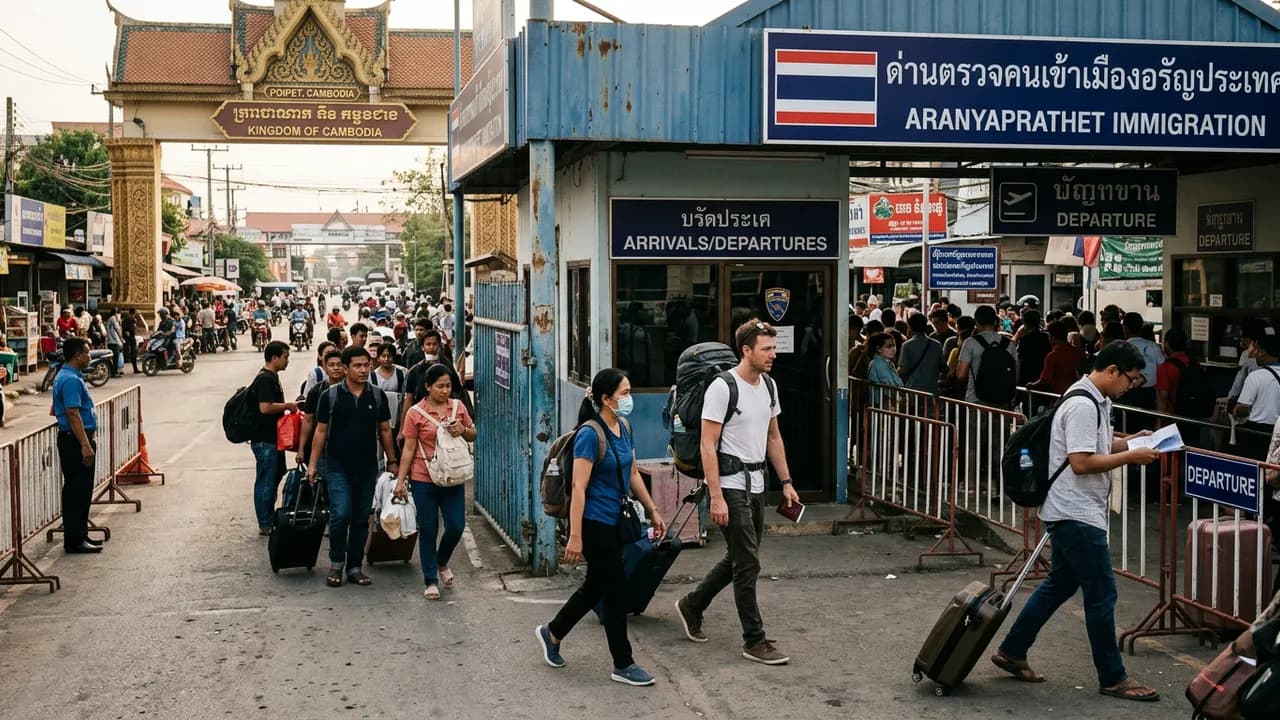
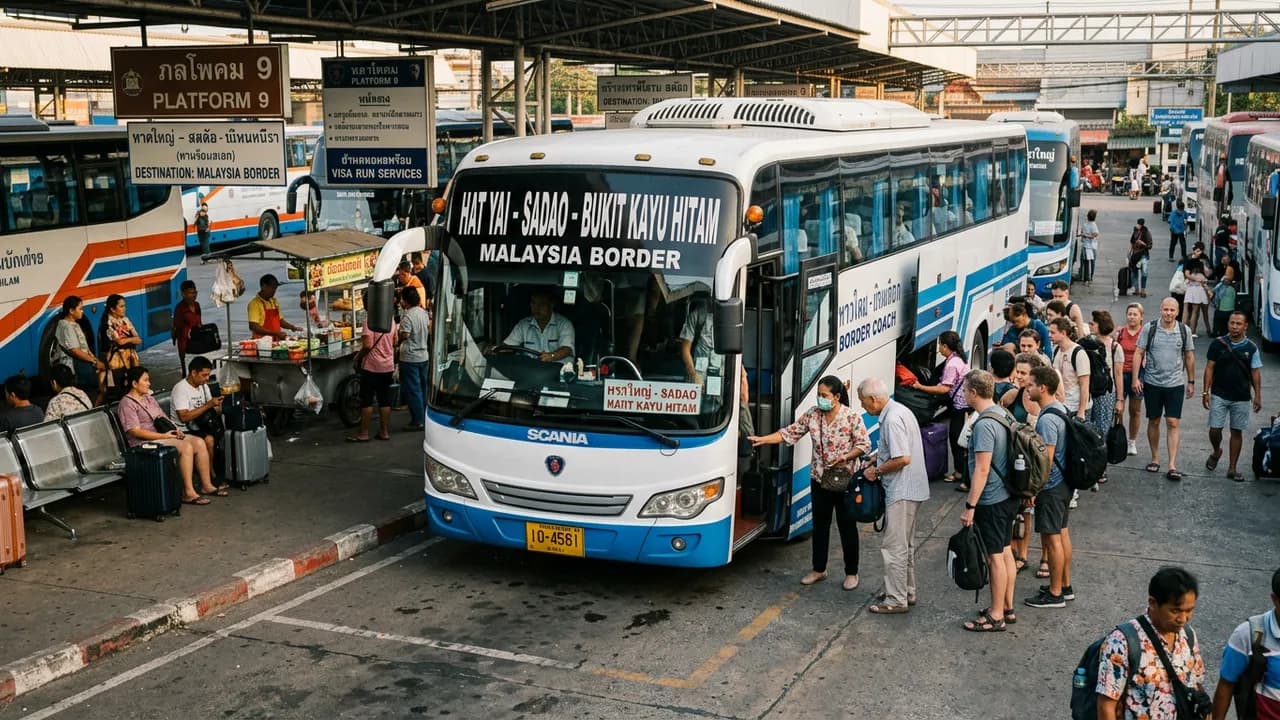
A land visa run involves traveling overland to a neighboring country's border checkpoint, crossing into that country, and then crossing back into Thailand.
| Aspect | Details |
|---|---|
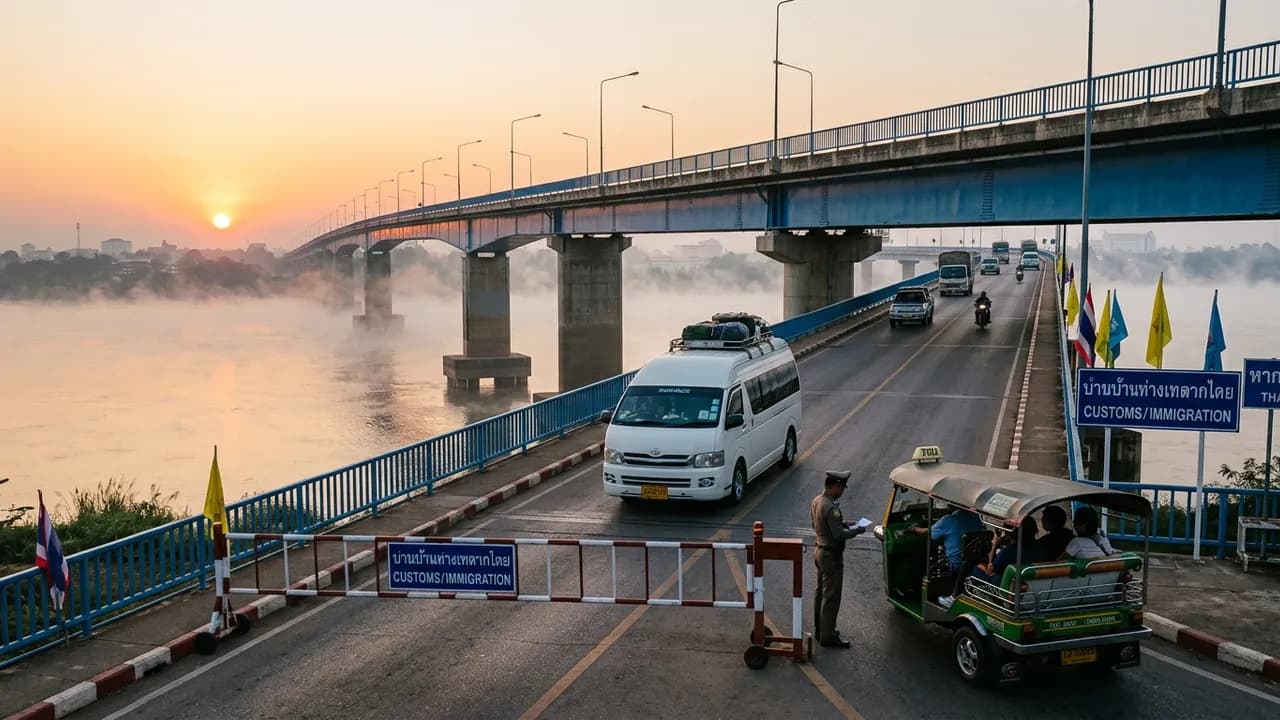
| Popular routes | Aranyaprathet–Poipet (Cambodia), Nong Khai–Vientiane (Laos), Sadao–Bukit Kayu Hitam (Malaysia) |
| Cost | 500–3,000 THB (transport + border fees) |
| Time required | 4–12 hours (same day possible) |
| Stamp received | 30 or 60 days visa exemption (varies by nationality and current rules) |
| Visa obtained | Usually just a new entry stamp; some crossings allow visa-on-arrival for the transit country |
Advantages:
- Cheapest option
- Can be done in a single day
- No flights needed
- Multiple border options around Thailand
Disadvantages:
- Can be physically tiring
- Border areas can be chaotic
- Scams at some crossings (especially Poipet)
- Immigration officers may question frequent land crossings
Air Visa Runs
An air visa run involves flying from Thailand to any international destination and returning.
| Aspect | Details |
|---|---|
| Popular destinations | Kuala Lumpur, Singapore, Phnom Penh, Vientiane, Yangon, Hong Kong |
| Cost | 2,000–10,000 THB (budget airline round trip) |
| Time required | 1–3 days minimum |
| Stamp received | 60 days visa exemption for most nationalities |
| Visa obtained | Fresh entry stamp; can also apply for Thai visa at embassy in destination |
Advantages:
- Less scrutiny from immigration officers
- 60-day exemption stamp (vs. potentially 30 days by land)
- Opportunity to visit another country
- More comfortable process overall
Disadvantages:
- More expensive
- Requires more time
- Need accommodation in the destination country
History of Visa Runs in Thailand
Visa runs have been a part of the Thailand expat experience since at least the 1990s, when the country became a major hub for long-term travelers, backpackers, and early digital nomads.
The Early Days (1990s–2000s)
In the early years, visa runs were virtually unrestricted. Travelers could cross the border at land checkpoints and return to Thailand with a fresh 30-day stamp indefinitely. Some people lived in Thailand for years using nothing but back-to-back visa runs. Minivan services operated daily from Bangkok, Chiang Mai, and Pattaya to border crossings, making the process almost automatic.
The First Crackdowns (2006–2009)
Thai authorities began restricting consecutive land entries. In 2006, a rule was introduced limiting visa-exempt land entries to 90 days within any 6-month period (the so-called "half-year rule"). This was Thailand's first serious attempt to discourage people from living in the country indefinitely on tourist stamps.
The 2014 Tightening
After the military government came to power in 2014, immigration enforcement increased significantly. Officers at land borders began denying entry to people with histories of multiple back-to-back entries. The arbitrary denial — at the discretion of the individual officer — became a real risk.
2015 Land Border Cap
In 2015, Thailand introduced a rule limiting visa-exempt entries by land to two per calendar year. This was a major blow to the visa-run industry. Air entries were not affected by this cap.
2016–2023 Evolving Rules
The two-per-year land entry cap was eventually relaxed and enforcement became inconsistent. Some borders applied it strictly; others did not. Air entries continued to receive 30-day stamps without restriction (later increased to 45 days as a COVID recovery measure, then further extended).
2024–2026 Current Era
Thailand has moved toward longer initial visa-exempt stays (60 days by air for most nationalities) and introduced new visa categories like the Destination Thailand Visa (DTV) for remote workers. The general trend is toward longer legal stays with fewer gray areas, though visa runs remain a common practice for short-to-medium-term visitors.
Current Rules for Visa Runs in 2026
By Air
- Citizens of most visa-exempt countries receive a 60-day stamp upon arrival by air
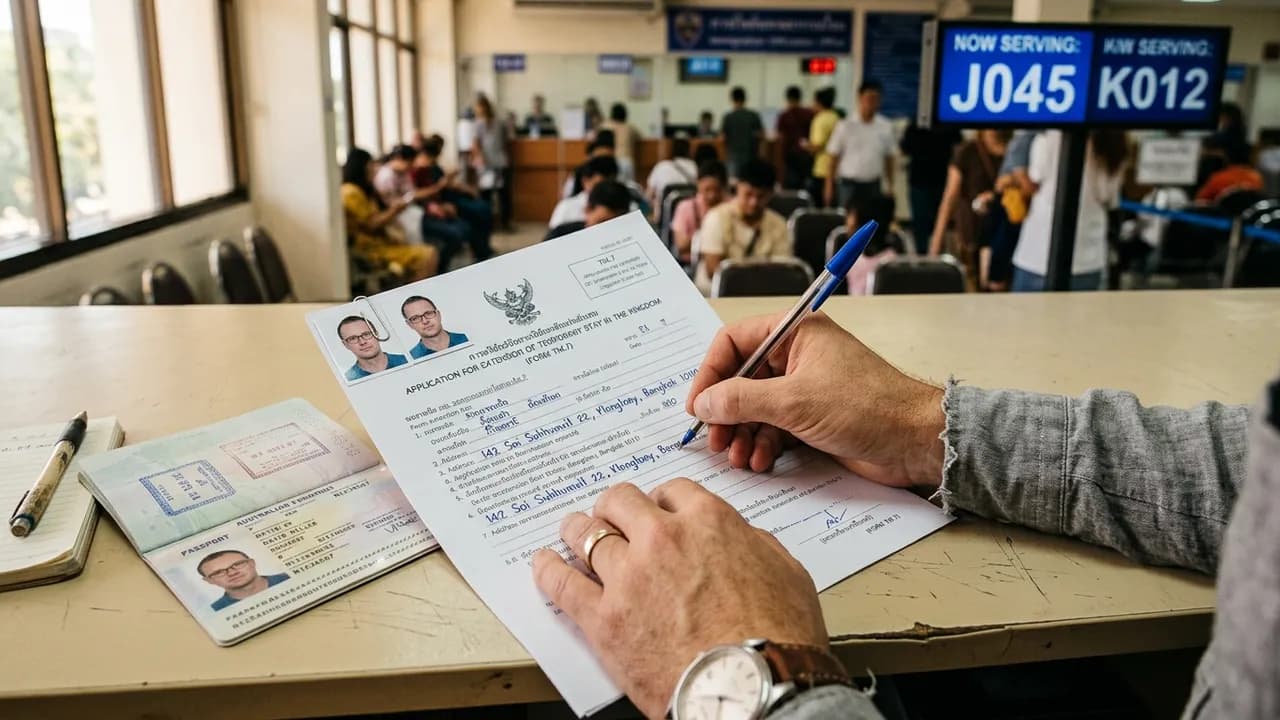
- This can be extended by 30 days at Immigration (1,900 THB)
- Total possible stay per entry: 90 days
- No official limit on the number of air entries per year
- However, frequent entries may trigger questions or denial at the officer's discretion
By Land
- Visa-exempt entries by land may grant 30 or 60 days depending on nationality and the specific border crossing
- Can be extended by 30 days at Immigration
- The two-per-year land entry cap has been officially removed, but officers retain discretion to deny entry
- Frequent land crossings (more than 3–4 in a short period) significantly increase the risk of denial
At the Officer's Discretion
This is the critical point that many people overlook. Every entry into Thailand is at the discretion of the immigration officer. There is no absolute right to enter Thailand on a visa exemption. Officers can and do deny entry if they believe you are:
- Living in Thailand on consecutive tourist entries
- Working illegally
- Not a genuine tourist
- A person who cannot demonstrate sufficient funds or onward travel
Risks and Consequences
Entry Denial
The most immediate risk. If denied entry, you must return to the country you came from at your own expense. You may be able to try again at a different border crossing or on a different day, but there are no guarantees.
Increased Scrutiny
Frequent visa runs create a pattern in your passport that experienced officers recognize instantly. Multiple entry and exit stamps from the same border crossing within a short period is a red flag.
Questioning
Officers may ask:
- "Why do you keep coming back to Thailand?"
- "Do you work in Thailand?"
- "How much money do you have?"
- "Do you have a return ticket?"
Having clear, honest answers and supporting documents (hotel bookings, bank statements, return flights) helps.
Blacklisting
In extreme cases, individuals who have been denied entry multiple times or who are suspected of illegal employment may be placed on a blacklist, effectively banning them from Thailand.
Overstay Risks
If your visa run fails (entry denied) and you were counting on the new stamp to stay legal, you may find yourself in an overstay situation in the transit country. Always have a backup plan.
How to Minimize Visa Run Risks
- Alternate between air and land entries. Air entries receive less scrutiny.
- Do not use the same border crossing repeatedly. Variety helps.
- Carry supporting documents: hotel bookings, bank statements showing sufficient funds, a return flight itinerary.
- Dress neatly. First impressions matter at border checkpoints.
- Be polite and calm. Do not argue with officers or show frustration.
- Consider applying for a proper visa. If you plan to stay in Thailand for more than 3–6 months, invest in a Non-Immigrant visa, Education visa, or Destination Thailand Visa. The upfront effort saves you repeated visa run stress.
- Keep entries reasonable. Two or three visa-exempt entries per year is generally not a problem. Six or more starts to look suspicious.
Popular Visa Run Destinations from Thailand
| Destination | Border/Route | Best For | Time Needed | Approximate Cost |
|---|---|---|---|---|
| Cambodia (Poipet) | Aranyaprathet land crossing | Quick same-day run from Bangkok/Pattaya | 6–10 hours | 1,000–3,000 THB |
| Laos (Vientiane) | Nong Khai/Friendship Bridge | Getting a new Thai visa at Vientiane embassy | 2–3 days | 3,000–8,000 THB |
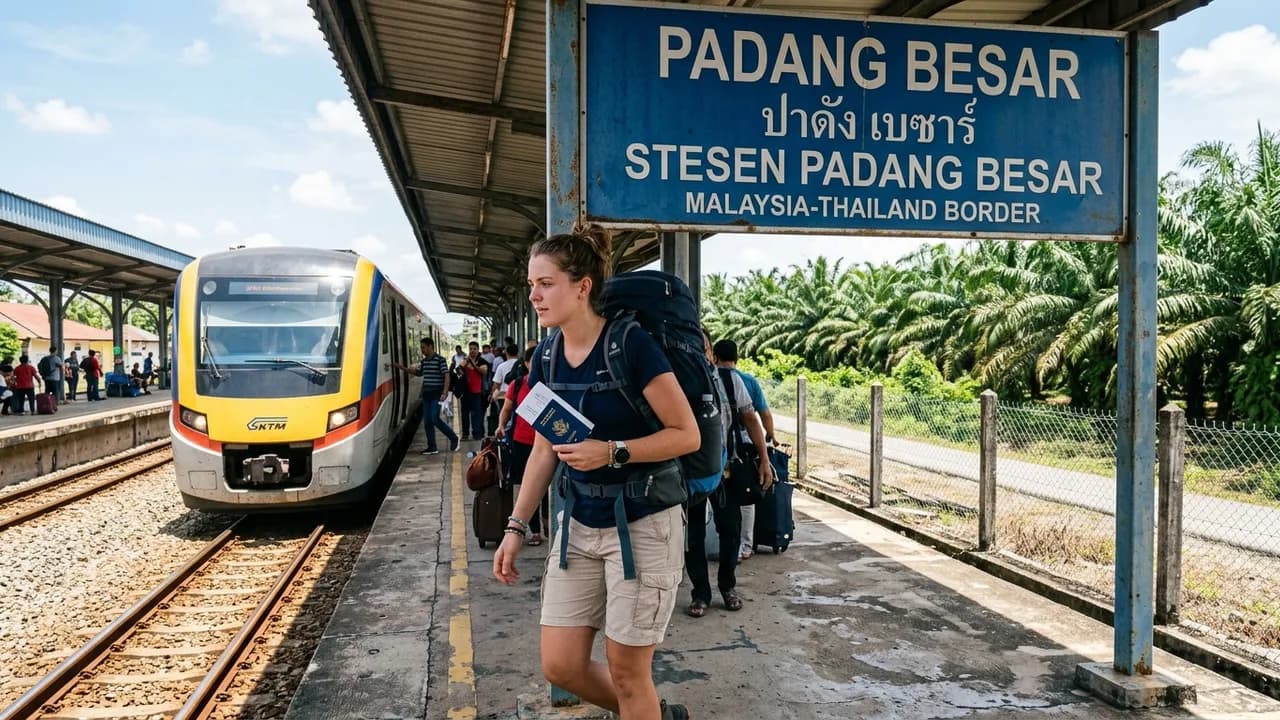
| Malaysia (Sadao) | Sadao/Dannok land crossing | Quick run from Southern Thailand | 4–8 hours | 500–2,000 THB |
| Malaysia (Penang) | Fly or bus from Bangkok/Hat Yai | Getting a new Thai visa at Penang consulate | 2–3 days | 3,000–10,000 THB |
| Myanmar (Mae Sai) | Mae Sai land crossing in Chiang Rai | Quick run from Northern Thailand | 2–4 hours | 500–1,500 THB |
| Kuala Lumpur (air) | Fly from any Thai airport | Comfortable air visa run | 2–3 days | 3,000–8,000 THB |
| Singapore (air) | Fly from any Thai airport | Premium air visa run | 2–3 days | 5,000–15,000 THB |
For detailed step-by-step guides to the most popular routes, see:
- Cambodia Visa Run: Poipet Border Guide
- Laos Visa Run: Vientiane & Nong Khai Guide
- Malaysia Visa Run: Sadao & Padang Besar Guide
- Myanmar Visa Run: Mae Sai Border Guide
Visa Run vs. Getting a Proper Visa
If you find yourself planning a third or fourth visa run within a year, it is time to seriously consider obtaining a proper visa. Here is a comparison:
| Approach | Stay Duration | Annual Cost | Hassle Level | Legal Security |
|---|---|---|---|---|
| Visa runs (3x/year) | Up to 270 days | 10,000–30,000 THB (travel costs) | High | Low (entry never guaranteed) |
| Tourist Visa (TR) + extension | 90 days per entry | 3,900 THB (visa + extension) | Medium | Medium |
| Education Visa (ED) | 1 year | 30,000–80,000 THB (school fees) | Medium | High |
| Destination Thailand Visa (DTV) | 180 days (extendable) | 10,000 THB | Low | High |
| Non-Immigrant B (Business) | 1 year | Varies (employer sponsored) | Low | Very High |
| Retirement Visa (Non-O) | 1 year | 1,900 THB (+ 800K deposit) | Low | Very High |
Frequently Asked Questions
Are visa runs legal?
Yes. There is nothing illegal about leaving Thailand and re-entering. What authorities frown upon is using the visa-exemption system as a substitute for a proper long-term visa when your real purpose is to live or work in Thailand.
How many visa runs can I do per year?
There is no official published limit for air entries. For land entries, the old two-per-year cap has been removed but officers can still deny entry at their discretion. Practically speaking, three to four per year by air is generally unproblematic.
Can I do a same-day visa run?
Yes, at land borders. You cross out of Thailand, enter the neighboring country (even briefly), and return to Thailand the same day. This is common at Poipet (Cambodia) and Mae Sai (Myanmar).
Do I need a visa for the transit country?
Depends on your nationality and the country. Many nationalities get visa-on-arrival or visa-exempt entry in Cambodia, Laos, Malaysia, and Myanmar. Research the entry requirements for the transit country based on your passport.
What if I get denied entry on a visa run?
You remain in the neighboring country. You can try again at a different border or on a different day, fly to Thailand (air entries have less scrutiny), or apply for a Thai visa at a nearby embassy or consulate.
Is the visa run industry still active?
Yes, but it has shrunk compared to its peak in the 2000s. Minivan services to border crossings still operate from major cities. Visa run agencies still exist, particularly in Bangkok, Pattaya, and Chiang Mai. However, the introduction of longer stay periods and new visa categories has reduced demand.
Summary
A visa run is the practice of exiting and re-entering Thailand to receive a fresh entry stamp, effectively extending your time in the country. While still a common and legal practice in 2026, the landscape has shifted toward longer official stay periods and more accessible visa options. Visa runs remain useful as a short-term solution, but anyone planning to spend significant time in Thailand should investigate proper visa categories that provide legal security without the uncertainty and hassle of repeated border crossings.