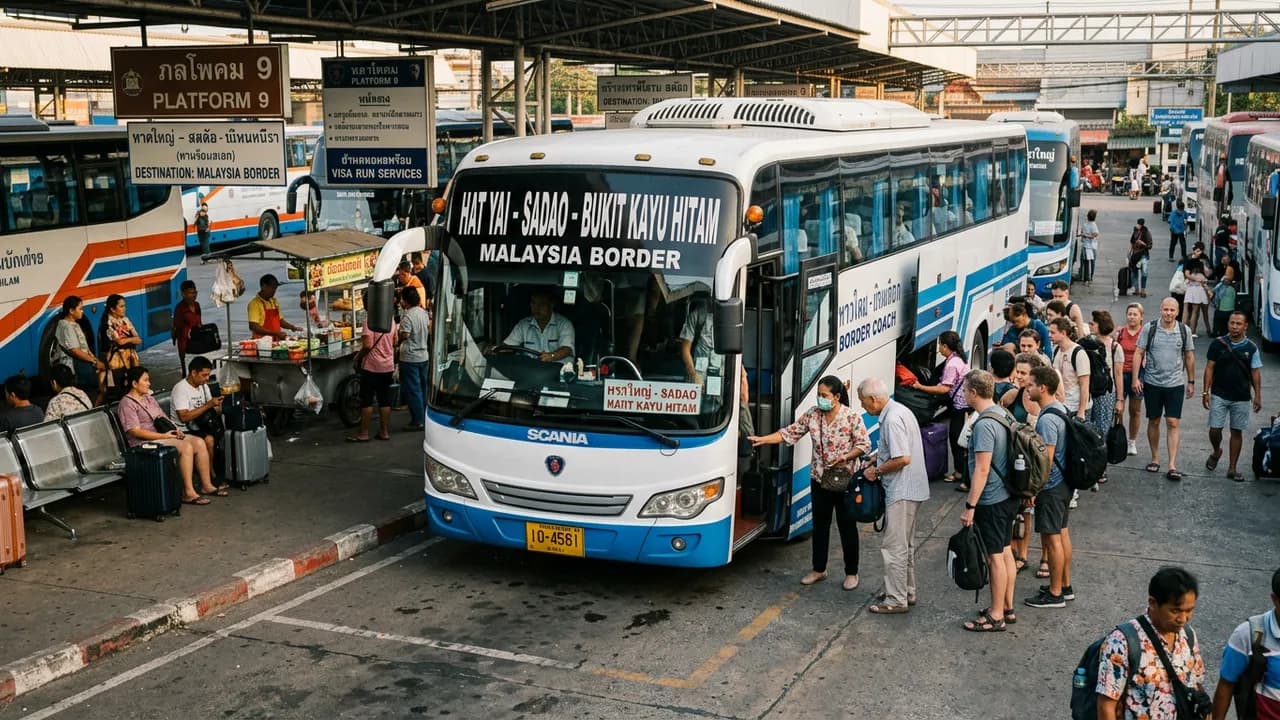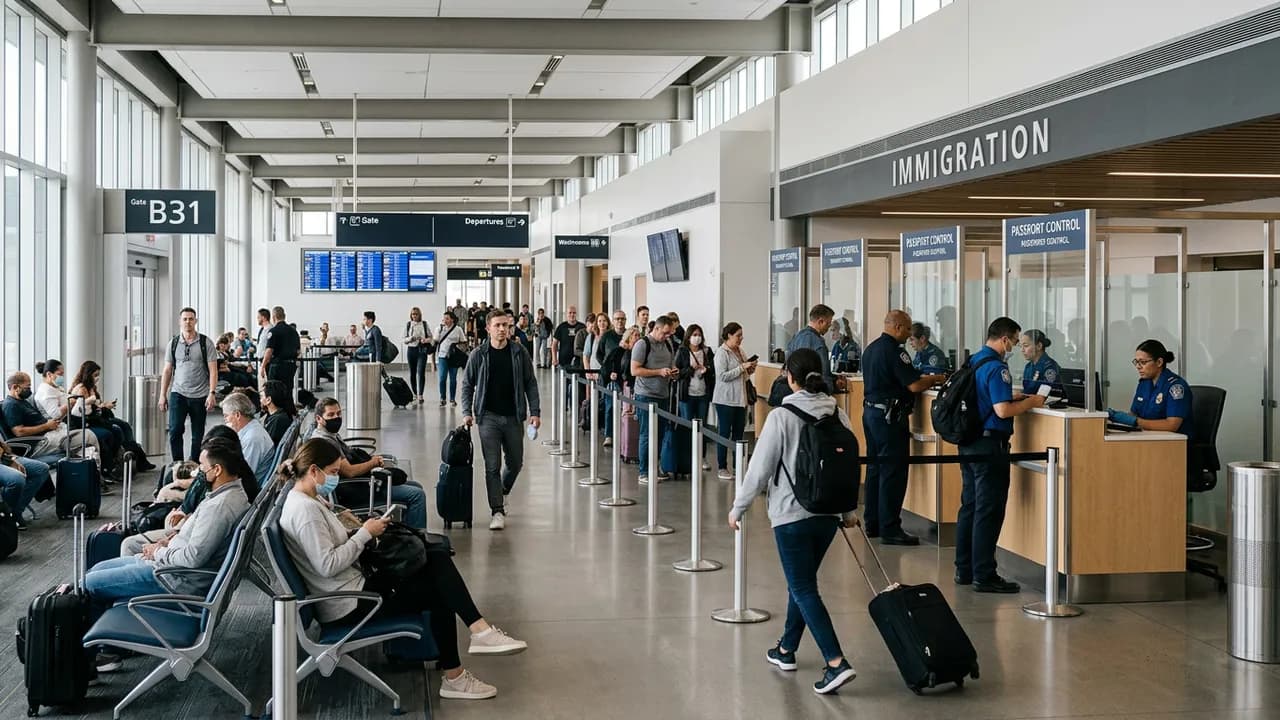
In a Thailand voluntary overstay situation, the single most important decision you will make is whether to turn yourself in voluntarily or risk being caught by authorities. The distinction between voluntary departure and being apprehended by authorities is not just a matter of principle — it directly determines the severity of your penalties, whether you are blacklisted, and how long any ban from re-entering Thailand will last. This guide explains the difference, breaks down the consequences, and walks you through the process of self-reporting. For the broader penalty context, see our Thailand overstay penalties overview.
Quick Facts: Voluntary vs. Caught Overstay
| Factor | Voluntary Departure | Caught by Authorities |
|---|---|---|
| Fine | 500 THB per day (max 20,000 THB) | 500 THB per day (max 20,000 THB) |
| Blacklist (under 90 days) | No ban | No ban |
| Blacklist (90 days – 1 year) | No ban | 1-year ban |
| Blacklist (1 – 3 years) | No ban | 3-year ban |
| Blacklist (3 – 5 years) | No ban | 5-year ban |
| Blacklist (over 5 years) | 1-year ban | 10-year ban |
| Detention | No | Possible |
| Criminal record in Thailand | No | Possible |
The table above shows why voluntary departure is always the better option. The penalties are dramatically less severe.
Understanding the Overstay Fine
The overstay fine applies equally whether you depart voluntarily or are caught:
- 500 THB per day of overstay
- Maximum cap of 20,000 THB (reached at 40 days of overstay)
This means that whether you overstay by 41 days or 400 days, the maximum fine remains 20,000 THB. The fine itself is not the primary concern — the blacklist is.
Fine Calculation Examples
| Days Overstayed | Fine Amount |
|---|---|
| 1 day | 500 THB |
| 5 days | 2,500 THB |
| 10 days | 5,000 THB |
| 20 days | 10,000 THB |
| 40 days | 20,000 THB (maximum) |
| 90 days | 20,000 THB (maximum) |
| 365 days | 20,000 THB (maximum) |
Voluntary Departure: What It Means
Voluntary departure means you present yourself to Thai immigration authorities on your own, admit that you have overstayed, pay the fine, and leave the country. This can happen in two ways:
-
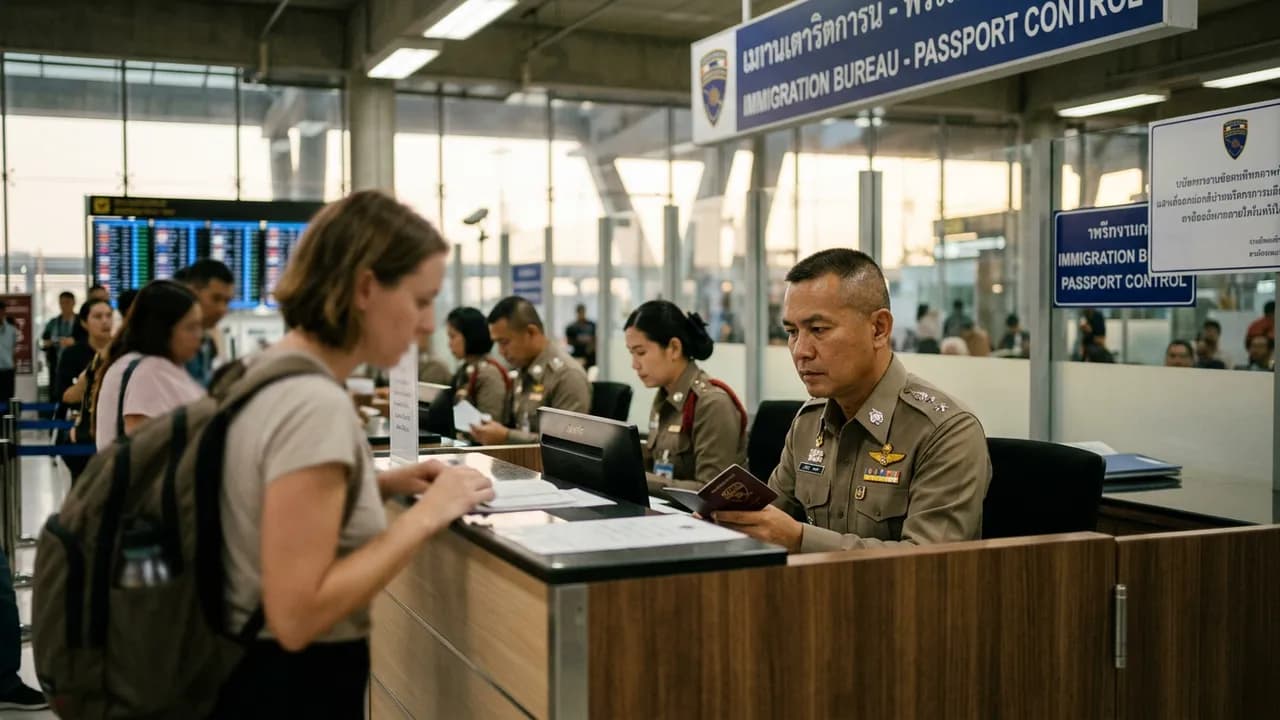
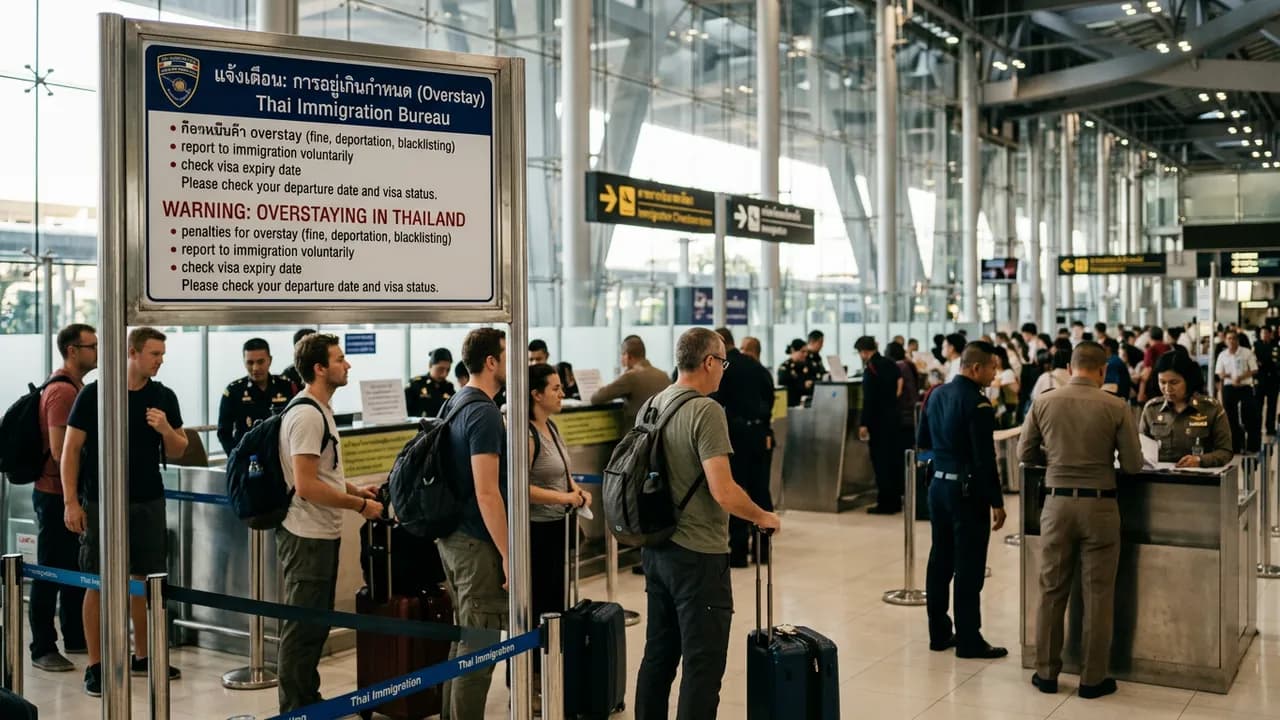
At the airport during departure — You show up at the airport to fly out of Thailand. At passport control, the immigration officer discovers your overstay, calculates the fine, and processes you. Because you came to the airport voluntarily to leave, this counts as voluntary departure.
-
At an immigration office — You go to a Thai Immigration office, report your overstay, pay the fine, and arrange to leave the country within a specified timeframe (usually 7 days).
In both scenarios, you are treated as someone who came forward willingly. This is the critical distinction.
Being Caught: What It Means
Being caught means immigration authorities or police discover your overstay during:
- A police checkpoint or ID check on the street
- A raid on your workplace or residence
- A routine traffic stop where your passport is requested
- A hospital visit where your passport details are reported
- An arrest for any other offense, during which your immigration status is checked
When you are caught, you are classified as an apprehended overstayer. The consequences are significantly worse.
The Blacklist: Voluntary vs. Caught
Thailand's immigration blacklist is the most consequential penalty for overstay. Understanding how it works for voluntary versus caught overstayers is critical.
Voluntary Departure Blacklist Thresholds
If you turn yourself in or depart voluntarily:
| Overstay Duration | Ban |
|---|---|
| Less than 90 days | No ban |
| 90 days to less than 1 year | No ban |
| 1 year to less than 3 years | No ban |
| 3 years to less than 5 years | No ban |
| 5 years or more | 1-year ban |
This is a significant advantage. You can overstay for up to 5 years, pay the 20,000 THB fine, depart voluntarily, and face no re-entry ban whatsoever. Only overstays exceeding 5 years trigger a 1-year ban for voluntary departures.
Caught by Authorities Blacklist Thresholds
If you are caught or apprehended:
| Overstay Duration | Ban |
|---|---|
| Less than 90 days | No ban |
| 90 days to less than 1 year | 1-year ban |
| 1 year to less than 3 years | 3-year ban |
| 3 years to less than 5 years | 5-year ban |
| 5 years or more | 10-year ban |
The difference is stark. A person caught after 1 year of overstay faces a 3-year ban, while someone who voluntarily departs after the same period faces no ban at all.
How to Self-Report Your Overstay
If you are currently overstaying and want to resolve the situation, here is the recommended process:
Step 1: Gather Your Documents
Prepare the following:
- Your passport (even if expired)
- Your departure card (TM.6) if you still have it
- Cash to pay the fine — up to 20,000 THB depending on the duration of your overstay
- A confirmed flight or bus ticket out of Thailand (not always required, but strongly recommended)
- Proof of accommodation showing where you have been staying
Step 2: Choose Your Approach
You have two options:
Option A: Go directly to the airport and depart. This is the simplest approach if your overstay is under 90 days. Show up at the airport with a confirmed outbound flight. At passport control, the officer will identify your overstay, calculate the fine, and collect payment. You will be stamped out and allowed to board your flight. No detention, no arrest.
Option B: Visit an immigration office first. If your overstay is longer (especially over 90 days) or if you want to handle the situation before traveling to the airport, visit the nearest immigration office — such as the Bangkok Immigration office at Chaeng Wattana. Explain that you are aware of your overstay and wish to depart voluntarily. The officer will:
- Calculate your fine
- Collect payment
- Stamp your passport with an overstay notation
- Give you a deadline (typically 7 days) to leave Thailand
- In some cases, issue a temporary document allowing you to travel to the airport
Step 3: Pay the Fine
Payment must be in Thai Baht, cash only. Some immigration offices near tourist areas may have ATMs nearby. Bring exact or near-exact amounts to avoid delays.
If you cannot afford the full fine amount, contact your embassy for assistance. In rare cases, immigration may allow installment payment or work out alternative arrangements, but this is not standard.
Step 4: Depart Thailand
Leave the country within the timeframe given by immigration. Keep your boarding pass and any receipts from immigration as proof of voluntary departure. These can be valuable if there are any questions about your status when applying for future Thai visas.
What to Expect at the Airport
If you are departing with an overstay via the airport:
- Check-in normally at your airline counter. Airlines generally do not check your visa status.
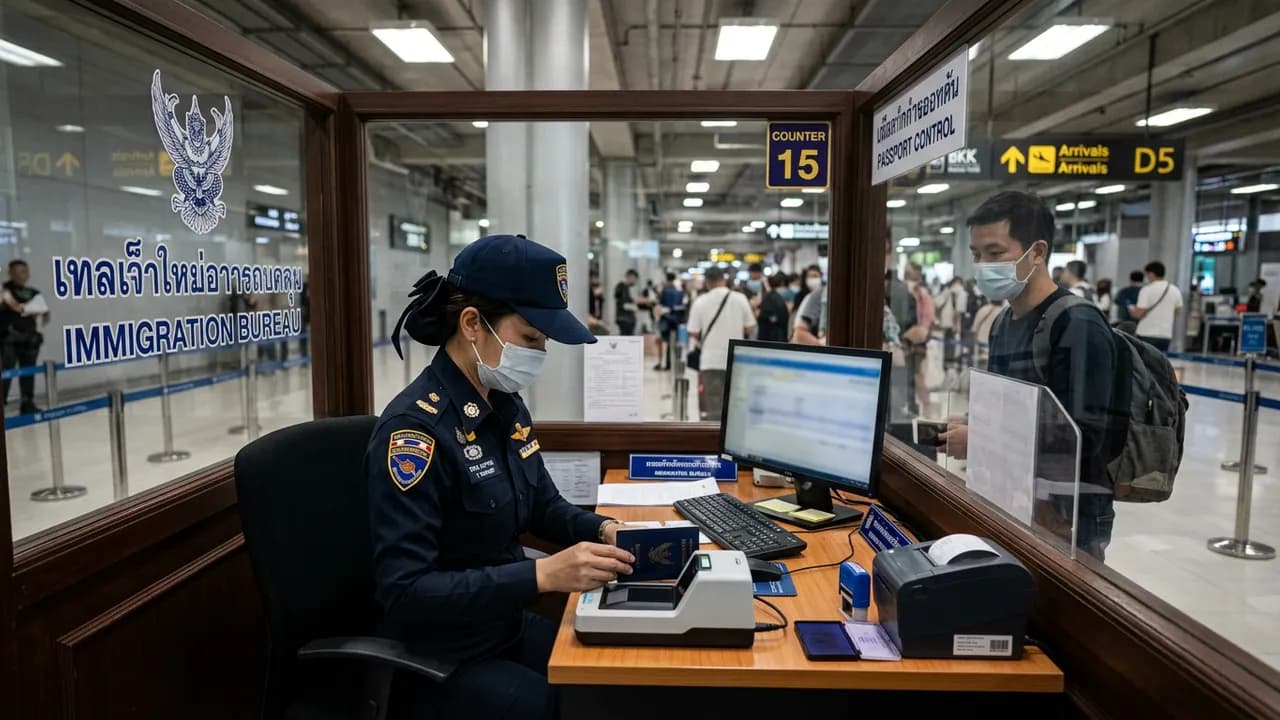
- Proceed to passport control. This is where your overstay will be identified.
- The immigration officer will calculate your fine and ask you to pay.
- You may be taken to a separate counter or office to process the overstay paperwork. This can take 15–45 minutes.
- You will receive an overstay stamp in your passport.
- You will be allowed to proceed to your gate and board your flight.
- Allow extra time — at least 3 hours before your flight — to account for the overstay processing at passport control.
Important: Do Not Overstay Extremely Long and Try the Airport
While voluntary airport departure works smoothly for overstays under a year, extremely long overstays (multiple years) may trigger additional scrutiny even at the airport. Officers may need to consult with supervisors, and the process can take longer. In these cases, visiting an immigration office first is the safer approach.
Recommended Steps If You Are Currently Overstaying
If you realize you have overstayed, take these steps:
-
Do not panic. Overstay is treated as an administrative violation, not a criminal offense (unless you are caught and it becomes part of a broader enforcement action).
-
Calculate your fine. Count the days since your permitted stay expired. Multiply by 500 THB, capped at 20,000 THB.
-
Book an outbound flight or transport. Having a confirmed departure booking demonstrates your intention to leave voluntarily.
-
Prepare your cash. Have the fine amount ready in Thai Baht.
-
Go to the airport or immigration office. Do not delay further — every day increases your fine (up to the cap) and adds risk of being caught.
-
Be honest and polite. Immigration officers deal with overstay cases routinely. Approaching the situation calmly and honestly produces the best outcome.
-
Keep all documentation. Save receipts, stamped passport pages, and any paperwork from immigration. You will need these for future visa applications.
Situations That Complicate Voluntary Departure
Expired Passport
If your passport has expired during your overstay, contact your home country's embassy or consulate in Thailand first. They can issue an emergency travel document or renew your passport. Immigration will accept an emergency travel document for departure processing.
No Money for the Fine
Contact your embassy. Some embassies offer emergency loans or can connect you with assistance programs. In extremely rare cases, immigration may allow you to leave with an IOU-type arrangement, but this is entirely at their discretion and not something to rely on.
Outstanding Legal Issues
If you have pending criminal charges or court cases in Thailand, you cannot simply depart. You must resolve legal matters through the court system first. Consult a Thai lawyer immediately.
Medical Emergencies
If you overstayed due to a medical emergency (hospitalization, serious illness), bring documentation from the hospital. Immigration officers have discretion to consider medical circumstances, though the fine itself is not waived. Medical documentation can help avoid any blacklist if the overstay was long.
After Voluntary Departure: Can You Return?
If you departed voluntarily with an overstay under 5 years, there is no automatic ban on re-entry. However:
- Your passport will contain an overstay stamp, which future visa officers will see.
- When applying for a new Thai visa at an embassy abroad, you may be asked to explain the overstay.
- Some embassies may require a letter of explanation or additional documentation.
- Repeat overstayers face increasing scrutiny and may be denied future visas even without a formal blacklist ban.
A single short overstay followed by voluntary departure typically does not prevent you from obtaining a new Thai visa, but it is noted in the system permanently.
Frequently Asked Questions
Does the overstay fine apply on weekends and holidays?
Yes. The fine is calculated per calendar day, including weekends, public holidays, and days when immigration offices are closed. If your visa expires on a Friday and you cannot get to immigration until Monday, you owe for Saturday and Sunday as well.
Can I pay the fine and stay in Thailand?
No. Paying the fine does not grant you permission to remain. You must leave the country. If you want to stay legally, you need to exit and re-enter with a valid visa or apply for a visa extension before your stay expires next time.
Will the overstay show up when I apply for visas to other countries?
Thailand does not routinely share overstay data with other countries' visa systems. However, if you are asked on a visa application whether you have ever overstayed in any country, you are expected to answer honestly.
What if I overstay by just one day?
A one-day overstay carries a 500 THB fine. If you depart voluntarily, there is no blacklist consequence. However, the overstay is still recorded in the immigration system and stamped in your passport.
Can I avoid the overstay stamp in my passport?
No. The overstay stamp is mandatory and will be placed in your passport upon departure. It cannot be removed or covered.
Is there any amnesty for overstayers?
Thailand has occasionally declared overstay amnesties during extraordinary circumstances (such as during the COVID-19 pandemic in 2020–2021). These are rare and unpredictable. Do not plan around the possibility of an amnesty.
Summary
If you find yourself overstaying in Thailand, voluntary departure is always the right choice. The penalties for self-reporting are dramatically less severe than for being caught — most notably, voluntary departure carries no re-entry ban for overstays under 5 years, while being apprehended can result in bans lasting up to 10 years. Gather your documents, calculate your fine, book your departure, and present yourself at the airport or immigration office. Handle the situation proactively, and you preserve your ability to return to Thailand in the future.