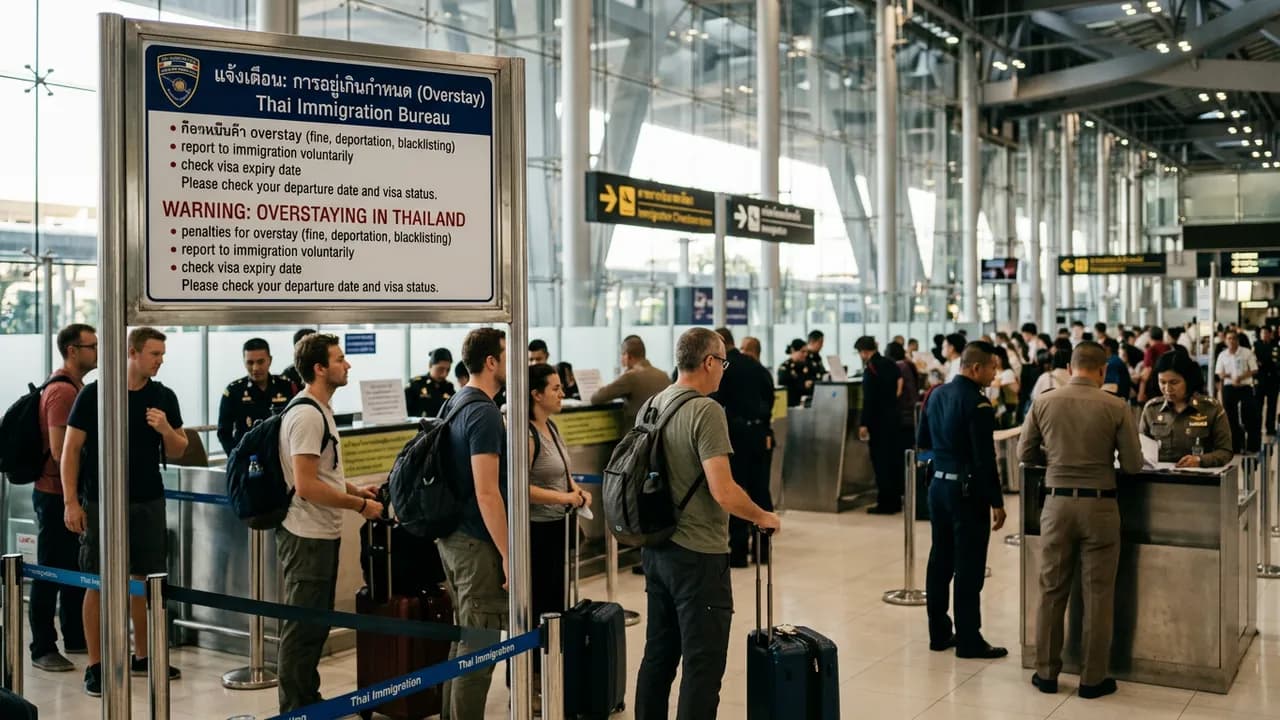
If you have just realized you are overstaying in Thailand, do not panic — but do act quickly. The steps you take now directly impact the consequences you will face. The difference between surrendering voluntarily and being caught can mean the difference between a small fine and a multi-year ban from Thailand. For the broader penalty context, see our Thailand overstay penalties overview.
This guide provides clear, step-by-step advice for anyone currently in overstay, regardless of how long.
First: Assess Your Situation
Before taking any action, determine two critical facts:
1. How Many Days Have You Overstayed?
Check your passport stamp. Count the days from the day after your permitted stay expired to today.
| Overstay Duration | Urgency Level | Likely Outcome (Voluntary Surrender) |
|---|---|---|
| 1-7 days | Low | Fine only (500 THB/day), no ban |
| 8-40 days | Moderate | Fine up to 20,000 THB, no ban |
| 41-89 days | Elevated | 20,000 THB fine, no ban |
| 90 days - 1 year | High | 20,000 THB fine + 1-year ban |
| Over 1 year | Critical | 20,000 THB fine + 3-10 year ban |
2. Do You Have Enough Money to Leave?
You will need:
- Overstay fine: up to 20,000 THB (cash)
- Flight or transport out of Thailand
- Enough money to support yourself in your destination country
If you are unable to fund your departure, contact your embassy immediately (see Step 3 below).
Step-by-Step: What to Do Right Now
Step 1: Stop and Think Before You Act
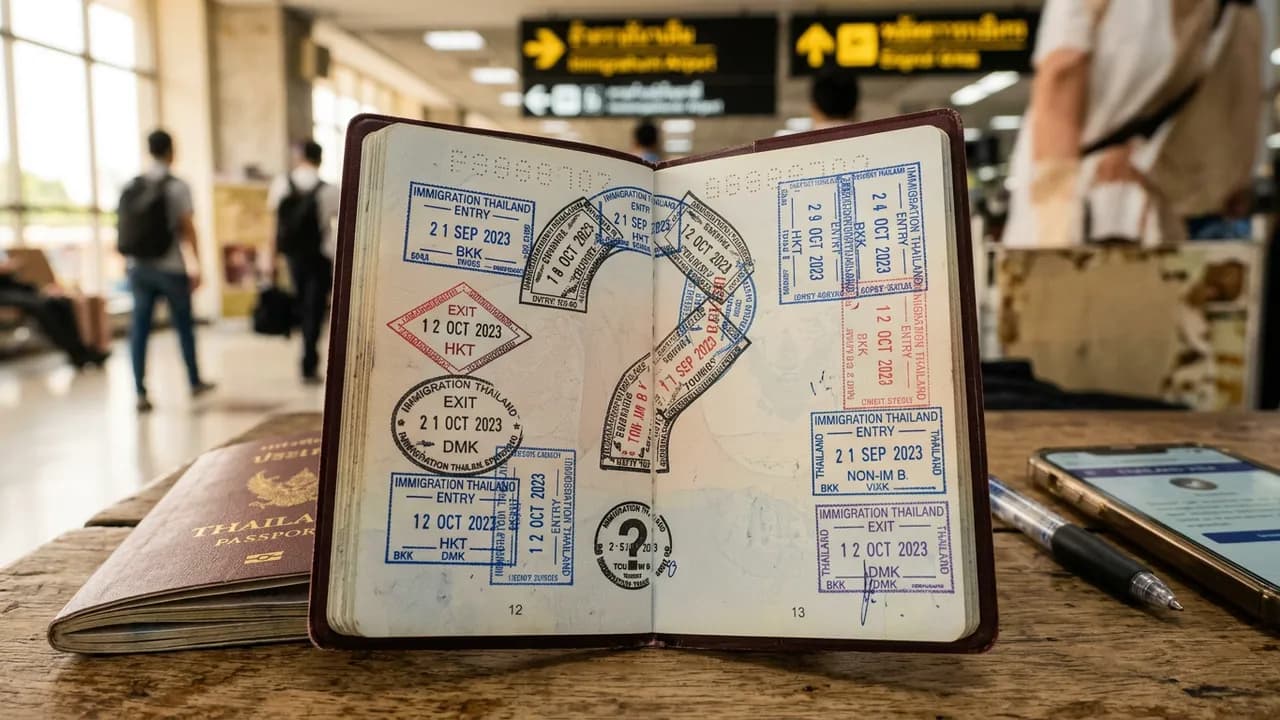
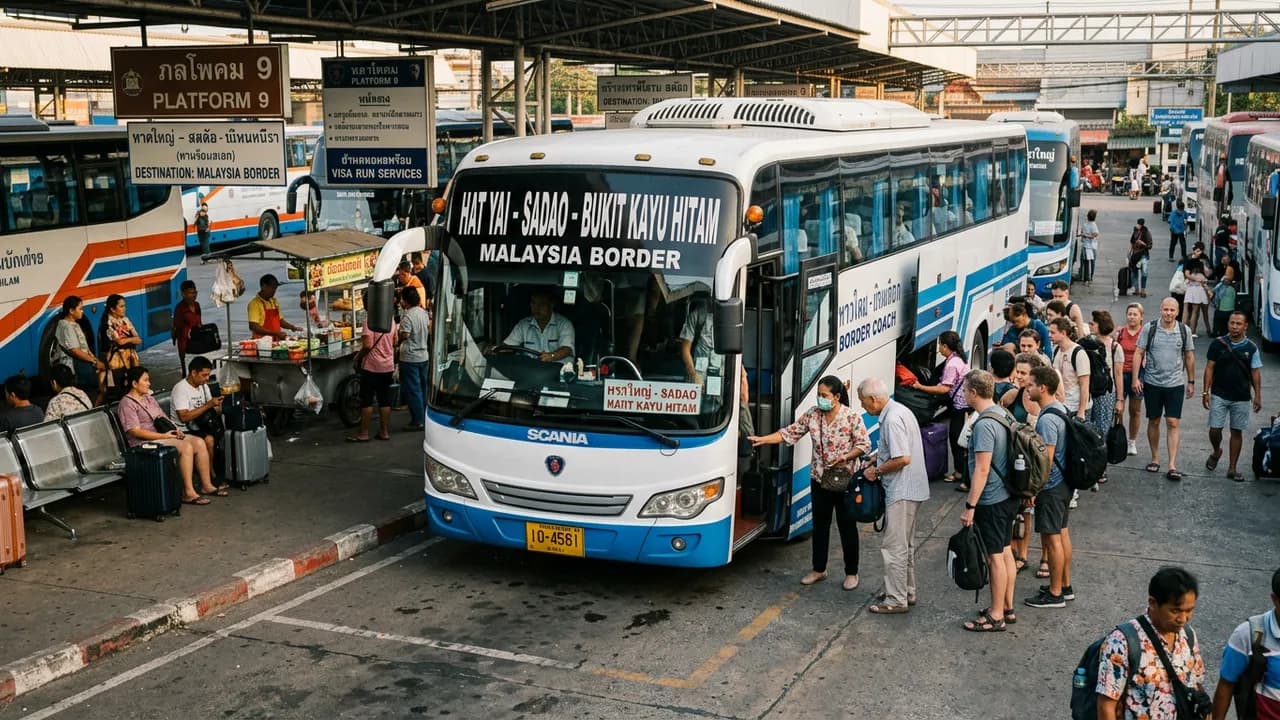
Do not go to a random police station. Do not attempt to cross a land border without preparation. And do not try to hide or avoid the situation — it will only get worse.
Your priority is to leave Thailand voluntarily in the most controlled way possible.
Step 2: Decide Your Departure Method
You have two options for leaving Thailand:
Option A: Depart at an International Airport
This is the most straightforward method for most overstayers.
- Go directly to the airport with your passport, cash for the fine, and your flight ticket
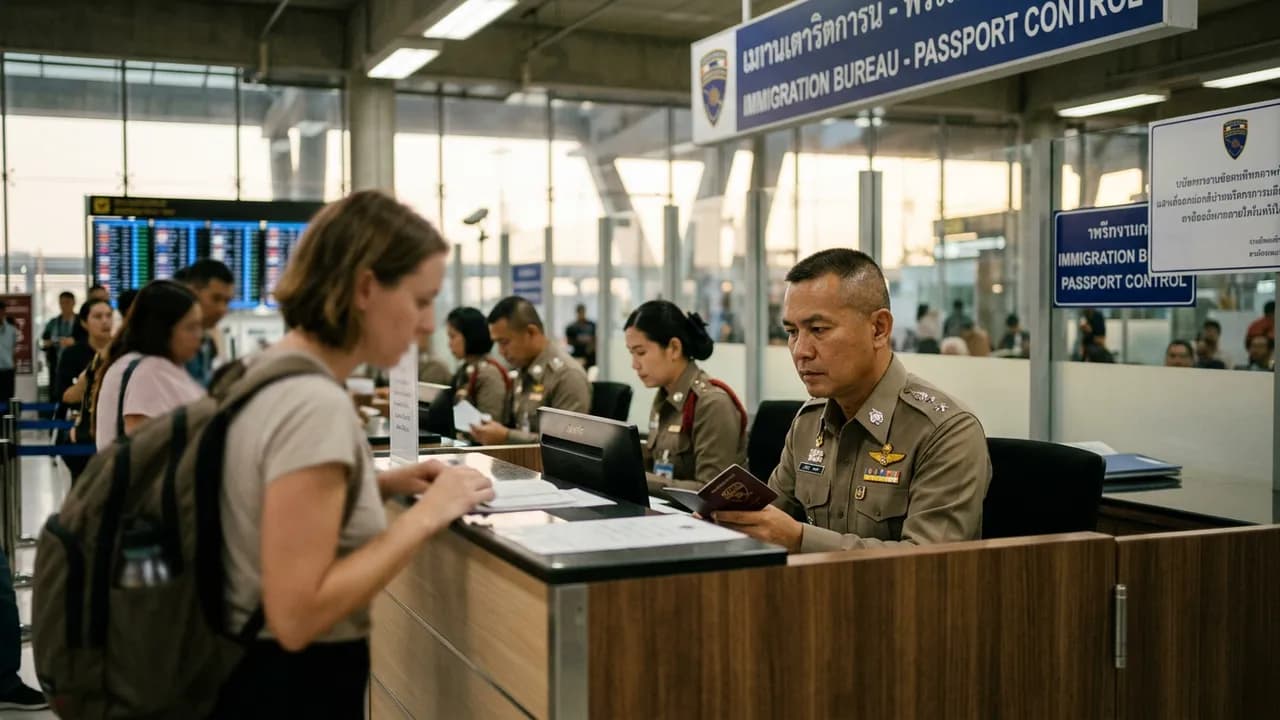
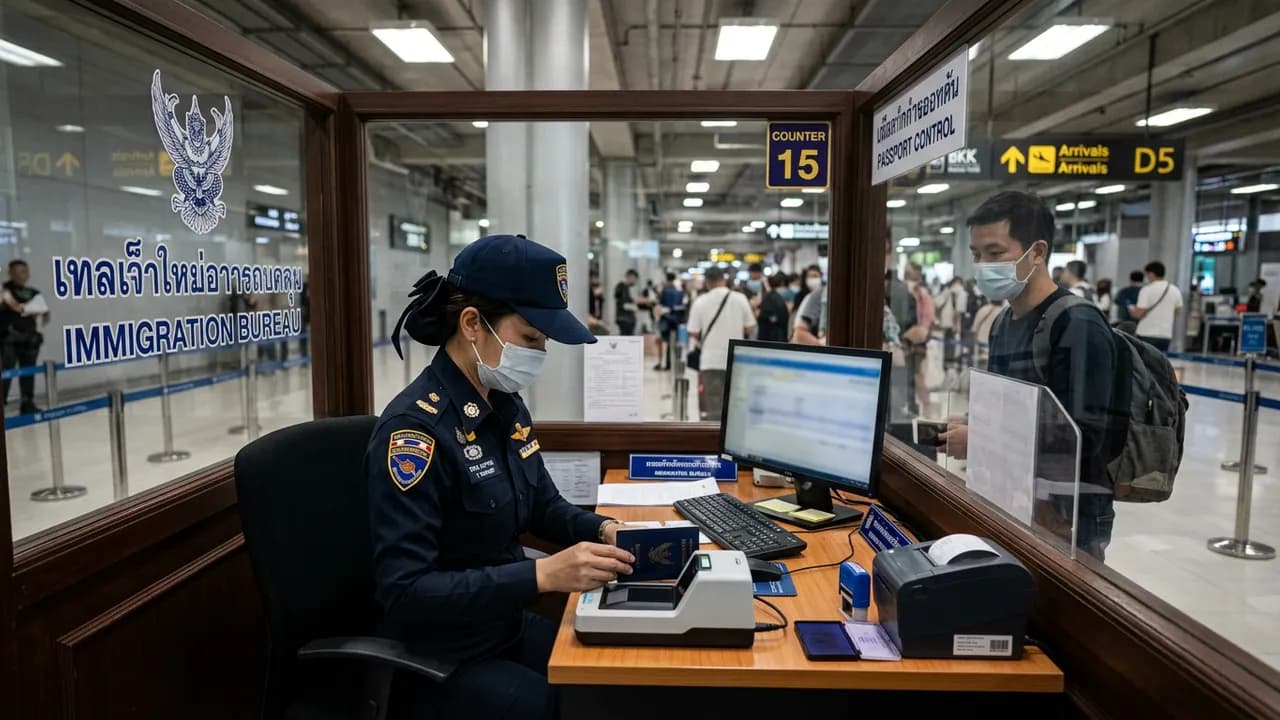
- At the immigration departure counter, present your passport
- The officer will calculate your overstay and assess the fine
- Pay the fine in cash (THB is preferred; some airports accept other currencies)
- You will be stamped out and may receive an overstay notation in your passport
- If your overstay is under 90 days, you will typically be processed and allowed to board your flight
Important: For overstays of 90+ days, the airport process may take longer. In some cases, you may be escorted to a separate room for processing. Have your flight details ready and arrive extra early (at least 4-5 hours before departure).
Option B: Visit an Immigration Office First
For longer overstays or if you want to resolve the situation before your departure date:
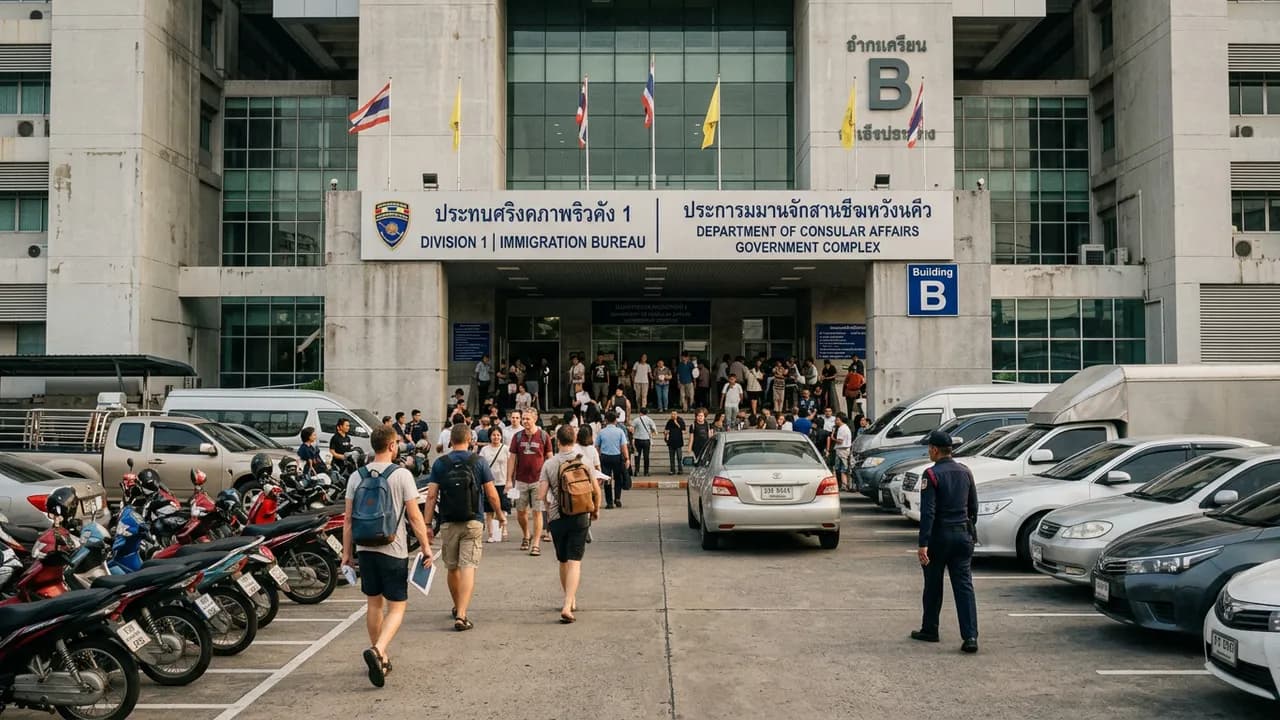
- Visit the nearest immigration office during business hours — for example, the Bangkok Immigration Bureau at Chaeng Wattana
- Bring your passport, cash, and a confirmed departure ticket
- Explain that you wish to voluntarily surrender and depart Thailand
- The office will process your overstay fine and may set a deadline for your departure
- In some cases, they may issue a short-term "order to leave" giving you a few days to arrange travel
Step 3: Contact Your Embassy (If Needed)
Contact your country's embassy or consulate in Thailand if:
- You cannot afford the fine or a flight home
- Your passport is lost, stolen, or expired
- You have been detained or arrested
- You need emergency consular assistance
What embassies can do:
- Issue emergency travel documents if your passport is lost or expired
- Provide a list of local lawyers
- Contact family on your behalf
- Visit you if you are in detention
- Provide general advice and guidance
What embassies generally cannot do:
- Pay your fines for you
- Get you out of detention
- Override Thai immigration decisions
- Provide legal representation
Step 4: Consider Legal Help (For Long Overstays)
If your overstay exceeds 90 days, consulting an immigration lawyer before surrendering can be valuable. A lawyer can:
- Assess your specific situation and advise on the best course of action
- Accompany you to immigration to advocate on your behalf
- Help with paperwork and communication (especially if you do not speak Thai)
- Advise on minimizing ban duration
- Assist with detention situations
Cost: Immigration lawyers in Thailand typically charge 10,000-50,000 THB for overstay assistance, depending on complexity.
Finding a lawyer:
- Ask your embassy for their list of recommended lawyers
- Contact the Lawyers Council of Thailand
- Search for immigration law firms in Bangkok (many have English-speaking staff)
Step 5: Prepare Your Documents
Before going to the airport or immigration office, prepare:
- Passport (even if expired — bring it)
- Cash for the fine (up to 20,000 THB, bring extra to be safe)
- Flight ticket or proof of onward travel
- Photocopies of your passport biographical page, visa page, and entry stamp
- Accommodation address in your destination country
- Embassy contact details (in case of complications)
Step 6: At the Immigration Counter
When you present yourself:
- Be calm and polite — Immigration officers deal with overstayers regularly. Courtesy goes a long way.
- Be honest — Do not lie about your circumstances. The dates are clearly recorded in your passport and their system.
- Do not argue about the fine — It is fixed by law. There is no negotiation.
- Ask questions if uncertain — If you do not understand a question or instruction, ask for clarification.
- Request a receipt — After paying the fine, get a receipt for your records.
Specific Situations
You Overstayed by a Few Days (Accident)
This is the most common scenario — you miscounted days, missed a flight, or had a medical emergency.
What to do: Simply go to the airport and leave. Pay the fine at the departure counter. No ban, no drama. Arrive a bit early to allow time for processing.
Tip: If your overstay was caused by a genuine medical emergency, bring hospital documentation. While it does not eliminate the fine, it may be noted favorably by the officer.
You Lost Your Passport While on Overstay
This creates a compound problem. You need both a new travel document and to resolve the overstay.
Steps:
- Report the loss to local police and get a police report
- Contact your embassy to request an emergency travel document
- Visit immigration with the police report and emergency document
- Resolve the overstay and arrange departure
This process can take several days to a week. Your embassy is your primary ally here.
You Cannot Afford to Leave
If you are genuinely destitute:
- Contact your embassy immediately — most embassies have provisions for distressed nationals
- Some embassies offer repatriation loans (repayable later)
- Contact family or friends who may be able to transfer funds
- Do not simply continue overstaying — the situation only worsens with time
You Have Been Arrested or Detained
If police have already caught you:
- Remain calm and cooperate
- Request to contact your embassy — this is your legal right
- Do not sign anything you do not understand
- Ask for an interpreter if you do not speak Thai
- You may be transferred to the Immigration Detention Center (IDC) for processing
At the IDC:
- You will be held until departure arrangements are finalized
- Your embassy will be notified
- You or your embassy will need to arrange and fund your departure flight
- Detention can last from a few days to several weeks depending on circumstances
- Conditions are basic — bring personal hygiene items if possible
You Have a Thai Family
If you have a Thai spouse or children:
- This does not exempt you from overstay penalties
- However, it may be relevant when consulting a lawyer about your options
- If you are eligible for a marriage visa (Non-Immigrant O), a lawyer may be able to help you transition after resolving the overstay
- Your family circumstances may be considered as a mitigating factor in some situations
After Leaving Thailand
If You Received No Entry Ban
- You can return to Thailand immediately
- Your overstay will be on record but does not prevent re-entry
- Future immigration officers may ask about the previous overstay, especially if it is noted in your passport
- Carry documentation of the resolved overstay (receipt) for future reference
If You Received an Entry Ban
- The ban starts from the date you departed Thailand
- You cannot enter Thailand during the ban period
- The ban is linked to your identity (passport number, biometrics), not just your passport
- After the ban expires, you can apply to enter Thailand normally
- Consider obtaining a visa from a Thai embassy before your first return to ensure no issues
Cleaning Up Your Record
There is no formal process to "clean" an overstay record from the Thai immigration system. However:
- After your ban expires (if any), you are eligible to enter Thailand again
- A previous resolved overstay does not permanently prevent future long-term visas, though it may be questioned during applications
- For future visa applications, be transparent about your history if asked
How to Prevent Overstay in the Future
- Set phone alarms at 30, 14, and 7 days before your permitted stay expires
- Photograph every passport stamp immediately after receiving it
- Use a visa tracking app or calendar to monitor your status
- Apply for extensions well in advance — at least 2-3 weeks before expiry
- Understand re-entry permits — leaving Thailand without one can void your extension
- Verify Buddhist calendar dates — Thai dates may use BE (Buddhist Era), which is 543 years ahead of the Western calendar
- Have a contingency fund — keep enough money set aside to change flights or pay for an extension if plans change
Key Takeaways
| Principle | Why It Matters |
|---|---|
| Act fast | Every day in overstay increases the fine and potentially the ban |
| Surrender voluntarily | Dramatically reduces penalties compared to being caught |
| Under 90 days = no ban | If you leave voluntarily within 89 days of overstay, there is no entry ban |
| Cash is king | Have THB cash ready for the fine — credit cards may not be accepted |
| Embassy is your ally | They cannot fix everything, but they can provide critical support |
| Lawyer up for long overstays | Professional advice pays for itself when years-long bans are at stake |
Final Thoughts
If you are reading this because you are currently overstaying in Thailand, the most important thing you can do is act now. Every day you wait adds to the fine and potentially pushes you into a longer ban tier. If your overstay is under 90 days, leave voluntarily and you will face nothing more than a manageable fine. If it is longer, get legal advice before making your move.
Thailand's immigration system is strict but predictable. Knowing the rules and acting on them promptly gives you the best possible outcome.