This Thailand visa FAQ answers the questions that come up constantly, whether you are planning your first trip to Thailand or navigating a long-term stay. This FAQ covers the 20 most frequently asked questions about Thai visas, entry requirements, extensions, and immigration rules in 2026.
Do I need a visa to visit Thailand?
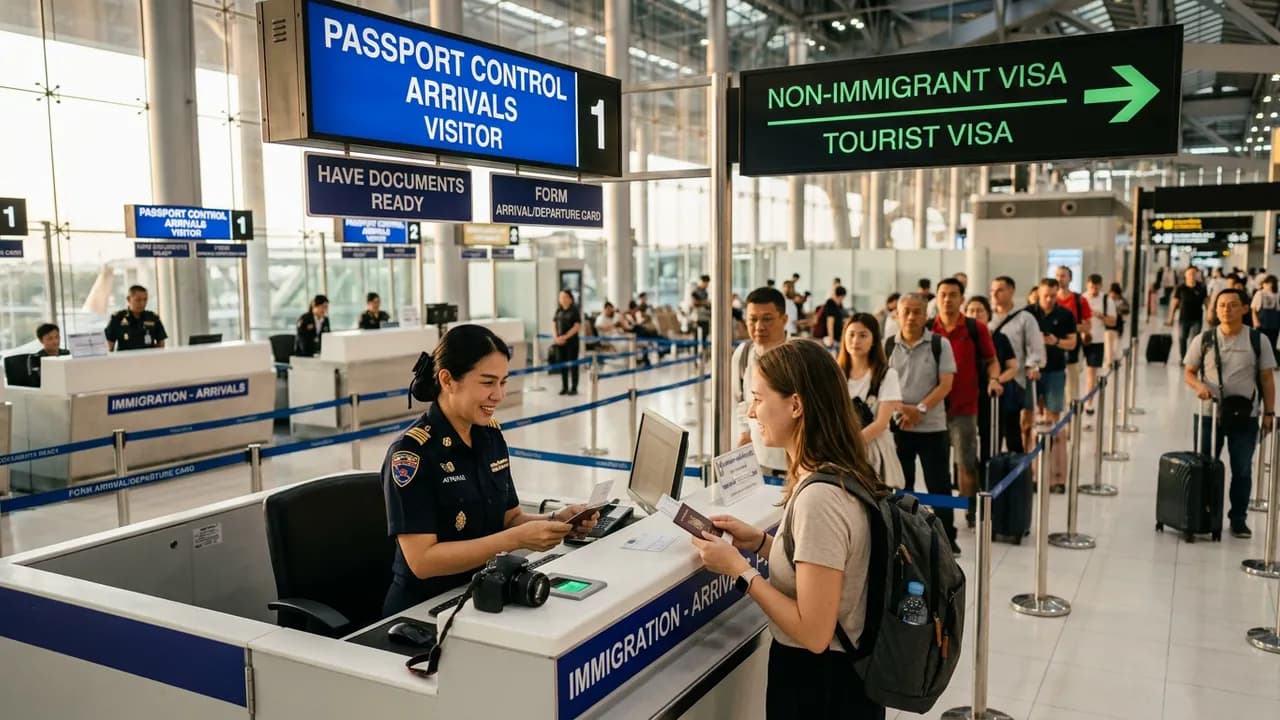
Most likely no, at least not for a short visit. Thailand offers visa exemptions to nationals of over 90 countries, allowing entry for up to 60 days without any advance visa application. Citizens of the US, UK, EU, Australia, Canada, Japan, and many other countries simply arrive at a Thai airport, present their passport, and receive a 60-day entry stamp.
You only need a visa if:
- Your country is not on the visa exemption list
- You plan to stay longer than 60 days (plus the 30-day extension)
- You need a specific visa type for work, study, or retirement
Check the Thai Ministry of Foreign Affairs website for the full list of visa-exempt countries.
How long can I stay in Thailand without a visa?
If your country qualifies for a visa exemption, you receive a 60-day entry stamp upon arrival. You can then extend this by 30 days at any Thai immigration office for a fee of 1,900 THB, giving you a maximum stay of 90 days without a pre-arranged visa.
Can I extend my stay in Thailand?
Yes. Almost every visa type and entry stamp can be extended at a Thai immigration office:
| Entry Type | Initial Stay | Extension | Total |
|---|---|---|---|
| Visa exemption | 60 days | +30 days (1,900 THB) | 90 days |
| Tourist visa (TR) | 60 days | +30 days (1,900 THB) | 90 days |
| Non-Immigrant O (retirement) | 90 days | +1 year (1,900 THB) | Renewable annually |
| Non-Immigrant B (work) | 90 days | +1 year (1,900 THB) | Renewable annually |
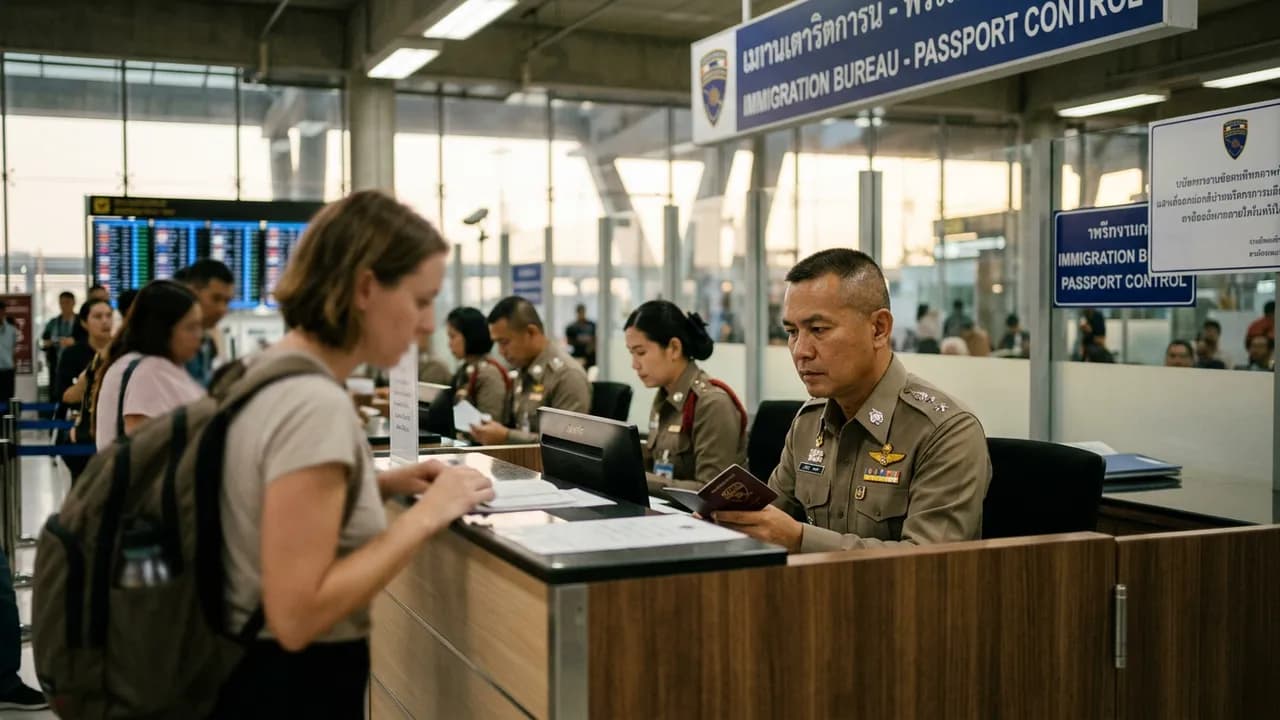
Extensions are applied for at Thai immigration offices, not at embassies. Apply before your current stay expires. For the full step-by-step process across every visa type, see extending your visa in Thailand.
What happens if I overstay my visa in Thailand?
Overstaying is penalized with a fine of 500 THB per day, up to a maximum of 20,000 THB. Beyond the fine, longer overstays carry entry bans:
- Under 90 days (voluntary departure): No ban
- 90 days to 1 year (voluntary): 1-year ban
- Caught by police (under 1 year): 5-year ban
- Caught by police (over 1 year): 10-year ban
Always track your permitted stay date and leave before it expires. See our detailed overstay penalties guide.
Do I need a return ticket to enter Thailand?
Technically, yes. Thai immigration can ask for proof of onward travel, and airlines may deny boarding without a return or onward ticket. In practice, this is not always checked at the airport immigration counter, but it is frequently checked by airlines at departure.
Recommendation: Always have a return or onward flight booked, even a refundable one.
How much money do I need to show at the Thai border?
The official requirements are:
- Visa exemption: 10,000 THB per person / 20,000 THB per family
- Tourist visa: 20,000 THB per person / 40,000 THB per family
Cash checks are random and infrequent at airports but more common at land borders. Carry the minimum amount in cash to be safe.
Can I do visa runs to reset my stay?
Technically, each time you exit and re-enter Thailand, you receive a fresh entry stamp. However, frequent visa runs are increasingly scrutinized. Immigration officers can deny entry if they suspect you are using the visa exemption to live in Thailand long-term without an appropriate visa.
Signs that may trigger denial:
- Multiple consecutive entries with short stays outside Thailand
- Spending most of the year in Thailand on back-to-back exemptions
- No proof of employment or ties to your home country
If you plan to stay long-term, apply for an appropriate visa instead of relying on visa runs.
What is the difference between a visa and a visa exemption?
A visa is a permit applied for at a Thai embassy or consulate before travel. It is a sticker placed in your passport.
A visa exemption means you do not need a visa. You receive an entry stamp directly at the port of entry without any advance application.
Both grant you legal permission to stay in Thailand for a defined period. The practical difference is that a visa requires advance application and a fee, while a visa exemption requires neither.
Can I change my visa type while in Thailand?
In most cases, no. Changing visa types within Thailand is very limited. Generally, you need to leave Thailand and apply for the new visa type at a Thai embassy abroad.
Exceptions:
- Some immigration offices allow conversion from a tourist visa to a Non-Immigrant visa in specific circumstances
- The LTR visa can sometimes be applied for from within Thailand through the BOI
- Certain emergency situations may allow special consideration
The standard practice is to exit to a nearby country (Laos, Malaysia, Cambodia, Myanmar) and apply at the Thai embassy there. See our guide on changing visa type in Thailand for more details.
What is the cheapest long-term visa for Thailand?
For stays of 1 year or more, here is how the costs compare:
| Visa Type | Annual Cost (approx.) | Requirements |
|---|---|---|
| Non-Immigrant O (retirement) | ~19,000 THB/year + 800,000 THB in bank | Age 50+, financial proof |
| Non-Immigrant O (marriage) | ~19,000 THB/year + 400,000 THB in bank | Married to Thai national |
| LTR Visa | ~10,000 THB/year | USD 80,000+ annual income |
| Thailand Elite | ~100,000-120,000 THB/year | Membership fee only |
The retirement and marriage visas are the cheapest in terms of direct costs, but they require maintaining significant funds in a Thai bank account.
Do I need a work permit to work in Thailand?
Yes. Working in Thailand without a work permit is illegal, regardless of your visa type. This includes:
- Employment by a Thai company
- Self-employment or freelancing for Thai clients
- Teaching, even volunteer teaching (in most cases)
- Any activity that generates income within Thailand
Penalties for working without a permit include a fine of 5,000-50,000 THB, deportation, and a 2-year ban on being granted a new work permit (imprisonment for the worker was removed by the 2018 amendment to the Royal Ordinance on Foreign Workers B.E. 2560).
See our deep dive on working on a tourist visa.
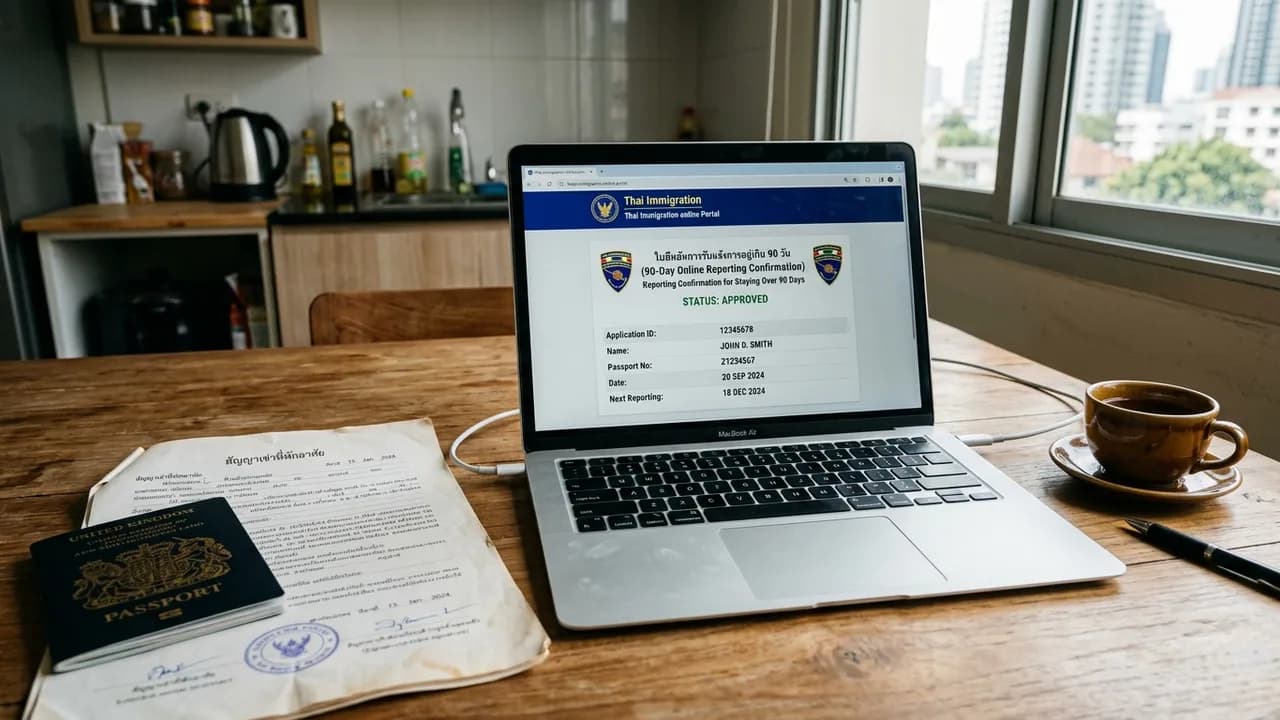
What is 90-day reporting?
Every foreigner staying in Thailand for more than 90 consecutive days must report their address to Thai immigration every 90 days. This is an address notification, not a visa renewal. It can be done online, in person, by mail, or through an agent. Failure to report results in a 2,000 THB fine.
The 90-day counter resets every time you leave and re-enter Thailand.
What is TM30?
The TM30 is a notification form that must be filed by your landlord, hotel, or property owner whenever a foreigner stays at an address. It must be filed within 24 hours of arrival and re-filed after every international trip. Hotels file it automatically; for private rentals, the landlord is responsible (though the foreigner often ends up doing it).
Can I get permanent residency in Thailand?
Yes, but it is difficult. Thailand offers permanent residency through an annual quota system (approximately 100 slots per nationality per year). Requirements include 3+ consecutive years on a Non-Immigrant visa, financial proof, Thai language ability, and a thorough application process that takes 1-3 years. See our permanent residency guide.
What is the Destination Thailand Visa (DTV)?
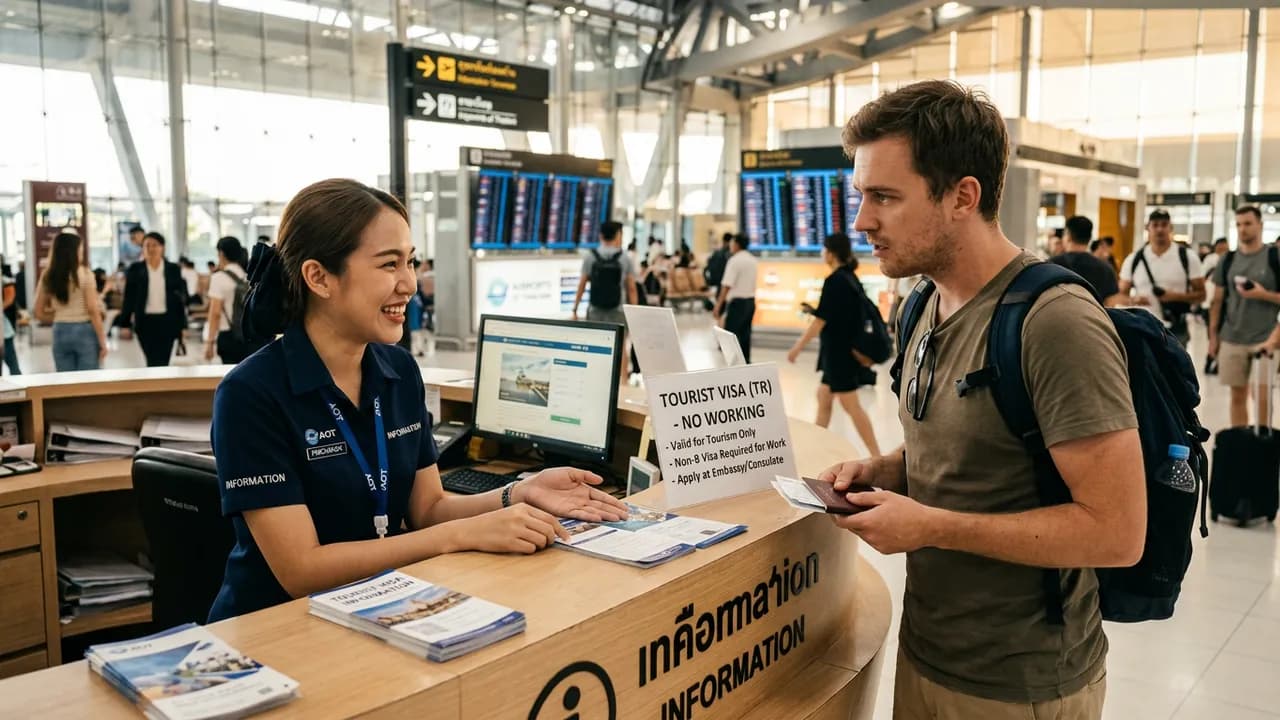
The DTV is a 5-year, multiple-entry visa launched in 2024 for remote workers, freelancers, and people attending events or courses in Thailand. It allows 180-day stays per entry and costs 10,000 THB. It does not include a work permit, making the legal status of remote work under the DTV a subject of ongoing discussion.
Do I need travel insurance for Thailand?
Thailand does not universally require travel insurance for entry on a tourist visa or visa exemption. However:
- Non-Immigrant O-A (retirement) visa applicants must have health insurance with minimum coverage of 40,000 THB outpatient and 400,000 THB inpatient
- Health insurance is strongly recommended for all visitors — medical costs in Thailand can be substantial, especially at private hospitals
- Some embassies may request proof of travel insurance as part of visa applications
How long does it take to get a Thai visa from an embassy?
Processing times vary by embassy and visa type:
| Visa Type | Typical Processing |
|---|---|
| Tourist visa (single entry) | 1-5 business days |
| Tourist visa (multiple entry) | 3-7 business days |
| Non-Immigrant visas | 3-10 business days |
| DTV | 5-15 business days |
Mail-in applications take longer due to postal transit. During peak season, processing may be slower.
Can I enter Thailand by land?
Yes. Thailand has numerous land border checkpoints with Malaysia, Cambodia, Laos, and Myanmar. Visa exemptions and visa-on-arrival are available at most international border crossings.
Important notes:
- The same visa rules apply at land borders as at airports
- Cash checks for proof of funds are more common at land borders
- Some smaller border crossings may have limited hours
- Frequent land border entries can raise suspicion of visa runs
What documents should I carry in Thailand?
Thai law requires foreigners to carry identification at all times. In practice:
- Always carry: Your passport or a photocopy of the biographical page, visa page, and entry stamp
- Recommended: Keep the original passport accessible (in your hotel safe or on your person)
- Digital backup: Store photos of all passport pages on your phone and in cloud storage
- Other useful documents: TM30 receipt, 90-day reporting receipt, work permit (if applicable)
Is there a digital nomad visa for Thailand?
The closest option is the Destination Thailand Visa (DTV), which was designed with remote workers in mind. It offers 180-day stays with 5-year validity. However, it does not include a formal work permit, and the legal framework around remote work for non-Thai employers remains a gray area.
The LTR visa (Work-from-Thailand Professional category) is a more robust option that includes a digital work permit, but it requires USD 80,000+ annual income and employment with a qualifying company.
For more on working remotely in Thailand, see our guide on working on a tourist visa. See our full FAQ on the Thai visa for remote workers.
Final Thoughts
Thailand's visa system is more straightforward than it appears. Most tourists need nothing more than a valid passport. Long-term residents have multiple options depending on their age, income, and purpose of stay. When in doubt, check the official Thai Immigration Bureau website or consult with a reputable immigration service for your specific situation.