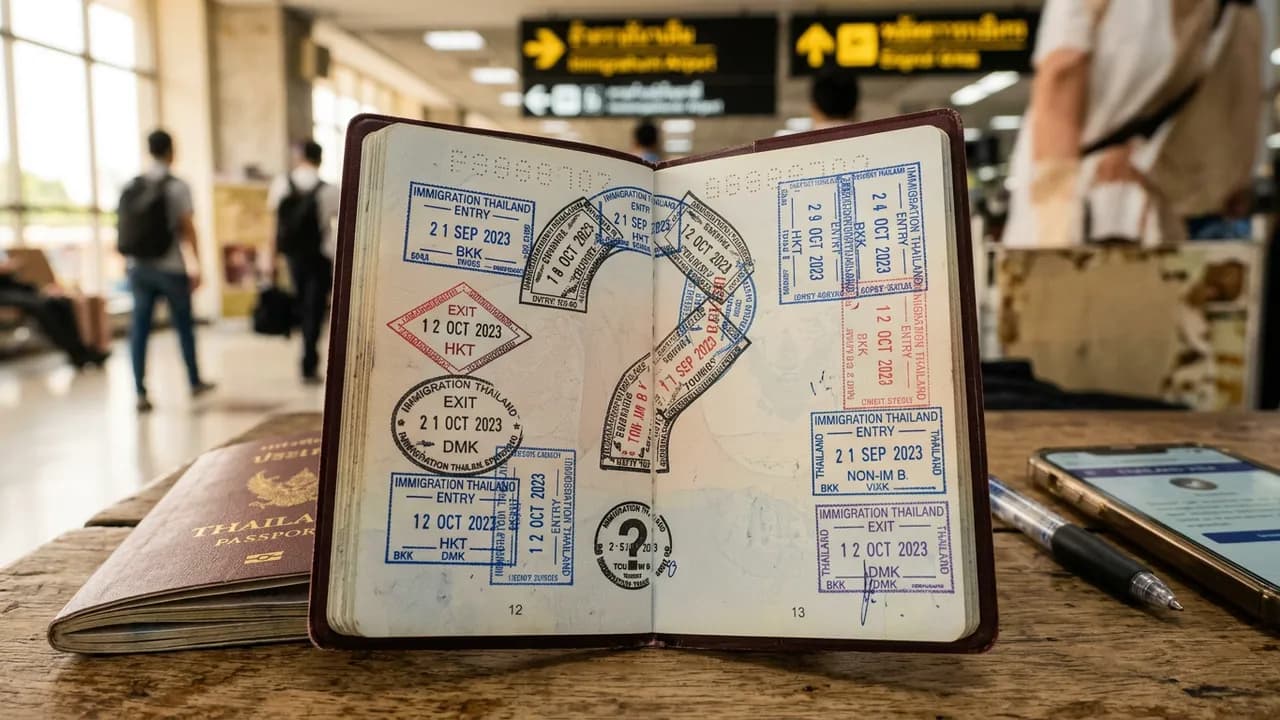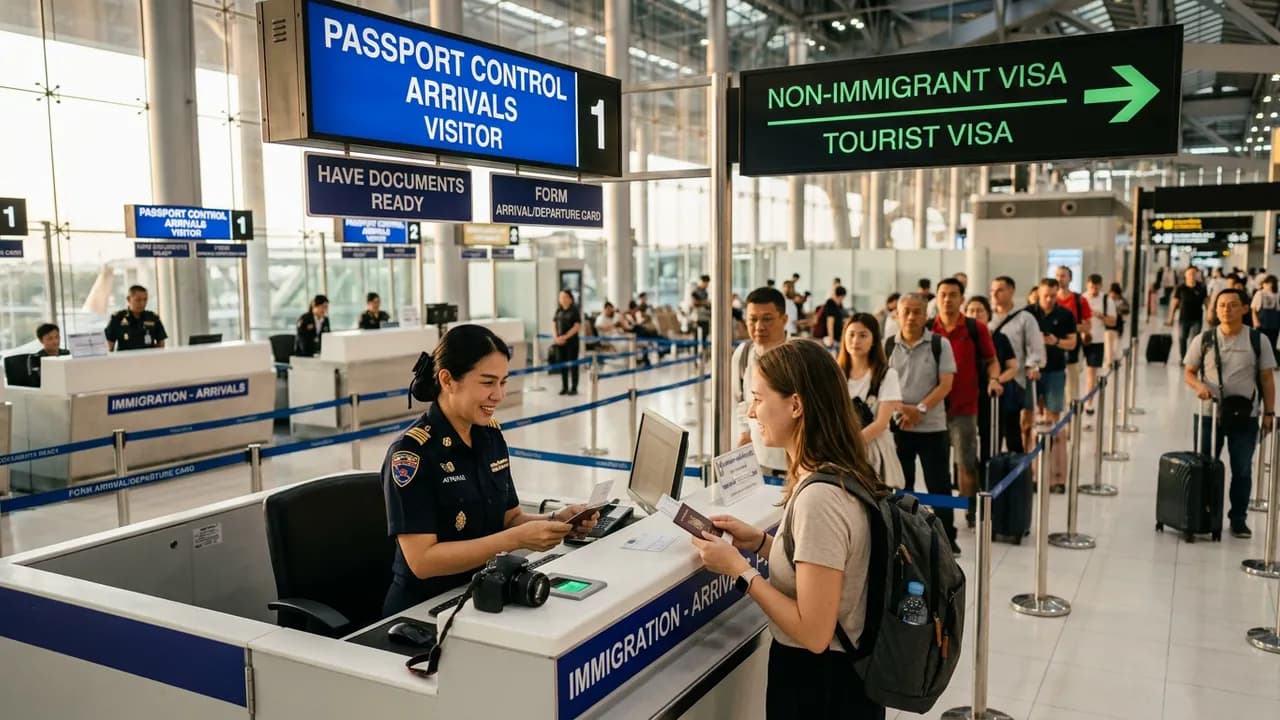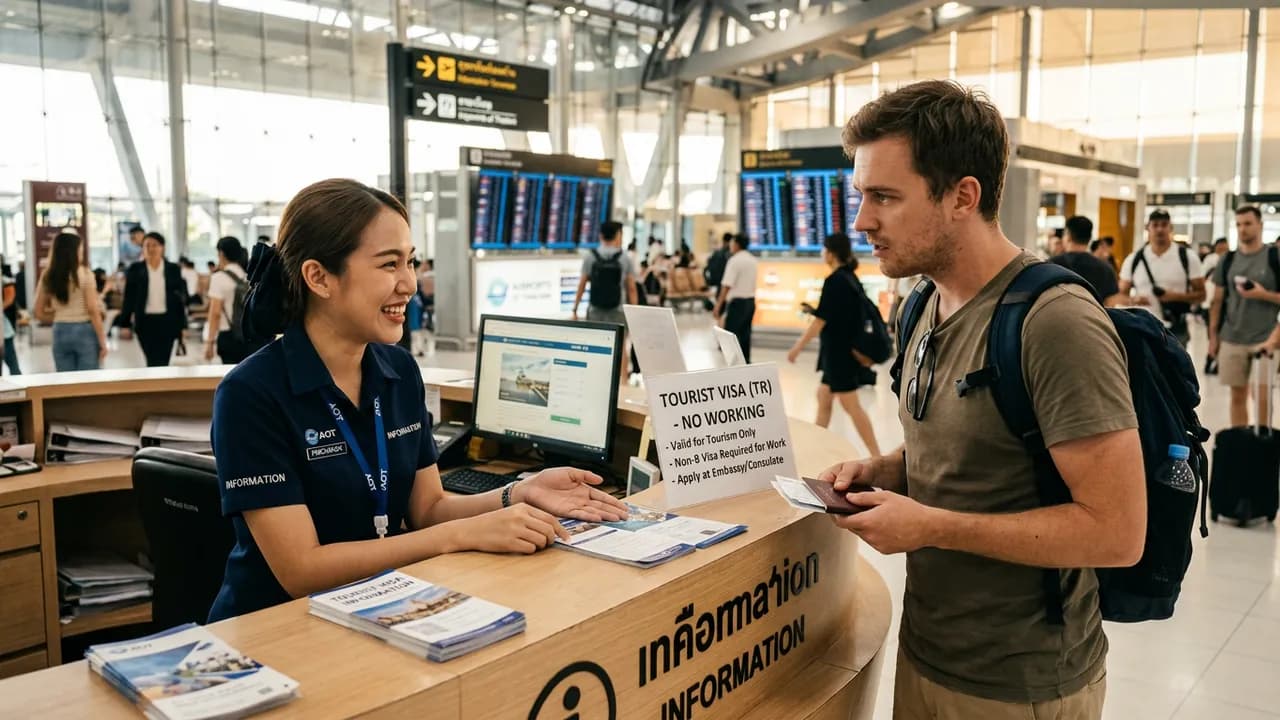
Can you work on a tourist visa in Thailand? The short answer is no — Thai law explicitly prohibits any foreigner from working without a valid work permit, which a tourist visa does not provide. Working on a tourist visa in Thailand is illegal. Thai law is explicit: any foreigner who works in Thailand must have a valid work permit, and a tourist visa does not qualify you for one. For the broader set of common visa questions, see our Thailand visa FAQ.
But the reality is more nuanced than a simple yes or no, particularly for the growing population of digital nomads and remote workers. This guide explains the legal framework, what counts as "work," the penalties for violations, and the gray areas that many foreigners navigate.
The Legal Framework
The Royal Ordinance on Foreign Workers
Work performed by foreigners in the Kingdom is governed by the Royal Ordinance on the Management of Foreign Workers' Employment B.E. 2560 (2017), as amended by Royal Ordinance (No. 2) B.E. 2561 (2018) — the law that replaced the older Foreign Employment Act B.E. 2551 (official English translation, ILO NATLEX). Under this law:
- A work permit is required for any foreigner performing work in Thailand
- "Work" is defined broadly as engaging in work by exerting energy or using knowledge, whether or not for wages or other benefits
- A work permit can only be issued alongside an appropriate visa type (Non-Immigrant B, LTR, etc.)
- A tourist visa, visa exemption, or retirement visa does not qualify for a work permit
The Immigration Act
The Immigration Act B.E. 2522 (1979) defines the conditions of entry for each visa type. A tourist visa grants permission to enter Thailand for the purpose of tourism only. Engaging in employment activities violates the conditions of your entry and can result in visa revocation, fines, and deportation.
What Counts as "Work" Under Thai Law?
The definition of "work" in Thai law is exceptionally broad. It includes:
Clearly Illegal (Work Permit Required)
| Activity | Status |
|---|---|
| Employment by a Thai company | Illegal without work permit |
| Teaching at a Thai school | Illegal without work permit |
| Running a business in Thailand | Illegal without work permit |
| Providing services to Thai clients | Illegal without work permit |
| Freelancing for Thai businesses | Illegal without work permit |
| Performing (music, entertainment) for payment in Thailand | Illegal without work permit |
| Volunteer work (in many cases) | Technically illegal without work permit |
The Gray Area: Remote Work for Foreign Employers
This is where the vast majority of digital nomads and remote workers find themselves. The question: Is working on a laptop in Thailand for a company based in another country considered "work" under Thai law?
Legally: Yes, technically. The law does not distinguish between work for Thai employers and work for foreign employers. If you are "exerting energy or using knowledge" in Thailand, you are technically working in Thailand regardless of where your employer or clients are based.
In practice: Thai authorities have historically not enforced work permit requirements against foreigners who are:
- Working remotely for companies outside Thailand
- Not taking jobs from Thai workers
- Not serving Thai clients
- Paying for their accommodation and contributing to the local economy as consumers
This tolerance is not the same as legality. It represents a pragmatic enforcement gap, not a legal exemption.
What Is Clearly Not "Work"
| Activity | Status |
|---|---|
| Checking personal email | Not work |
| Managing personal investments | Not work |
| Browsing the internet | Not work |
| Attending online meetings for personal matters | Not work |
| Tourism, sightseeing, leisure | Not work |
Penalties for Working Illegally
If caught working without a work permit, the penalties are severe:
For the Worker
Since the 2018 amendment to the Royal Ordinance (effective July 1, 2018), imprisonment for working without a permit was removed for the foreign worker — but the remaining penalties are still serious (Tilleke & Gibbins analysis of the reformed law):
| Penalty | Details |
|---|---|
| Fine | 5,000 – 50,000 THB |
| Deportation | At your own expense |
| Blacklist | Potential entry ban |
| Visa revocation | Immediate cancellation of your visa |
| Re-employment ban | Cannot be granted a new work permit for 2 years after conviction |
For the Employer
Thai employers who hire foreigners without work permits face heavier penalties:
| Penalty | Details |
|---|---|
| Fine | 10,000 – 100,000 THB per illegal worker |
| Repeat offense | 50,000 – 200,000 THB per worker, up to 1 year imprisonment, and a 3-year ban on employing any foreign workers |
How People Get Caught
Common ways foreigners are caught working illegally:
- Raids on businesses — Thai police and labor officials conduct raids on businesses, particularly language schools, restaurants, and tourist-area businesses
- Tip-offs — Competitors, disgruntled employees, or neighbors may report illegal workers
- Social media — Posting about your work or business in Thailand on social media can attract attention
- Immigration checks — Random police checkpoints sometimes lead to questioning about visa status and activities
- Tax investigations — If you are generating income connected to Thailand, tax authorities may investigate
Realistic Risk Assessment
For a digital nomad working on a laptop in a cafe for a foreign company:
- Risk of active enforcement: Very low
- Risk if actively investigated for other reasons: Moderate to high (working illegally could compound other issues)
- Legal exposure: Present regardless of enforcement likelihood
For someone teaching English at a Thai school without a work permit:
- Risk of active enforcement: High — schools are regularly inspected
- Legal exposure: Very high
Legal Alternatives for Working in Thailand
If you want to work legally in Thailand, several visa options exist:
Non-Immigrant B Visa + Work Permit
The traditional route for employment in Thailand.
- Requires a job offer from a Thai-registered company
- The company sponsors your work permit
- Company must meet capital and Thai employee ratio requirements
- Tied to your specific employer and job description
LTR Visa (Work-from-Thailand Professional)
The best option for high-earning remote workers.
- 10-year visa with digital work permit
- Requires USD 80,000+/year income
- Employer must have USD 150M+ revenue
- 0% tax on foreign-sourced income
Destination Thailand Visa (DTV)
Designed with remote workers in mind, but with a critical caveat.
- 5-year multiple entry visa, 180-day stays
- Costs 10,000 THB
- Does not include a work permit
- Thai government has signaled tolerance of remote work under DTV, but the legal framework has not been fully clarified
The DTV represents the Thai government's acknowledgment of the digital nomad trend, but it stops short of providing a formal work permit. This ambiguity is intentional — it allows flexibility without requiring changes to the broader work permit framework.
BOI Smart Visa
For highly skilled professionals in targeted industries.
- 4-year visa with work authorization
- Requires employment in a BOI-promoted activity
- Minimum salary of 100,000 THB/month (varies by category)
The Digital Nomad Reality
Tens of thousands of foreigners work remotely from Thailand on tourist visas, visa exemptions, retirement visas, and other non-work visa types. Coworking spaces operate openly, cafes are filled with laptop workers, and the Thai government has actively marketed the country as a destination for remote workers.
The Government's Evolving Stance
Thailand's approach to remote work has shifted significantly:
- Pre-2020: Remote work existed but was rarely discussed at a policy level
- 2020-2022: COVID-era special tourist visas implicitly acknowledged remote workers
- 2023-2024: The DTV launch signaled explicit encouragement of remote workers, though without full legal resolution
- 2025-2026: Ongoing policy discussions about a formal remote work framework, but no comprehensive legislation has been passed
Practical Advice for Remote Workers
If you are working remotely in Thailand on a non-work visa, understand the following:
- You are technically in violation of Thai law — Awareness of this is important
- Enforcement risk is very low for remote workers serving foreign clients/employers
- Do not work for Thai clients or companies — This dramatically increases your legal exposure
- Do not advertise your work publicly in Thailand — Keep a low profile
- Pay taxes in your home country — Maintain your tax obligations where you are legally employed
- Consider the DTV — While it does not provide a work permit, it is the visa most aligned with remote work and signals government acceptance
- Consider the LTR visa — If you earn USD 80,000+, this is the fully legal solution with a digital work permit
- Have a plan if questioned — If immigration or police ask what you do in Thailand, "tourism" or "working online for my company abroad" are common responses. The former is evasive; the latter is honest but potentially problematic.
Volunteering in Thailand
Volunteer work is also technically "work" under Thai law and legally requires a work permit. In practice:
- Established NGOs that host international volunteers usually handle the legal requirements (obtaining work permits or operating under government exemptions)
- Informal volunteering (helping at a hostel in exchange for free accommodation, for example) is technically illegal and does expose you to risk
- Teaching English as a volunteer still requires a work permit in most circumstances
If you want to volunteer in Thailand, work through an established organization that handles the legal framework.
Frequently Asked Questions
Can I freelance on a tourist visa if my clients are all overseas?
Legally, no. Practically, enforcement against this scenario is extremely rare. The DTV or LTR visa are better long-term solutions.
What about attending a business meeting in Thailand on a tourist visa?
Short business meetings, conferences, and seminars are generally permissible under a tourist visa or visa exemption. This is recognized as business travel, not employment. However, conducting ongoing work (not just meetings) crosses the line.
Can I trade stocks or cryptocurrency while in Thailand?
Managing personal investments is generally not considered "work." However, if you are trading professionally or managing others' investments, it could be classified as work.
Do coworking spaces check visa status?
No. Coworking spaces in Thailand do not check or verify the visa or work permit status of their members. However, their existence does not legalize working without a permit.
What if I start a Thai company — can I then work?
Starting a Thai company does not automatically grant you work authorization. You still need a work permit, and the company must meet capitalization and staffing requirements (typically 2 million THB registered capital and 4 Thai employees per 1 work permit).
Is remote work tax-free if I use a tourist visa?
Your tax obligations depend on your country's tax laws and Thailand's tax treaties. Thailand has been expanding its tax rules for foreign-sourced income. Consult a tax professional for your specific situation.
Final Thoughts
The gap between Thai law and its enforcement regarding remote work is wide, and tens of thousands of foreigners operate in that gap daily. However, "rarely enforced" is not the same as "legal." If you plan to spend significant time working in Thailand, the responsible path is to obtain appropriate authorization — whether through the DTV, LTR visa, or a traditional work permit. The Thai government is clearly moving toward accommodating remote workers, but until the legal framework catches up with the policy intent, working on a tourist visa remains a calculated risk.