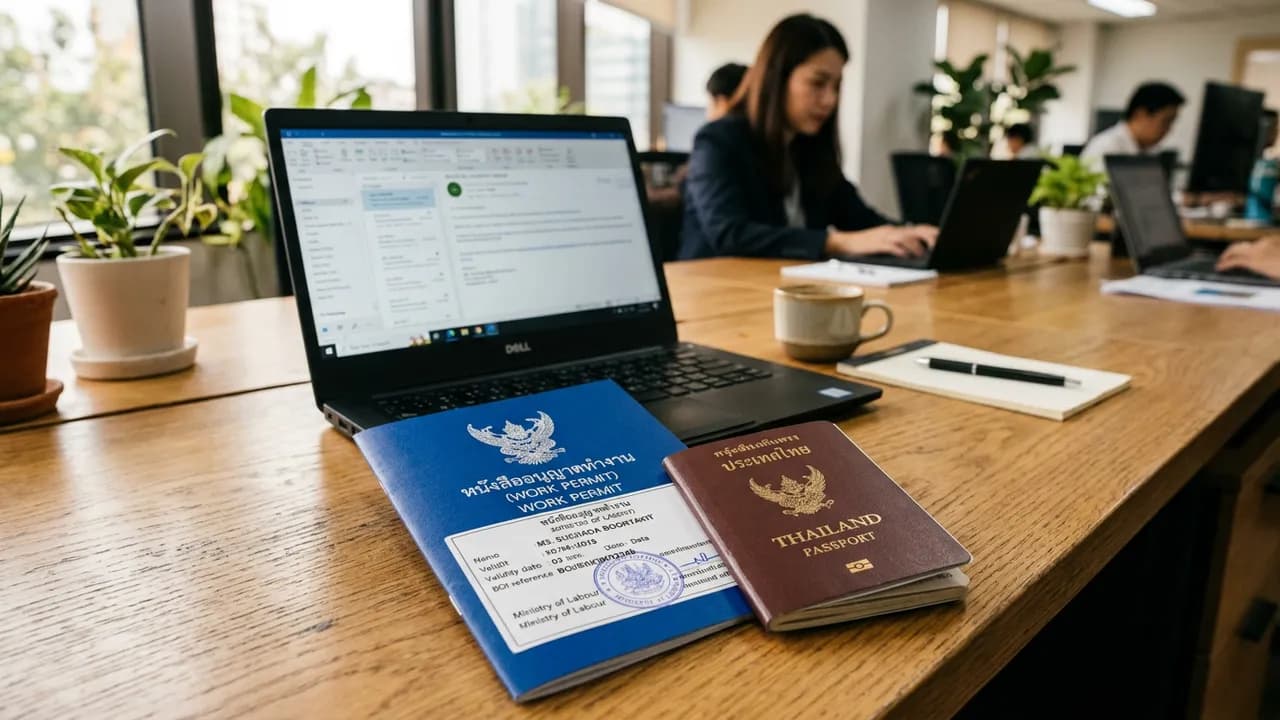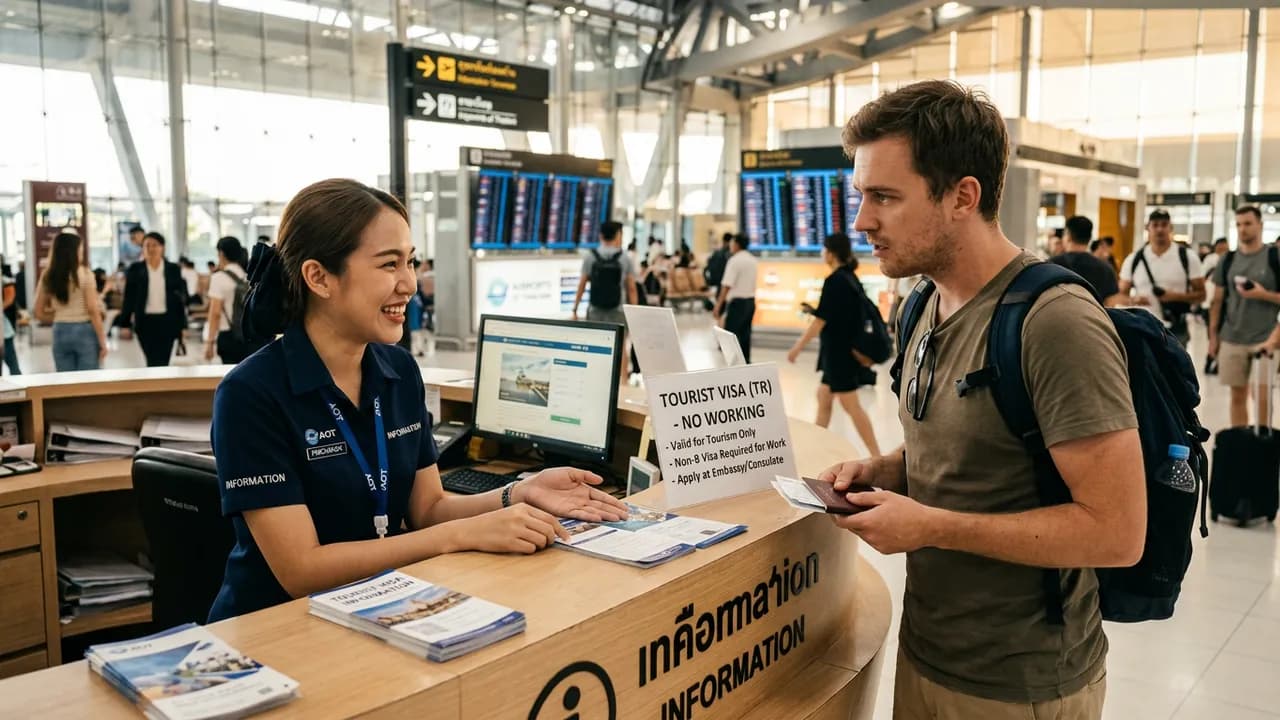
Thailand does not offer a standalone "freelance work permit." This is one of the most misunderstood topics among foreign workers in the country. Unlike some European countries that issue freelance or self-employment visas, Thailand's work permit system is built around employer-sponsored employment. If you want to work legally as a freelancer in Thailand, you need to understand the available alternatives and their trade-offs. This guide covers every legitimate path. For the full overview of work permits in Thailand, see our Thailand work permit guide.
Quick Facts
| Detail | Information |
|---|---|
| Does Thailand have a freelance work permit? | No. There is no dedicated freelance or self-employment work permit category. |
| Can freelancers work legally in Thailand? | Yes, but only through specific structures (own company, BOI, DTV visa, or LTR visa) |
| Is remote work for foreign clients illegal? | Technically yes without a work permit, though enforcement is a gray area |
| DTV visa for freelancers | Available since mid-2024; allows remote work without a Thai work permit |
| Setting up a Thai company | Possible, but requires minimum 2 million THB registered capital and Thai shareholders |
| BOI promotion | Available for certain tech and creative industries |
| Penalty for working without a permit | Fine 5,000-50,000 THB plus deportation (imprisonment for workers was removed by the 2018 amendment to the Royal Ordinance B.E. 2560) |
Why Thailand Has No Freelance Work Permit
Thailand's Foreign Business Act and work permit regulations were designed in an era when foreign workers were either employees of Thai companies, transferred by multinational corporations, or investing in formal business structures. The entire legal framework assumes an employer-employee relationship.
To legally work in Thailand, you need:
- A valid Non-Immigrant visa (B, O, or similar)
- A work permit issued by the Ministry of Labour
- A sponsoring employer or registered company
Freelancers — people who work independently for multiple clients without a single employer — do not fit neatly into this structure. The law has not been updated to create a standalone freelance category, despite the global shift toward independent work.
The Legal Gray Area of Remote Work
This is where reality diverges from the letter of the law.
What the Law Says
Under the Royal Ordinance on the Management of Foreign Workers' Employment B.E. 2560 (2017), which replaced the older Foreign Working Act, "work" is defined broadly as engaging in work by exerting energy or using knowledge, whether or not for wages or other benefits. This definition technically covers remote work performed on a laptop in Thailand, even if the client and income source are entirely foreign.
What Actually Happens
In practice, Thai authorities have not systematically enforced work permit requirements against remote workers who:
- Work only for foreign clients
- Receive income outside Thailand
- Do not take jobs from Thai nationals
- Do not advertise services to Thai customers
This tolerance is pragmatic, not legal. There is no written exemption, no published guideline, and no guarantee it will continue. You are technically in violation of the law and could face consequences if reported or investigated.
The Risk Assessment
| Risk Factor | Level |
|---|---|
| Working quietly from a condo on a laptop for foreign clients | Very low enforcement risk |
| Meeting Thai-based clients for freelance work | Moderate risk |
| Invoicing Thai companies without a work permit | High risk |
| Teaching, performing, or providing physical services | Very high risk — frequently enforced |
Legal Option 1: Destination Thailand Visa (DTV)
The DTV visa, introduced in mid-2024, is currently the most practical option for freelancers who want to work in Thailand with some degree of legal protection. For application details, see our DTV Visa Application Guide.
How It Works
The DTV is designed for remote workers, digital nomads, and people attending events, training, or medical treatment in Thailand. It explicitly allows holders to work remotely for foreign employers or clients.
Key Details
| Aspect | Details |
|---|---|
| Validity | 5 years (multiple entry) |
| Stay per entry | 180 days, extendable by 180 days |
| Cost | 10,000 THB application fee |
| Work permit required? | No — remote work for foreign clients is permitted |
| Can you work for Thai clients? | No — the DTV does not replace a work permit for Thai-sourced employment |
| Income requirement | Proof of remote work or freelance activity; no fixed income threshold published |
| Where to apply | Thai embassy/consulate abroad or online (e-visa) |
Who It Suits
The DTV is ideal for freelancers who:
- Work for clients outside Thailand
- Earn income paid to accounts outside Thailand (or to Thai accounts from foreign sources)
- Want to stay in Thailand for extended periods without visa runs
- Do not need to invoice Thai companies or provide services to Thai customers
Limitations
- Does not authorize work for Thai employers or Thai-registered companies
- Does not provide a path to a Thai work permit
- Relatively new visa category with evolving interpretation and enforcement
Legal Option 2: Setting Up a Thai Company
If you want to freelance for Thai clients or build a business presence in Thailand, registering a Thai limited company is the traditional route.
Structure Requirements
| Requirement | Details |
|---|---|
| Company type | Thai Limited Company (most common) |
| Minimum shareholders | 3 (at least 51% Thai-owned unless BOI promoted) |
| Registered capital | 2 million THB per foreign work permit holder |
| Thai employees | 4 Thai employees per 1 foreign work permit |
| Monthly costs | Accounting, social security, employee salaries |
| Setup time | 2–4 weeks |
| Setup cost | 30,000–80,000 THB (legal and registration fees) |
How It Works for Freelancers
- Register a Thai limited company with you as a director
- Apply for a Non-Immigrant B visa based on the company
- Apply for a work permit through the Ministry of Labour
- Invoice clients through the company
- Pay corporate tax (20%) and personal income tax on your salary
- Maintain ongoing compliance (accounting, tax filings, social security contributions)
Reality Check
This path is expensive and administratively heavy for a solo freelancer. Between employee salaries, social security, accounting fees, and registered capital requirements, you are looking at a minimum ongoing cost of 50,000–80,000 THB per month before you pay yourself. It makes sense for freelancers with substantial and consistent income, but it is overkill for someone earning modestly.
Nominee Shareholders Warning
Many company setup services arrange "nominee" Thai shareholders who hold shares on behalf of the foreign owner. This is technically illegal under Thai law (the Foreign Business Act prohibits using nominees to circumvent the Thai ownership requirement). While common in practice, it carries legal risk. The government has periodically investigated and prosecuted nominee arrangements.
Legal Option 3: BOI Promotion
The Board of Investment (BOI) offers incentives for certain industries that can benefit freelancers in specific sectors.
Eligible Activities
BOI-promoted activities relevant to freelancers include:
- Software development and IT services
- Digital content creation
- Creative industries (design, animation, film production)
- Research and development
- Certain consulting services
Benefits of BOI Promotion
| Benefit | Details |
|---|---|
| Foreign ownership | 100% foreign ownership allowed (no Thai shareholders needed) |
| Reduced capital requirement | Lower than standard company setup |
| Work permit facilitation | Faster, easier work permit process through BOI One-Stop Service |
| Tax incentives | Corporate income tax exemption for 3–8 years depending on activity |
| Foreign employee ratio | More favorable than standard requirements |
Requirements
- Must operate in a BOI-eligible activity category
- Must meet minimum investment thresholds (varies by category)
- Must submit a business plan and demonstrate viability
- Application process takes 2–4 months
- Ongoing reporting to BOI required
Is It Worth It for Freelancers?
BOI promotion is best suited for freelancers who are ready to formalize their operation into a real company, particularly in tech or creative fields. If you are a solo web developer or designer processing consistent revenue, this can be a cost-effective path. For occasional freelancers, the overhead is not justified.
Legal Option 4: LTR Visa (Work-from-Thailand Professionals)
The Long-Term Resident (LTR) visa includes a category specifically for remote workers called "Work-from-Thailand Professionals."
LTR Visa Requirements for Freelancers
| Requirement | Details |
|---|---|
| Income | Minimum $80,000 USD per year (or $40,000 with a master's degree or IP ownership) |
| Employment | Must be employed by or contracted with a company outside Thailand |
| Company revenue | Employer must have revenue of at least $150 million USD in the past 3 years |
| Health insurance | Required |
| Visa duration | 10 years |
| Work permit | Digital work permit issued; allows remote work |
| Tax rate | Flat 17% on Thai-sourced income |
Who the LTR Visa Suits
High-earning freelancers who contract with large international companies. The income threshold and employer revenue requirement make this impractical for most independent freelancers.
Tax Obligations for Freelancers in Thailand
Regardless of your visa status, you may have tax obligations in Thailand. The rules changed significantly starting in 2024.
The 2024 Tax Rule Change
Before 2024, foreign income remitted to Thailand was only taxable if brought into the country in the same tax year it was earned. Starting January 1, 2024, all foreign-sourced income remitted to Thailand is subject to Thai personal income tax, regardless of when it was earned.
What This Means for Freelancers
| Scenario | Tax Obligation |
|---|---|
| Earning from foreign clients, money stays abroad | No Thai tax (but may owe tax in your home country) |
| Earning from foreign clients, money transferred to Thai bank | Subject to Thai income tax |
| Earning from Thai clients via a Thai company | Subject to Thai income tax and corporate tax |
| Staying in Thailand 180+ days per year | Considered a Thai tax resident |
Thai Personal Income Tax Rates (2026)
| Taxable Income (THB) | Rate |
|---|---|
| 0 – 150,000 | Exempt |
| 150,001 – 300,000 | 5% |
| 300,001 – 500,000 | 10% |
| 500,001 – 750,000 | 15% |
| 750,001 – 1,000,000 | 20% |
| 1,000,001 – 2,000,000 | 25% |
| 2,000,001 – 5,000,000 | 30% |
| Over 5,000,000 | 35% |
Double Tax Agreements
Thailand has double tax agreements with over 60 countries. For more details, see our Thailand Tax Guide for Expats. If you are a tax resident of a country with a DTA with Thailand, you may be able to offset taxes paid in one country against the other. Consult a tax advisor familiar with both jurisdictions.
Practical Approaches Used by Freelancers
Beyond the formal legal options, here is how freelancers in Thailand typically operate in practice:
The DTV Route (Recommended for Most)
- Apply for a DTV visa at a Thai embassy abroad
- Enter Thailand and work remotely for foreign clients
- Keep income in foreign bank accounts or transfer as needed (understanding the tax implications)
- Extend the visa every 180 days
- File Thai tax returns if you are a tax resident
The Company Route (For Serious Operations)
- Engage a Thai law firm to set up a company
- Obtain a Non-Immigrant B visa and work permit
- Invoice all clients through the company
- Maintain full compliance (accounting, tax, social security)
- Best for those earning 100,000+ THB per month consistently
The Quiet Laptop Route (Common but Not Legal)
- Enter on a tourist visa, visa exemption, or other non-work visa
- Work quietly from home or co-working spaces
- Keep all income and banking offshore
- Avoid any local business activity
- This is technically illegal and offers no legal protection
Frequently Asked Questions
Can I just work from a co-working space on a tourist visa?
Technically no. Working on a tourist visa or visa exemption violates the Royal Ordinance on Foreign Workers regardless of where you sit. However, enforcement against quiet remote workers in co-working spaces has been essentially nonexistent. The DTV visa resolves this ambiguity.
Do Thai co-working spaces check work permits?
No. Co-working spaces in Thailand do not verify your visa status or work permit. They operate as commercial office rental services and have no legal obligation to police your immigration status.
What about freelancing on a retirement visa?
Retirement visa (Non-O based on retirement) holders are explicitly prohibited from working. This includes freelance work. Violating this can result in revocation of your visa and work permit charges.
Can I invoice Thai companies as a freelancer?
Not legally without a work permit and a registered business entity. Invoicing Thai companies as an individual without a work permit is a clear violation that carries higher enforcement risk than remote work for foreign clients.
What is the penalty for working without a work permit?
Under the Royal Ordinance on Foreign Workers B.E. 2560 as amended in 2018, the worker faces a fine of 5,000-50,000 THB plus deportation, and cannot be granted a new work permit for 2 years; imprisonment for the worker was removed by the amendment. Deportation and a potential re-entry ban still follow, and employers face separate, heavier penalties.
Summary
Thailand has no freelance work permit, and this gap in the legal framework creates challenges for independent workers. The DTV visa is currently the best option for most freelancers, providing legal cover for remote work without the cost and complexity of company formation. For those who need to work with Thai clients or build a formal business, setting up a Thai company (potentially with BOI promotion) is the proper path. Whatever route you choose, understand the tax implications of the 2024 rule change on remitted income, and consider consulting a Thai tax advisor to structure your affairs properly. The days of operating in a complete gray area are gradually ending as Thailand builds out its legal framework for modern work arrangements.