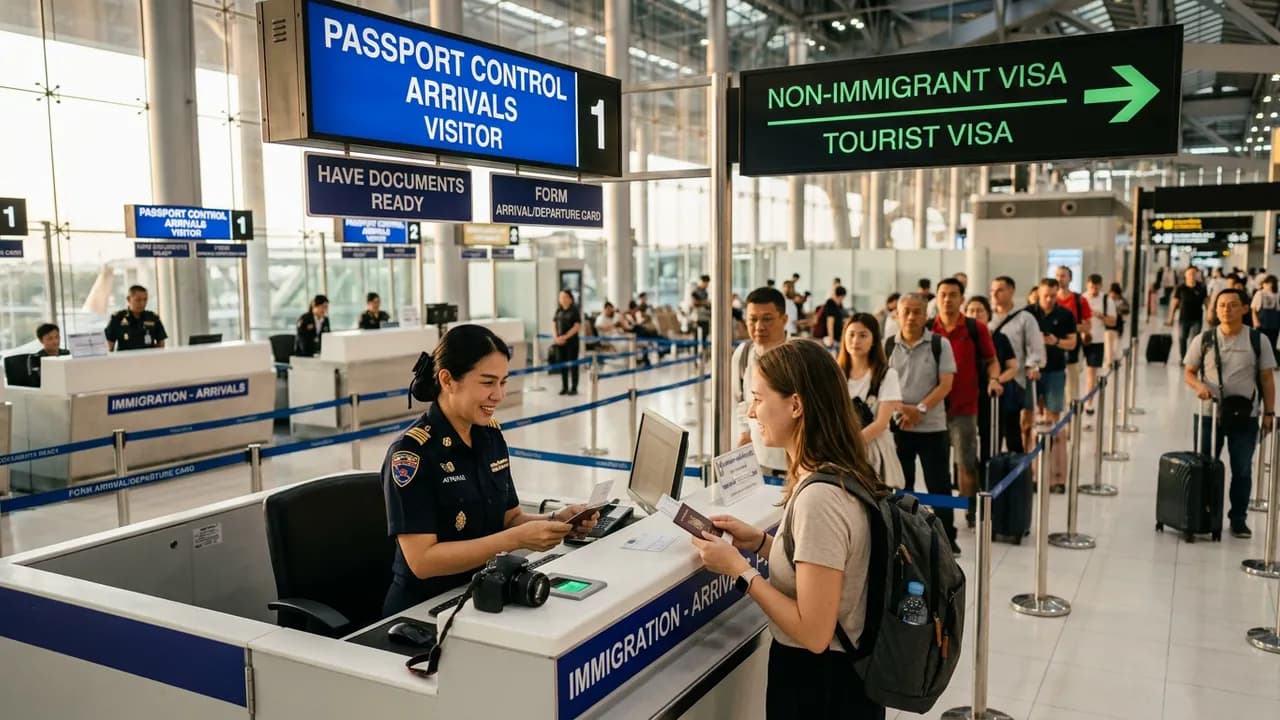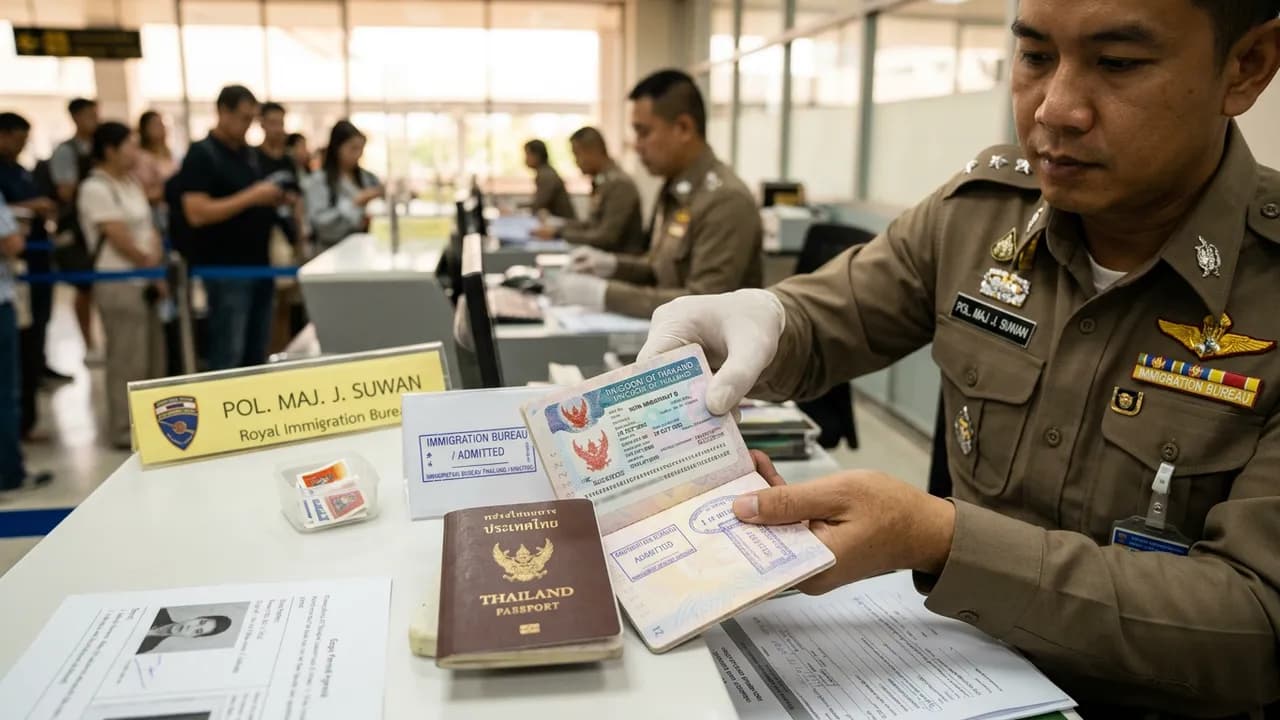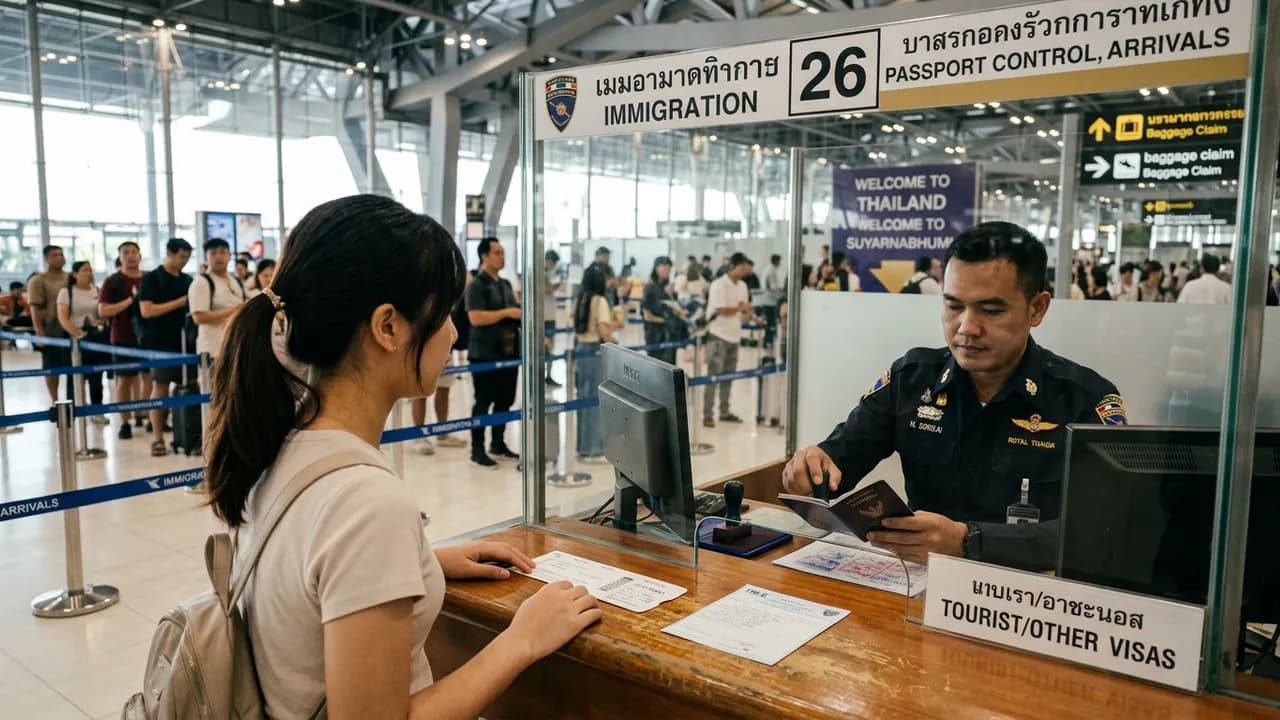
Changing your visa type while already in Thailand is one of the most common questions foreign residents and visitors face. Whether you entered on a tourist visa and found a job, started a relationship, or decided to study Thai, you may wonder if you can switch to a different visa category without leaving the country. The answer depends on what visa you currently hold, what visa you want, and current Immigration Bureau policies.
Quick Facts
| Detail | Information |
|---|---|
| Official Term | Change of visa category / Change of Non-Immigrant status |
| Where to Apply | Thai Immigration Bureau (Chaeng Wattana, Bangkok) or provincial offices |
| Processing Time | 1–15 business days (varies by conversion type) |
| Cost | 2,000 THB (standard change of category fee) |
| Can All Visas Be Changed? | No — only certain conversions are permitted |
| Most Common Method | Leave Thailand and apply at a Thai consulate abroad |
Understanding Visa Conversion in Thailand
Thailand's Immigration Bureau distinguishes between two concepts:
Change of visa category: Converting your current visa type to a different one (e.g., Tourist Visa to Non-Immigrant B). This is done inside Thailand and is subject to strict rules.
New visa application: Leaving Thailand and applying for an entirely new visa at a Thai Embassy or Consulate abroad. This is the more common and more reliable method for most conversions.
The key principle is this: most visa type changes require you to leave Thailand and apply from abroad. In-country changes are the exception rather than the rule, and Immigration officers have significant discretion in approving or denying them.
Which Conversions Are Possible Inside Thailand?
The following conversions have been approved inside Thailand, though availability may vary by Immigration office and current policy:
Conversions Generally Permitted
| From | To | Notes |
|---|---|---|
| Tourist Visa (TR) | Non-Immigrant B | Requires a Thai employer with supporting documents |
| Tourist Visa (TR) | Non-Immigrant O (marriage) | Requires marriage certificate and spouse documents |
| Tourist Visa (TR) | Non-Immigrant ED | Requires enrollment at a licensed Thai school |
| Visa Exemption (60-day stamp) | Non-Immigrant B | Permitted at some offices with employer sponsorship |
| Visa Exemption (60-day stamp) | Non-Immigrant O (marriage) | Permitted at some offices with full documentation |
| Non-Immigrant B (single entry) | Non-Immigrant B (extension) | Standard 1-year extension process |
| Non-Immigrant O | Non-Immigrant O (retirement extension) | Standard extension with financial proof |
| Any Non-Immigrant | Same category (extension) | Not a conversion but a continuation |
Conversions That Typically Require Leaving Thailand
| From | To | Why |
|---|---|---|
| Visa Exemption | Non-Immigrant O-A (retirement) | O-A must be applied for at a consulate abroad |
| Visa on Arrival | Any Non-Immigrant visa | VOA cannot be converted in-country |
| Tourist Visa | Non-Immigrant O-A | Must apply abroad |
| Non-Immigrant B | Non-Immigrant O (retirement) | Changing between Non-Immigrant subcategories is complex |
| Any visa | SMART Visa | Must apply through BOI process and at a consulate |
| Any visa | LTR Visa | Must apply through BOI/designated process |
| Any visa | DTV | Must apply at a Thai consulate abroad |
The Gray Area
Immigration policy in Thailand can shift without formal public announcements. Some conversions that were routinely approved a year ago may be denied today, and vice versa. The Bangkok Immigration Bureau (Chaeng Wattana) tends to be the most flexible and experienced in handling conversions. Provincial offices may be stricter or may not process certain types at all.
Always confirm with the specific Immigration office before planning an in-country conversion.
Step-by-Step: Changing Visa Type Inside Thailand
If your desired conversion is among those permitted, here is the general process:
Step 1: Confirm Eligibility
Contact the Immigration office where you plan to apply. Ask specifically whether they process the conversion you need. If possible, visit in person to confirm requirements, as phone information may be incomplete.
Step 2: Gather Supporting Documents
The required documents vary by the visa type you are converting to. Common requirements include:
For conversion to Non-Immigrant B (work):
- Letter from your Thai employer requesting the visa change
- Company registration documents (certificate, shareholder list, tax filings)
- Employment contract or appointment letter
- Your educational qualifications and resume
- Passport with current visa and at least 21 days of remaining stay
For conversion to Non-Immigrant O (marriage):
- Thai marriage certificate (registered at the local Amphur office)
- Spouse's Thai national ID card and house registration (tabien baan)
- Combined financial evidence (bank statements, income proof)
- Photos of you and your spouse together
- Passport with current visa and at least 21 days of remaining stay
For conversion to Non-Immigrant ED (education):
- Acceptance letter from a licensed Thai educational institution
- School registration documents and license
- Course details (subject, duration, schedule)
- Proof of tuition payment or enrollment fees
- Passport with current visa and at least 21 days of remaining stay
Step 3: Visit the Immigration Office
Go to the Immigration Bureau during business hours. Major offices for visa conversions include:
- Bangkok: Immigration Bureau, Chaeng Wattana Road (the main office for conversions)
- Chiang Mai: Chiang Mai Immigration Office
- Phuket: Phuket Immigration Office
Arrive early. Visa conversion is a specialized process and may require you to visit a specific division within the office.
Step 4: Submit Your Application
Present your documents and passport to the officer. You will typically need to:
- Complete a visa change application form
- Pay the 2,000 THB fee
- Provide passport photos
- Submit all supporting documents and photocopies
Step 5: Attend an Interview (If Required)
For some conversions, particularly Tourist to Non-Immigrant B, the Immigration officer may conduct a brief interview or ask for additional documentation. For marriage-based conversions, a home visit by Immigration may be required as part of the extension process that follows.
Step 6: Receive Your New Visa Status
If approved, the Immigration officer will place a new stamp in your passport indicating the changed visa category. The initial permission to stay granted with the conversion is typically 90 days, after which you must apply for a standard 1-year extension based on your visa category.
Leaving Thailand to Change Your Visa
For most visa changes, the most straightforward method is to leave Thailand and apply at a Thai Embassy or Consulate in a neighboring country. This is often called a "visa run" or "border run," though it involves a proper visa application, not simply crossing a border.
Popular Locations for Visa Applications
| Location | Pros | Cons |
|---|---|---|
| Vientiane, Laos | Historically the most popular; familiar with all visa types | Can be busy; appointment system required |
| Kuala Lumpur, Malaysia | Modern consulate; efficient processing | Farther from northern Thailand |
| Penang, Malaysia | Well-established for visa processing | Smaller office; limited appointment slots |
| Phnom Penh, Cambodia | Close to eastern Thailand; generally efficient | Requires Cambodian visa |
| Savannakhet, Laos | Less crowded alternative to Vientiane | Smaller city with fewer amenities |
| Ho Chi Minh City, Vietnam | Modern consulate | Requires Vietnamese visa for some nationalities |
What to Bring When Applying Abroad
- Passport with at least 6 months validity and blank pages
- Completed visa application form for the Thai consulate
- Passport photos (specifications vary by consulate)
- Supporting documents specific to the visa type you are applying for (employer letter, school enrollment, marriage certificate, financial proof, etc.)
- Visa fee (varies by visa type and consulate)
- Proof of accommodation in the country where you are applying (hotel booking)
- Flight or travel itinerary showing your arrival and return
Timeline for Applying Abroad
| Step | Duration |
|---|---|
| Travel to the consulate city | 1 day |
| Submit application | 1 day |
| Processing time | 2–5 business days |
| Collect passport | 1 day |
| Return to Thailand | 1 day |
| Total | 5–9 days minimum |
Some consulates offer next-day or same-day processing for an additional fee. Check with the specific consulate before traveling.
Cost Breakdown
| Fee | Amount |
|---|---|
| In-country visa category change | 2,000 THB (~$58 USD) |
| Subsequent 1-year extension of stay | 1,900 THB (~$55 USD) |
| Non-Immigrant B visa (at consulate abroad) | 2,000–5,000 THB |
| Non-Immigrant O visa (at consulate abroad) | 2,000 THB |
| Non-Immigrant ED visa (at consulate abroad) | 2,000 THB |
| Travel costs for applying abroad | Varies (flights, hotel, transport) |
Important Rules and Restrictions
Minimum Remaining Stay
To apply for an in-country visa conversion, you typically need at least 21 days remaining on your current permission to stay. If your stay is expiring soon, you may not have time to complete the process.
90-Day Initial Stay After Conversion
When you successfully change your visa type inside Thailand, the new visa stamp usually grants an initial 90-day stay. Before these 90 days expire, you must apply for a standard extension of stay based on your new visa category (e.g., 1-year extension for work, retirement, or marriage).
Work Permit Implications
If you are converting to a Non-Immigrant B visa for work purposes, you cannot begin working until both the visa conversion and work permit are complete. Working before your work permit is issued is illegal, regardless of your visa status.
Extensions Cannot Be Converted
If you are on an extended stay (e.g., a 1-year retirement extension on a Non-Immigrant O), you generally cannot convert to a different visa category in-country. You would need to let your current extension expire or leave Thailand and apply for the new visa type abroad.
Common Mistakes to Avoid
1. Assuming any visa can be converted to any other. In-country conversions are limited to specific combinations. Research your specific situation before making plans.
2. Waiting until the last week of your stay. Conversions require processing time and may need additional documents. Start the process with at least 21 days remaining, and ideally more.
3. Not bringing complete documents. Immigration offices will not process incomplete applications. Missing a single document means returning another day, potentially jeopardizing your timeline.
4. Relying on outdated information. Thai immigration policies change frequently. Forum posts from even 6 months ago may no longer reflect current practice. Verify with the Immigration office directly.
5. Working before your visa and work permit are finalized. Even if your employer has sponsored your conversion, you cannot legally work until both the new visa status and work permit are in hand.
6. Not planning for the extension after conversion. An in-country conversion gives you roughly 90 days. You must then apply for a full extension of stay, which has its own requirements (financial proof, employer documents, etc.).
Frequently Asked Questions
Can I convert a visa exemption stamp to a Non-Immigrant visa?
In some cases, yes. The Bangkok Immigration Bureau has processed conversions from a 60-day visa exemption stamp to Non-Immigrant B and Non-Immigrant O (marriage). However, this is not guaranteed, and provincial offices may decline. Having strong supporting documents (employer sponsorship, marriage registration) significantly improves your chances.
How long does an in-country conversion take?
Processing times vary from same-day to 15 business days, depending on the complexity and the Immigration office. Simple conversions (Tourist to Non-B with employer support) may be processed in 1–3 days. More complex cases may take longer.
Can I convert my tourist visa to a retirement visa inside Thailand?
You can convert a Tourist Visa to a Non-Immigrant O visa (for those over 50) at certain Immigration offices, which then allows you to apply for a 1-year retirement extension. However, the Non-Immigrant O-A (long-stay retirement) visa must be applied for at a consulate abroad. The practical difference: Non-Immigrant O with retirement extension requires 800,000 THB in a Thai bank or 65,000 THB monthly income. Non-Immigrant O-A requires the same financial proof plus health insurance.
What if my conversion is denied?
If Immigration denies your in-country conversion, your current visa status remains unchanged. You can continue staying in Thailand until your current permission to stay expires. Your options are to try a different Immigration office (policies vary), leave Thailand and apply at a consulate abroad, or consult a licensed Thai immigration attorney for guidance.
Do I need a visa agent or lawyer?
An agent or lawyer is not required but can be helpful for complex cases or if language is a barrier. Reputable agents can ensure your documents are properly prepared and accompany you to Immigration. Be cautious of agents who promise guaranteed approvals or charge excessive fees. Verify any agent's reputation through expat community recommendations.
Can I change from a work visa to a marriage visa without leaving?
Changing from a Non-Immigrant B to a Non-Immigrant O (marriage) inside Thailand is not straightforward. In most cases, you would need to let your Non-B extension expire, leave Thailand, and apply for a Non-Immigrant O at a consulate abroad. However, if your Non-B extension is ending and you have already registered your marriage in Thailand, some Immigration offices may allow the change. Consult the office directly.