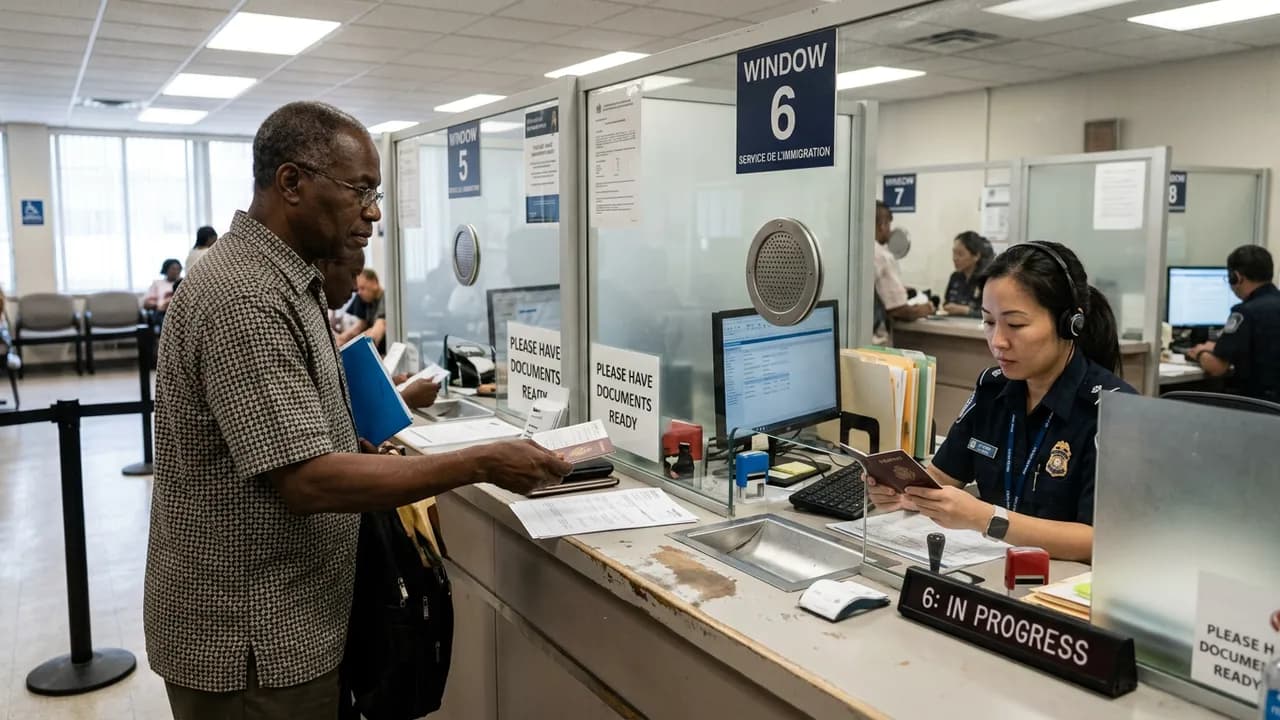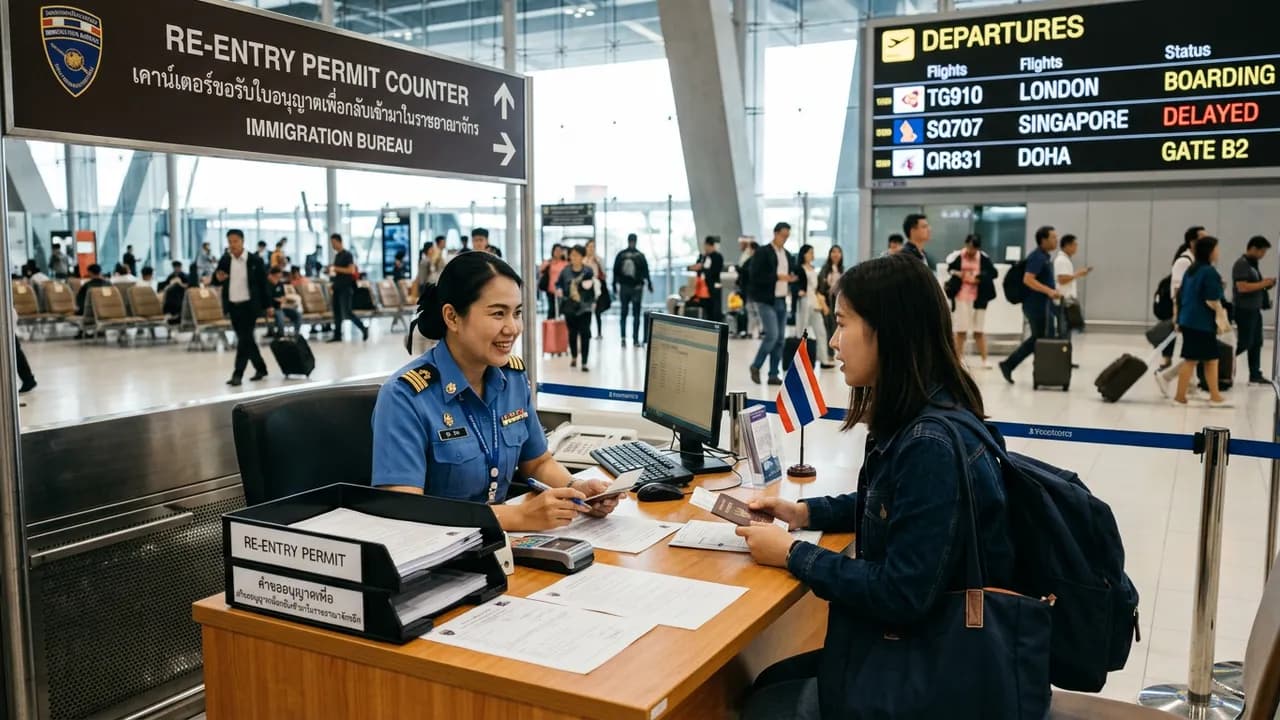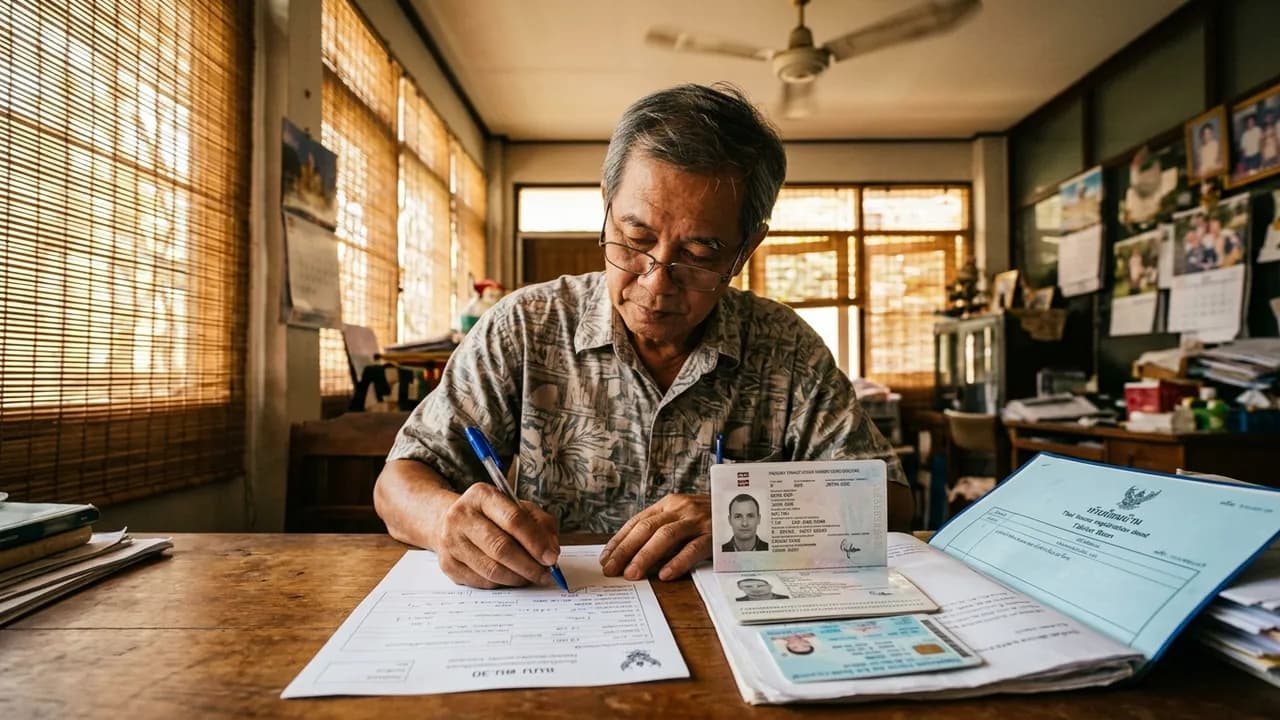
TM30 reporting in Thailand is one of the most confusing and contentious immigration requirements foreigners face. While technically it is the landlord's responsibility to file, the consequences often fall on the foreigner. Understanding how TM30 works can save you fines, frustration, and delays at the immigration office.
This guide explains what TM30 is, who is responsible for filing, how to do it, and what recent changes mean for foreigners living in Thailand in 2026.
What Is the TM30?
The TM30 (officially "Notification Form for House Owner/Occupier/Possessor of the Residence to Notify Accommodation of Foreign National") is a legal notification that must be filed whenever a foreigner stays at any address in Thailand.
Under Section 38 of the Immigration Act (1979), the owner, occupier, or manager of any residence where a foreigner stays must notify Thai Immigration within 24 hours of the foreigner's arrival at that address.
In plain terms: Every time you check into a hotel, move into a rental apartment, or return to your home after traveling abroad, someone is supposed to tell immigration where you are staying.
Who Files the TM30?
The legal responsibility falls on the property owner or manager, not the foreigner. In practice:
| Accommodation Type | Who Files |
|---|---|
| Hotel, hostel, guesthouse | The hotel (automatically at check-in) |
| Rented apartment or condo (managed building) | The building management or landlord |
| Rented house | The landlord |
| Your own condo | You (as the owner/occupier) |
| Staying with a Thai friend/partner | Your Thai host |
The problem: Many landlords and property owners are unaware of this requirement or unwilling to file. In these cases, the foreigner often ends up filing the TM30 themselves to avoid complications at immigration.
When Does TM30 Need to Be Filed?
A new TM30 notification must be filed:
- When a foreigner first arrives at an address — Within 24 hours of moving in
- When a foreigner returns to Thailand from abroad — Even returning to the same address where you have been living requires a new TM30 within 24 hours of arrival
- When a foreigner moves to a new address — A new TM30 for the new address must be filed
The Re-Entry Issue
The most frustrating aspect of TM30 is the requirement to re-file after every international trip. Even if you have lived at the same address for years, a weekend trip to a neighboring country technically requires a fresh TM30 filing within 24 hours of your return.
This requirement has been a major pain point for long-term residents. Enforcement varies significantly by immigration office and over time, but it remains on the books as of 2026.
How to File the TM30
Method 1: Online Filing
The Thai Immigration Bureau offers an online TM30 filing system.
Steps:
- Visit the Immigration Bureau's online notification system
- Register an account (the property owner/landlord must register as the notifier)
- Enter the foreigner's passport and visa details
- Enter the property address
- Submit the notification
- Save the confirmation receipt
Requirements:
- The property owner must have a Thai ID card
- First-time registration requires the landlord to visit immigration in person to verify their identity
- After initial registration, subsequent filings can be done entirely online
Pros: Fast, convenient, no queuing Cons: Requires landlord cooperation and initial in-person registration
Method 2: In Person at Immigration
Steps:
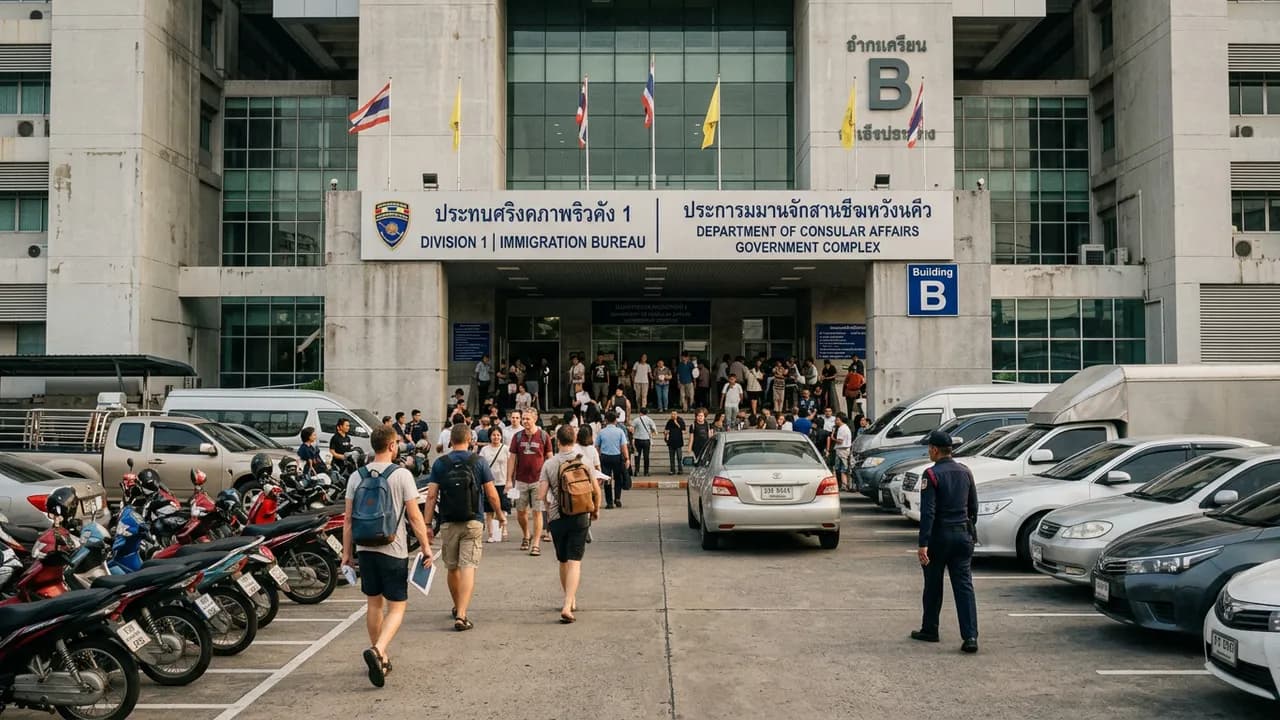
- Visit the immigration office covering your residential area
- Bring the completed TM30 form
- Bring the landlord's Thai ID card (copy) and property documents (house registration/tabien baan, lease agreement)
- Bring the foreigner's passport (copy of biographical page, visa, and entry stamp)
- Submit at the TM30 counter
- Receive a receipt
Who can go: The landlord, the foreigner, or an authorized representative
Method 3: Through Building Management
If you live in a managed condominium or serviced apartment, the building management typically handles TM30 filing as part of their service. Ask the front desk or juristic office whether they file TM30 for residents.
Method 4: Via an Agent
Immigration agents can file TM30 on your behalf, usually for a fee of 500-1,500 THB. This is useful when your landlord is uncooperative or unavailable.
Required Documents
| Document | Who Provides It |
|---|---|
| Completed TM30 form | Landlord/owner |
| Landlord's Thai ID card (copy) | Landlord |
| House registration book / Tabien Baan (copy) | Landlord |
| Lease agreement or property ownership proof | Landlord |
| Foreigner's passport (copy of bio page, visa, entry stamp) | Foreigner |
| Power of attorney (if filing through representative) | Both parties |
Penalties
For the Property Owner/Landlord
The landlord faces a fine of up to 2,000 THB for failing to file the TM30 within the required timeframe.
For the Foreigner
While TM30 is technically the landlord's obligation, foreigners experience practical consequences:
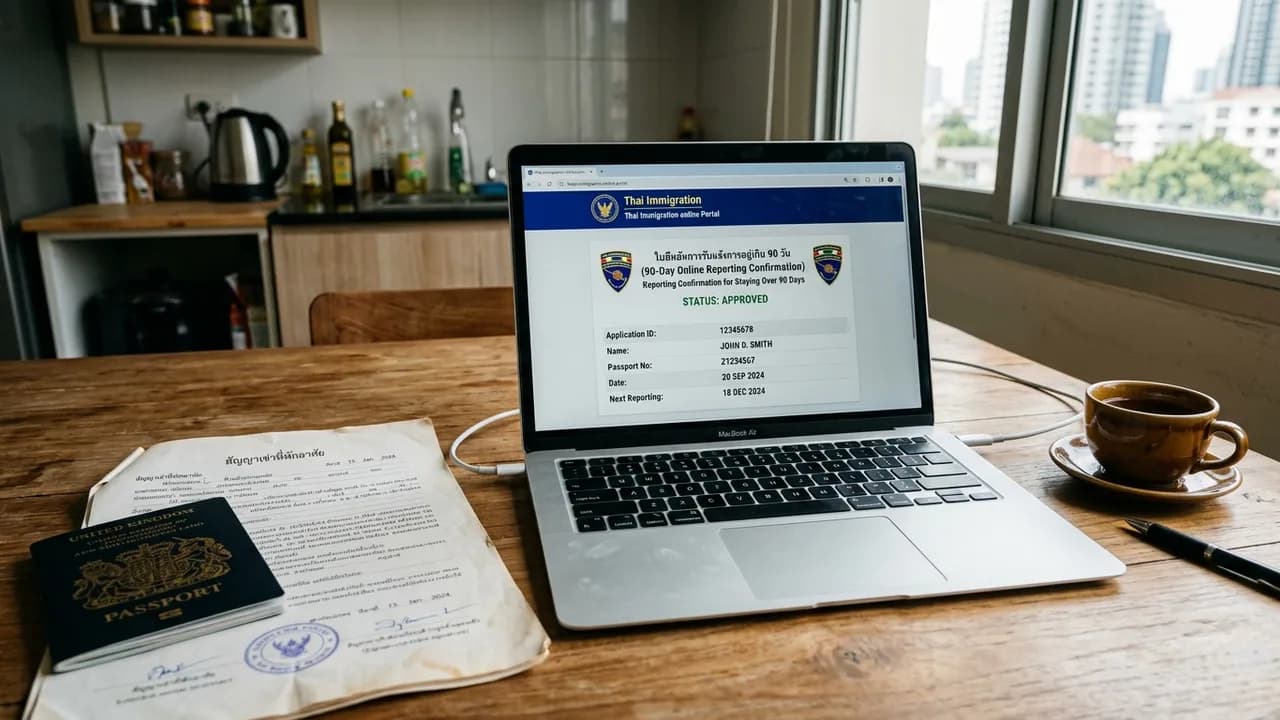
- Difficulty with 90-day reporting — Some immigration offices will not accept your 90-day report if there is no active TM30 on file
- Problems with visa extensions — Your extension of stay application may be delayed or rejected if TM30 is not filed
- Fine of up to 2,000 THB — Some offices impose fines on the foreigner for not having a current TM30
- Complications with other government services — Opening a bank account, getting a driver's license, and other services may require proof of a filed TM30
TM30 Enforcement: The Reality
Enforcement of TM30 varies dramatically across Thailand:
Strict enforcement:
- Bangkok (Chaeng Wattana) — Generally requires current TM30 for all services
- Chiang Mai — Has been strict in recent years
Moderate enforcement:
Relaxed enforcement:
- Smaller provincial offices — Some barely check TM30 status
The level of enforcement also changes over time based on policy directives from the Immigration Bureau headquarters. What is loosely enforced one year may become strictly enforced the next.
Recent Changes and Digital TM30
Thailand has been gradually digitizing the TM30 process:
- Hotels and registered accommodations file TM30 electronically through a direct connection to the immigration database. When you check into a hotel, TM30 is filed automatically.
- The online filing system has improved but still requires initial in-person verification of the property owner's identity.
- Some immigration offices have become more flexible about the re-entry re-filing requirement, particularly for foreigners returning to a previously registered address. However, this flexibility is not guaranteed.
As of 2026, there have been ongoing discussions about reforming TM30 to reduce the burden on long-term residents, but no fundamental change to the legal requirement has been enacted.
TM30 vs. 90-Day Reporting
These two requirements are separate and serve different purposes:
| Feature | TM30 | 90-Day Reporting (TM47) |
|---|---|---|
| Purpose | Notify immigration of foreigner's accommodation | Notify immigration of foreigner's continued residence |
| Filed by | Property owner/landlord | The foreigner |
| Frequency | Within 24 hours of each arrival at address | Every 90 days of continuous stay |
| After re-entry | Must be re-filed | 90-day counter resets |
| Form | TM30 | TM47 |
| Online option | Yes | Yes |
Both requirements must be met. Having one filed does not satisfy the other.
Practical Tips
- Choose TM30-friendly accommodation — When renting long-term, ask the landlord upfront whether they will file TM30. Get it in your lease agreement.
- Managed condos are easiest — Buildings with a juristic office or management company almost always handle TM30 as a standard service.
- Keep copies of filed TM30 receipts — You may need to show them when extending your visa or doing 90-day reporting.
- File online if possible — If your landlord has registered with the online system, subsequent filings take just minutes.
- After international travel, file immediately — If your landlord will not file the TM30 after your return, do it yourself or through an agent within 24 hours.
- Do not ignore it — Even if enforcement is lax in your area, an unfiled TM30 can cause unexpected problems when you need immigration services.
Frequently Asked Questions
How do I file the TM30 online?
File online through the Immigration Bureau's TM30 notification system. The property owner registers an account (verifying their identity in person the first time), then adds your passport and visa details and the property address. Once the owner is registered, every subsequent filing — including re-filing after you return from a trip abroad — takes just a few minutes online with no queue. Hotels and most managed condos file electronically for you automatically at check-in.
What is a TM30 receipt and do I need to keep it?
The TM30 receipt is the confirmation slip immigration issues when the notification is filed. Keep it: many offices ask to see a current TM30 receipt when you do your 90-day report, extend your visa, or apply for other government services. Save both a paper copy and a photo on your phone so you can produce it on demand.
Is there a fine for not filing TM30?
Yes. The property owner or landlord faces a fine of up to 2,000 THB for failing to file within 24 hours. In practice some immigration offices also impose a fine on the foreigner, or refuse to process a 90-day report or visa extension until a current TM30 is on file — so an unfiled TM30 can cost you far more than the fine in delays.
I own my condo. Do I need to file TM30?
Yes. As the owner and occupier, you are responsible for filing TM30 on yourself. Register with the online system for convenience.
My landlord refuses to file TM30. What can I do?
You can file it yourself by bringing your landlord's documents (copies of their ID and tabien baan) to immigration. Alternatively, use an agent. In the long term, consider finding a more cooperative landlord.
Do I need a new TM30 if I travel within Thailand?
If you stay at a hotel or guesthouse within Thailand, that hotel files a TM30 for you. When you return to your regular address, your existing TM30 should still be valid (you have not left the country). However, some offices interpret this differently.
Can I file TM30 at any immigration office?
You should file at the immigration office that covers the area where the property is located.
What if I am staying with my Thai partner at their house?
Your Thai partner (as the householder) is legally responsible for filing the TM30. They need to submit the form with their ID and tabien baan.
Final Thoughts
TM30 is an imperfect system that creates real headaches for long-term residents. The best approach is to proactively ensure it is filed, even if it means doing the landlord's job yourself. The time spent filing a TM30 is minimal compared to the complications that arise when immigration tells you it is missing during a visa extension appointment.