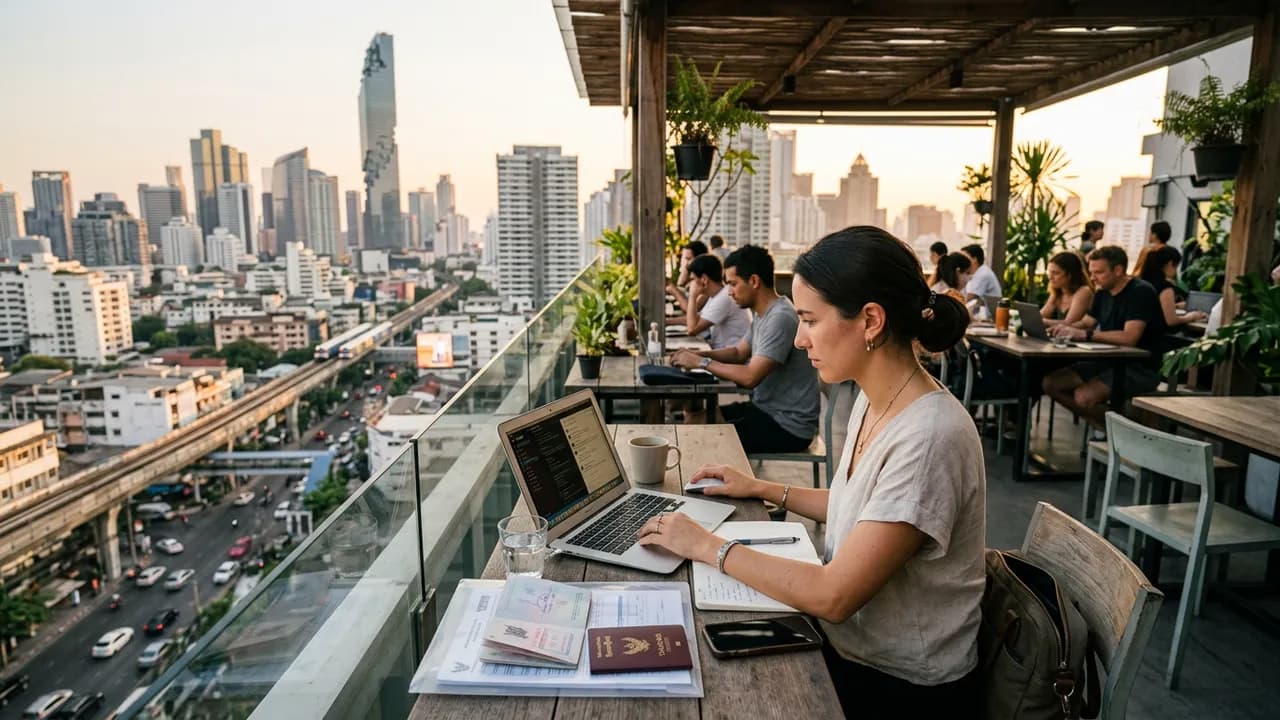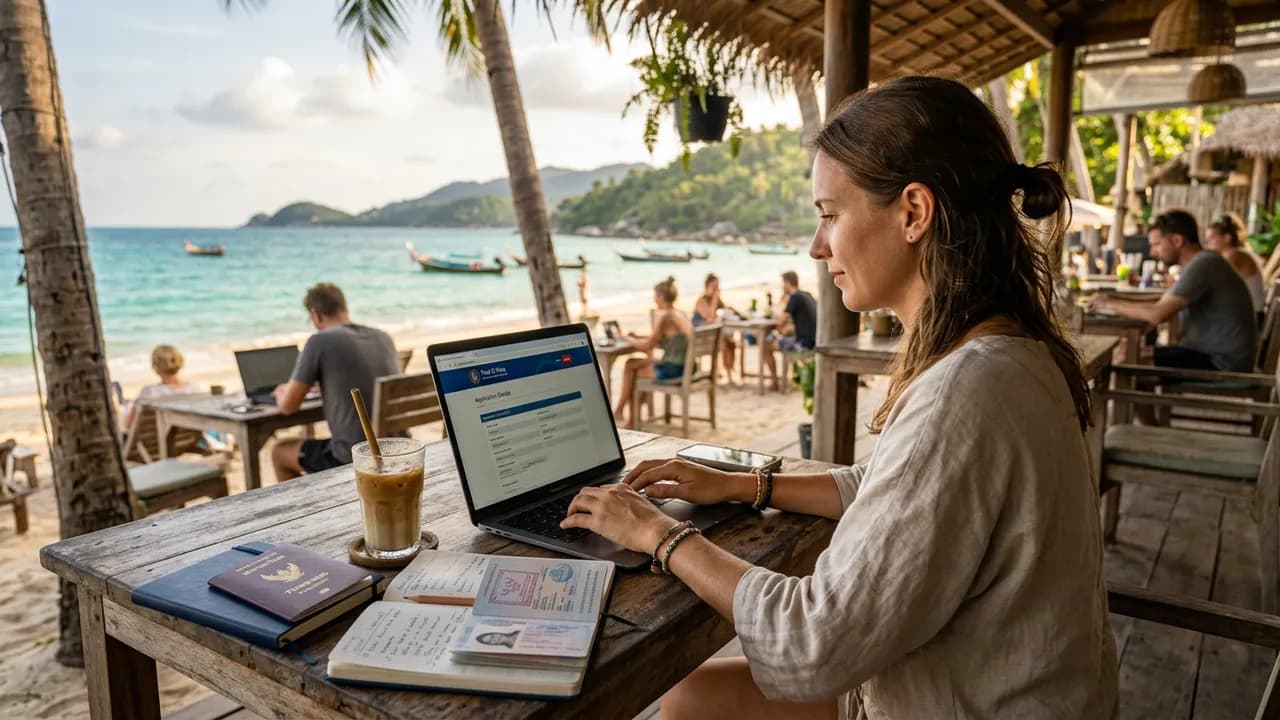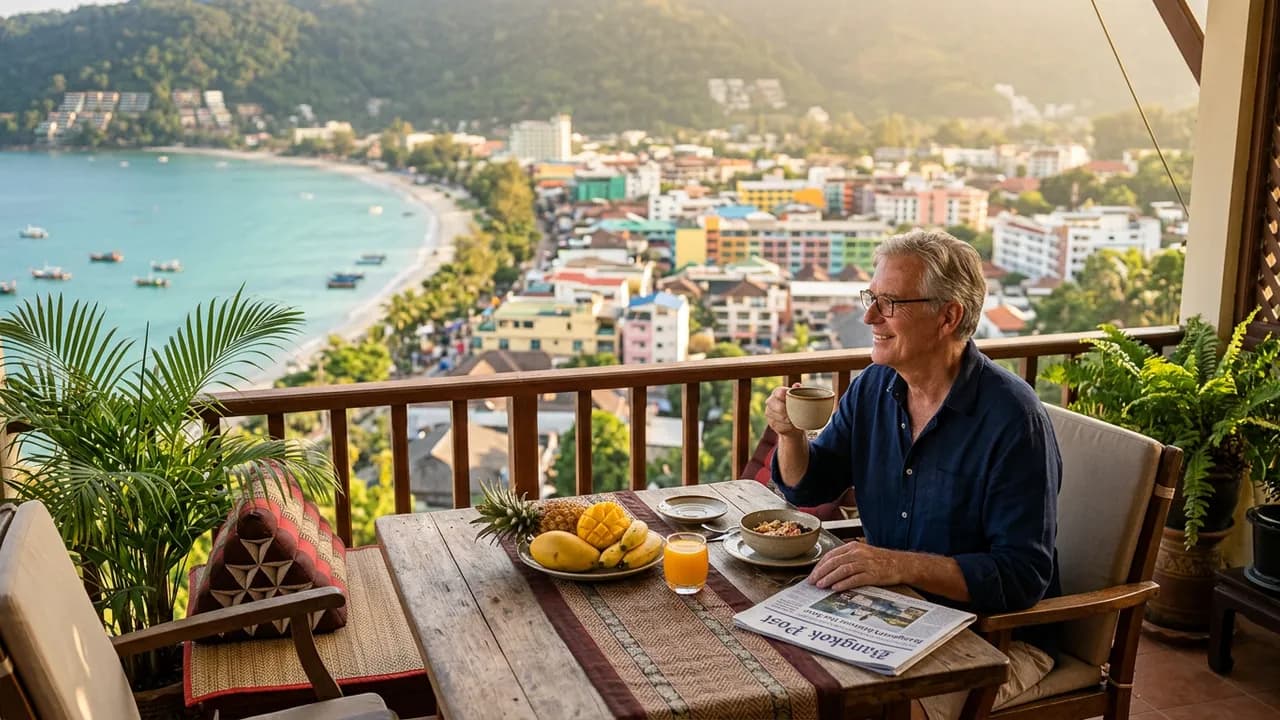
The cost of living in Thailand keeps it among the most affordable countries in the world for digital nomads, though costs have risen notably since the post-pandemic influx of remote workers. Bangkok in particular has seen rent increases in popular neighborhoods, and island prices continue to climb during high season. That said, Thailand still offers exceptional value compared to Western countries and even many Southeast Asian neighbors.
This guide provides realistic, up-to-date cost breakdowns for digital nomads in 2026, organized by city and spending category.
Monthly Budget Overview by City
Here is a quick snapshot of what to expect per month in each major nomad destination. These figures represent a comfortable but not extravagant lifestyle — a private studio or one-bedroom apartment, eating a mix of street food and restaurants, and a coworking membership.
| Expense Category | Bangkok | Chiang Mai | Phuket | Koh Phangan |
|---|---|---|---|---|
| Accommodation | 15,000-25,000 | 8,000-15,000 | 12,000-22,000 | 10,000-18,000 |
| Food | 8,000-15,000 | 6,000-12,000 | 8,000-15,000 | 7,000-14,000 |
| Coworking | 4,000-8,000 | 3,000-5,000 | 3,500-6,500 | 3,500-6,000 |
| Transport | 3,000-6,000 | 1,500-3,500 | 3,000-5,000 | 2,000-4,000 |
| Utilities & phone | 2,000-4,000 | 1,500-3,000 | 2,000-4,000 | 1,500-3,000 |
| Health insurance | 3,000-8,000 | 3,000-8,000 | 3,000-8,000 | 3,000-8,000 |
| Entertainment | 3,000-8,000 | 2,000-5,000 | 3,000-8,000 | 2,000-6,000 |
| Total | 38,000-74,000 | 25,000-51,500 | 34,500-68,500 | 29,000-59,000 |
| In USD (approx.) | $1,060-2,060 | $700-1,430 | $960-1,900 | $810-1,640 |
All figures in Thai Baht (THB). Exchange rate used: approximately 36 THB = 1 USD.
Accommodation
Accommodation is typically the largest expense for digital nomads in Thailand. Prices vary dramatically based on location, property type, and lease length.
Bangkok
Bangkok offers the widest range of accommodation options in the country.
| Type | Monthly Range | Notes |
|---|---|---|
| Studio condo (outer areas) | 8,000-12,000 THB | Bangna, Bearing, On Nut |
| Studio/1-bed condo (midtown) | 12,000-18,000 THB | Ekkamai, Phra Khanong, Udom Suk |
| 1-bed condo (central) | 18,000-30,000 THB | Asok, Thonglor, Silom |
| Serviced apartment | 25,000-50,000 THB | Includes utilities, cleaning |
| Coliving space | 10,000-20,000 THB | Shared amenities, community |
Tips: Condos near BTS/MRT stations cost more but save on transport. Negotiate 6-month leases for 15-20% discounts. Use Hipflat, DDproperty, and Facebook groups to find listings.
Chiang Mai
Chiang Mai remains the most affordable major nomad destination in Thailand.
| Type | Monthly Range | Notes |
|---|---|---|
| Studio condo (basic) | 5,000-8,000 THB | Older buildings, further from Nimman |
| Studio/1-bed condo (Nimman) | 8,000-14,000 THB | Popular nomad neighborhood |
| 1-bed apartment (Old City) | 7,000-12,000 THB | Character buildings, walkable |
| House with garden | 10,000-18,000 THB | Common in outer neighborhoods |
| Coliving space | 8,000-15,000 THB | Includes workspace and community |
Tips: Nimman is the nomad epicenter and priced accordingly. Santitham and the Old City are cheaper. Burning season (Feb-Apr) causes air quality issues — plan accordingly.
Phuket
Phuket is more expensive than the mainland, particularly near the popular west coast beaches.
| Type | Monthly Range | Notes |
|---|---|---|
| Studio (Phuket Town) | 7,000-12,000 THB | Most affordable area |
| 1-bed condo (Rawai/Chalong) | 10,000-18,000 THB | Southern beaches |
| 1-bed (Bangtao/Cherngtalay) | 15,000-25,000 THB | Near beach clubs, upscale |
| Villa (shared) | 8,000-15,000 THB per person | Pool, common areas |
| Villa (private) | 20,000-40,000 THB | Private pool, 2+ bedrooms |
Tips: A motorbike or car is essential. Rainy season (May-Oct) brings lower rents. Phuket Town is the most affordable base.
Koh Phangan
Koh Phangan has seen the most dramatic price increases among nomad destinations in recent years.
| Type | Monthly Range | Notes |
|---|---|---|
| Basic bungalow | 6,000-10,000 THB | Fan-only, simple |
| AC bungalow/studio | 8,000-14,000 THB | Standard nomad accommodation |
| 1-bed apartment | 12,000-18,000 THB | Modern, near Srithanu or Baan Tai |
| Coliving space | 10,000-18,000 THB | Includes workspace |
| Villa (shared) | 8,000-15,000 THB per person | Pool, ocean views possible |
Tips: Book before arriving in high season (Dec-Mar). Srithanu is the nomad hub. Low season cuts prices 30-50%.
Food and Dining
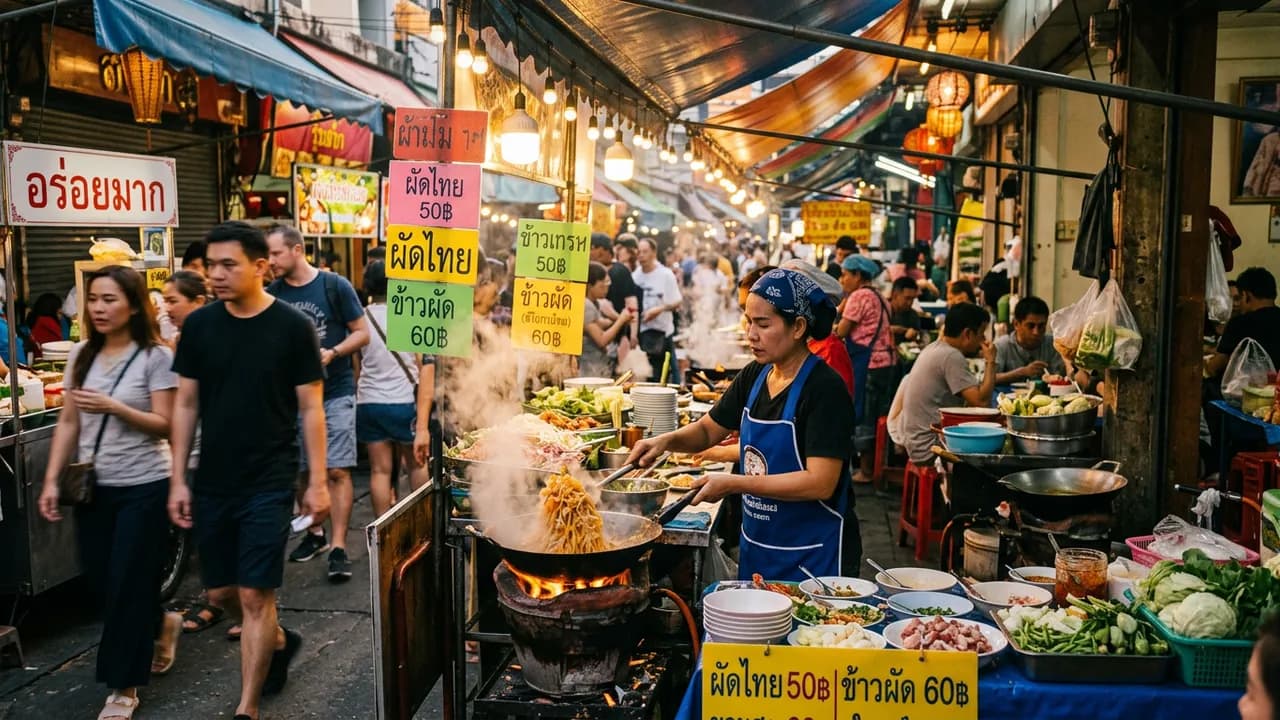
Thailand's food is one of its greatest advantages. Street food meals cost 40-80 THB, local restaurants 60-120 THB, and Western restaurants 200-450 THB. Coffee ranges from 40 THB at local shops to 80-150 THB at specialty cafes.
Monthly Food Budgets
| Budget Level | Monthly Cost | Description |
|---|---|---|
| Budget | 6,000-8,000 THB | Mostly street food and local restaurants |
| Comfortable | 10,000-15,000 THB | Mix of local and Western, eating out daily |
| Premium | 15,000-25,000 THB | Western restaurants, delivery apps, specialty groceries |
For groceries, local markets are 30-50% cheaper than supermarkets. Makro and Lotus's are good for bulk staples. Tops and Villa Market carry imported products at premium prices.
Transportation
Bangkok Transport
Bangkok has the best public transport in Thailand:
- BTS Skytrain: 17-62 THB per trip, 30-day pass available for 1,350 THB (30 trips)
- MRT subway: 17-42 THB per trip
- Grab (ride-hailing): 60-200 THB for most trips within the city
- Motorbike taxi: 10-40 THB for short trips
- Monthly transport budget: 3,000-6,000 THB depending on frequency and mode
Chiang Mai Transport
Chiang Mai has limited public transport. Most nomads use:
- Motorbike rental: 2,500-3,500 THB/month for a Honda Click or similar automatic
- Songthaew (red truck): 30-60 THB per trip within the city
- Grab: Available but limited compared to Bangkok
- Bicycle: Popular in the Old City and Nimman area
- Monthly transport budget: 1,500-3,500 THB
Phuket and Islands
- Motorbike rental (Phuket): 3,000-4,500 THB/month
- Car rental (Phuket): 12,000-18,000 THB/month
- Motorbike rental (Koh Phangan): 3,000-4,000 THB/month
- Taxis on islands are expensive — 300-500 THB for short trips
- Monthly transport budget: 3,000-5,000 THB
Health Insurance
Health insurance is essential for digital nomads in Thailand and is required for several visa types including the DTV.
Options and Costs
| Provider Type | Monthly Cost | Coverage | Notes |
|---|---|---|---|
| Thai local policy | 1,500-3,000 THB | 500,000-2,000,000 THB | Covers Thai hospitals only |
| International nomad insurance (SafetyWing, Genki) | 1,500-3,000 THB | 250,000 USD+ | Global coverage, popular with nomads |
| International comprehensive (Cigna, Allianz) | 5,000-15,000 THB | 1,000,000 USD+ | Full coverage, maternity, dental options |
| Thai social security (if employed) | 750 THB (capped) | Public hospitals | Only for formal employment |
Routine medical care without insurance is affordable (GP visits 500-1,500 THB, dental cleaning 800-1,500 THB), but insurance is critical for emergencies or hospitalization, where costs can reach 5,000-15,000 THB per night for a private room.
Visa Costs
Your visa choice significantly impacts your annual budget:
| Visa Type | Initial Cost | Annual Extensions/Renewals | Effective Monthly Cost |
|---|---|---|---|
| Visa exemption (60 days) | Free | N/A (must leave and re-enter) | 0 THB + travel costs |
| Tourist visa (TR) | 1,000 THB | 1,900 THB per extension | ~200-500 THB |
| DTV visa | 10,000 THB (one-time) | 10,000 THB per 180-day extension | ~800-1,700 THB |
| Thailand Elite (5-year) | 600,000 THB | None | 10,000 THB |
| LTR visa | Free | Free | 0 THB |
For most digital nomads, the DTV visa offers the best balance of legality, flexibility, and cost. See our DTV visa application guide for the full process.
Utilities and Connectivity
Monthly Utilities
| Utility | Monthly Cost | Notes |
|---|---|---|
| Electricity (condo) | 1,000-3,000 THB | AC usage is the main factor |
| Water | 100-300 THB | Usually cheap |
| Internet (home fiber) | 500-900 THB | AIS, True, 3BB — 200-1,000 Mbps plans |
| Mobile phone (prepaid) | 300-600 THB | Unlimited data plans available |
| Mobile phone (postpaid) | 500-1,000 THB | 5G plans with high data |
Electricity Warning
Air conditioning is by far the largest electricity cost. Running AC 24/7 in a condo can easily push electricity bills above 3,000 THB per month. Many condo buildings charge per unit at a rate of 7-9 THB/unit, which is higher than the government rate of 4-5 THB/unit. Check the electricity rate before signing a lease.
Entertainment and Lifestyle
Common monthly costs: gym membership 800-5,000 THB (local to premium), yoga 2,000-4,000 THB, Muay Thai 5,000-10,000 THB, Thai massage 200-400 THB per session. Domestic flights run 1,000-3,500 THB and weekend island trips 3,000-8,000 THB.
Sample Monthly Budgets
Budget Nomad: 25,000-35,000 THB ($700-970 USD)
- Accommodation: Basic studio in Chiang Mai — 6,000-10,000 THB
- Food: Street food and local restaurants — 6,000-8,000 THB
- Coworking/transport/phone: 2,000-5,500 THB
- Insurance + visa (amortized): 2,300-4,000 THB
- Entertainment: 2,000-4,000 THB
Realistic in Chiang Mai and doable on Koh Phangan during low season.
Comfortable Nomad: 45,000-65,000 THB ($1,250-1,800 USD)
- Accommodation: Nice condo with pool, good area — 12,000-18,000 THB
- Food: Mix of local and Western, eating out daily — 10,000-15,000 THB
- Coworking: Monthly membership — 3,000-6,000 THB
- Transport: Motorbike + occasional Grab — 2,500-4,000 THB
- Insurance: International nomad policy — 2,000-3,500 THB
- Utilities: Electricity, water, home internet — 2,000-3,500 THB
- Phone: Unlimited data plan — 500-800 THB
- Entertainment: Regular activities, weekend trips — 4,000-8,000 THB
- Visa (amortized): DTV — 800-1,500 THB
This is the sweet spot for most digital nomads. It provides a comfortable lifestyle with good accommodation, reliable workspace, and enough budget for social activities and travel.
Premium Nomad: 80,000-120,000 THB ($2,220-3,330 USD)
- Accommodation: Luxury condo or private villa — 25,000-40,000 THB
- Food: Western restaurants, fine dining, delivery apps — 15,000-25,000 THB
- Coworking: Dedicated desk or private office — 8,000-14,000 THB
- Transport: Car rental or daily Grab use — 5,000-10,000 THB
- Insurance: Comprehensive international policy — 5,000-10,000 THB
- Utilities & entertainment: 15,000-25,000 THB combined
This budget provides a genuinely luxurious lifestyle — the kind that would cost $5,000-8,000 per month in a Western city.
Comparison with Other SE Asian Countries
| Country | Comfortable Budget (USD) | Internet | Nomad Infrastructure | Visa Ease |
|---|---|---|---|---|
| Thailand | $1,250-1,800 | Excellent | Excellent | Good (DTV) |
| Vietnam | $1,000-1,500 | Good | Good | Moderate |
| Indonesia (Bali) | $1,200-1,800 | Fair to good | Excellent | Moderate |
| Malaysia | $1,000-1,600 | Excellent | Good | Good |
| Philippines | $900-1,400 | Fair | Fair | Easy |
| Cambodia | $800-1,200 | Fair | Limited | Easy |
Thailand's advantages over cheaper alternatives are its internet infrastructure, healthcare quality, food variety, safety, and the DTV visa. While you can live more cheaply elsewhere, the overall quality of life in Thailand is hard to match.
Money-Saving Tips
- Eat at local markets and street stalls — prices are a fraction of restaurants and the food is excellent
- Negotiate rent for stays longer than 3 months — landlords often discount 10-20%
- Use no-fee cards like Wise or Revolut to avoid foreign transaction charges
- Buy a local SIM immediately — Thai mobile data is fast and cheap
- Travel in low season for 30-50% lower accommodation costs
- Consider coliving — bundling accommodation and coworking saves 20-30% over booking separately
Key Takeaways
Thailand offers a range of lifestyles from backpacker-budget to luxury living, all at a fraction of Western costs. The most important factor in your monthly spend is your choice of city — Chiang Mai offers the best value, Bangkok the most convenience, and the islands a premium for the lifestyle. A comfortable digital nomad lifestyle in Thailand costs between $1,250 and $1,800 per month, making it one of the best value propositions for remote workers anywhere in the world.
For help choosing the right Thai city for your lifestyle, see our Best Cities for Digital Nomads guide. For visa options and the application process, check our Digital Nomad Thailand Guide.