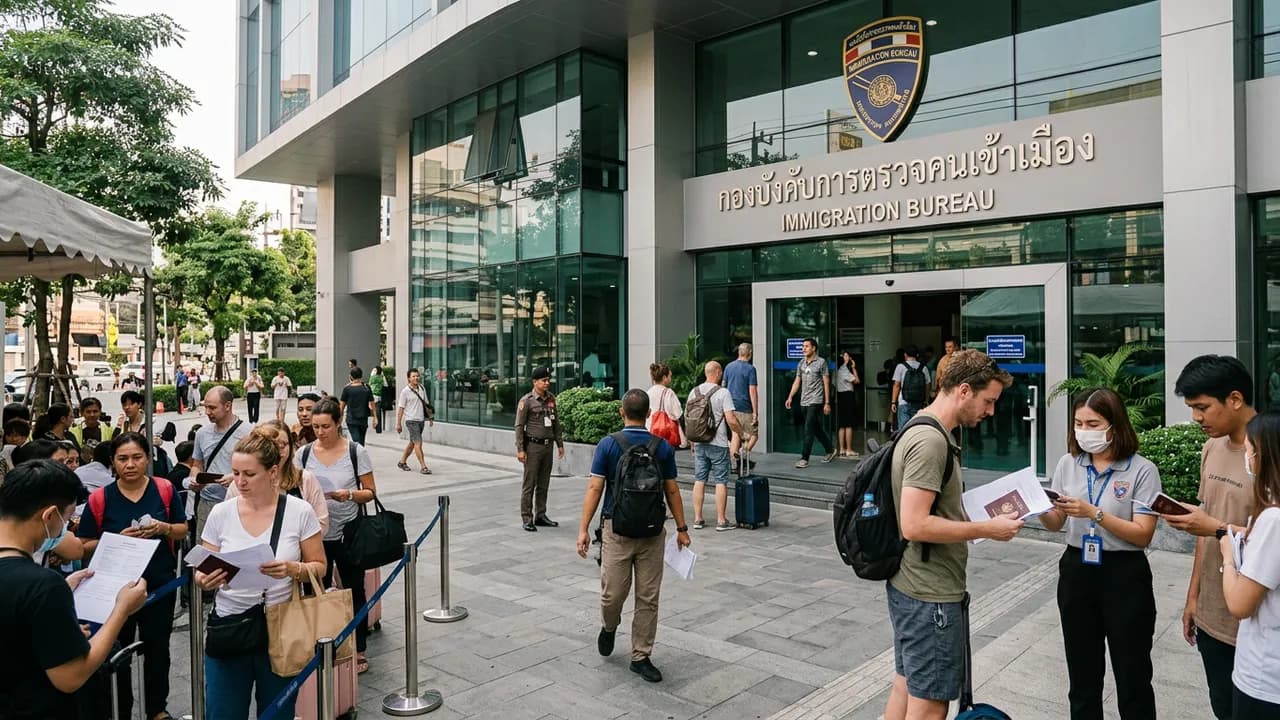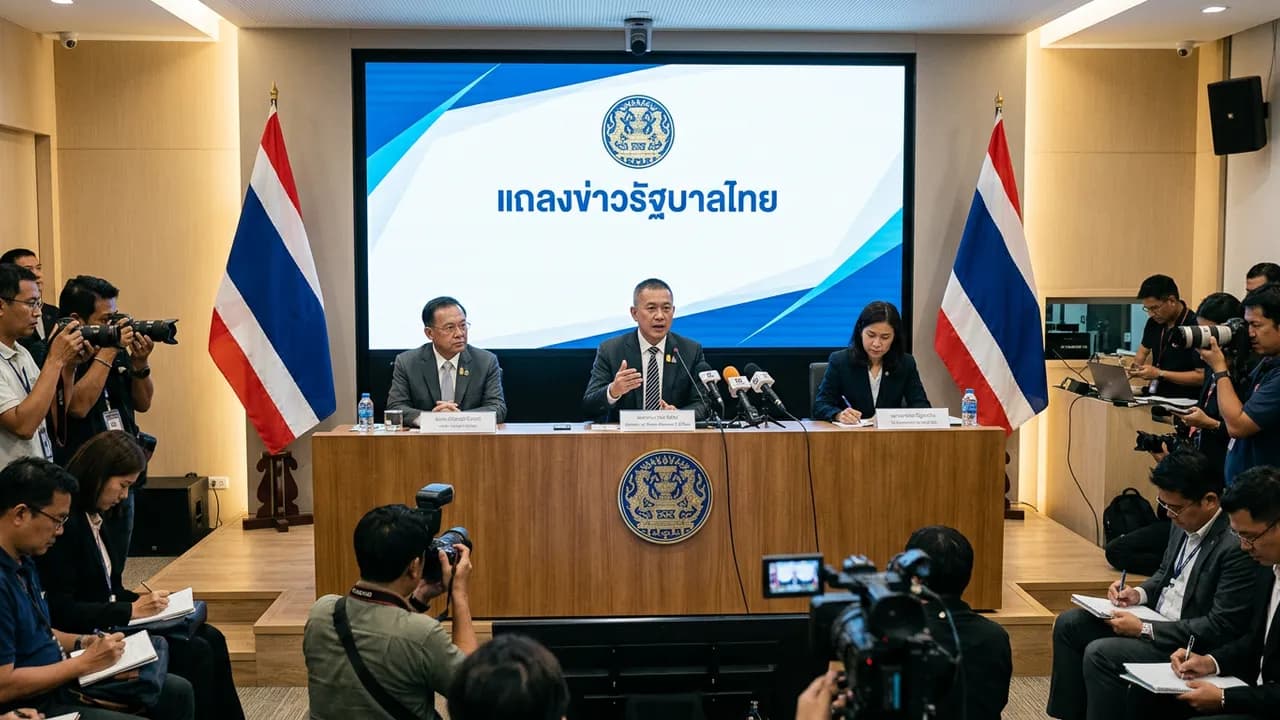
DTV visa updates in 2026 include several notable changes to Thailand's Destination Thailand Visa program since its launch in mid-2024. As the program matures, Thai immigration authorities have refined eligibility criteria, streamlined the application process, and expanded the categories of qualifying applicants. This article covers everything that has changed with the DTV visa in 2026 and what prospective applicants need to know.
Quick Facts: DTV Visa in 2026
| Detail | Current Status (2026) |
|---|---|
| Official name | Destination Thailand Visa (DTV) |
| Validity | 5 years from date of issue |
| Stay per entry | 180 days, extendable by 180 days |
| Entry type | Multiple entry |
| Application fee | 10,000 THB |
| Work authorization | Legal for remote work for non-Thai employers |
| Dependent eligibility | Spouse and children under 20 |
| Where to apply | Thai embassies/consulates worldwide + online e-Visa portal |
Major Policy Changes in 2026
Expanded Qualifying Categories
When the DTV launched in 2024, the qualifying categories were somewhat vague. The Thai government has since clarified and expanded them. As of early 2026, the confirmed qualifying categories include:
- Remote workers and freelancers employed by or contracting with companies outside Thailand
- Content creators including YouTubers, bloggers, and social media professionals with demonstrable audiences
- Muay Thai practitioners enrolled in registered training camps
- Thai cooking and culinary arts students attending accredited programs
- Medical and wellness tourists undergoing treatment at accredited Thai facilities
- Attendees of seminars, workshops, and conferences held in Thailand
- Music festival attendees for registered international events
- Participants in Thai cultural activities including language study, traditional arts, and meditation retreats
- Startup founders participating in recognized Thai incubator or accelerator programs (new for 2026)
- Academic researchers conducting fieldwork or collaborative projects with Thai institutions (new for 2026)
The addition of startup founders and academic researchers reflects Thailand's ambition to attract higher-value long-term visitors beyond the traditional digital nomad demographic.
Stricter Documentation Requirements
While the categories have expanded, the documentation requirements have tightened. In the early months of the DTV program, many embassies were inconsistent in what they required. By 2026, the Ministry of Foreign Affairs has issued clearer guidance to all Thai missions abroad.
For remote workers, you now typically need:
- Valid passport with at least 12 months remaining validity
- Completed DTV application form
- Recent passport photos (4x6 cm, white background)
- Proof of employment or freelance contracts with non-Thai entities
- Bank statements showing at least 500,000 THB equivalent in funds (or monthly income of at least 50,000 THB over the past 6 months)
- Health insurance with minimum 40,000 USD coverage valid in Thailand
- Proof of accommodation in Thailand (hotel booking or rental agreement for the initial period)
- Portfolio or evidence of professional work (LinkedIn profile, company website, published work)
Changes to Financial Requirements
The financial threshold has been a point of contention since the DTV's launch. Initially, some embassies required proof of 500,000 THB in savings, while others accepted income evidence. The updated guidance provides more flexibility:
- Option A: Savings of at least 500,000 THB (approximately 14,000 USD) in your bank account
- Option B: Monthly income of at least 50,000 THB (approximately 1,400 USD) demonstrated over the past 6 months
- Option C: Combination of savings and income that demonstrates financial stability
This tiered approach is a welcome change for freelancers whose income may fluctuate but who maintain adequate savings.
Application Process Updates
Online E-Visa Portal Now Available
One of the most significant improvements in 2026 is the expanded availability of online DTV applications through Thailand's e-Visa system. Previously, the online system was limited to certain nationalities and often unreliable. The updated portal now supports applicants from over 60 countries.
How the online process works:
- Create an account on the Thai e-Visa portal (thaievisa.go.th)
- Select "Destination Thailand Visa (DTV)" from the visa types
- Choose the Thai embassy or consulate you want to process your application
- Upload all required documents in PDF or JPEG format
- Pay the 10,000 THB fee via credit card or bank transfer
- Wait for processing (typically 5-15 business days)
- Receive approval notification via email
- Print the e-Visa approval letter or collect the visa sticker at the selected embassy
Embassy Walk-In Applications
Walk-in applications remain available at most Thai embassies and consulates. However, an increasing number of missions now require appointments booked through the e-Visa portal, even for in-person submissions. Check with your local Thai embassy before showing up.
Processing Times in 2026
Processing times have generally improved as embassies have become more familiar with the DTV category:
| Application Method | Typical Processing Time |
|---|---|
| E-Visa portal | 5-15 business days |
| Embassy walk-in (major cities) | 3-5 business days |
| Embassy by mail | 10-20 business days |
| Consulate (smaller missions) | 5-10 business days |
These times can vary significantly depending on the embassy and time of year. Peak tourist seasons (November through February) tend to see longer processing times. Some embassies, particularly in countries with high application volumes like the United States and United Kingdom, may take longer.
Where to Apply: Best Embassies for DTV
Not all Thai embassies handle DTV applications with the same efficiency or consistency. Based on applicant feedback and community reports, here are some observations:
Consistently Smooth Processing
- Thai Embassy in Kuala Lumpur, Malaysia — Fast processing, clear requirements, experienced with nomad applicants
- Thai Embassy in Vientiane, Laos — Traditionally popular for visa runs, now handles DTV efficiently
- Thai Consulate in Penang, Malaysia — Smaller mission but generally straightforward
- Thai Embassy in Tokyo, Japan — Well-organized, strict but fair documentation review
Variable Experiences
- Thai Embassy in London, UK — Longer processing times but thorough review
- Thai Embassy in Washington, DC — Requires appointment, processing can take 2-3 weeks
- Thai Consulate in Los Angeles — High volume, occasional delays
Best Practice
Apply at the embassy nearest your registered residence or country of citizenship. While some embassies accept third-country nationals, this is not guaranteed and policies change frequently.
In-Country Extensions and 90-Day Reporting
180-Day Extensions
DTV holders can extend their 180-day stay by an additional 180 days at any Thai Immigration office. The extension fee is 10,000 THB. Requirements for the extension include:
- Completed TM.7 extension form
- Passport with current DTV visa
- Two passport photos
- Proof of accommodation
- Extension fee of 10,000 THB
90-Day Reporting
Like all foreigners staying in Thailand for more than 90 consecutive days, DTV holders must complete 90-day reporting. This can now be done through three methods:
- In person at any Immigration office
- Online through the Immigration Bureau's 90-day reporting system
- By mail sent to the nearest Immigration office at least 15 days before the due date
The online system has improved substantially in 2026 but can still be unreliable during high-traffic periods. Many expats recommend doing the first report in person and subsequent ones online.
Tax Implications for DTV Holders
An important consideration that many DTV applicants overlook is Thailand's evolving tax policy on foreign income. Since January 2024, Thailand has required tax residents (those spending 180 or more days in a calendar year in Thailand) to pay tax on foreign income remitted to the country.
Key Points
- Spending 180+ days in Thailand in a calendar year makes you a Thai tax resident
- Income earned abroad and transferred to Thai bank accounts may be subject to Thai income tax
- Thailand has double taxation agreements (DTAs) with many countries, which may reduce or eliminate double taxation
- The Revenue Department is still developing enforcement mechanisms for digital nomads
- Consult a qualified Thai tax advisor to understand your specific obligations
Practical Impact
Most DTV holders manage this by either:
- Keeping their total stay under 180 days per calendar year
- Using foreign bank accounts and cards for expenses rather than transferring money to Thai accounts
- Working with tax professionals to utilize DTA provisions
- Structuring their stays across calendar years to minimize exposure
DTV vs. Other Long-Term Visa Options
For context, here is how the DTV compares with other long-stay visa options in 2026:
| Feature | DTV | Tourist Visa | Thailand Elite | LTR Visa |
|---|---|---|---|---|
| Validity | 5 years | 60 days | 5-20 years | 10 years |
| Max continuous stay | 360 days | 90 days | 1 year | 1 year |
| Cost | 10,000 THB | 1,000 THB | 600,000+ THB | Free |
| Remote work legal | Yes | No | No | Yes (select categories) |
| Income requirement | 500,000 THB savings or 50,000 THB/month | None | None | 80,000 USD/year (varies) |
| Dependents | Yes | No | Separate application | Yes |
Common Issues and How to Avoid Them
Application Rejections
The most common reasons for DTV rejection include:
- Insufficient proof of remote work — Provide contracts, invoices, or employer letters, not just a LinkedIn profile
- Inadequate financial documentation — Bank statements should cover at least 6 months
- Incomplete health insurance — Ensure your policy explicitly covers Thailand and meets the minimum coverage threshold
- Vague purpose of visit — Be specific about your qualifying category and activities in Thailand
Re-Entry Permits
DTV is a multiple-entry visa, so you do not need to obtain a re-entry permit before leaving Thailand. This is a significant advantage over single-entry visas, which become void upon departure.
What to Expect Next
The Thai government has signaled further refinements to the DTV program throughout 2026:
- Possible fee adjustment — There have been discussions about tiered pricing based on the length of intended stay
- Integration with the Digital ID system — Thailand is working on a digital identity platform that may streamline visa extensions and 90-day reporting
- Expanded dependent eligibility — Proposals to include parents and domestic partners beyond the current spouse-and-children definition
- Work permit integration — Ongoing discussions about whether DTV holders should be able to take on limited local freelance work
These changes are not yet confirmed, and Thailand's immigration policies can shift quickly. We will update this article as new information becomes available.
Key Takeaways
The DTV visa remains the best option for digital nomads who want to live in Thailand legally while working remotely. The 2026 updates have made the application process more predictable and the qualifying categories more inclusive. However, applicants should be thorough with their documentation, aware of the tax implications, and prepared for processing times that vary by embassy.
For a complete step-by-step application walkthrough, see our DTV Visa Application Guide. For broader context on Thailand's immigration changes, read our Thailand Visa Changes in 2026 roundup.