The Thailand visa for Chinese citizens supports the most popular overseas destination for Chinese travelers, with millions of visitors from China arriving each year. Thanks to a bilateral visa exemption agreement, Chinese passport holders can now enter Thailand without a visa for short stays, making travel between the two countries easier than ever.
This guide covers everything Chinese citizens need to know about visiting Thailand, from the visa exemption policy to longer-stay visa options, embassy locations across China, costs, and practical tips for a smooth trip.
Quick Facts for Chinese Citizens
| Detail | Information |
|---|---|
| Visa exemption | Yes, 30 days (bilateral agreement) |
| Visa on arrival | Not available (since 15 September 2026, VOA covers only Azerbaijan, Belarus and Serbia) |
| Tourist visa (TR) | Available (60 days) |
| Passport validity required | At least 6 months |
| Proof of funds required | 20,000 THB per person / 40,000 THB per family, if the officer asks |
| Return ticket required | Yes |
| e-Visa available | Yes |
| Thai embassies in China | 6+ locations |
Visa Exemption for Chinese Citizens
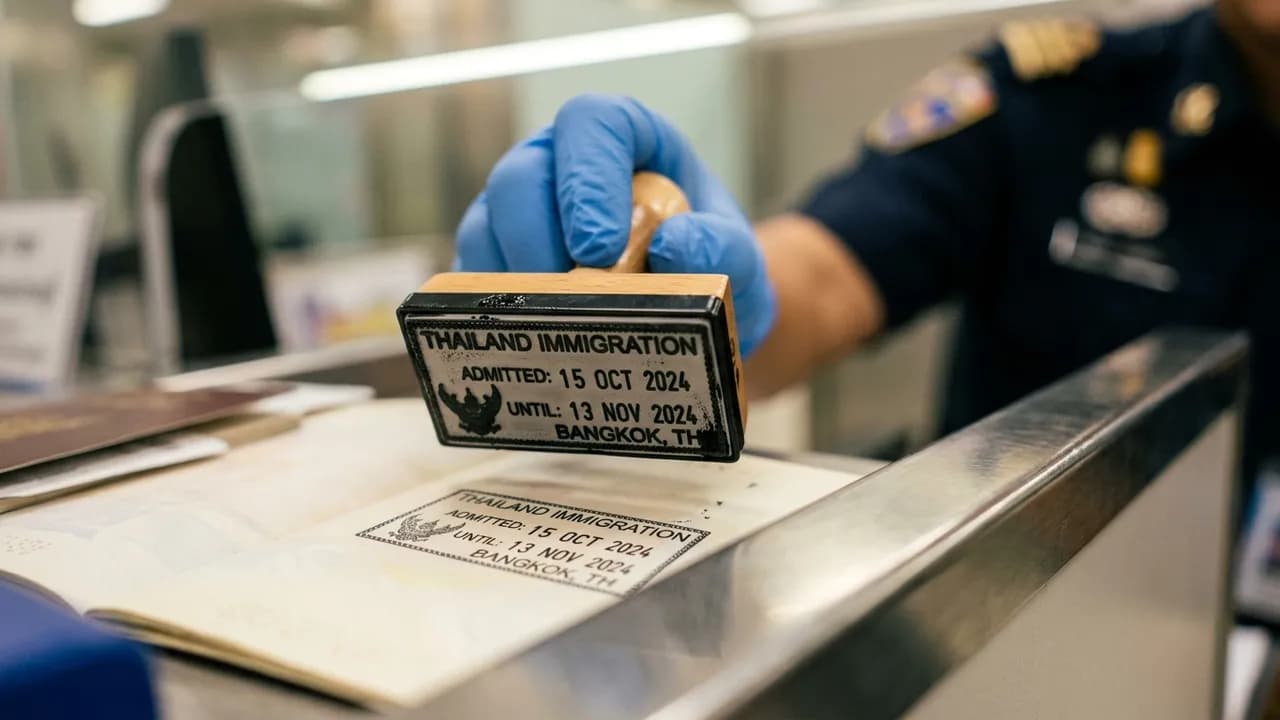
Since the Thailand-China mutual visa exemption agreement took effect on 1 March 2024, Chinese passport holders can enter Thailand without applying for a visa in advance. This is the simplest and most convenient option for short visits.
China is not on the lists in Thailand's new visa exemption rules, which were published in the Royal Gazette on 31 August 2026 and have been in force since 15 September 2026 (TAT Newsroom). Chinese citizens keep their own bilateral arrangement. Under the agreement, holders of Chinese ordinary passports can stay up to 30 days per entry, with a cumulative total of no more than 90 days in any 180-day period (Ministry of Foreign Affairs of Thailand).
Key Rules
- Duration: Up to 30 days per entry.
- Cumulative limit: No more than 90 days in total in any 180-day period.
- Purpose: Short visits. The agreement does not cover "residing or engaging in employment, study, media activities or other activities that require prior approval from competent authorities" (MFA). If your trip involves any of those, apply for the matching visa.
- Entry points: The MFA's list of bilateral agreement countries puts China in the 30-day group, restricts only Myanmar nationals to international airports, and sets no port restriction for China (MFA list, 24 February 2025). The 2026 twice-per-year land-border cap is written for the 30-day and 15-day exemption categories; whether it applies to bilateral entries hasn't been published. Check before planning repeated land crossings.
- Extensions: One extension of no more than 30 days at a Thai Immigration office (cost: 1,900 THB, form TM.7), at the officer's discretion. Thai Immigration's tourism-extension criteria cover "visa exemption for ordinary passports for not exceeding 30 days in accordance with international agreements", which includes the China agreement (Immigration Division 1). Whether extended days count toward the 90-day cumulative limit has not been published.
- No advance application: Simply arrive with your passport and supporting documents.
What You Need at the Border
When arriving in Thailand under the visa exemption, have the following ready:
- Passport valid for at least 6 months beyond your arrival date.
- Thailand Digital Arrival Card (TDAC), filed online at tdac.immigration.go.th before arrival. It replaced the paper T.M.6 card.
- Proof of onward travel — a return flight ticket or ticket to a third country.
- Proof of accommodation — hotel booking or invitation letter from a host.
- Proof of funds — 20,000 THB (approximately 4,000 CNY) per person or 40,000 THB per family. Thai missions state this requirement for visa-exempt entry generally, not specifically for the bilateral agreement, and officers may ask to see it (Royal Thai Embassy, London; Royal Thai Embassy, Washington D.C.).
What About Visa on Arrival?
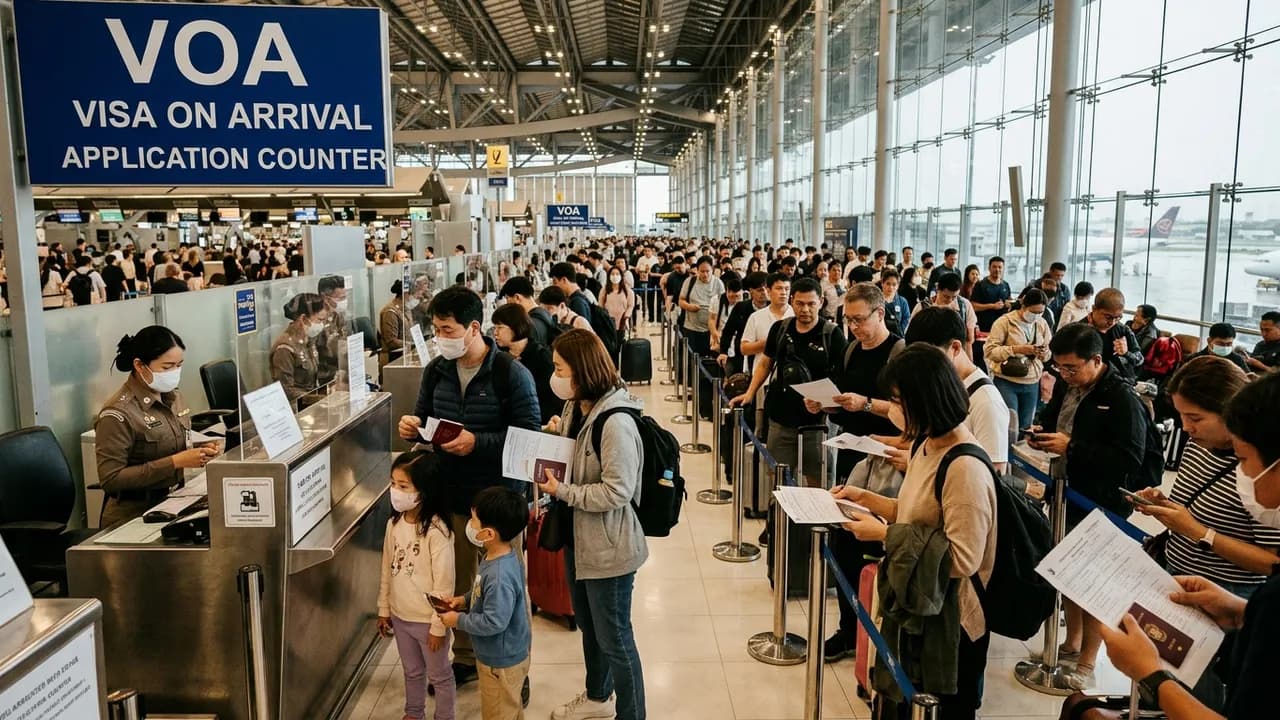
Visa on arrival is not an option for Chinese passport holders. Since 15 September 2026, it is limited to citizens of Azerbaijan, Belarus and Serbia. Use the visa exemption for trips of up to 30 days, or apply for a visa before you travel.
Tourist Visa (TR) for Longer Stays
If you plan to stay in Thailand for more than 30 days, applying for a Tourist Visa at a Thai embassy or consulate in China before your trip is the recommended option.
Tourist Visa Details
| Feature | Single Entry | Multiple Entry (METV) |
|---|---|---|
| Stay per entry | 60 days | 60 days per entry |
| Extensions | +30 days at immigration | +30 days per entry |
| Validity | 3 months | 6 months |
| Entries | 1 | Unlimited within validity |
| Fee | 240 CNY | 1,200 CNY |
Required Documents
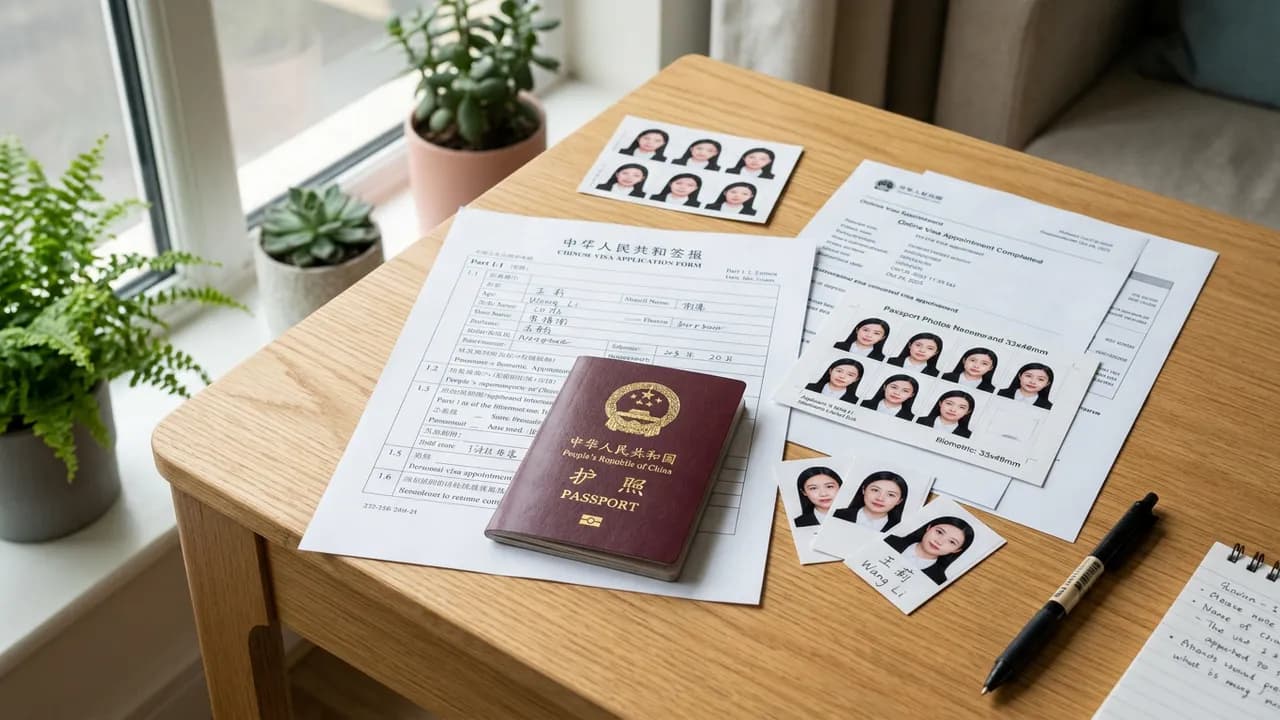
- Passport biodata page (passport valid for at least 6 months) and a photo taken within the last six months, uploaded to the e-Visa form.
- A document showing where you currently live.
- Proof of financial means (bank statements for the last three months showing at least 20,000 THB, or a sponsor letter).
- Confirmed round-trip flight itinerary.
- Hotel reservation or accommodation details.
Application Process
- Choose your embassy or consulate based on where you currently live (see the jurisdiction table below).
- Gather all documents listed above.
- Apply online at thaievisa.go.th. The Thai missions in mainland China accept visa applications only through the e-Visa system and have issued stickerless e-Visas since 27 September 2021.
- Pay the fee online. It is non-refundable.
- Wait for processing. Most missions in China publish no standard processing time; the Kunming consulate quotes at least 7 working days for a single-entry tourist visa. Apply several weeks ahead.
- Print the approval e-mail and carry it with your passport.
e-Visa for Chinese Citizens
Thailand offers an electronic visa application system that allows Chinese citizens to apply online without visiting an embassy in person.
How the e-Visa Works
- Visit the official Thai e-Visa website.
- Create an account and select the visa type.
- Upload scanned copies of all required documents.
- Pay the visa fee online (credit card or other accepted methods).
- Receive approval via email. Allow several weeks, as most missions publish no fixed processing time.
- Print the e-Visa approval letter and present it at check-in and immigration.
The e-Visa system is particularly convenient for applicants who live far from a Thai embassy or consulate.
Group Tour Visa Exemption
Chinese citizens traveling as part of an organized tour group from a licensed travel agency may benefit from additional facilitations. Group tours arranged through agencies with agreements with Thai authorities can sometimes enjoy expedited processing at immigration. However, with the individual visa exemption now in place, this option is less critical than it once was.
Thai Embassies and Consulates in China
China has one of the largest networks of Thai diplomatic missions worldwide, reflecting the enormous volume of travel between the two countries.
Embassy and Consulate Locations
| City | Type | Jurisdiction |
|---|---|---|
| Beijing | Royal Thai Embassy | Beijing, Tianjin, Hebei, Heilongjiang, Jilin, Liaoning, Hubei, Shanxi, Henan, Qinghai, Inner Mongolia, Tibet, Xinjiang |
| Shanghai | Consulate-General | Shanghai, Jiangsu, Zhejiang, Anhui |
| Guangzhou | Consulate-General | Guangdong, Hainan |
| Xiamen | Consulate-General | Fujian, Jiangxi |
| Kunming | Consulate-General | Yunnan, Guizhou, Hunan |
| Chengdu | Consulate-General | Sichuan, Chongqing |
| Xi'an | Consulate-General | Shaanxi, Gansu, Ningxia |
| Nanning | Consulate-General | Guangxi |
| Qingdao | Consulate-General | Shandong |
These are the districts each mission publishes on its own website (read 27 September 2026), and together they cover all 31 mainland provinces, regions and municipalities once each. Residents of Hong Kong and Macao apply through the Consulate-General in Hong Kong. Choose the mission for the place where you currently live when you apply online.
Costs Summary in CNY
| Item | Approximate Cost (CNY) |
|---|---|
| Visa exemption | Free |
| Visa on arrival | Not available to Chinese passport holders |
| Single-entry Tourist Visa | 240 CNY |
| Multiple-entry Tourist Visa (METV) | 1,200 CNY |
| Extension at immigration (up to 30 days) | 140 CNY (1,900 THB) |
Note: Exchange rates fluctuate. The THB amounts are fixed by Thai immigration; CNY equivalents are approximate.
Popular Tourist Routes from China
Many Chinese visitors follow well-established routes when visiting Thailand:
- Bangkok and surroundings: Grand Palace, temples, street food, and shopping at MBK or Chatuchak.
- Phuket and Krabi: Beach holidays, island hopping, diving, and nightlife.
- Chiang Mai and Chiang Rai: Temples, trekking, night markets, and cultural experiences.
- Pattaya: Beach resorts, family attractions, and entertainment.
- Koh Samui: Upscale beach resorts and wellness retreats.
Direct flights connect Bangkok with dozens of Chinese cities, and budget airlines like AirAsia, Lion Air, and Spring Airlines offer affordable fares.
Other Visa Types for Chinese Citizens
Beyond tourism, Chinese citizens may apply for several other visa categories:
Non-Immigrant B (Business)
For those conducting business, attending conferences, or taking up employment in Thailand. Requires a letter from a Thai company or organization. A separate work permit is required for employment.
Non-Immigrant ED (Education)
For studying at a Thai university, language school, or other educational institution. Requires an acceptance letter from the school.
Non-Immigrant O (Family/Retirement)
For those visiting or living with a Thai spouse or family member, or for retirees aged 50 and above meeting financial requirements.
Destination Thailand Visa (DTV)
A newer visa category aimed at remote workers, digital nomads, and those attending events or activities in Thailand. Valid for up to 180 days. See the DTV application guide for details.
Practical Tips for Chinese Citizens
Before You Travel
- Check your passport expiry well in advance. Renewing a Chinese passport can take several weeks.
- Download useful apps: Google Maps (requires VPN in China but works in Thailand), Grab for taxis, and a translation app.
- Exchange some THB before departure or withdraw from ATMs upon arrival. Thai ATMs charge a 220 THB fee per withdrawal for foreign cards.
- Purchase travel insurance that covers medical expenses in Thailand. Hospitals in tourist areas often have Mandarin-speaking staff.
At the Airport
- Fill out the arrival card on the plane to save time.
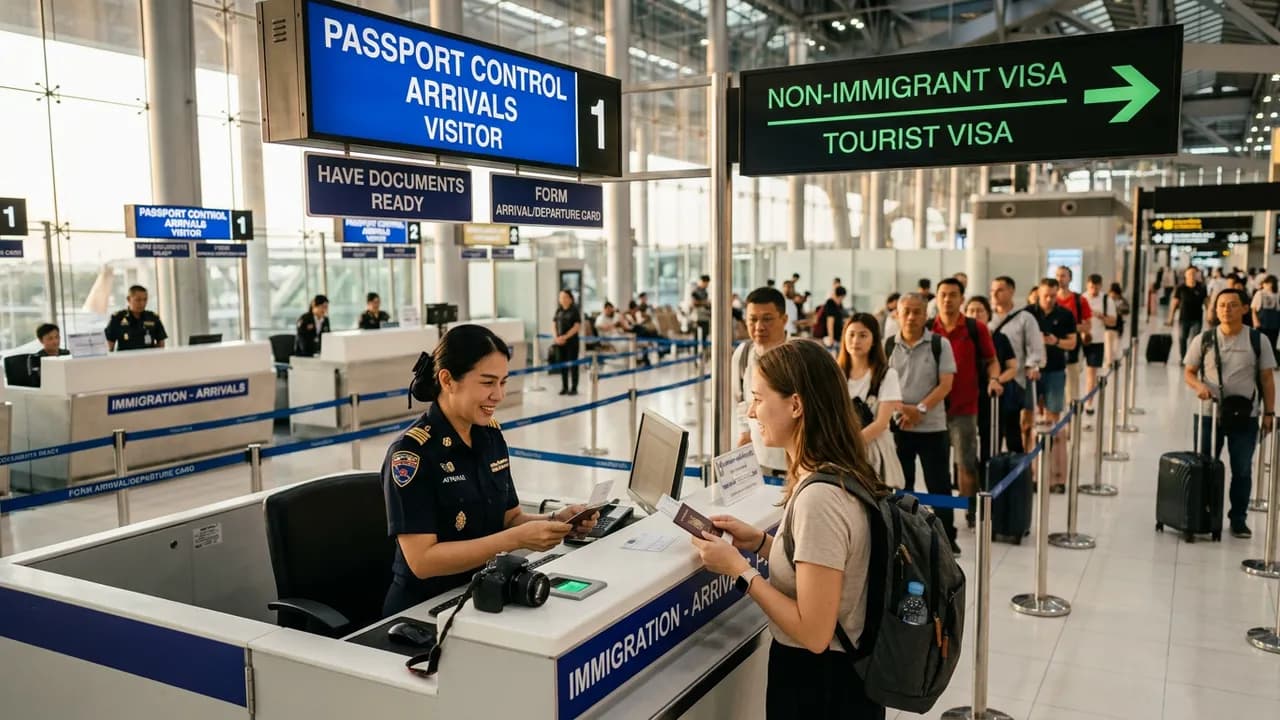
- Use the visa exemption lanes at immigration — the visa on arrival counter is not for Chinese passport holders.
- Have your hotel booking confirmation ready on your phone or printed.
- Carry proof of funds in cash if possible, as immigration officers occasionally check.
During Your Stay
- Overstaying is serious: Thailand imposes fines of 500 THB per day for overstays, with a maximum of 20,000 THB. Overstays exceeding 90 days can result in entry bans ranging from 1 to 10 years.
- Keep your passport safe: Carry a photocopy or digital copy for daily use, and store the original in a hotel safe.
- Respect local customs: Remove shoes when entering temples, dress modestly at religious sites, and show respect for the Thai monarchy.
- SIM cards: Purchase a Thai SIM card at the airport for affordable data. Providers like AIS, DTAC, and TrueMove offer tourist packages.
Extending Your Stay
If you entered on the visa exemption and wish to stay longer than 30 days, visit your nearest Thai Immigration office to request an extension of up to 30 days. It is granted once, at the officer's discretion. Bring your passport, a completed TM.7 form, a passport photo, and 1,900 THB in cash. Extensions are processed the same day in most offices.
Frequently Asked Questions
Can I work in Thailand on a visa exemption?
No. The visa exemption is strictly for tourism and short visits. Working without a valid work permit is illegal and can result in detention and deportation.
Do I need a COVID vaccination certificate?
As of 2026, Thailand does not require COVID vaccination certificates for entry. Check the latest requirements before traveling, as policies can change.
Can I enter Thailand by land from Laos or Cambodia?
The MFA's list of bilateral agreement countries restricts only Myanmar nationals to international airports and sets no port restriction for China (MFA list). The 30-day allowance is the same however you enter. The 2026 twice-per-year land-border cap is written for the 30-day and 15-day exemption categories; whether it applies to bilateral entries hasn't been published. Check with a Thai embassy or consulate in China before planning repeated land crossings.
How many times can I use the visa exemption per year?
There is no fixed number of entries, but the agreement caps your total time in Thailand at 90 days in any 180-day period, with each visa-free entry giving no more than 30 days. Immigration officers may also question frequent short entries. If you plan to spend extended time in Thailand, consider a proper long-stay visa.
Is there a fast-track immigration service at Bangkok airports?
Yes. Several companies offer paid fast-track services at Suvarnabhumi and Don Mueang airports, which can significantly reduce your wait time at immigration.