The Thailand visa for Canadians covers a top destination for Canadians — from backpackers exploring Southeast Asia to retirees escaping harsh winters. Canadian passport holders enjoy generous visa-free access to Thailand, making short trips straightforward. For longer stays, several visa options are available. This guide explains every option, the application process, costs in Canadian dollars, and practical tips tailored to Canadians.
Quick Facts for Canadians
| Detail | Information |
|---|---|
| Visa exemption | Yes — 60 days on arrival |
| Extension available | 30 additional days at immigration (1,900 THB / ~CAD 75) |
| Passport validity required | At least 6 months from date of entry |
| Blank passport pages | At least 1 required |
| Thai Embassy in Canada | Ottawa (main) |
| Thai Consulates | Vancouver, Toronto, Montreal, Edmonton, Calgary (Honorary) |
| e-Visa available | Yes, via thaievisa.go.th |
| Proof of onward travel | Technically required; sometimes checked |
| Proof of funds | 20,000 THB (~CAD 780) per person or 40,000 THB (~CAD 1,560) per family |
Visa Exemption: 60 Days Without Applying
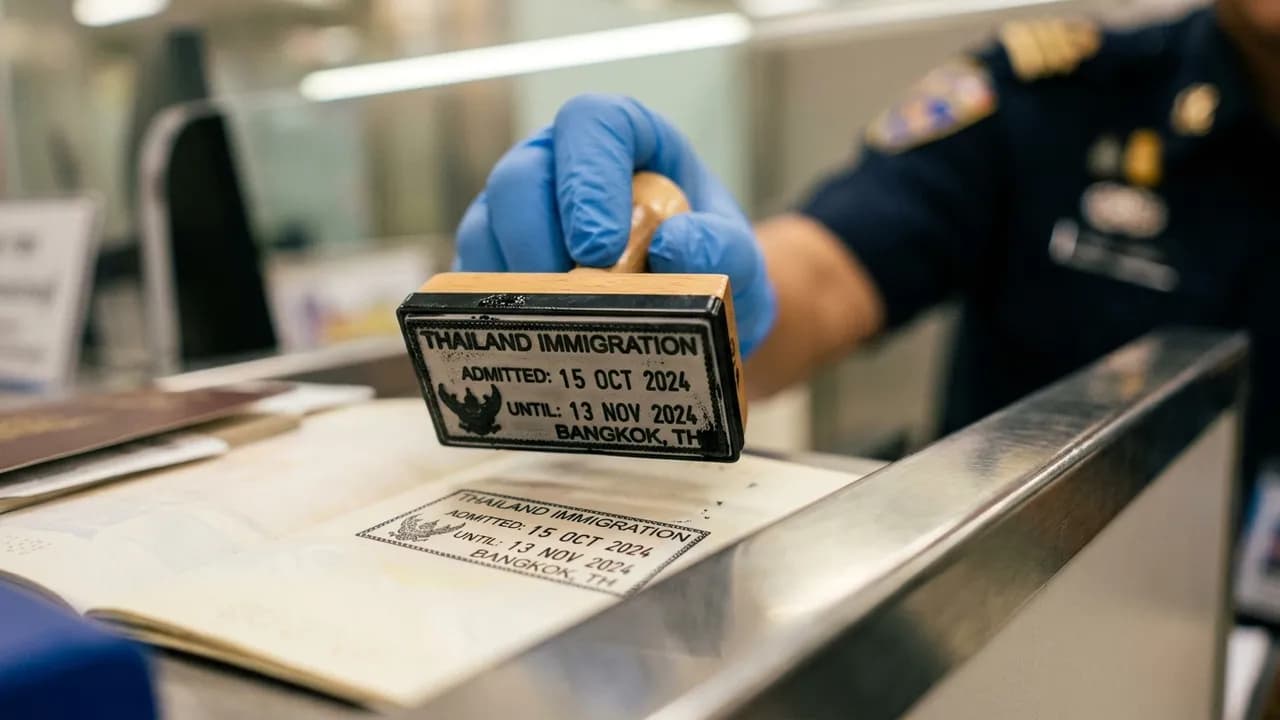
Canadian citizens are on Thailand's visa exemption list. You can board your flight to Thailand without any prior visa application and receive a 60-day entry stamp at the airport.
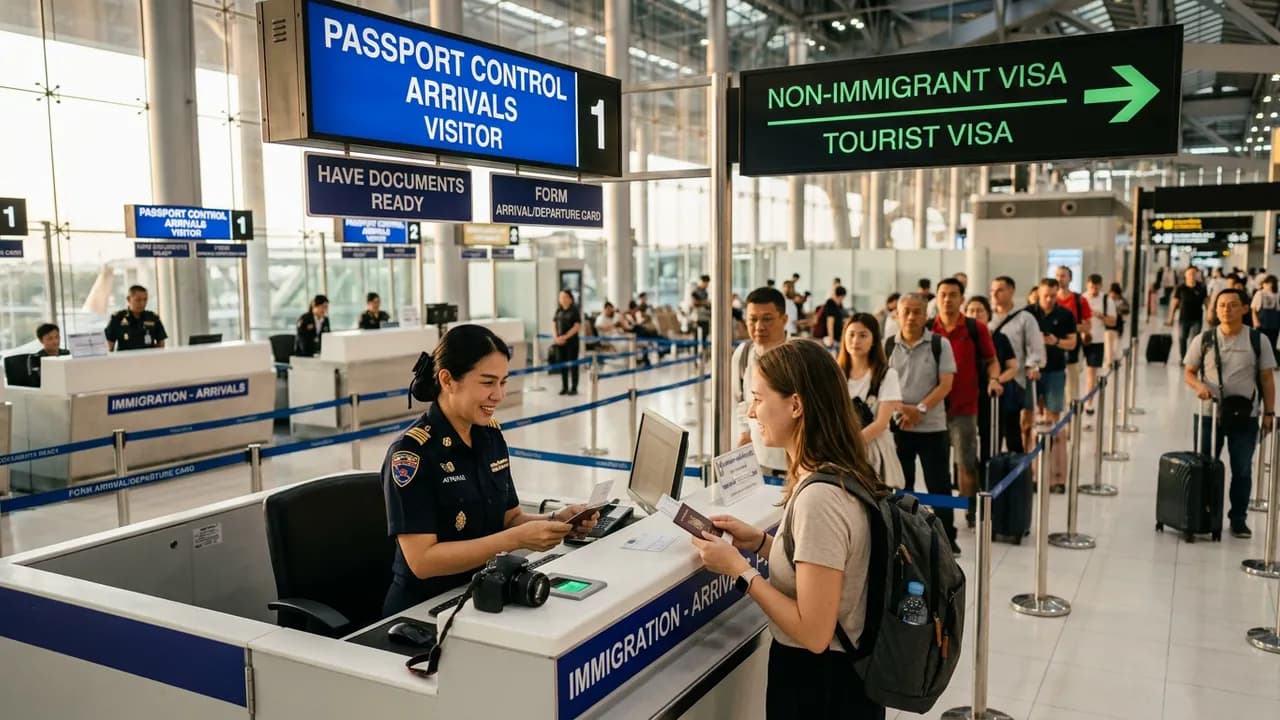
What You Need at Immigration
- A valid Canadian passport with at least 6 months remaining validity
- A completed arrival card
- Proof of onward or return travel (a flight booking out of Thailand)
- Proof of sufficient funds if requested (20,000 THB per person)
Extending Your Stay by 30 Days
You can extend your visa exemption stamp by 30 days at any Thai Immigration office inside Thailand. The fee is 1,900 THB (approximately CAD 75).
What to bring:
- Your passport
- TM.7 extension application form (available at the immigration office)
- One passport-sized photo (4x6 cm)
- Photocopies of your passport photo page and current entry stamp
- 1,900 THB in cash
This gives you a total of up to 90 days in Thailand without needing a visa.
Tourist Visa (TR): Planned Longer Stays
If you prefer to arrange your visa before leaving Canada, or if you want the flexibility of multiple entries, apply for a Tourist Visa.
Single Entry Tourist Visa
- Validity: 3 months from date of issue
- Stay permitted: 60 days per entry
- Cost: CAD 50
- Extendable: Yes, by 30 days at Thai Immigration (1,900 THB)
Multiple Entry Tourist Visa (METV)
- Validity: 6 months from date of issue
- Stay permitted: 60 days per entry (unlimited entries during validity)
- Cost: CAD 250
- Extendable: Each 60-day entry can be extended by 30 days
The METV is excellent for Canadians who want to use Thailand as a base for exploring Southeast Asia, making side trips to Vietnam, Laos, or Cambodia and re-entering Thailand each time.
e-Visa: Apply from Anywhere in Canada
The Thai e-Visa system at thaievisa.go.th lets Canadians apply for visas online. This is especially valuable given that the only full Thai Embassy in Canada is in Ottawa.
e-Visa Application Steps
- Register on thaievisa.go.th
- Choose your visa type
- Fill in the application form online
- Upload scanned documents (passport, photo, itinerary, hotel booking, financial proof)
- Pay the visa fee by credit card
- Track your application status online (processing typically takes 5-10 business days)
- Receive your e-Visa approval by email
- Print the approval letter for check-in and immigration
Benefits of e-Visa for Canadians
- No need to mail your passport to Ottawa
- No need to visit the embassy in person
- Accessible from any province or territory
- Faster than postal applications
All Visa Types Available to Canadians
Non-Immigrant B Visa (Business/Work)
For Canadians who have a job offer in Thailand or are conducting business activities.
- Cost: CAD 100 (single entry) / CAD 250 (multiple entry)
- Stay: 90 days per entry
- Requirements: Invitation letter from Thai company, company registration documents
- Note: A separate Work Permit must be obtained after arrival
Non-Immigrant ED Visa (Education)
For enrolling in Thai language courses, university programmes, Muay Thai training, or other approved educational activities.
- Cost: CAD 100
- Stay: 90 days, renewable based on course duration
Non-Immigrant O Visa (Family/Retirement)
For Canadians married to a Thai national, those with Thai children, or those over 50 looking to retire.
- Cost: CAD 100
- Stay: 90 days, extendable to 1 year in Thailand
Non-Immigrant O-A Visa (Long Stay / Retirement)
The dedicated retirement visa for Canadians aged 50 and over.
- Cost: CAD 100
- Stay: 1 year, renewable annually
- Financial requirement: 800,000 THB (~CAD 31,000) in a Thai bank account, or monthly income of 65,000 THB (~CAD 2,540), or a combination
- Health insurance: Mandatory — minimum 40,000 THB outpatient and 400,000 THB inpatient coverage (see health insurance requirements)
- Police clearance: Required from the RCMP (Canadian Criminal Record Check)
Destination Thailand Visa (DTV)
Designed for digital nomads, remote workers, and those attending extended events or medical treatment.
- Cost: CAD 130
- Stay: 180 days, extendable by another 180 days
- Key benefit: Permits remote work for a non-Thai employer
Transit Visa
For Canadians transiting through Thailand.
- Cost: CAD 45
- Stay: 30 days
Thai Embassy and Consulate Locations in Canada
Royal Thai Embassy, Ottawa (Main Embassy)
- Address: 180 Island Park Drive, Ottawa, ON K1Y 0A2
- Phone: (613) 722-4444
- Services: Full consular and visa services
- Hours: Monday to Friday, 9:30 AM – 12:00 PM (visa submissions)
Royal Thai Consulate-General, Vancouver
- Address: 1040 Burrard Street, Vancouver, BC V6Z 2R9
- Phone: (604) 687-1143
- Services: Visa services for residents of British Columbia and the western provinces
Honorary Consulates
Thailand maintains Honorary Consulates in Toronto, Montreal, Edmonton, and Calgary. These offices provide limited consular services and may assist with certain visa enquiries, but they do not all process visa applications directly. Check with the specific office before visiting.
For Canadians outside Ottawa and Vancouver, the e-Visa system is the most practical option.
Application Process: Step by Step
Applying at the Ottawa Embassy or Vancouver Consulate
- Download the application form from the embassy website
- Prepare supporting documents: passport (with 6+ months validity), two passport photos, flight confirmation, hotel reservation, bank statements
- Submit in person or by mail (Ottawa accepts mailed applications with a prepaid return envelope)
- Pay the visa fee (cash, money order, or certified cheque — policies vary by office)
- Collect your passport with the visa, or receive it by return mail (typically 3-5 business days)
Applying via e-Visa
- Go to thaievisa.go.th and create an account
- Select the visa type
- Complete the online form
- Upload all required documents as clear scans or photos
- Pay by credit card
- Receive the approval letter by email once processed
- Print and carry the letter when travelling
Costs Summary in CAD
| Visa Type | Cost (CAD) |
|---|---|
| Visa exemption | Free |
| Tourist Visa (single entry) | $50 |
| Tourist Visa (METV) | $250 |
| Non-Immigrant B (single) | $100 |
| Non-Immigrant B (multiple) | $250 |
| Non-Immigrant ED | $100 |
| Non-Immigrant O / O-A | $100 |
| Destination Thailand Visa (DTV) | $130 |
| Transit Visa | $45 |
| 30-day extension (in Thailand) | ~$75 (1,900 THB) |
Fees are approximate and subject to change. Confirm with the Royal Thai Embassy in Ottawa before applying.
Snowbird Guide: Wintering in Thailand
Many Canadians now choose Thailand over traditional snowbird destinations like Florida or Mexico. The lower cost of living, warm weather from November to March, and excellent healthcare make it an attractive winter escape.
Best Strategy for Canadian Snowbirds
- Use the visa exemption — fly to Thailand and get your 60-day stamp on arrival
- Extend by 30 days — visit immigration for a 30-day extension (90 days total)
- For longer winters, apply for a Tourist Visa (METV) before leaving Canada, giving you up to 6 months of flexibility with multiple entries
- Consider the DTV — if you work remotely, the Destination Thailand Visa offers 180 days in a single stretch
Provincial Health Insurance and Tax Considerations
- Most provincial health plans (OHIP, MSP, RAMQ, etc.) have residency requirements. If you are outside your province for more than a set number of days (often 212 days), you may lose coverage. Always purchase private travel medical insurance.
- The Canada-Thailand Tax Treaty prevents double taxation on certain types of income, but spending more than 180 days in Thailand may trigger Thai tax residency. CPP and OAS payments can be received abroad — notify Service Canada of your travel plans.
Tips for Canadian Travellers
- Watch your timing for departure — direct flights from Vancouver to Bangkok (or connections via Tokyo, Seoul, or Hong Kong) are long. Book well in advance during peak winter season (December-February) when Canadian snowbird demand drives prices up.
- Carry proof of onward travel — airlines in Canada will often check for a return or onward ticket before allowing you to board.
- Register with the Government of Canada — use the Registration of Canadians Abroad service at travel.gc.ca to receive travel advisories and consular assistance information.
- Keep digital copies of everything — store scans of your passport, visa, insurance policy, and emergency contacts in your email or cloud storage.
- Get THB at ATMs in Thailand — Canadian bank cards work at most Thai ATMs. Withdraw baht on arrival rather than exchanging CAD at Canadian banks, where rates are poor. Note the 220 THB ATM fee per withdrawal.
- Know the overstay rules — 500 THB per day fine (capped at 20,000 THB), and serious overstays can result in bans from re-entering Thailand for 1 to 10 years.
- Apply for Global Entry or NEXUS — while not Thailand-specific, these trusted traveller programmes speed up re-entry to Canada after your trip.
Common Mistakes Canadians Make
- Confusing visa exemption duration — Canada is on the 60-day list, not 30 days. You get a full 60 days without any advance application.
- Not having enough blank pages — Canadian passports with limited blank pages can cause issues. Renew your passport before it gets full.
- Forgetting travel insurance — Canadian provincial health plans provide minimal or zero coverage in Thailand. Hospital bills for even moderate injuries can run to thousands of CAD.
- Mailing passport without tracking — if sending your passport to the Ottawa embassy by mail, always use tracked and insured mail (Xpresspost or equivalent).
- Ignoring the 180-day tax threshold — spending more than 180 days in Thailand in a year can trigger Thai tax residency (see Thailand tax guide for expats). This catches some snowbirds off guard.
- Arriving without cash — while Thailand is increasingly card-friendly, immigration may ask to see proof of funds. Having some cash (THB, CAD, or USD) available avoids unnecessary stress.
- Assuming land border rules differ — Canadians entering Thailand by land (from Laos, Cambodia, Malaysia, or Myanmar) receive the same 60-day visa exemption as those arriving by air.
Frequently Asked Questions
Can I extend my stay beyond 90 days without leaving Thailand?
With a visa exemption (60 days + 30-day extension), 90 days is the maximum without a different visa. To stay longer, you would need to apply for a Tourist Visa, Non-Immigrant visa, or the DTV.
Is there a limit on how many times I can enter Thailand?
There is no published maximum number of entries per year, but immigration officers have discretion. Frequent short visits followed by brief exits may raise questions. If you plan to spend most of your time in Thailand, a proper long-stay visa is recommended.
Converting a Visa Exemption to Non-Immigrant
Generally, no. Most Non-Immigrant visas must be applied for outside Thailand at a Thai embassy or consulate. Applying from Canada before departure is the simplest approach.
This guide is current as of March 2026. Visa rules, fees, and requirements can change without notice. Always confirm details with the Royal Thai Embassy in Ottawa or the official Thai e-Visa portal before travelling.