The Thailand visa for Germans covers one of the most popular long-haul destinations for German travellers, from short holidays to gap years and longer stays for work or retirement. Whether you are planning a two-week holiday, a gap year through Southeast Asia, or a longer stay for work or retirement, this guide covers everything German passport holders need to know about visas, entry requirements, and the application process.
Quick Facts for German Citizens
| Detail | Information |
|---|---|
| Visa exemption | Yes — 30 days on arrival (since 15 September 2026) |
| Extension available | 30 additional days at immigration (1,900 THB / ~EUR 50) |
| Passport validity required | At least 6 months from date of entry |
| Blank passport pages | At least 1 required |
| Thai Embassy in Germany | Berlin (main) |
| Thai Consulates | Frankfurt, Munich |
| e-Visa available | Yes, via thaievisa.go.th (the only way to apply for a visa in Germany) |
| Proof of onward travel | Technically required; sometimes checked |
| Proof of funds | 20,000 THB (~EUR 520) per person or 40,000 THB (~EUR 1,040) per family, if the officer asks |
| Schengen passport | Accepted — standard German Reisepass |
Visa Exemption: 30 Days Without Applying
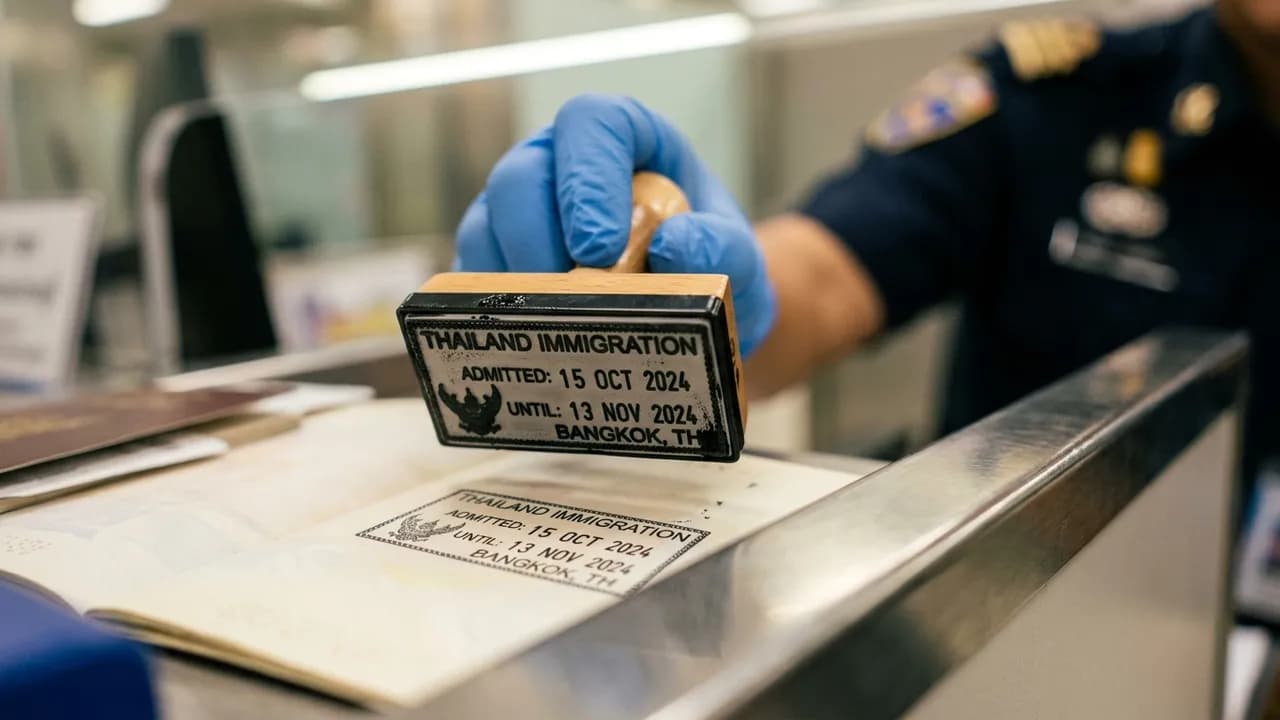
German citizens qualify for Thailand's visa exemption programme. You can fly to Thailand without applying for a visa beforehand and receive a 30-day entry stamp at immigration. Germany is on the list of 60 countries and territories that get 30 days under the new rules, published in the Royal Gazette on 31 August 2026 and in force since 15 September 2026 (TAT Newsroom).
From July 2024 until 14 September 2026, the exemption was 60 days. If you entered before 15 September 2026, you keep the stay you were granted.
The exemption is for tourism only. Business or work activity is not permitted under it.
What You Need at the Border
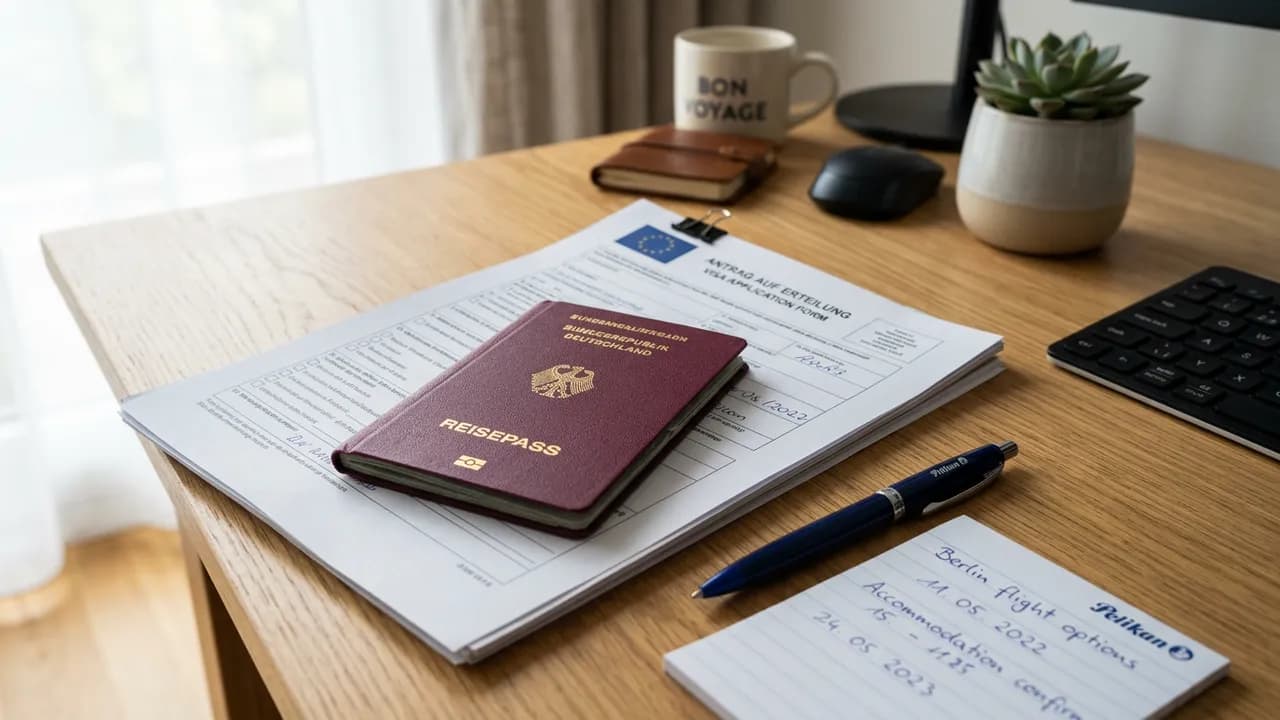
- A valid German passport (Reisepass) with at least 6 months remaining validity
- A completed Thailand Digital Arrival Card (TDAC), filed online at tdac.immigration.go.th before arrival
- Proof of onward or return travel
- Proof of sufficient funds if requested: 20,000 THB per person or 40,000 THB per family (Royal Thai Embassy, London; Royal Thai Embassy, Washington D.C.)
Important: The German Personalausweis (national ID card) is not accepted for entry into Thailand. You must travel with your Reisepass.
Extending Your Stay by 30 Days
You can extend your visa exemption once by 30 days at any Thai Immigration office (such as Bangkok Chaeng Wattana). The fee is 1,900 THB (approximately EUR 50). See extending your visa exemption for the full process.
Required documents:
- Your passport
- Completed TM.7 application form
- One passport-sized photo (4x6 cm — note this differs from the standard German biometric photo size of 3.5x4.5 cm; bring both sizes to be safe)
- Photocopies of your passport photo page and entry stamp
- 1,900 THB in cash
Total possible stay with visa exemption plus extension: about 60 days (30 + 30). For a longer stay, apply for a Tourist Visa before you travel.
Tourist Visa (TR): For Planned Longer Visits
If you want your visa arranged before departure or need multiple entries, apply for a Tourist Visa online through the e-Visa portal, under the Thai Embassy in Berlin or the consulate in Frankfurt or Munich, depending on your state of residence.
Single Entry Tourist Visa (Touristenvisum)
- Validity: 3 months from date of issue
- Stay permitted: 60 days per entry
- Cost: EUR 35
- Extendable: Yes, by 30 days at Thai Immigration in Thailand (1,900 THB)
Multiple Entry Tourist Visa (METV)
- Validity: 6 months from date of issue
- Stay permitted: 60 days per entry (multiple entries)
- Cost: EUR 175
- Extendable: Each entry can be extended by 30 days
The METV is ideal for Germans planning extended travel through Southeast Asia with Thailand as a home base.
e-Visa: Apply Online from Germany
The Thai e-Visa system at thaievisa.go.th is the only way to apply for a Thai visa in Germany. The Berlin embassy states that all visa applications must be submitted there, and that it does not accept hard-copy applications by post or in person (Royal Thai Embassy, Berlin).
e-Visa Process
- Create an account on thaievisa.go.th
- Select the desired visa type
- Complete the online application form
- Upload required documents (passport scan, biometric photo, flight booking, hotel confirmation, financial proof)
- Pay the visa fee online by credit card
- Track your application (the Berlin embassy states 15 working days from payment, plus another 15 working days if it asks for more documents)
- Receive the e-Visa approval letter by email
- Print the letter and present it at airline check-in and Thai immigration
You can apply up to 90 days before arrival, and you must be in Germany when you pay. The embassy may invite you to an interview, so stay in Germany until you have a decision.
All Visa Types Available to German Citizens
Non-Immigrant B Visa (Geschäftsvisum / Work)
For Germans taking up employment or conducting business in Thailand.
- Cost: EUR 70 (single entry) / EUR 175 (multiple entry)
- Stay: 90 days per entry
- Requirements: Invitation from a Thai employer, company registration documents
- Note: A Work Permit (Arbeitserlaubnis) must be obtained separately after arrival
Non-Immigrant ED Visa (Bildungsvisum / Education)
For studying at Thai universities, language schools, Muay Thai academies, or other approved institutions.
- Cost: EUR 70
- Stay: 90 days, renewable based on course length
Non-Immigrant O Visa (Family/Retirement)
For Germans married to a Thai national, with Thai children, or over 50 and planning to retire.
- Cost: EUR 70
- Stay: 90 days, extendable to 1 year
Non-Immigrant O-A Visa (Langzeitvisum / Retirement)
The dedicated long-stay retirement visa for German citizens aged 50 and over.
- Cost: EUR 175 (multiple entry, valid 1 year)
- Stay: 1 year, renewable
- Financial requirement: a current balance of 800,000 THB (~EUR 21,000) or monthly income of at least 65,000 THB (~EUR 1,700), shown with bank statements for the last three months or proof of earnings
- Health insurance: Mandatory. The Berlin embassy asks for health insurance from a Thai or foreign insurer covering general illnesses, including COVID-19, with an insured sum of at least USD 100,000 or 3,000,000 THB, plus the Foreign Insurance Certificate completed by your insurer (form at longstay.tgia.org)
- Medical certificate: issued in Germany, no more than three months old
- Police clearance: A Führungszeugnis (Certificate of Good Conduct) from the Bundesamt für Justiz is required
Source: the Royal Thai Embassy Berlin's list of visa types and required documents, as of 1 September 2026 (Visaarten und die erforderlichen Unterlagen). The 40,000 THB outpatient / 400,000 THB inpatient cover from a Thai insurer is what Berlin asks for the 10-year O-X visa, not the O-A.
Destination Thailand Visa (DTV)
For digital nomads, remote workers, and visitors attending events or seeking medical treatment.
- Cost: EUR 350 (multiple entry, valid 5 years)
- Stay: 180 days, extendable by another 180 days
- Key benefit: Permits remote work for a non-Thai employer — relevant for Germans working remotely for EU-based companies
Transit Visa
For Germans transiting through Thailand to another destination.
- Cost: EUR 30
- Stay: 30 days
Schengen Context: What German Travellers Should Know
As a Schengen area resident, there are a few Thailand-specific points to keep in mind:
Passport vs. National ID
- Your Reisepass is required for Thailand. The Personalausweis, which works for travel within the EU and Schengen area, is not valid for entry into Thailand.
- Ensure your Reisepass has at least 6 months validity. German passport renewal (Passbeantragung) can take 4-6 weeks, so plan ahead.
Health Insurance
- Your GKV (gesetzliche Krankenversicherung) does not cover Thailand. Private Auslandskrankenversicherung is essential — providers like ADAC, HanseMerkur, or Allianz Travel offer affordable annual policies.
- For stays over 6 weeks, standard travel insurance may not apply. Look for Langzeit-Auslandskrankenversicherung.
Tax Residency
- Germany and Thailand have a Doppelbesteuerungsabkommen (DBA). Spending more than 180 days in Thailand may trigger Thai tax residency. Consult a Steuerberater with international experience.
Thai Embassy and Consulate Locations in Germany
Royal Thai Embassy, Berlin (Hauptbotschaft)
- Address: Lepsiusstraße 64-66, 12163 Berlin
- Phone: +49 (0)30 794 810 (general); +49 (0)30 794 811 17 (visas), both answered 14:00 – 17:00
- Services: Consular services; visas for residents of Berlin, Brandenburg, Bremen, Hamburg, Mecklenburg-Vorpommern, Niedersachsen, Sachsen, Sachsen-Anhalt and Schleswig-Holstein (applications online only)
- Hours: Consular counter Monday to Friday, 9:00 – 13:00 (last applications 12:30). The counter does not take visa applications.
Royal Thai Consulate-General, Frankfurt
- Address: Kennedyallee 109, 60596 Frankfurt am Main
- Phone: +49 (0)69 69868-0 (switchboard); +49 (0)69 69868-208 (visa section)
- Services: Visas for residents of Hessen, Nordrhein-Westfalen, Rheinland-Pfalz, Saarland and Thüringen (applications online only)
Royal Thai Consulate-General, Munich
- Address: Törringstraße 20, 81675 München
- Phone: +49 (0)89 944 677-0 (switchboard); +49 (0)89 944 677-112 (visa section, 14:00 – 17:00)
- Services: Visas for residents of Bayern and Baden-Württemberg (applications online only)
Which Office Should You Use?
Use the mission responsible for the state of your Meldeadresse. The embassy and consulates divide Germany into consular districts, and each state belongs to exactly one mission: Berlin covers Berlin, Brandenburg, Bremen, Hamburg, Mecklenburg-Vorpommern, Niedersachsen, Sachsen, Sachsen-Anhalt and Schleswig-Holstein; Frankfurt covers Hessen, Nordrhein-Westfalen, Rheinland-Pfalz, Saarland and Thüringen; Munich covers Bayern and Baden-Württemberg (Royal Thai Embassy, Berlin).
Application Process: Step by Step
Paper Applications Are No Longer Accepted
The Thai missions in Germany no longer take paper applications. The Berlin embassy does not accept hard copies by post or in person, and the Frankfurt and Munich consulates also take applications online only.
Applying via e-Visa
- Register at thaievisa.go.th, choose the mission for your state, and select your visa type
- Complete the form and upload scanned documents (for a tourist visa: passport data page, a recent photo, proof of residence such as your Personalausweis or a Meldebescheinigung, flight booking, accommodation proof, and bank statements showing at least 20,000 THB)
- Pay the fee online and receive the decision by email (15 working days, according to the Berlin embassy)
- Print the approved e-Visa for travel
Costs Summary in EUR
| Visa Type | Cost (EUR) |
|---|---|
| Visa exemption | Kostenlos (free) |
| Tourist Visa (single entry) | €35 |
| Tourist Visa (METV) | €175 |
| Non-Immigrant B (single) | €70 |
| Non-Immigrant B (multiple) | €175 |
| Non-Immigrant ED | €70 |
| Non-Immigrant O (single entry) | €70 |
| Non-Immigrant O-A (multiple entry, 1 year) | €175 |
| Destination Thailand Visa (DTV) | €350 |
| Transit Visa | €30 |
| 30-day extension (in Thailand) | ~€50 (1,900 THB) |
Fees from the Berlin embassy's visa fee page, read 27 September 2026. Fees are paid online and are not refunded. Gebühren können sich ändern. Aktuelle Gebühren auf der Website der Thailändischen Botschaft in Berlin prüfen.
Tips for German Travellers
- Reisepass rechtzeitig beantragen — if your passport expires within 6 months of your planned entry to Thailand, apply for a new one immediately. Processing takes 4-6 weeks at most Bürgerämter.
- Auslandskrankenversicherung abschließen — your GKV does not cover Thailand. Even a basic travel health policy costs only EUR 10-20 per year and covers emergency treatment and medical evacuation.
- Register with the Auswärtiges Amt — use the Elefand (Elektronische Erfassung von Deutschen im Ausland) system to register your trip. This allows the German Foreign Office to contact you in case of emergencies.
- Carry proof of onward travel — airlines departing Germany (Lufthansa, Thai Airways, Condor) may check for a return or onward ticket before allowing you to board.
- ATM withdrawals in Thailand — German bank cards (EC-Karte / Girocard) may not work at all Thai ATMs. Bring a Visa or Mastercard debit/credit card. Note the 220 THB ATM surcharge per withdrawal. Banks like DKB or comdirect offer accounts with reduced foreign transaction fees.
- Photo size matters — Thailand requires 4x6 cm photos for visa extensions, which differs from the German standard of 3.5x4.5 cm. Get Thai-sized photos taken at a photo shop in Thailand if needed.
- Know the overstay penalties — 500 THB per day (capped at 20,000 THB), with entry bans of 1-10 years for serious overstays.
- Familiarise yourself with 90-day reporting — if you hold a long-stay visa, you must report your address to Thai Immigration every 90 days. This can be done online.
Common Mistakes German Citizens Make
- Travelling with only the Personalausweis — this is a common error for Germans used to EU travel. Thailand requires a full Reisepass.
- Assuming Schengen travel insurance covers Thailand — standard Schengen health insurance policies only cover the Schengen area. Thailand requires separate Auslandskrankenversicherung.
- Wrong photo dimensions — bringing only 3.5x4.5 cm biometric photos when Thailand requires 4x6 cm for in-country visa extensions. Have both sizes available.
- Not checking consular district — submitting your application at the wrong office (e.g., applying in Munich when your Meldeadresse is in Berlin's consular district) can result in rejection or delays.
- Ignoring the 180-day rule — spending more than 180 days in Thailand triggers potential Thai tax residency, which interacts with German tax obligations under the DBA (Doppelbesteuerungsabkommen).
- Forgetting to deregister from Einwohnermeldeamt — if you plan to stay in Thailand long-term, consider Abmeldung from your German municipality, which affects health insurance, taxes, and voting rights.
Frequently Asked Questions
Can I use my Personalausweis to enter Thailand?
No. Thailand does not accept the German national ID card. You must present a valid Reisepass (passport) with at least 6 months of remaining validity.
Can I enter Thailand by land with a visa exemption?
Yes. German citizens receive the same 30-day visa exemption stamp at land borders (e.g., entering from Laos, Cambodia, Malaysia, or Myanmar) as they do at international airports. Since 15 September 2026, entries on the 30-day exemption via land borders are capped at twice per calendar year.
Can I work remotely from Thailand on a visa exemption?
Legally, working in Thailand requires a work permit. The Destination Thailand Visa (DTV) specifically allows remote work for non-Thai employers and is the appropriate visa for this purpose.
Sources
- Royal Thai Embassy, Berlin — E-Visa system and jurisdiction by state
- Royal Thai Embassy, Berlin — Visa fees
- Royal Thai Embassy, Berlin — Kontakt
- Royal Thai Embassy, Berlin — Visa types and required documents
- Royal Thai Consulate-General, Frankfurt — Kontakt
- Royal Thai Consulate-General, Munich — Kontakt
- TAT Newsroom — new 30-day and 15-day visa exemption rules from 15 September
Dieser Leitfaden ist auf dem Stand von März 2026; die Angaben zur Visabefreiung wurden im September 2026 aktualisiert, Gebühren, Antragsverfahren und Kontaktdaten am 27. September 2026. Visa-Bestimmungen, Gebühren und Anforderungen können sich ändern. Aktuelle Informationen erhalten Sie bei der Königlich Thailändischen Botschaft in Berlin oder über das offizielle Thai e-Visa Portal.