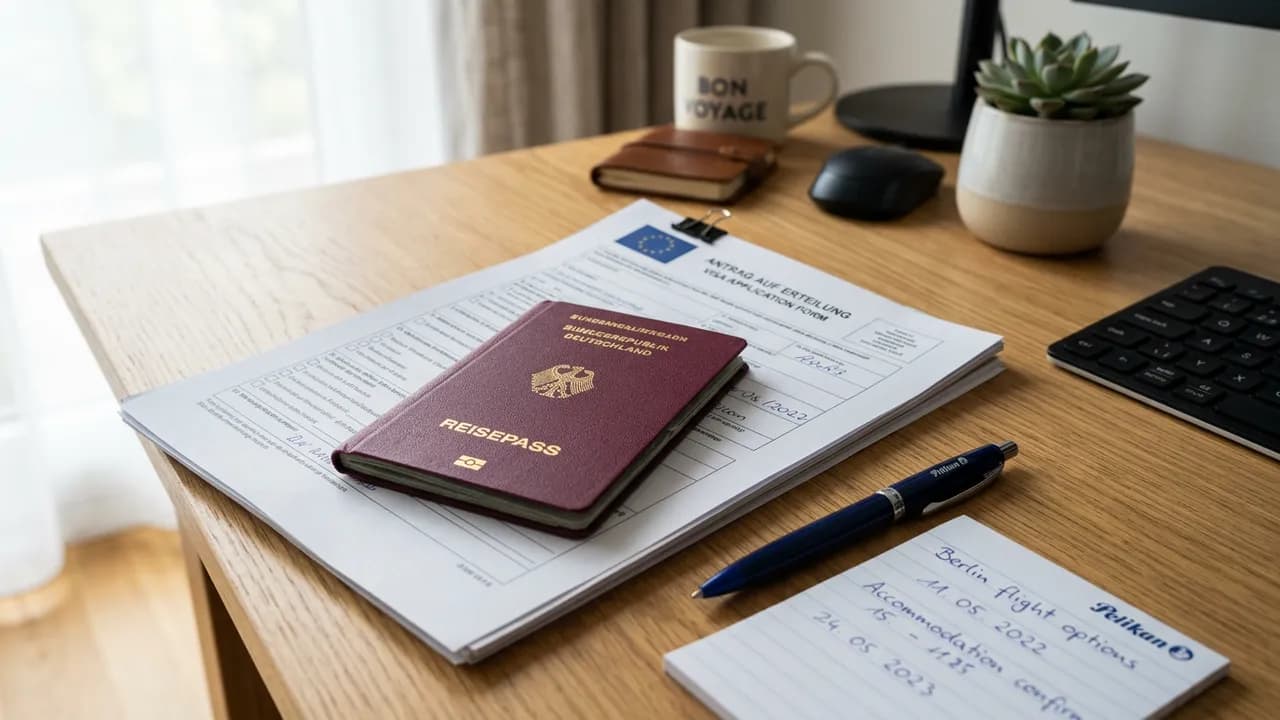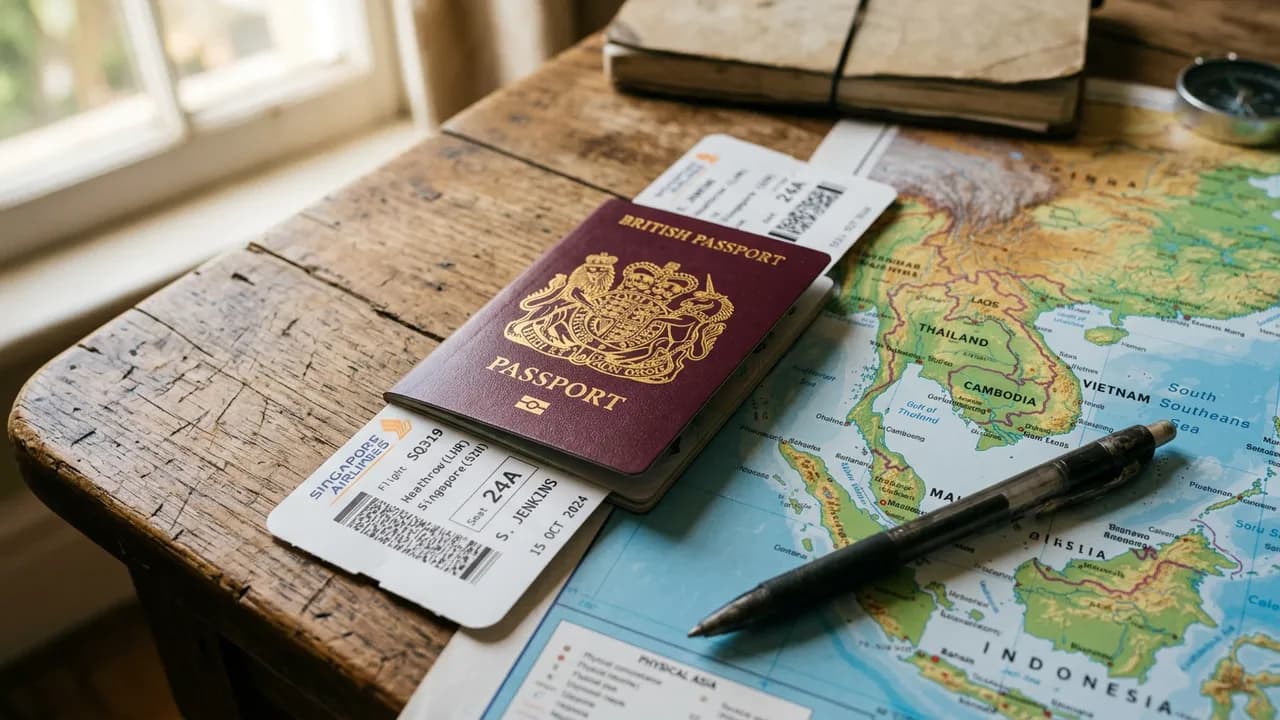
The Thailand visa for UK citizens reflects a strong connection, with the kingdom remaining one of the most popular destinations for British travellers. UK passport holders benefit from a 60-day visa exemption on arrival, making short holidays and extended trips straightforward. This guide covers every visa option, costs in GBP, and practical advice tailored to British nationals.
Quick Facts for UK Citizens
| Detail | Information |
|---|---|
| Visa Exemption | Yes - 60 days on arrival |
| Passport Validity | Minimum 6 months beyond entry date |
| Extension Available | 30 additional days at immigration office |
| Maximum Stay (No Visa) | 90 days (60 + 30 extension) |
| E-Visa Available | Yes, via thaievisa.go.th |
| Tourist Visa (TR) Cost | ~£25 GBP (single entry) |
| Brexit Impact on Visa | None - no change to Thai visa rules |
| Currency | Thai Baht (THB); ~45 THB = £1 GBP |
| UK Embassy in Bangkok | Yes, fully operational |
Visa Exemption for UK Citizens
British passport holders receive a 60-day visa-free entry to Thailand. This applies to holders of full British Citizen passports. British Nationals (Overseas), British Overseas Territories Citizens, and British Overseas Citizens should check their specific eligibility, as arrangements may differ.
How the Visa Exemption Works
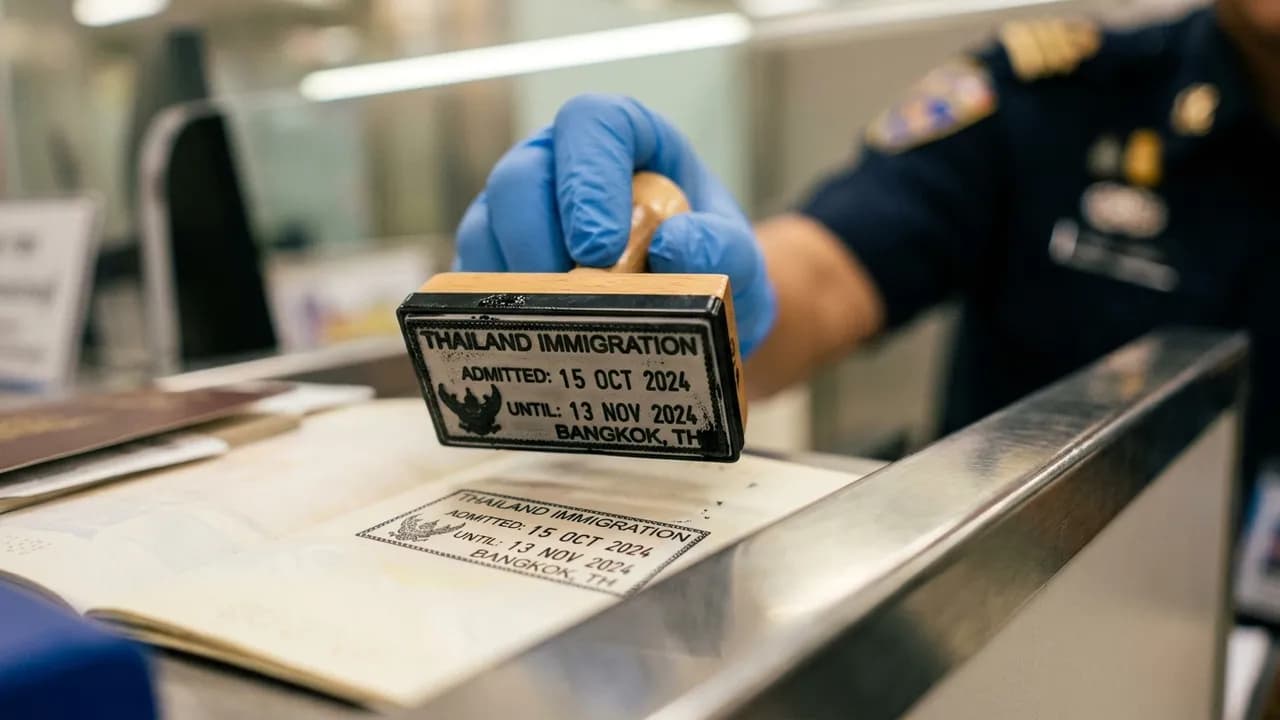
Present your British passport at immigration upon arrival at any Thai international airport or land border. You will receive a 60-day stamp with no advance application, no fees, and no visa label required. Simply fill in the arrival/departure card provided during your flight or at the border.
Requirements for Visa-Free Entry
- Valid British passport with at least 6 months remaining validity
- Proof of onward travel - return or onward flight booking (not always checked but technically required)
- Proof of funds - 20,000 THB (
£445 GBP) per person or 40,000 THB (£890 GBP) per family - Completed arrival/departure card (TM.6)
- One blank passport page for the entry stamp
Brexit and Thailand Visa Rules
Brexit has had no impact on Thailand's visa arrangements for UK citizens. Thai immigration policy is based on bilateral agreements with individual countries, not with the EU. British passport holders continue to receive the same 60-day visa exemption they had before Brexit. There is no difference in treatment between UK and EU nationals for Thai visa purposes.
Extending Your Visa Exemption
You can extend your stay by 30 additional days at any Thai Immigration office. The fee is 1,900 THB (~£42 GBP). Bring your passport, a passport-sized photo (4x6 cm), a completed TM.7 application form, and photocopies of your passport data page and entry stamp.
All Visa Types Available to UK Citizens
Tourist Visa (TR)
For stays longer than 90 days or when you want a guaranteed longer entry from the outset.
- Single Entry: ~£25 GBP - valid for 60 days, extendable by 30 days
- Multiple Entry (METV): ~£140 GBP - valid for 6 months, 60-day stays per entry
- Processing Time: 2-5 business days at the London embassy; 5-10 days via e-Visa
Non-Immigrant Visa B (Business)
For British nationals working in Thailand, establishing a business, or conducting extended business activities.
- Cost: ~£50 GBP (single entry) / ~£140 GBP (multiple entry)
- Validity: 90 days per entry
- Requirements: Invitation letter from a Thai company, company registration documents
Non-Immigrant Visa O (Family/Retirement)
A popular choice among British retirees seeking sunshine and affordable living.
- Retirement: Must be 50+ years old with 800,000 THB (
£17,780 GBP) in a Thai bank account or monthly income of 65,000 THB (£1,445 GBP) - Marriage: Must be married to a Thai national with 400,000 THB (~£8,890 GBP) in a Thai bank
- Cost: ~£50 GBP (single entry)
Non-Immigrant Visa ED (Education)
For British nationals enrolled in Thai language courses, university programmes, or vocational training.
- Cost: ~£50 GBP (single entry)
- Requirements: Acceptance letter from a recognised Thai educational institution
Smart Visa
For highly skilled professionals, investors, executives, and startup founders in Thailand's targeted industries (digital, robotics, biotech, etc.).
- Validity: Up to 4 years
- No separate work permit required
Long-Term Resident (LTR) Visa
Thailand's premium visa for wealthy individuals, retirees with substantial pensions, remote workers, and highly skilled professionals.
- Validity: 10 years
- Wealthy global citizens: Must have $1 million USD (~£790,000 GBP) in assets
- Wealthy pensioners: Must be 50+ with $80,000 USD annual pension income
E-Visa Application for UK Citizens
The Thai e-Visa system at thaievisa.go.th allows British nationals to apply for visas online without visiting the embassy in person.
E-Visa Process
- Register on the Thai e-Visa portal
- Select your visa type and choose the Royal Thai Embassy London as your jurisdiction
- Upload scanned documents (passport, photo, travel itinerary, accommodation booking, bank statements)
- Pay the fee online by credit or debit card
- Track your application status through the portal
- Receive the e-Visa approval letter by email
- Print the approval and present it when boarding and at Thai immigration
E-Visa Processing Times
- Standard: 5-10 business days
- Peak season (November-March): Allow up to 15 business days
- Recommended lead time: Apply at least 3-4 weeks before departure
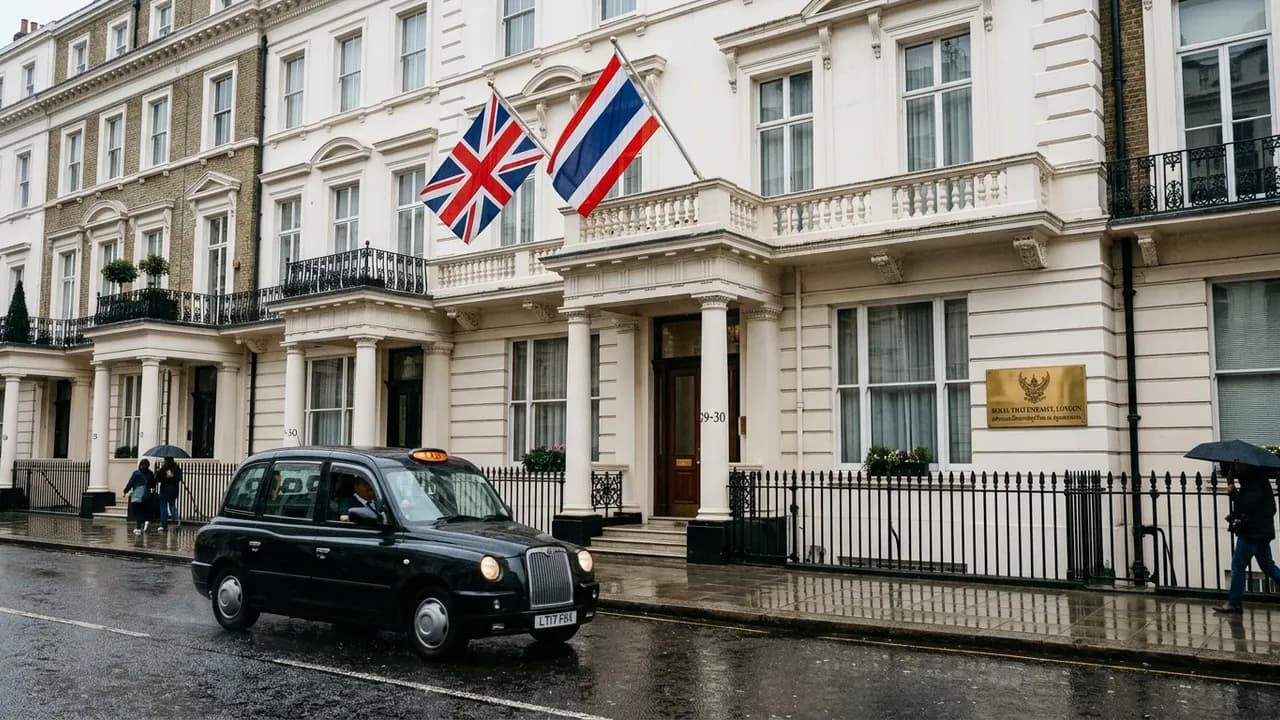
Royal Thai Embassy London
Embassy Details
- Address: 29-30 Queen's Gate, London SW7 5JB
- Phone: 020 7589 2944
- Nearest Tube: Gloucester Road (District, Circle, Piccadilly lines)
- Visa Section Hours: Monday-Friday, 09:00-12:00 (submission), 14:00-15:30 (collection)
- Website: thaiembassyuk.org.uk
In-Person Application at the Embassy
While the e-Visa system is now the primary method, the London embassy still accepts in-person applications for certain visa categories. Check the embassy website for the latest submission procedures, as appointment requirements may apply.
Honorary Consulates
Thailand has honorary consulates in several UK cities including Birmingham, Cardiff, Glasgow, Hull, and Liverpool. These can provide limited consular assistance but generally do not process visa applications. All visa matters are handled by the London embassy or via e-Visa.
Costs Summary for UK Citizens (GBP)
| Service | Cost (GBP) |
|---|---|
| Visa exemption entry | Free |
| 30-day extension of exemption | ~£42 (1,900 THB) |
| Tourist Visa - Single Entry | ~£25 |
| Tourist Visa - Multiple Entry | ~£140 |
| Non-Immigrant Visa (Single) | ~£50 |
| Non-Immigrant Visa (Multiple) | ~£140 |
| 90-Day Report | Free |
| Re-entry Permit (Single) | ~£22 (1,000 THB) |
| Re-entry Permit (Multiple) | ~£84 (3,800 THB) |
Note: GBP equivalents are approximate. Embassy fees may be quoted in GBP at a fixed rate that differs from the live exchange rate.
Tips for UK Citizens Travelling to Thailand
Before You Go
- Check your passport validity carefully. HM Passport Office processing times can stretch to 10 weeks during peak periods. Thailand requires 6 months of validity from your date of entry.
- Register with the FCDO - follow Foreign, Commonwealth & Development Office travel advice at gov.uk/foreign-travel-advice/thailand.
- Travel insurance is essential. The NHS does not cover you abroad. Thailand has excellent private hospitals, but treatment can cost thousands of pounds without insurance. Ensure your policy covers medical evacuation.
- Your EHIC/GHIC card is irrelevant for Thailand - those cards only work in Europe.
- Driving in Thailand requires an International Driving Permit (IDP). Obtain one from the Post Office before departure for £5.50.
At the Airport
- Direct flights operate from London Heathrow to Bangkok Suvarnabhumi on Thai Airways, British Airways, and EVA Air. Flight time is approximately 11-12 hours.
- Use the Foreign Passport immigration lanes at Suvarnabhumi (BKK) or Don Mueang (DMK).
- Have your accommodation address and return flight details accessible.
During Your Stay
- Carry your passport or a photocopy at all times. Thai law requires foreigners to have identification available.
- Hotels handle TM.30 registration automatically. Private rental hosts must file within 24 hours of your arrival.
- Overstay penalties are 500 THB per day, capped at 20,000 THB. Serious overstays lead to re-entry bans ranging from 1 to 10 years.
- 90-day reporting applies if your visa allows stays exceeding 90 days.
Common Mistakes by British Travellers
- Confusing visa exemption duration - the current allowance is 60 days, not 30. Many older guides and even some airline staff cite the outdated figure.
- Arriving without proof of onward travel - while enforcement is inconsistent, airlines occasionally refuse boarding without it, and immigration can request it.
- Relying on repeated visa exemptions for long-term stays - immigration officers may refuse entry if they detect a pattern of back-to-back tourist entries.
- Not getting a re-entry permit before travelling to neighbouring countries while on a Non-Immigrant visa - leaving Thailand cancels your visa without one.
- Underestimating sun and heat - this is practical rather than bureaucratic, but UK travellers frequently underestimate the tropical climate, leading to health issues that complicate extended stays.
- Assuming Thai driving norms match UK norms - while both countries drive on the left, road safety standards differ significantly. Exercise extreme caution.
Frequently Asked Questions
Has Brexit changed anything for UK travellers to Thailand?
No. Thailand's visa policies are based on bilateral country agreements, not EU membership. Your 60-day visa exemption, visa fees, and application processes remain unchanged.
Can I enter Thailand overland from neighbouring countries?
Yes. UK citizens receive the same 60-day visa exemption at land borders (e.g., from Malaysia, Cambodia, Laos, Myanmar) as at airports.
Can I work remotely in Thailand on a visa exemption?
Strictly speaking, any form of work - including remote work for a UK employer - requires a work permit. In practice, enforcement for digital nomads is minimal, but you should be aware of the legal position. The LTR visa for remote workers offers a legitimate pathway.
Is the Thai Baht easy to obtain in the UK?
Most UK banks and travel money providers stock Thai Baht, though rates at UK airports are poor. You will get significantly better rates withdrawing from ATMs in Thailand (note the 220 THB ATM fee) or exchanging GBP at SuperRich or similar exchange bureaux in Bangkok.
Do I need vaccinations for Thailand?
No vaccinations are mandatory for direct travel from the UK. However, the NHS Travel Health service recommends Hepatitis A, Typhoid, and ensuring routine vaccinations are up to date. Consult your GP or a travel health clinic at least 6-8 weeks before departure.