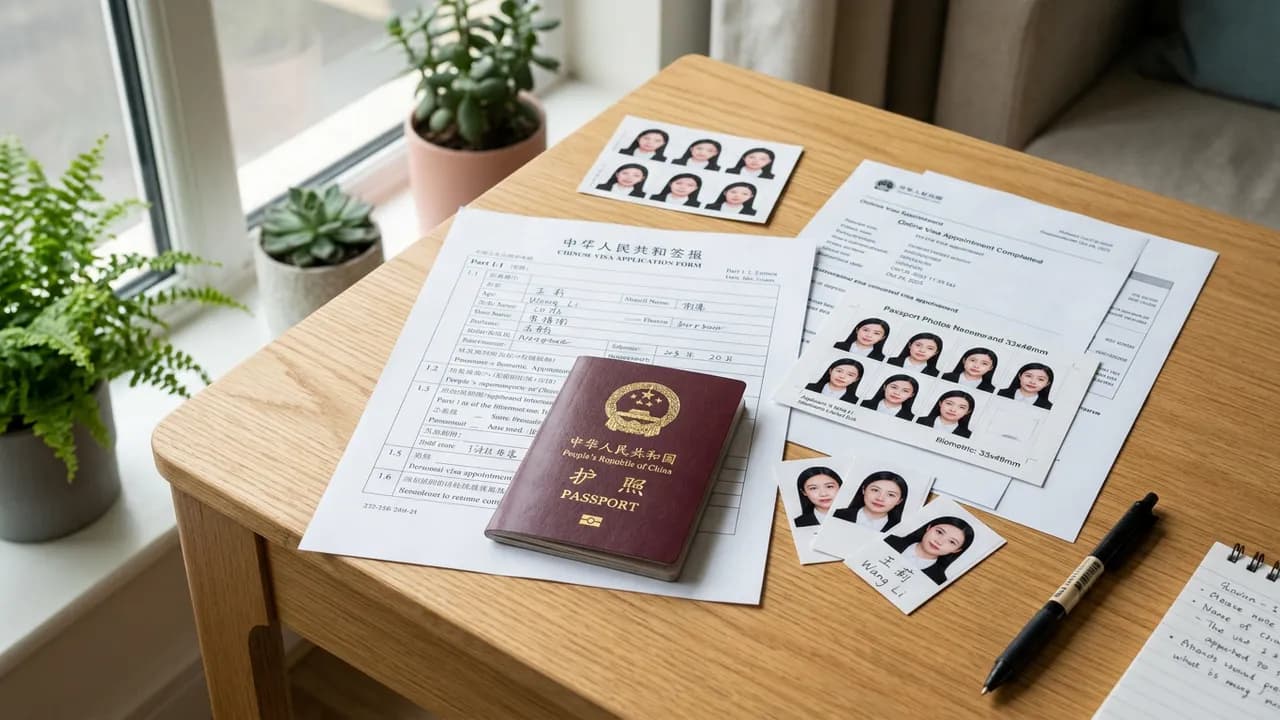
The Royal Thai Consulate-General in Kunming handles Thai visas for residents of Yunnan, Guizhou and Hunan. That third province surprises people: Changsha, Zhuzhou and Zhangjiajie are all in Kunming's district, not Guangzhou's or Beijing's. If you live in Guiyang, Changsha or anywhere in Yunnan, select Kunming when you apply in the Thai e-Visa system.
Opened in March 1994, the consulate sits on the 18th floor of the Shuncheng Twin Towers on Dongfeng West Road in central Kunming. Chinese passport holders can visit Thailand for up to 30 days without a visa, so most of its visa work is longer stays, Non-Immigrant visas, the DTV and foreign residents of its three provinces.
Quick Facts
| Detail | Information |
|---|---|
| Official name | Royal Thai Consulate-General, Kunming (泰王国驻昆明总领事馆) |
| Address | 18th Floor, Shuncheng Twin Towers, East Building, Dong Feng Xi Lu Road, Kunming, Yunnan |
| Main phone | +86 871 6314 9296 |
| Visa enquiries | +86 871 6316 6616 |
| [email protected] | |
| Fax | +86 871 6316 6891 |
| Office hours | Monday to Friday, 08:30–12:00 and 13:00–17:30 |
| Visa section hours | Monday to Friday, 09:30–11:30 and 13:30–16:30 |
| Area covered | Yunnan, Guizhou, Hunan |
| Visa applications | Online only, at thaievisa.go.th |
| Visa fees (RMB) | Tourist single entry 240 · Tourist multiple entry 1,200 · Non-Immigrant single entry 480 · DTV 2,300 (China-wide schedule since 15 July 2024; read 27 Sep 2026) |
Which Areas This Consulate Covers
The consulate's history page states that its jurisdiction covers three provinces: Yunnan, Hunan and Guizhou. Its "Yunnan and jurisdiction" information page profiles the same three.
Here is the mainland split as each Thai mission publishes it:
| Thai mission | Provinces and municipalities |
|---|---|
| Embassy, Beijing | Beijing, Tianjin, Hebei, Heilongjiang, Jilin, Liaoning, Hubei, Shanxi, Henan, Qinghai, Inner Mongolia, Tibet, Xinjiang |
| Consulate-General, Shanghai | Shanghai, Jiangsu, Zhejiang, Anhui |
| Consulate-General, Guangzhou | Guangdong, Hainan |
| Consulate-General, Xiamen | Fujian, Jiangxi |
| Consulate-General, Kunming | Yunnan, Guizhou, Hunan |
| Consulate-General, Chengdu | Sichuan, Chongqing |
| Consulate-General, Xi'an | Shaanxi, Gansu, Ningxia |
| Consulate-General, Nanning | Guangxi |
| Consulate-General, Qingdao | Shandong |
| Consulate-General, Hong Kong | Hong Kong and Macao residents |
Guizhou goes to Kunming, not Chengdu. Chongqing borders Guizhou, but the Chengdu consulate's district is Sichuan and Chongqing only. Hunan goes to Kunming, not Guangzhou, even though Guangzhou is the shorter train ride from Changsha.
Do You Need a Visa?
Chinese citizens: not for tourism of up to 30 days. The Thailand-China mutual visa exemption has applied since 1 March 2024: 30 days per entry, and no more than 90 days in total in any 180-day period. Thailand's exemption overhaul of 15 September 2026 left this agreement unchanged.
- One extension of up to 30 days is possible at a Thai immigration office for 1,900 THB (visa exemption extension).
- The exemption is for tourism only.
- Immigration may ask for funds of 20,000 THB per person or 40,000 THB per family.
- Fill in the Thailand Digital Arrival Card at tdac.immigration.go.th within three days before arrival.
Travelling overland through Laos? Many Yunnan travellers take the train south to Laos and cross into Thailand at the Nong Khai Friendship Bridge. Visa-exempt entries over Thailand's land borders are capped at twice per calendar year, so frequent overland travellers should get a visa instead. See the Nong Khai immigration page.
Foreign residents of Yunnan, Guizhou or Hunan follow the rule for their own passport. Most now get 30 days. Check with the visa finder.
You need the consulate for a Tourist Visa (60 days per entry), Non-Immigrant visas for work, study or family (B, ED, O), the DTV, and SMART or LTR visas.
How to Apply
The consulate's visa page says every applicant must apply through www.thaievisa.go.th. Visas for applicants in China have been stickerless since 27 September 2021. There is no need to hand in a passport, though the consulate can ask for more documents or an interview, online or in person.
- Register on thaievisa.go.th and pick your visa type.
- Select the Royal Thai Consulate-General, Kunming if you live in Yunnan, Guizhou or Hunan.
- Upload the documents listed for your category.
- Pay online. The consulate states that fees are non-refundable.
- When approved, download the notification letter and print it for Chinese and Thai border checks.
Stays over 90 days take longer. For Chinese citizens who plan to stay in Thailand more than 90 days, or when the consulate thinks it necessary, the file is sent to the relevant Thai authorities for approval before the visa is issued. The consulate says it cannot predict how long that takes.
DTV since 31 August 2026: add proof of permanent residence in your country of nationality or permanent residence, and a criminal record clearance from that country (Royal Thai Embassy Beijing notice for applicants in China).
Processing times: the page gives two sets
The Chinese text of the consulate's visa page says at least 3 working days for transit and single-entry tourist visas and at least 4 working days for multiple-entry tourist and Non-Immigrant B, ED and O visas. The English text on the same page says at least 7 working days and at least 15 working days. Plan on the longer English figures.
Visa fees in China (RMB)
From the joint notice of the Embassy in Beijing and all mainland consulates-general, effective 15 July 2024:
| Visa | Entries | Fee (RMB) |
|---|---|---|
| Transit | Single / double | 190 / 380 |
| Tourist | Single | 240 |
| Tourist | Multiple (6 months) | 1,200 |
| Destination Thailand Visa | Multiple (5 years) | 2,300 |
| Non-Immigrant (incl. ED Plus) | Single | 480 |
| Non-Immigrant | Multiple (1 year) | 1,200 |
| SMART | Multiple (per year of validity) | 2,300 |
| Long-Term Resident | Multiple (10 years) | 12,000 |
Practical Notes
Two phone numbers, two jobs. Call +86 871 6316 6616 for visas during the visa section's hours. The +86 871 6314 9296 number is the main line, mostly used by Thai nationals.
Forged documents. The consulate's document list includes a notice about forged documents and refusal of entry to Thailand even with a visa. Submit only genuine bank statements and bookings.
Holidays. The consulate closes on weekends and on the holidays it announces, which include both Thai and Chinese public holidays. Check its holiday notice before planning around National Day in early October.
Frequently Asked Questions
Which Thai consulate covers Hunan?
The Royal Thai Consulate-General in Kunming. Its district is Yunnan, Hunan and Guizhou, so Changsha residents choose Kunming in the e-Visa system.
Which Thai consulate covers Guizhou?
Kunming. Guizhou is not part of the Chengdu consulate's district, which covers Sichuan and Chongqing only.
How long does a Thai visa take in Kunming?
The consulate's English text says at least 7 working days for transit and single-entry tourist visas and at least 15 working days for multiple-entry tourist and Non-Immigrant visas. Its Chinese text gives shorter minimums. Stays over 90 days can take longer because the file goes to Thai authorities.
Can I apply at the Kunming consulate in person?
No. All visa applications go through thaievisa.go.th. The consulate may still call you for an interview if it needs one.
How much is a Thai tourist visa in Kunming?
RMB 240 for single entry and RMB 1,200 for a six-month multiple-entry tourist visa, under the China-wide fee schedule in force since 15 July 2024.
Do Chinese citizens need a visa to enter Thailand by land from Laos?
Not for a tourist stay of up to 30 days, but visa-exempt land entries are limited to two per calendar year. Frequent overland travellers should apply for a tourist visa.
Sources
- Royal Thai Consulate-General, Kunming: History (jurisdiction)
- Royal Thai Consulate-General, Kunming: Location and hours
- Royal Thai Consulate-General, Kunming: Visa (processing times, e-Visa)
- Royal Thai Consulate-General, Kunming: Yunnan and jurisdiction
- Royal Thai Consulate-General, Guangzhou: Updated List of the Thai Visa Service Fees for Applicants in China (15 July 2024)
- Royal Thai Consulate-General, Chengdu: History (Sichuan and Chongqing)
- Royal Thai Embassy, Beijing: Update on supporting documents for the DTV (29 Aug 2026)
- Ministry of Foreign Affairs of Thailand: Thailand-China mutual visa exemption
- TAT Newsroom: New 30-day and 15-day visa exemption rules from 15 September