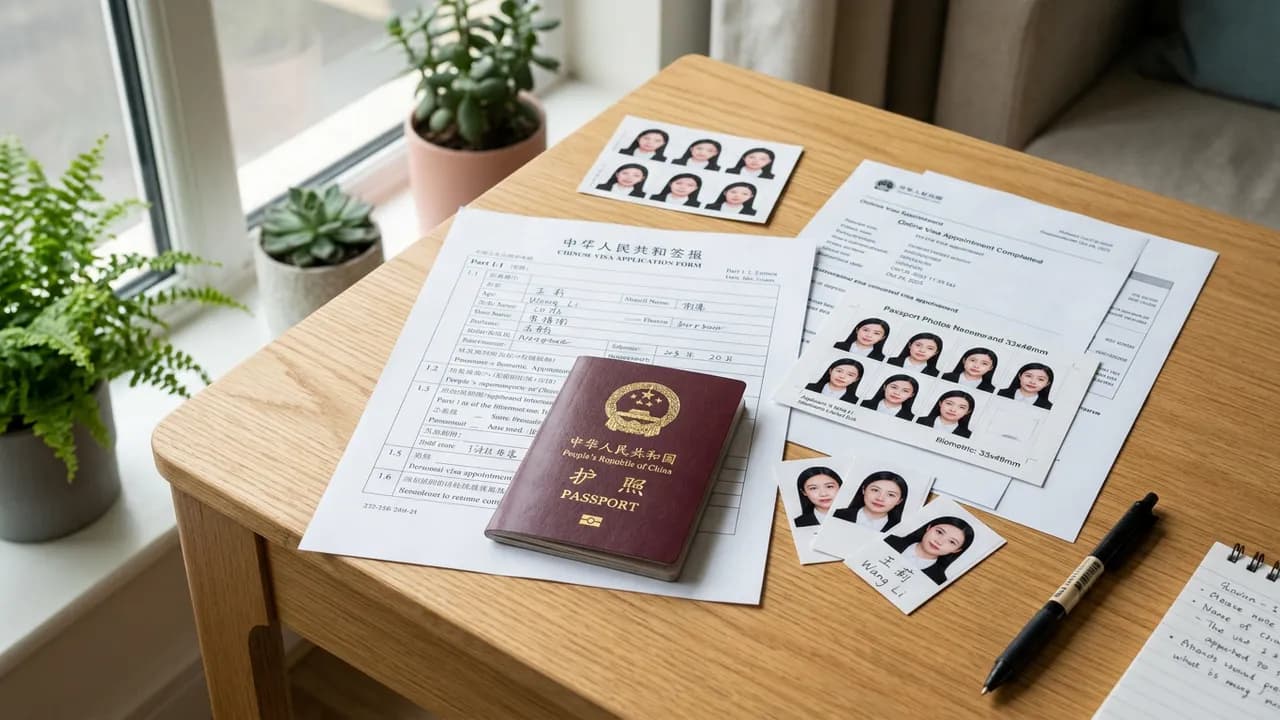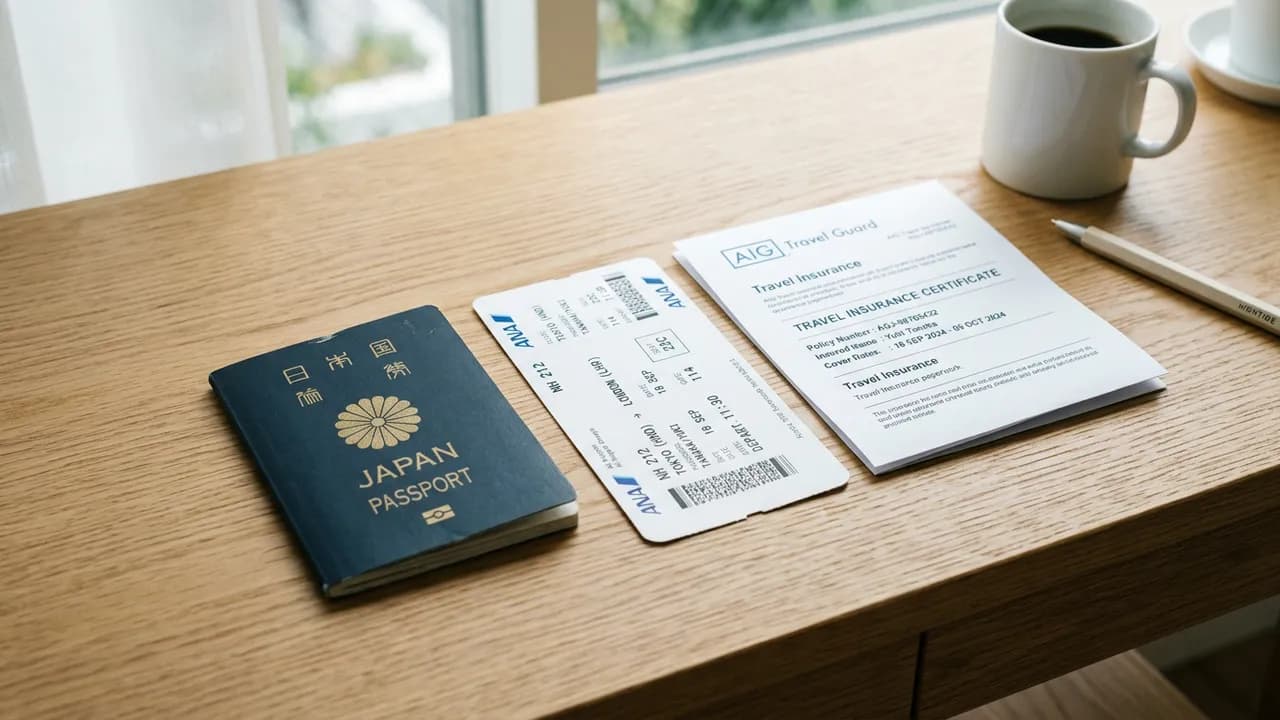
The Thailand visa for Japanese citizens reflects the long diplomatic and economic ties between the two countries, with generous travel arrangements between Thailand and Japan. Japanese passport holders enjoy visa-free entry to Thailand for stays of up to 30 days, and a range of longer-stay visa options are available for those with business, retirement, or extended travel plans.
This guide provides Japanese citizens with everything they need to know about entering Thailand, from the visa exemption to specialized visa categories, embassy information, costs in JPY, and tips for a hassle-free trip.
Quick Facts for Japanese Citizens
| Detail | Information |
|---|---|
| Visa exemption | Yes, 30 days |
| Visa on arrival | Not needed (exemption is superior) |
| Tourist visa (TR) | Available (60 days) |
| Passport validity required | At least 6 months |
| Proof of funds required | 10,000 THB per person / 20,000 THB per family |
| Return ticket required | Yes |
| e-Visa available | Yes |
| Thai embassy in Japan | Tokyo (embassy) + consulates in Osaka and Fukuoka |
Visa Exemption for Japanese Citizens
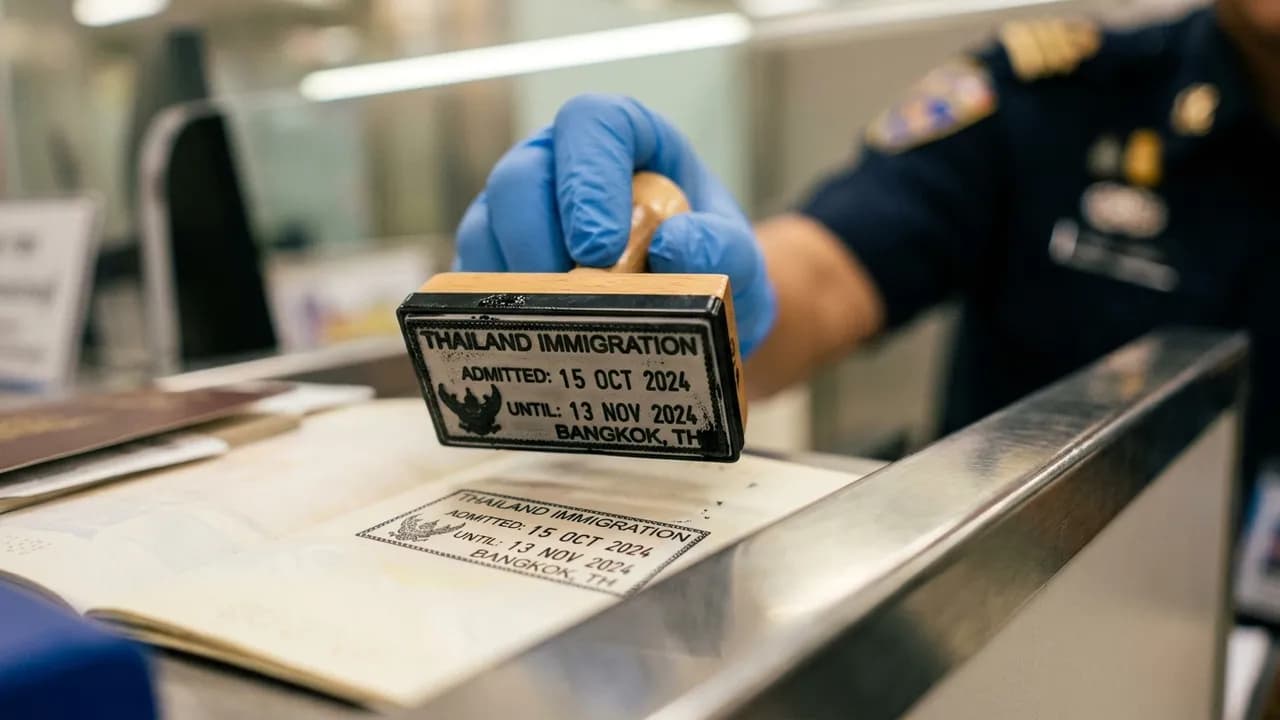
Japanese passport holders can enter Thailand without a visa for tourism purposes. This visa exemption is one of the most convenient entry options available and requires no advance application.
Key Rules
- Duration: Up to 30 days per entry.
- Purpose: Tourism, visiting friends or family, short business meetings, transit, or medical treatment.
- Entry points: All international airports and land border crossings.
- Extensions: One 30-day extension available at any Thai Immigration office (cost: 1,900 THB).
- Total possible stay: Up to 60 days with one extension.
What You Need at Immigration
Arrive with the following documents ready:
- Japanese passport valid for at least 6 months beyond your entry date.
- Completed arrival/departure card (T.M.6).
- Proof of onward travel — return flight to Japan or onward ticket.
- Proof of accommodation — hotel booking or host details.
- Proof of funds — 10,000 THB per person (approximately 42,000 JPY) or 20,000 THB per family.
In practice, Japanese citizens are rarely asked to show proof of funds, but it is wise to have documentation available.
Tourist Visa (TR) for Longer Stays
For Japanese travelers planning to stay in Thailand longer than 30 days without relying on an extension, the Tourist Visa is the best option.
Tourist Visa Details
| Feature | Single Entry | Multiple Entry (METV) |
|---|---|---|
| Stay per entry | 60 days | 60 days per entry |
| Extensions | +30 days at immigration | +30 days per entry |
| Maximum stay per entry | 90 days (60 + 30 extension) | 90 days per entry |
| Validity | 3 months | 6 months |
| Entries | 1 | Unlimited within validity |
| Fee | Approximately 4,500 JPY | Approximately 22,000 JPY |
Required Documents
- Valid Japanese passport with at least 6 months remaining and 2 blank pages.
- Completed visa application form with a recent 4x6 cm photo.
- Bank statement or proof of funds (minimum 20,000 THB equivalent).
- Round-trip flight booking.
- Hotel reservation or letter of invitation.
- For METV: bank statement showing at least 200,000 THB equivalent maintained over 6 months.
Application Process
- Submit online or in person at the Royal Thai Embassy in Tokyo, or consulates in Osaka or Fukuoka.
- Pay the visa fee at the time of application.
- Processing time: Typically 3 to 5 working days.
- Collect your passport with the visa sticker, or receive it by mail if that option is available.
e-Visa for Japanese Citizens
The Thai e-Visa system allows Japanese citizens to apply for visas entirely online.
Steps
- Visit the official Thai e-Visa portal.
- Register an account and select your visa type.
- Upload scanned documents (passport bio page, photo, financial proof, flight itinerary).
- Pay the visa fee by credit card.
- Receive the e-Visa approval via email within 5 to 10 working days.
- Print the approval letter and carry it when traveling.
This is ideal for applicants outside the Tokyo, Osaka, or Fukuoka areas who would otherwise need to travel to a consulate.
Thai Embassy and Consulates in Japan
| Location | Type | Address Area |
|---|---|---|
| Tokyo | Royal Thai Embassy | Kami-Osaki, Shinagawa-ku |
| Osaka | Consulate-General | Chuo-ku, Osaka |
| Fukuoka | Honorary Consulate | Chuo-ku, Fukuoka |
The Tokyo embassy handles the largest volume of visa applications. Appointments may be required during peak travel seasons (Golden Week, Obon, and New Year holidays).
Costs Summary in JPY
| Item | Approximate Cost (JPY) |
|---|---|
| Visa exemption | Free |
| Single-entry Tourist Visa | 4,500 JPY |
| Multiple-entry Tourist Visa (METV) | 22,000 JPY |
| 30-day extension at Thai immigration | 8,000 JPY (1,900 THB) |
| Non-Immigrant B (Business) Visa | 9,000 JPY |
| Non-Immigrant O Visa (Retirement/Family) | 9,000 JPY |
| e-Visa processing fee | Additional fee applies |
Note: JPY amounts are approximate based on prevailing exchange rates. Thai immigration fees are fixed in THB.
Business Visa (Non-Immigrant B)
Japan is one of the largest foreign investors in Thailand, and many Japanese nationals travel for business purposes. The Non-Immigrant B visa is the appropriate category for those who need to work, attend extended business activities, or establish a company in Thailand.
Key Points
- Requires a letter of invitation from a Thai company or business partner.
- Single-entry validity of 90 days; multiple-entry available for 1 year.
- A separate work permit is required for anyone taking up employment.
- Many Japanese companies with Thai subsidiaries handle visa arrangements through their HR departments.
Japan-Thailand Economic Partnership Agreement (JTEPA)
Under the JTEPA, certain categories of Japanese professionals and businesspeople may benefit from facilitated entry and work permit processes. Consult with your employer or a legal advisor for details specific to your industry.
Retirement in Thailand for Japanese Citizens
Thailand is an increasingly popular retirement destination for Japanese nationals, drawn by the lower cost of living, warm climate, and established Japanese communities in Bangkok, Chiang Mai, and Pattaya.
Non-Immigrant O-A Visa (Long Stay for Retirees)
- Available to Japanese citizens aged 50 and above.
- Allows a 1-year stay, renewable annually.
- Financial requirement: a monthly income of at least 65,000 THB or a Thai bank deposit of at least 800,000 THB.
- Requires a medical certificate and police clearance from Japan.
- Health insurance: Mandatory coverage of at least 40,000 THB for outpatient care and 400,000 THB for inpatient care.
Japanese Communities in Thailand
Thailand hosts sizable Japanese communities, particularly in the Sukhumvit (Phrom Phong to Thong Lo) area of Bangkok, where you will find Japanese restaurants, supermarkets, schools, and medical clinics with Japanese-speaking staff.
Other Visa Options
Non-Immigrant ED (Education)
For studying Thai language, culture, martial arts (Muay Thai), or enrolling at a Thai university. Requires an acceptance letter from a licensed institution.
Destination Thailand Visa (DTV)
Designed for remote workers and digital nomads. Valid for up to 180 days with the possibility of extension. Suitable for Japanese professionals working remotely for Japanese companies while living in Thailand.
Non-Immigrant O (Family)
For Japanese nationals married to a Thai citizen or who have Thai children. Allows long-term residence with annual renewals.
Practical Tips for Japanese Citizens
Before Departure
- Passport renewal: Japanese passports can be renewed at municipal offices. Allow at least 2 weeks for processing.
- Travel insurance: While not mandatory for the visa exemption, comprehensive travel insurance is strongly recommended. Japanese insurers offer Thailand-specific plans.
- Currency: Exchange JPY to THB at Bangkok airports or use ATMs (220 THB withdrawal fee per transaction for foreign cards). Rates in Thailand are generally better than in Japan.
- Language: English is widely spoken in tourist areas. Many hospitals and businesses in Bangkok have Japanese-speaking staff.
At the Airport
- Automated gates: Suvarnabhumi Airport has automated immigration gates, but these are typically reserved for Thai nationals. Japanese visitors use the staffed counters.
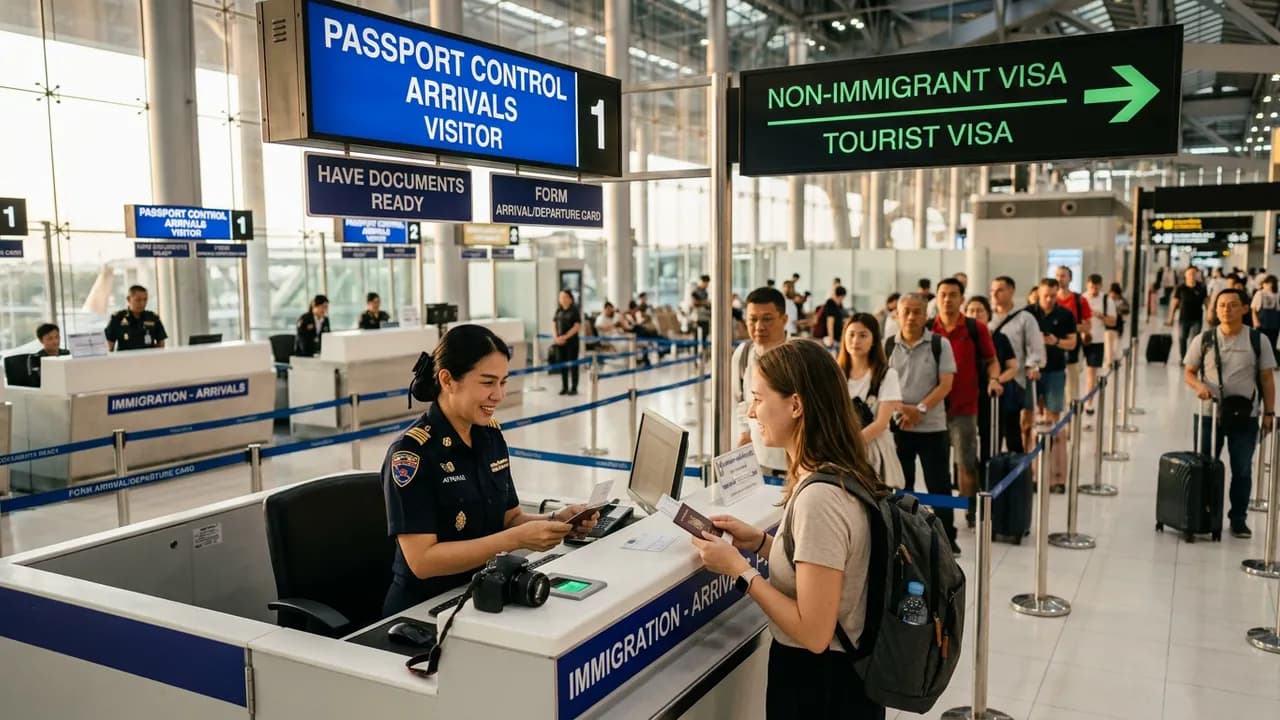
- Immigration lines: Use the "Visa Exemption" or "Foreign Passport" lanes. Do not queue at the Visa on Arrival counter.
- Customs: Thailand has strict rules on importing certain items. Declare valuables and check prohibited items lists.
During Your Stay
- Overstay penalties: 500 THB per day, maximum 20,000 THB. Overstays beyond 90 days can result in bans of 1 to 10 years. Japanese citizens are advised to strictly adhere to their permitted stay.
- 90-day reporting: Only applicable if you stay 90 consecutive days or more on a long-term visa. Not relevant for short-term visitors.
- Driving: A Japanese driver's license is not valid in Thailand. Obtain an International Driving Permit (IDP) before leaving Japan if you plan to drive.
- Emergency contacts: Japanese Embassy in Bangkok provides consular assistance. Keep the emergency number saved in your phone.
Extending Your Stay
Visit any Thai Immigration office to extend your visa exemption by 30 days. The main offices are:
- Bangkok: Chaeng Watthana Government Complex (Immigration Bureau).
- Chiang Mai: Promenada Mall area.
- Phuket: Phuket Town.
Bring your passport, a completed TM.7 form, a 4x6 cm photo, and 1,900 THB. Processing is typically same-day.
Frequently Asked Questions
Can I enter Thailand multiple times on the visa exemption?
Yes. There is no fixed limit on the number of visa-exempt entries per year. However, frequent short entries may attract questions from immigration officers. If you plan to spend significant time in Thailand, consider a longer-term visa.
Do I need a visa for a layover in Bangkok?
No. If you are transiting through Bangkok and remaining in the international zone (airside), no visa is needed. If you wish to leave the airport during a long layover, the visa exemption allows you to enter for up to 30 days.
Can I convert my visa exemption to a work visa while in Thailand?
Not directly. You would generally need to leave Thailand and apply for a Non-Immigrant B visa at a Thai embassy abroad, or work with an employer who can facilitate a change of visa status in certain circumstances.
Is the Japanese Embassy in Bangkok helpful for emergencies?
Yes. The Embassy of Japan in Bangkok is one of the largest Japanese embassies worldwide and provides comprehensive consular services, including emergency assistance, notarial services, and support for Japanese nationals in distress.
Are there direct flights from Japan to Thailand?
Yes. Multiple airlines operate direct flights from Tokyo (Narita and Haneda), Osaka (Kansai), Nagoya, and Fukuoka to Bangkok. Flight time is approximately 6 to 7 hours. Budget carriers like AirAsia X, Peach, and NokScoot (or successors) also serve these routes.