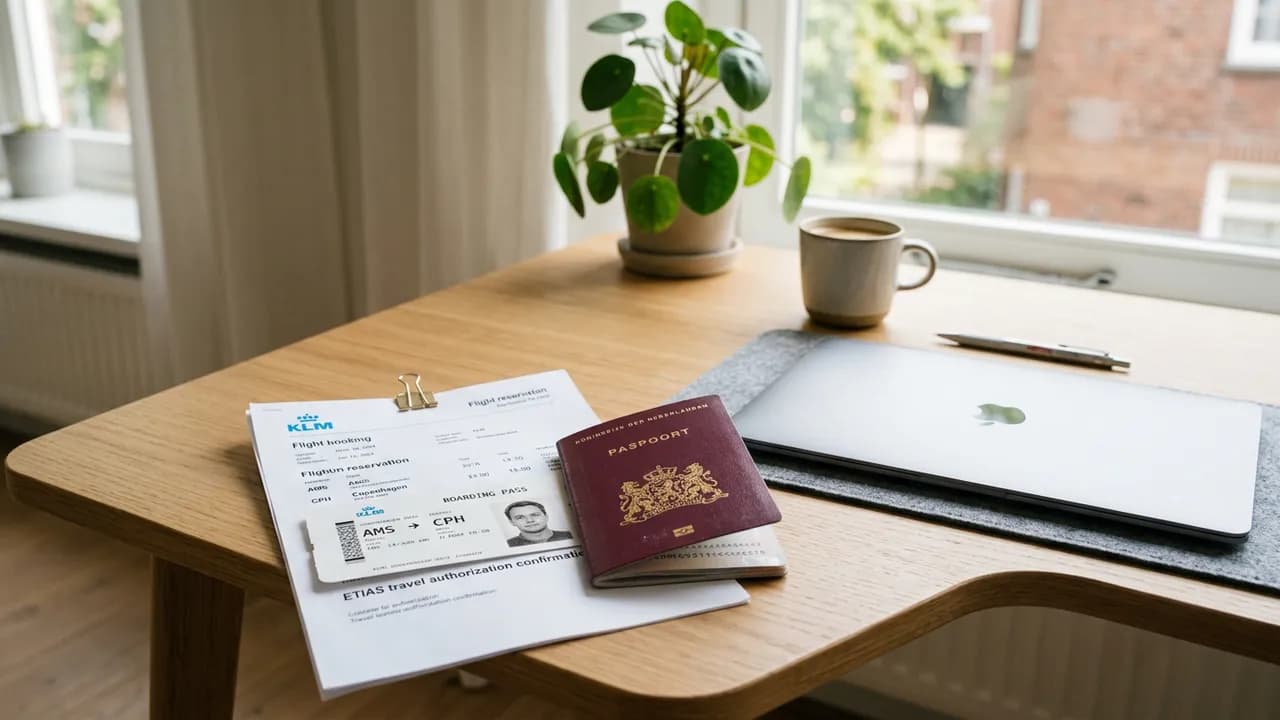
The Thailand visa for Dutch citizens has long been a favorable arrangement, making the kingdom a top destination for Dutch travelers, retirees, and digital nomads. The Netherlands consistently ranks among the top European countries for both tourism and long-term residency in Thailand, with significant Dutch communities in Bangkok, Chiang Mai, Hua Hin, and the southern islands.
Dutch passport holders benefit from a 60-day visa exemption and access to various long-stay visa categories. This guide covers everything you need to know about entering and staying in Thailand as a Dutch citizen.
Quick Facts for Dutch Citizens
| Detail | Information |
|---|---|
| Visa exemption | Yes — 60 days on arrival |
| Extension available | 30-day extension at Thai immigration (1,900 THB / ~50 EUR) |
| Maximum stay without visa | 90 days (60 + 30 extension) |
| Tourist Visa (TR) | Up to 60 days, extendable by 30 days |
| Passport validity required | 6 months from date of entry |
| Thai Embassy | The Hague |
| e-Visa available | Yes, via Thai e-Visa portal |
| Currency | 1 EUR ≈ 38 THB (approximate, check current rates) |
Visa Exemption: Simplest Entry Method
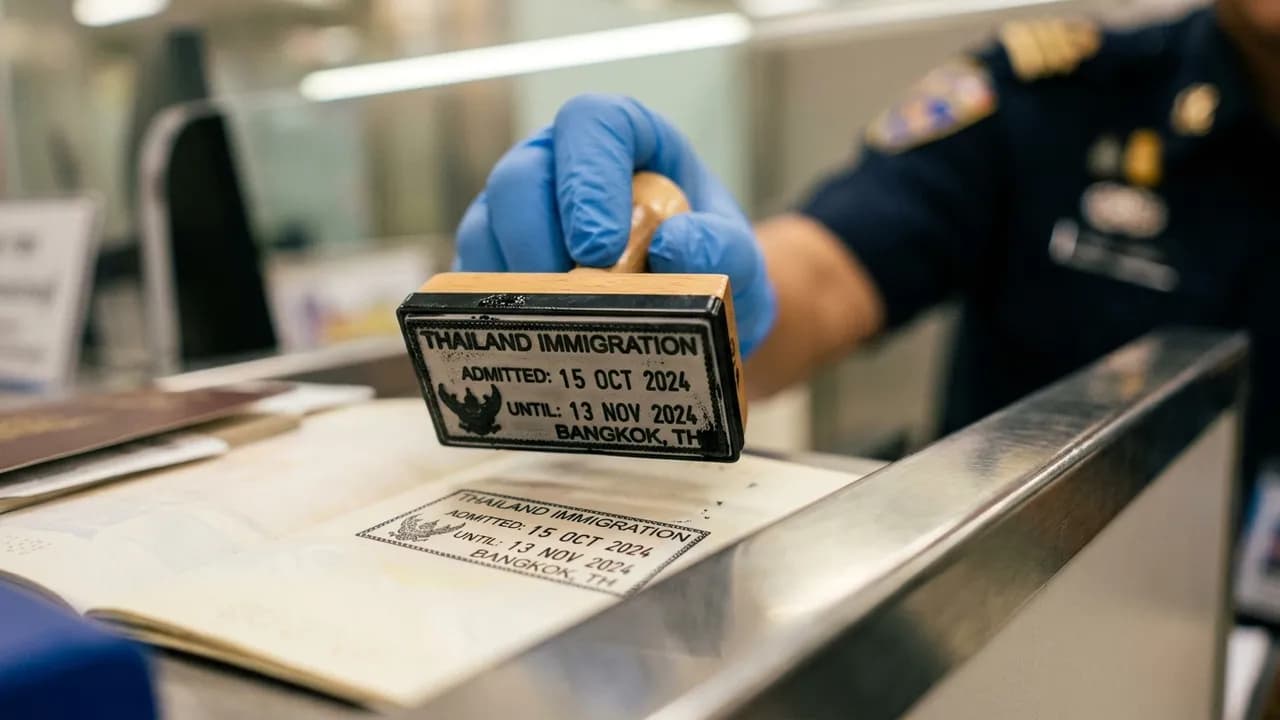
Dutch citizens are included on Thailand's visa exemption list. You can board a flight to Thailand without any advance visa application and receive a 60-day stamp in your passport upon arrival.
Entry Requirements
- Dutch passport with at least 6 months validity from your arrival date (see passport requirements)
- One blank passport page for the entry stamp
- Return or onward flight ticket departing Thailand within 60 days
- Proof of funds — 10,000 THB (~265 EUR) per person or 20,000 THB (~530 EUR) per family (cash, occasionally checked)
- Accommodation address — hotel or guesthouse name and address
Extending Your Visa Exemption
Before your 60-day stamp expires, you can visit any Thai Immigration office to request a 30-day extension, giving you a total stay of 90 days.
What you need:
- Passport with current entry stamp
- Completed TM.7 application form
- One passport photo (4x6 cm)
- Photocopies of passport data page and entry stamp
- Fee: 1,900 THB (~50 EUR)
The extension is processed the same day in most offices. Arrive early to avoid long queues, especially at busy locations like Chaeng Wattana (Bangkok) and Chiang Mai.
Tourist Visa (TR)
For Dutch travelers who want their visa arranged before departure, the Tourist Visa is available through the Thai Embassy in The Hague.
Single Entry vs. Multiple Entry
| Feature | Single Entry TR | Multiple Entry (METV) |
|---|---|---|
| Stay per entry | 60 days | 60 days |
| Extension | 30 days | 30 days per entry |
| Validity | 3 months | 6 months |
| Entries | 1 | Unlimited within validity |
| Cost | ~35 EUR | ~175 EUR |
Required Documents
- Visa application form (from embassy website or e-Visa portal)
- Dutch passport with 6+ months validity and 2 blank pages
- Two passport photos (4x6 cm, white background)
- Return flight booking
- Hotel reservation or accommodation proof
- Bank statements from the last 3 months (minimum balance ~5,000 EUR recommended)
- Visa fee
Royal Thai Embassy in The Hague
The Royal Thai Embassy in The Hague is the sole Thai diplomatic mission in the Netherlands and handles all visa applications.
Address: Laan Copes van Cattenburch 123, 2585 EZ Den Haag, Netherlands
Consular Section Hours: Monday to Friday, 09:00–12:00 (visa submission) Monday to Friday, 14:00–15:30 (visa collection)
Contact:
- Phone: +31 70 345 2088
- Website: thehagueemb.thaiembassy.org
Practical Tips:
- The embassy is located near Den Haag Centraal station, accessible by train from across the Netherlands
- Applications by post are accepted — include a prepaid return envelope (aangetekend)
- During the Dutch winter holiday season (November–January), processing times may be longer due to high demand
e-Visa: Apply Online
Dutch citizens can use the Thai e-Visa portal at thaievisa.go.th to apply for visas without visiting the embassy.
e-Visa Steps
- Register on the e-Visa website
- Choose your visa type and select The Hague as the processing embassy
- Upload scanned documents (passport, photo, bank statements, travel itinerary)
- Pay the fee by credit card
- Monitor the application status online
- Receive the e-Visa approval letter by email (5–15 working days)
- Print the approval and carry it when traveling
The e-Visa system is particularly useful for Dutch citizens living outside the Randstad area, as it eliminates the need to travel to The Hague.
Digital Nomad Options
The Netherlands has one of the highest rates of remote and freelance work in Europe, and many Dutch professionals choose Thailand as a base for working remotely. Thailand offers specific options for this lifestyle.
Destination Thailand Visa (DTV)
The DTV was introduced to attract remote workers and digital nomads. It is an excellent fit for Dutch freelancers, consultants, and remote employees.
Key Details:
- Stay duration: 180 days
- Cost: 10,000 THB (~265 EUR)
- Eligibility: Remote workers employed by or freelancing for companies outside Thailand
- Application: Through the e-Visa portal or at the Thai Embassy in The Hague
Required Documents:
- Proof of employment or freelance contracts with non-Thai companies
- Evidence of remote work capability
- Bank statements showing steady income
- Standard passport and photo requirements
Practical Considerations for Dutch Digital Nomads
- Tax implications: The Netherlands taxes worldwide income for residents. If you maintain Dutch tax residency, your Thai-sourced income remains taxable in the Netherlands. Consult a tax advisor if you plan to stay abroad for extended periods.
- Health insurance: Your Dutch basic health insurance (basisverzekering) has limited coverage abroad. Consider supplementary international health insurance for extended stays.
- Co-working spaces: Thailand has excellent co-working infrastructure in Bangkok (Hubba, The Hive), Chiang Mai (Punspace, CAMP), and Koh Lanta (KoHub).
Retirement in Thailand for Dutch Citizens
Thailand is a popular retirement destination for Dutch citizens, attracted by the low cost of living, warm climate, and established Dutch community.
Retirement Visa (Non-Immigrant O-A)
Requirements:
- Age 50 or older
- Monthly income of at least 65,000 THB (~1,720 EUR) or Thai bank deposit of 800,000 THB (~21,000 EUR)
- Criminal record certificate (Verklaring Omtrent het Gedrag / VOG) — available from Justis
- Medical certificate
- Thai health insurance with minimum coverage of 400,000 THB outpatient and 40,000 THB inpatient
Dutch Pension Considerations:
- AOW (state pension) and most Dutch company pensions can be received in Thailand
- SVB can transfer AOW payments to a Thai bank account
- Consult your pension fund about international payment arrangements
Dutch Community in Thailand
- Netherlands Embassy in Bangkok: Wireless Road — provides consular services including passport renewal, notarial services, and emergency assistance
- Dutch associations: Several informal Dutch clubs and organizations operate in Bangkok, Chiang Mai, Hua Hin, and Pattaya
- Dutch-language services: Some hospitals in Bangkok have Dutch-speaking staff or interpreters
Costs Summary for Dutch Citizens
| Visa Type | Approximate Cost (EUR) |
|---|---|
| Visa exemption (on arrival) | Free |
| 30-day extension | ~50 EUR (1,900 THB) |
| Tourist Visa — single entry | ~35 EUR |
| Tourist Visa — multiple entry (METV) | ~175 EUR |
| Non-Immigrant O-A (Retirement) | ~60 EUR |
| Non-Immigrant B (Business) | ~60 EUR |
| Destination Thailand Visa (DTV) | ~265 EUR |
| Re-entry permit (single) | ~27 EUR (1,000 THB) |
| Re-entry permit (multiple) | ~100 EUR (3,800 THB) |
Flights from the Netherlands
The Netherlands has excellent flight connections to Thailand:
- KLM: Direct flights from Amsterdam Schiphol (AMS) to Bangkok Suvarnabhumi (BKK), approximately 10.5 hours
- Thai Airways: Direct flights Amsterdam–Bangkok during peak season
- Budget connections: Via Istanbul (Turkish Airlines), Dubai (Emirates), or Doha (Qatar Airways)
Schiphol Airport is one of Europe's best-connected hubs, making Bangkok easily accessible with direct or single-stop flights.
Practical Tips for Dutch Travelers
Before You Leave
- Check passport validity — Dutch passports must have 6+ months validity on arrival. Renewal at your gemeente takes about 5 working days.
- Register with BZ Informatieservice — the Dutch Ministry of Foreign Affairs travel registration for emergency notifications (nederlandwereldwijd.nl).
- Arrange travel insurance — your Dutch zorgverzekering has limited international coverage. Take out a separate reis- or wereldpolis for Thailand.
- Notify your bank — inform your Dutch bank (ING, Rabobank, ABN AMRO, etc.) that you will be using your card in Thailand to prevent blocks.
On Arrival
- Use the foreign passport lane at Thai immigration.
- Exchange currency wisely — SuperRich and other licensed exchangers in Bangkok offer better rates than airport counters. ATM withdrawals incur a 220 THB fee per transaction.
- Buy a local SIM card — available at the airport from AIS, DTAC, or TrueMove. Prices start from about 300 THB (~8 EUR) for a tourist package with data.
During Your Stay
- Keep a passport copy on you at all times — Thai law requires foreigners to carry identification.
- Monitor your stay duration — set a reminder for when your entry stamp or visa expires. The immigration app or a simple calendar alert can prevent accidental overstays.
- Use Grab for transport — the Thai equivalent of Uber, widely available in Bangkok, Chiang Mai, Phuket, and other cities.
Mistakes to Avoid
- Overstaying — 500 THB fine per day (maximum 20,000 THB), with possible entry bans for extended overstays
- Multiple back-to-back visa-exempt entries — immigration may refuse entry if they suspect you are living in Thailand without a proper visa
- Leaving without a re-entry permit — if you hold a long-stay visa and leave Thailand without a re-entry permit, your visa is cancelled
- Driving without an IDP — your Dutch rijbewijs alone is not valid in Thailand. Obtain an International Driving Permit from the ANWB before departure
Frequently Asked Questions
Can I enter Thailand via a land border?
Yes. Dutch citizens receive the same 60-day visa exemption at all land borders with Cambodia, Laos, Myanmar, and Malaysia.
How long can I stay in Thailand per year as a tourist?
With a visa exemption (60 days + 30 extension), you can stay up to 90 days per entry. There is no annual cap, but immigration may question frequent entries. For stays exceeding a few months per year, a long-stay visa is advisable.
Do I need a yellow fever vaccination?
Not if you are arriving directly from the Netherlands. A yellow fever certificate is only required if you are arriving from or transiting through a yellow fever endemic country.
Can I open a Thai bank account as a tourist?
Some Thai banks allow tourists to open accounts, but requirements vary. Bangkok Bank and Kasikornbank are generally the most accommodating for foreign tourists. Bring your passport, proof of Thai address, and a reference letter from your Dutch bank if possible.
What if I lose my passport in Thailand?
Contact the Netherlands Embassy in Bangkok immediately. They can issue an emergency travel document (noodreisdocument). Also file a police report at the nearest Thai police station, which you will need for the replacement document.
Summary
Dutch citizens have straightforward access to Thailand with a 60-day visa exemption, a well-located embassy in The Hague, and a fully digital e-Visa option. Whether you are planning a holiday, exploring the digital nomad lifestyle, or considering retirement in Thailand, the visa process is clear and accessible. The strong Dutch community in Thailand and direct KLM flights from Schiphol make the connection between the two countries exceptionally convenient.