The Thailand visa for Russian citizens supports one of the most popular destinations for Russian travelers, with hundreds of thousands visiting each year for holidays, long-term stays, and even relocation. The expanded visa exemption agreement now allows Russian citizens to stay in Thailand for up to 90 days without a visa, making the country more accessible than ever.
This guide covers everything Russian citizens need to know about entering and staying in Thailand legally, including the visa exemption rules, longer-stay visa options, embassy details, costs in RUB, and practical advice for navigating life as a Russian visitor in Thailand.
Quick Facts for Russian Citizens
| Detail | Information |
|---|---|
| Visa exemption | Yes, 90 days |
| Visa on arrival | Available (15 days, but exemption is better) |
| Tourist visa (TR) | Available (60 days) |
| Passport validity required | At least 6 months |
| Proof of funds required | 10,000 THB per person / 20,000 THB per family |
| Return ticket required | Yes |
| e-Visa available | Yes |
| Thai embassy in Russia | Moscow (embassy) + consulate in St. Petersburg |
The 90-Day Visa Exemption
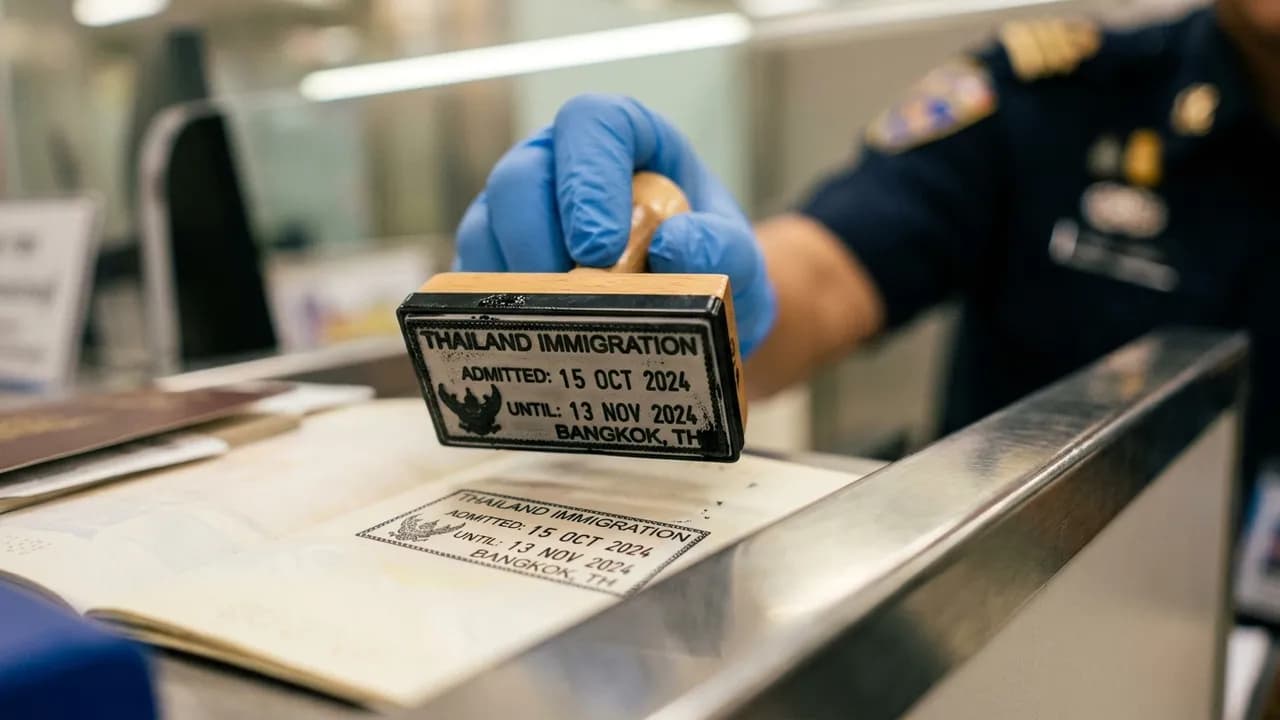
The expanded visa exemption agreement between Thailand and Russia allows Russian passport holders to enter Thailand without a visa for stays of up to 90 days. This generous allowance reflects the importance of Russian tourism to Thailand's economy.
Key Rules
- Duration: Up to 90 days per entry.
- Purpose: Tourism, visiting friends or family, medical tourism, short business meetings, or transit.
- Entry points: All international airports and land border crossings.
- Extensions: One 30-day extension available at Thai Immigration (cost: 1,900 THB).
- Maximum possible stay: Up to 120 days (90 + 30 extension) per entry.
- No advance application: Simply arrive with your passport and required documents.
What You Need at Immigration
- Russian passport (zagranpasport) valid for at least 6 months beyond your arrival date.
- Completed arrival/departure card (T.M.6).
- Proof of onward travel — return flight ticket or ticket to a third country.
- Proof of accommodation — hotel booking, rental agreement, or host invitation.
- Proof of funds — 10,000 THB per person (approximately 30,000 RUB) or 20,000 THB per family.
Important Notes on the Visa Exemption
- Use your zagranpasport (foreign travel passport), not your internal Russian passport.
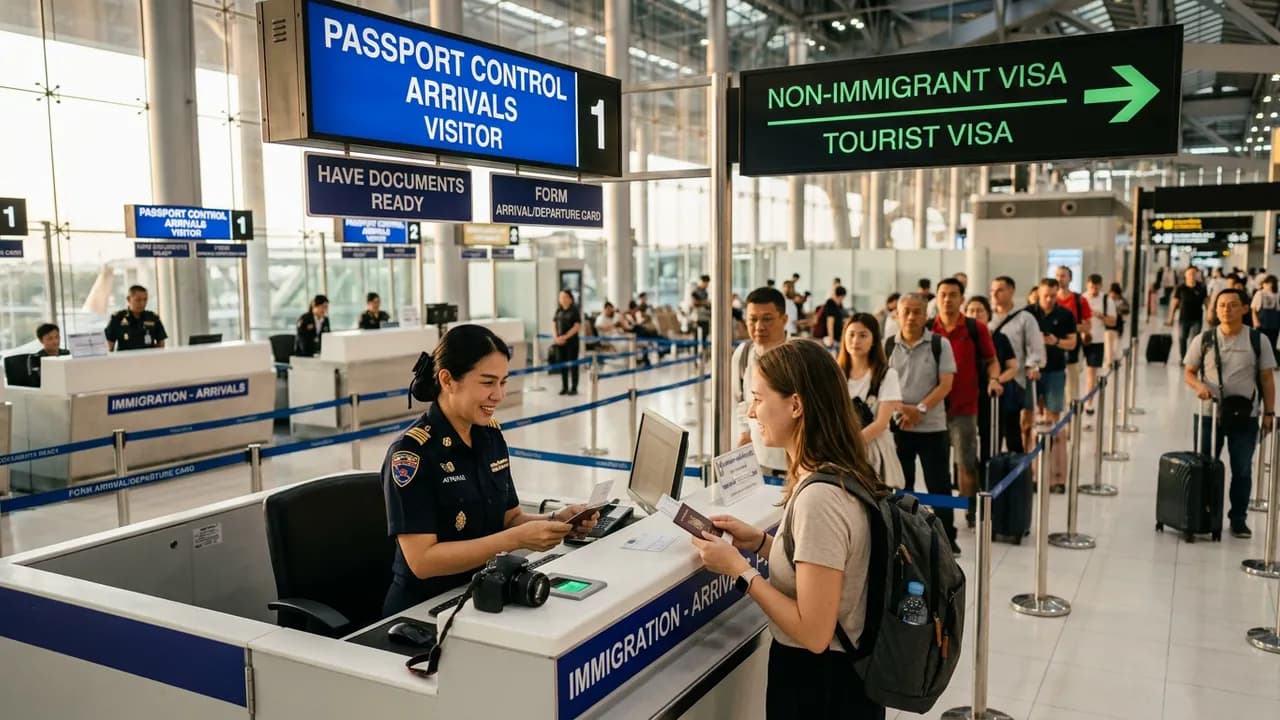
- Immigration officers at major airports like Suvarnabhumi and Phuket are accustomed to processing Russian travelers and the process is typically smooth.
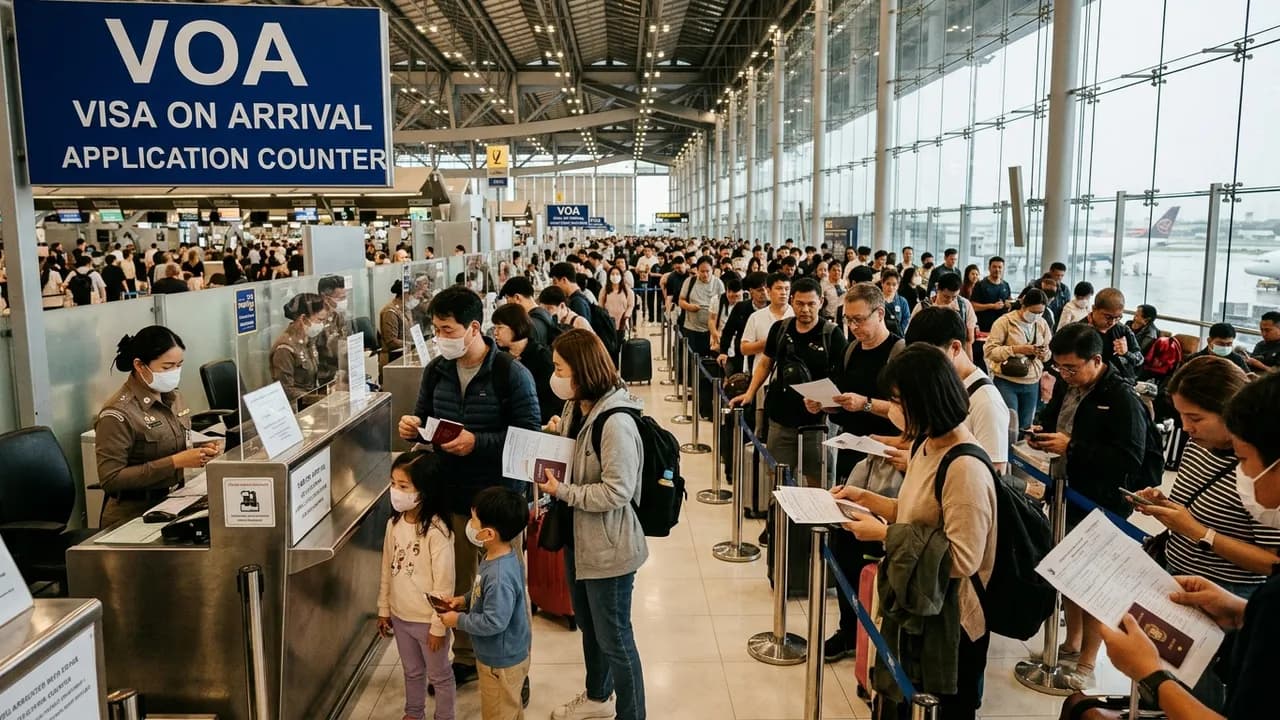
- During peak season (November through March), expect longer queues at Phuket airport in particular.
Tourist Visa (TR) for Extended Stays
While the 90-day exemption covers most vacation needs, some Russian travelers prefer to apply for a Tourist Visa in advance, especially when planning an extended stay or multiple trips.
Tourist Visa Details
| Feature | Single Entry | Multiple Entry (METV) |
|---|---|---|
| Stay per entry | 60 days | 60 days per entry |
| Extensions | +30 days at immigration | +30 days per entry |
| Maximum stay per entry | 90 days (60 + 30) | 90 days per entry |
| Validity | 3 months | 6 months |
| Entries | 1 | Unlimited within validity |
| Fee | Approximately 4,000 RUB | Approximately 20,000 RUB |
When to Choose a Tourist Visa Over the Exemption
- If you need to make multiple entries over a 6-month period, the METV provides flexibility.
- If you want the security of a pre-approved visa in your passport.
- If you plan to combine the visa with extensions for maximum stay duration.
Required Documents
- Valid Russian zagranpasport with at least 6 months remaining and 2 blank pages.
- Completed visa application form with a recent photo (4x6 cm).
- Bank statement showing sufficient funds (minimum 20,000 THB equivalent).
- Round-trip flight booking.
- Hotel reservation or accommodation confirmation.
- For METV: bank statement showing at least 200,000 THB equivalent over the past 6 months.
Thai Embassy and Consulate in Russia
| Location | Type | Coverage |
|---|---|---|
| Moscow | Royal Thai Embassy | All of Russia (primary visa processing) |
| St. Petersburg | Honorary Consulate | Northwestern Russia (limited services) |
Moscow Embassy Details
The Royal Thai Embassy in Moscow handles all visa applications for Russian citizens. Located in the central part of Moscow, it processes tourist visas, Non-Immigrant visas, and provides consular services.
- Processing time: 3 to 7 working days.
- Application: In person or through authorized visa agencies.
- Peak periods: October through December, as many Russians prepare for winter stays in Thailand.
Visa Agencies
Many Russian travelers use visa agencies in Moscow and other major cities to handle their applications. While this adds a service fee, it can save time and ensure all documents are properly prepared. Popular agencies advertise services specifically for Thai visa applications.
e-Visa for Russian Citizens
The Thai e-Visa system is available to Russian citizens and allows entirely online applications.
Process
- Visit the official Thai e-Visa website.
- Create an account and choose your visa type.
- Upload required documents (passport scan, photo, financial proof, flight details).
- Pay the visa fee online.
- Receive the e-Visa approval via email within 5 to 15 working days.
- Print the approval letter for travel.
Note: Processing times may vary. Apply well in advance of your planned travel date.
Costs Summary in RUB
| Item | Approximate Cost (RUB) |
|---|---|
| Visa exemption (90 days) | Free |
| Visa on arrival (15 days) | 6,000 RUB (2,000 THB) |
| Single-entry Tourist Visa | 4,000 RUB |
| Multiple-entry Tourist Visa (METV) | 20,000 RUB |
| 30-day extension at Thai Immigration | 5,700 RUB (1,900 THB) |
| Non-Immigrant B (Business) Visa | 8,000 RUB |
| Non-Immigrant O Visa | 8,000 RUB |
| e-Visa processing fee | Additional fee applies |
Note: RUB amounts are approximate. Exchange rates between RUB and THB fluctuate. Thai immigration fees are fixed in THB.
Popular Long-Stay Destinations for Russians
Russian travelers and long-term residents have established significant communities in several Thai locations:
Phuket
The largest Russian community in Thailand. The Rawai, Kata, and Karon areas have many Russian-speaking businesses, restaurants, schools, and services. Signs in Russian are common in these neighborhoods.
Pattaya
A popular destination for Russian tourists and long-stay visitors. The Jomtien and Pratumnak Hill areas have notable Russian communities with restaurants, shops, and real estate agencies catering to Russian speakers.
Koh Samui
Growing Russian community, particularly in the Chaweng and Lamai areas. Popular for its relaxed atmosphere and beach lifestyle.
Bangkok
While less of a beach destination, Bangkok attracts Russian business travelers and those seeking urban amenities. The Sukhumvit area has some Russian-oriented services.
Chiang Mai
Increasingly popular with Russian digital nomads and families, attracted by the lower cost of living and cooler climate compared to the southern beach destinations.
Other Visa Types for Russian Citizens
Non-Immigrant B (Business/Work)
For Russians employed by Thai companies or conducting extended business activities. Requires a work permit obtained after arrival. Some Russian-Thai joint ventures facilitate the visa process for employees.
Non-Immigrant ED (Education)
For studying Thai language, Muay Thai, or enrolling in educational programs. Many Russian long-stayers use education visas for extended stays while studying Thai language or martial arts.
Non-Immigrant O-A (Retirement)
For Russian citizens aged 50 and above. Requires proof of financial means (800,000 THB in a Thai bank or monthly income of 65,000 THB) and health insurance coverage.
Non-Immigrant O (Family)
For those married to a Thai national or with Thai children. Allows long-term residence with annual extensions.
Destination Thailand Visa (DTV)
Aimed at remote workers and digital nomads. Valid for up to 180 days. Increasingly popular among Russian IT professionals and freelancers working remotely.
Practical Tips for Russian Citizens
Before Departure
- Passport validity: Check that your zagranpasport has at least 6 months of validity. Russian passport renewal can take 1 to 3 months depending on your region.
- Flights: Direct flights operate from Moscow (Sheremetyevo and Domodedovo) to Bangkok and Phuket. Airlines include Aeroflot and various charter operators, especially during winter season. Flight time to Bangkok is approximately 9 hours.
- Currency: Exchanging RUB directly to THB can be difficult outside Russia. Consider bringing USD or EUR to exchange in Thailand, or use ATMs upon arrival. Some Russian bank cards may have restrictions on international use — verify with your bank before traveling.
- Insurance: Purchase comprehensive travel insurance that includes medical coverage. Thai hospitals provide excellent care but costs can be significant without insurance.
Banking and Money Matters
- ATM withdrawals: Thai ATMs charge 220 THB per transaction for foreign cards. Withdraw larger amounts to reduce fees.
- Card acceptance: Some Russian bank cards issued by sanctioned banks may not work internationally. Carry sufficient cash or use cards from banks with international connectivity.
- Money transfers: Services like Wise (TransferWise) or cryptocurrency exchanges are used by some Russian residents for transferring funds. Research options before departure.
- Cash exchange: SuperRich and other licensed exchange offices in Bangkok offer competitive rates for major currencies.
At the Airport
- Immigration queues: Phuket airport can have very long immigration queues during peak season (November to February). Consider arriving at off-peak hours.
- Fill out the arrival card on the plane to save time.
- SIM cards: Purchase a Thai SIM at the airport. Tourist packages from AIS, DTAC, or TrueMove offer 7 to 30 days of data.
- Transport: Use official taxi counters at airports. Grab (ride-hailing app) is widely available in major cities.
During Your Stay
- Overstay consequences: Thailand imposes fines of 500 THB per day (max 20,000 THB) for overstays. Overstays exceeding 90 days can result in entry bans from 1 to 10 years. Russian citizens have occasionally encountered issues with overstays — take your departure date seriously.
- Track your days: With a 90-day exemption, it is easy to lose track. Set a reminder on your phone for 2 weeks before your exit date.
- Re-entry permits: If you leave Thailand temporarily (for example, to visit Cambodia or Malaysia) and wish to return on your existing entry stamp, obtain a re-entry permit first (1,000 THB for single, 3,800 THB for multiple). Without it, your stay permission is cancelled upon departure.
- TM.30 reporting: Your landlord or hotel is required to report your address to immigration within 24 hours of your arrival at any new address. Hotels do this automatically; for private rentals, confirm with your landlord.
Common Issues for Russian Travelers
- Frequent entries: Immigration officers may question travelers who appear to be living in Thailand on back-to-back visa exemptions. If you plan extended stays, apply for an appropriate long-term visa.
- Proof of funds: Immigration officers at some entry points actively check for proof of funds. Carry at least 10,000 THB equivalent in cash per person.
- Return ticket requirement: Budget airlines at Phuket and Bangkok airports sometimes check for return tickets at check-in. Have a confirmed return booking.
- Rental scams: When renting accommodation long-term, use reputable agencies and get written contracts. The Russian-speaking community forums can provide recommendations.
Extending Your Stay
30-Day Extension Process
- Visit your nearest Thai Immigration office before your 90-day exemption expires.
- Bring: passport, completed TM.7 form, one passport photo (4x6 cm), 1,900 THB cash.
- Processing is typically same-day.
- Your new exit date will be stamped in your passport.
Phuket Immigration Office
Given the large Russian community in Phuket, the immigration office there is well-equipped to handle extension requests. Expect longer wait times during high season. Arrive early in the morning for the best experience.
Frequently Asked Questions
Can I work remotely for a Russian company while on a visa exemption?
Thai law technically requires a work permit for any work performed in Thailand. However, enforcement for remote workers on laptops is minimal. For full legal coverage, consider the Destination Thailand Visa (DTV) which explicitly accommodates remote workers.
Do I need a COVID vaccination certificate?
As of 2026, Thailand does not require COVID vaccination certificates for entry. Check current requirements before traveling.
Can I bring my pet to Thailand?
Yes, but it requires a health certificate, rabies vaccination records, and an import permit from the Thai Department of Livestock Development. The process takes several weeks of preparation.
Is it safe for Russians in Thailand?
Thailand remains welcoming to visitors of all nationalities. Russian tourists and residents are well-established in many Thai destinations and face no specific safety concerns beyond standard travel precautions.
Can I get a Thai driver's license?
Yes, but you need a valid visa (not just a visa exemption) and a certificate of residence from your embassy. Many Russian long-stayers obtain Thai driver's licenses for convenience, as International Driving Permits are only valid for short periods.
How do I find Russian-speaking services in Thailand?
Phuket, Pattaya, and to a lesser extent Koh Samui have extensive Russian-speaking communities with real estate agents, lawyers, medical interpreters, and tour operators. Online forums and social media groups for Russians in Thailand are active and helpful resources.